Why We Call It The Morocco Detour: A Short Flight South
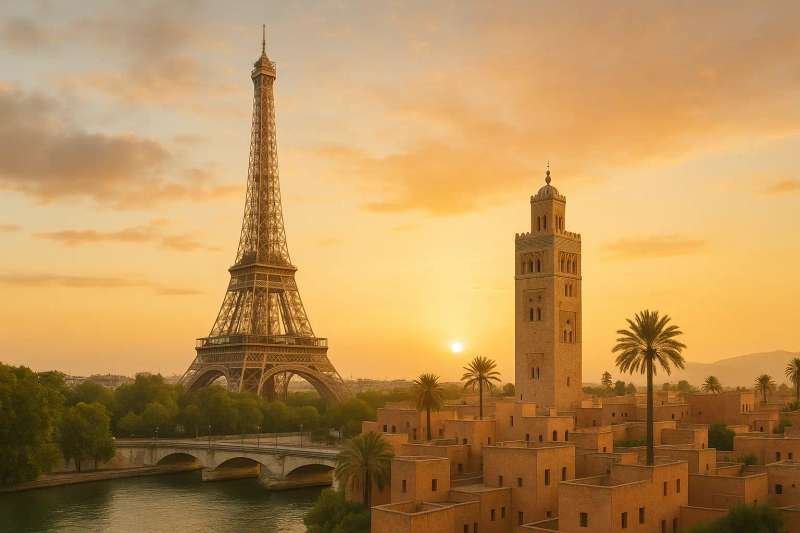
Morocco sits less than three hours by air from Barcelona, two and a half from Madrid, and under four from Paris or London. At its narrowest, the Strait of Gibraltar puts 14 kilometers of water between Europe and Africa.
That is close enough to change how people plan. A week in Spain stretches to take in three or four days in Morocco without anyone rearranging the rest of the trip. A honeymoon that was going to be Paris and the coast picks up four days that look nothing like the rest of it.
The word "detour" is doing precise work there. Morocco is not the reason for the trip, and it is not a random bolt-on either; it is a deliberate extension of a route you were already flying.
That is where the name came from, and it is still how we plan.
The Detour Concept
Where the Name Came From
The name came out of one question arriving over and over. Someone would book a week in Barcelona, look at a map, and write to ask: can we add Morocco to the end of it? The answer was always yes, and the trips were better for it.
Morocco gives a European itinerary what it usually cannot: a different alphabet on the shop signs, mountains and desert within a day's drive of each other, and a place that feels foreign without being hard to reach.
The three-hour flight from Spain crosses more than the Mediterranean. It crosses into different architecture, a different religion, a different language, and a day that starts and ends at different hours. The contrast works both ways: Europe looks more European once you have been to Morocco.
The Long-Haul Traveler Advantage
The case is strongest for travelers coming a long way. Flying to Europe is already a substantial commitment of time and money, and Morocco extends it without a second transcontinental flight.
You are most of the way there before you start. From Madrid or Barcelona the hop south is short, and it buys a change of scene no further European city can supply.
Morocco works in short windows. You do not need three weeks to get something out of it: three to five days covers real ground, seven to ten is comprehensive for a first visit, and two weeks lets you go deep. Timing your Morocco detour matters as much as its length, because some seasons are far kinder to a short trip than others.
Some countries need two weeks before they start giving anything back. Morocco pays out on whatever you put in. A long weekend returns a long weekend's worth; three weeks returns three weeks' worth.
What We Mean by It
The word carries more than geographic convenience.
Not the Main Event: A detour implies Morocco is not why you left home. It is an addition to plans you already had, and that takes the pressure off. Nobody is trying to "do Morocco completely." You see what the days allow, and you come back for the rest.
It makes for better trips. Four days spent trying to see everything are four anxious days.
Morocco takes to this well, because it does not need to be covered completely to be worth doing. Three days in Marrakech and the desert sends most people home planning the next one.
A Line You Were Already Flying: A detour follows a route you had already drawn. Barcelona to Marrakech is a natural line on the map, London to Casablanca is a direct flight, and Paris to Fes makes plain geographic sense.
Nothing about it doubles back. You carry on in the direction you were already going, with Morocco added at the end instead of wedged into the middle.
The Time Adds Up Sensibly: A three-day detour is worth taking. Five days is comfortable. Seven covers one region properly. All three fit either onto the end of a European trip or into a long weekend from a European address.
Nobody is asking you to commit two weeks to a country you have never seen. You are committing three to five days that already sit inside a trip you have booked.
The Historical Logic: Morocco shares the Mediterranean basin with southern Europe, and the connections run deep: trade routes, architectural influence, and centuries of exchange in both directions. This is a regional neighbor with traceable links to places most travelers already know.
It pays off in both directions. Moorish Spain makes more sense once you have stood in a Moroccan courtyard, and the tile work, the arches and the plan of the house are recognizably the same tradition.
How It Works in Practice
The idea comes down to a few decisions we make on your behalf.
Hub-and-Spoke Philosophy
We base travelers in one or two places and run excursions out from them, instead of changing hotels every night. Marrakech is the hub for the Atlas Mountains, the desert and the coast. Fes does the same job for the north and the Middle Atlas.
It means you unpack once. You settle into a riad, learn which turning is yours, work out where to buy water. The day trips and overnight excursions supply the variety.
It suits short and medium trips particularly well. [Five days in Marrakech]({{ '/morocco/short-stays/' | localizeUrl(lang) }}) with an Atlas day trip and one night in the desert covers a lot of the country's range.
Private Drivers Throughout: The Morocco Detour uses private drivers for every intercity leg and every excursion. That is a practical decision more than a luxurious one. On a four-day trip, every hour lost to logistics comes straight out of the trip.
A private car gives you flexibility no timetable can. You leave when you are ready, stop at the kasbahs and the viewpoints, and spend no part of the day working out which platform you need.
It also changes the character of the driving. The road from Marrakech to the Sahara crosses the High Atlas at Tizi n'Tichka and drops through the Dades valley; in a private car that day is part of the trip rather than the price of it.
Curated Accommodations: We choose riads and hotels by staying in them. That means meeting the staff, seeing how a place is maintained out of season, and working out which properties suit which travelers. Review scores tell you none of that.
It matters more the shorter the trip. With three nights, one bad room is a third of the holiday. The atmosphere of the riad, whether the staff know the medina, whether breakfast is worth getting up for, how far the door is from a taxi: on a short trip all of it counts.
Honeymooners and families want different buildings. So do a couple and a party of six. We match the property to the people in it.
Flexible Within Structure
The itinerary is a framework, not a timetable. The rooms are confirmed, the drivers are booked, the activities are arranged. What happens on the day bends to how you feel.
Sleep late? The driver waits.
Want another hour in the souk? The afternoon moves.
Would you sooner sit by the pool? Sit by the pool.
That matters more on a short trip than a long one. The structure is there so that nothing fails; the slack is there so it still feels like your trip and not a coach tour.
Who This Serves
It suits some travelers more than others.
Europeans Taking Short Breaks: A long weekend out of a European city is enough. Friday to Monday gives you three nights, which covers a first look at Marrakech, or a focused run at the desert.
Anyone living in France, Spain, the UK or Italy can do this more than once. The first trip covers the obvious things; the second goes somewhere else entirely. Morocco becomes a country you keep returning to instead of one you tick off.
It is close enough that adding it rarely needs a planning cycle of its own.
Americans Extending European Travel: Many Americans come to Europe for two or three weeks. Four or five days in Morocco can be added to that without a second transatlantic flight.
Europe and Morocco together cover more ground than Europe on its own. One trip takes in the Mediterranean, northern Europe and North Africa.
The money works too. Once the transatlantic ticket is paid for, a short hop south and four days in Morocco cost less than four more nights in most Western European capitals. Understanding Morocco costs sets out how the two compare.
Honeymooners: Europe Plus Morocco
A honeymoon split between Europe and Morocco gives you two different weeks. Paris or Barcelona for the restaurants and the hotels; Morocco for the mountains, the desert and a city that runs on foot.
[Our honeymoon approach]({{ '/morocco/honeymoon/' | localizeUrl(lang) }}) builds Morocco into the wider trip. A riad is a small building around a private courtyard, which answers the privacy question on its own, and the second half being nothing like the first is what gives the trip its shape.
Families Adding Cultural Component: A European family holiday picks up something a circuit of museums cannot. Children meet a country that works differently from their own, and the activities are physical: a night under canvas in the desert, a walk in the Atlas, an afternoon learning to cook a tagine.
Three or four days is about the length children will sustain. The novelty holds, the activities work across a range of ages, and nobody has to endure two weeks of hard travel to make the point.
Why the Name Stuck
The name works because it describes the size of what we sell.
It promises nothing about covering the whole country, and nothing about turning you into an expert.
What it says is simpler. You are already traveling. Morocco is close. A few days there will repay the diversion, and the logistics are ours to worry about.
It attracts people who want Morocco without the project management of a full itinerary. The framing gives them a way in: a set number of days, a route that already makes sense, and no obligation to see the rest.
It also answers the usual hesitations. Morocco is not complicated over three days with the arrangements made. You do not need to set aside a dedicated trip for it. And if you are already flying to Europe, waiting for a better moment only means paying for the long leg twice. First-time visitors tend to find the detour the least daunting way in.
Morocco is close, short trips are worth taking, and the planning is what makes the two fit together.
Hence the name.
Evolution Beyond Short Trips
The idea started with short European extensions, and then it outgrew them.
A ten-day Morocco trip is a detour from ordinary life more than a geographic one. A two-week journey still runs on the same principle: curate, and do not attempt everything.
What does not change with length is the method. Sensible routing, a base to work out from, a private car, and rooms we have slept in ourselves.
[The Morocco Detour approach]({{ '/morocco-detour/' | localizeUrl(lang) }}) scales from a three-day intensive to two full weeks, and the standard of it does not thin out as the days add up.
Making Your Detour Work
If you are planning a European trip, whether to add Morocco comes down to four questions.
Do you have three to five days spare? Can you face one more flight? Does the contrast appeal? Are you comfortable somewhere that will not resemble home?
Four yeses and the detour will work. We build it around the days you actually have.
If Morocco is already your main destination, the same discipline applies: choose depth over coverage, accept that you will not see everything, and give the parts you do see room to breathe.
Detour Success Questions
Do you have 3-5 extra days? Below that the flying starts to outweigh the trip.
Can you face one more flight? The European hops are short and there are several a day.
Does the contrast appeal? The difference from Europe is the whole reason to go.
Are you comfortable somewhere unfamiliar? Some adaptability is required. A driver removes most of the friction.
Quick Detour Reference
Send us the dates you have already booked in Europe and we will tell you whether Morocco fits them, and what those days should be. Start here.
Frequently Asked Questions
- How long is the flight from Europe to Morocco?
Morocco is under 3 hours by air from Barcelona, 2.5 hours from Madrid, and under 4 hours from Paris or London. The Strait of Gibraltar separating Europe from Africa narrows to just 14 kilometers at its closest point.
- How many days do you need for a Morocco detour?
Three days is enough for a real introduction, five is comfortable, and seven to ten covers a lot of ground. A Friday-to-Monday from a European city covers Marrakech, or a focused run at the desert.
- Can you add Morocco to a European trip?
Yes, and the routing rarely costs you anything. Flights from Spain, France and the UK are short enough that three to five days in Morocco slot into an existing itinerary without backtracking.
- What is included in a Morocco Detour trip?
Riads and hotels we have stayed in ourselves, a private driver for every transfer and excursion, activities booked in advance, and one person holding the whole thing together while you are here. The itinerary is a framework: if you sleep late, the driver waits.
- Is Morocco worth visiting for just a few days?
Yes. Three days based in Marrakech, with one excursion out of the city, sends most people home planning a second trip instead of needing a rest. Basing in one or two places and running day trips out from them is what makes a short visit work.