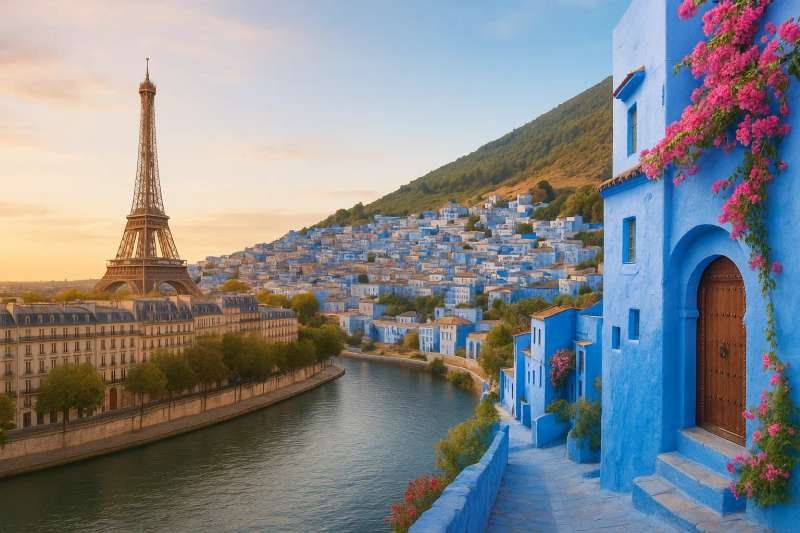
Three to five days in Morocco. Close enough to add, substantial enough to remember.
Three days works if someone else has done the arranging. The houses we book are restoration projects that took their owners years, and you get to sleep in one rather than queue to look at it. Mornings go to a family kitchen or an artisan's workshop. The Atlas begins an hour out of Marrakech, where villages sit on slopes that look unfarmable and have been farmed for centuries.
The logistics are ours: private guides, transfers timed to your flights, and accommodation chosen for where it sits as much as for what it looks like. It takes most independent travelers several weeks of research to assemble the same three days.
What You'll Experience
Medina Workshops
Potters throwing on kick wheels; metalworkers hammering patterns they have never seen written down. Some of the techniques are unchanged since the Almohad dynasty. You stand inside the workshop while the work goes on.
Mountain Villages
Berber valleys where the fields are cut into the slope in terraces because there is no flat ground to use. You walk them with a guide who can explain how the water gets shared between households. Lunch is usually in somebody's house.
Cooking Traditions
A morning in a home kitchen with a family who cook these dishes anyway, whether or not you are there. The couscous is rolled by hand, grain by grain, at the table you are sitting at. You will be given a job.
Cultural Immersion
Guides who have bought from the same spice stall for decades and can get you past the front room of a workshop. The introductions come out of those relationships, and none of them is paid for.
The Journey Itself
Three days is the floor. Most people book four or five once they see what fits inside them. Past five you are not extending a European trip any more; you are on a Morocco trip that happens to start in Europe, and that wants planning of its own.
Each detour is drawn up from scratch. The frames below stay much the same; the contents move with your dates and with what you want out of them.
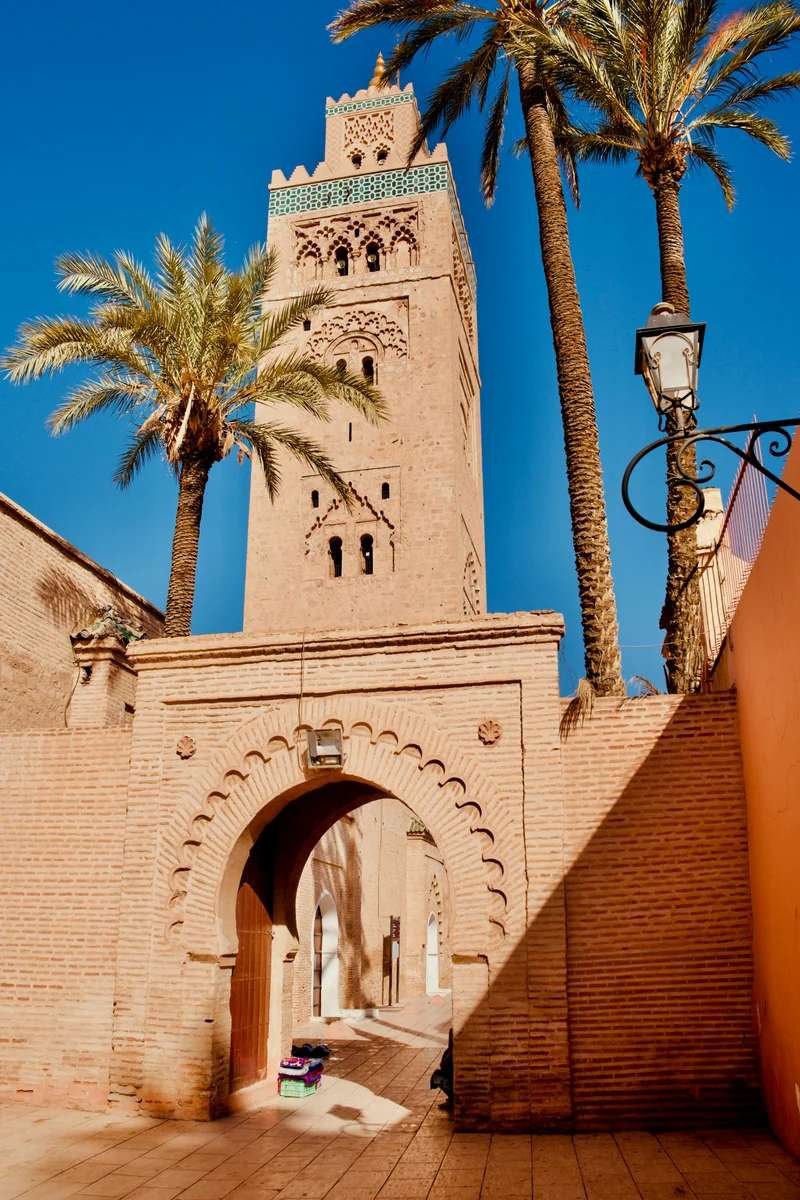
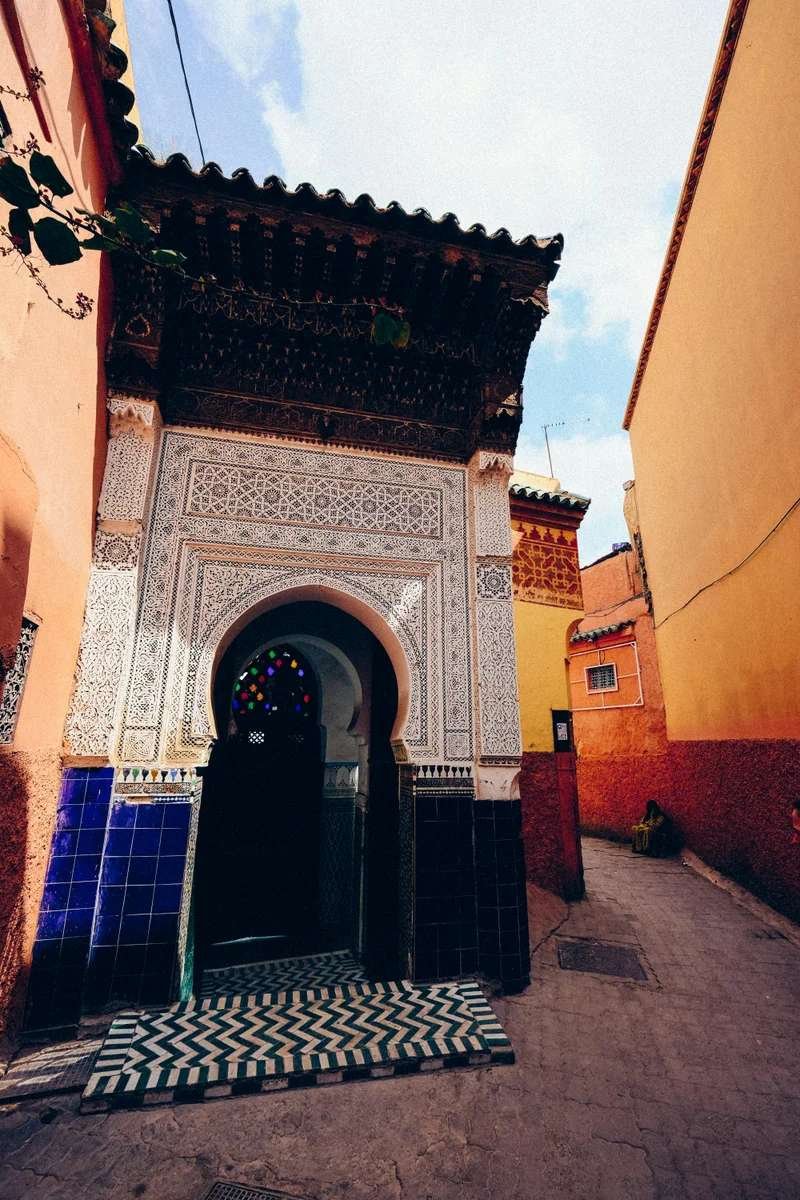
The Koutoubia, from the palmsThe road into the foothillsThe Blue Pearl
Theme: Essential Morocco introduction between European cities
Best for: European travelers adding Morocco between cities, first-time visitors seeking essential highlights
Pace: Unhurried, with one afternoon left deliberately open
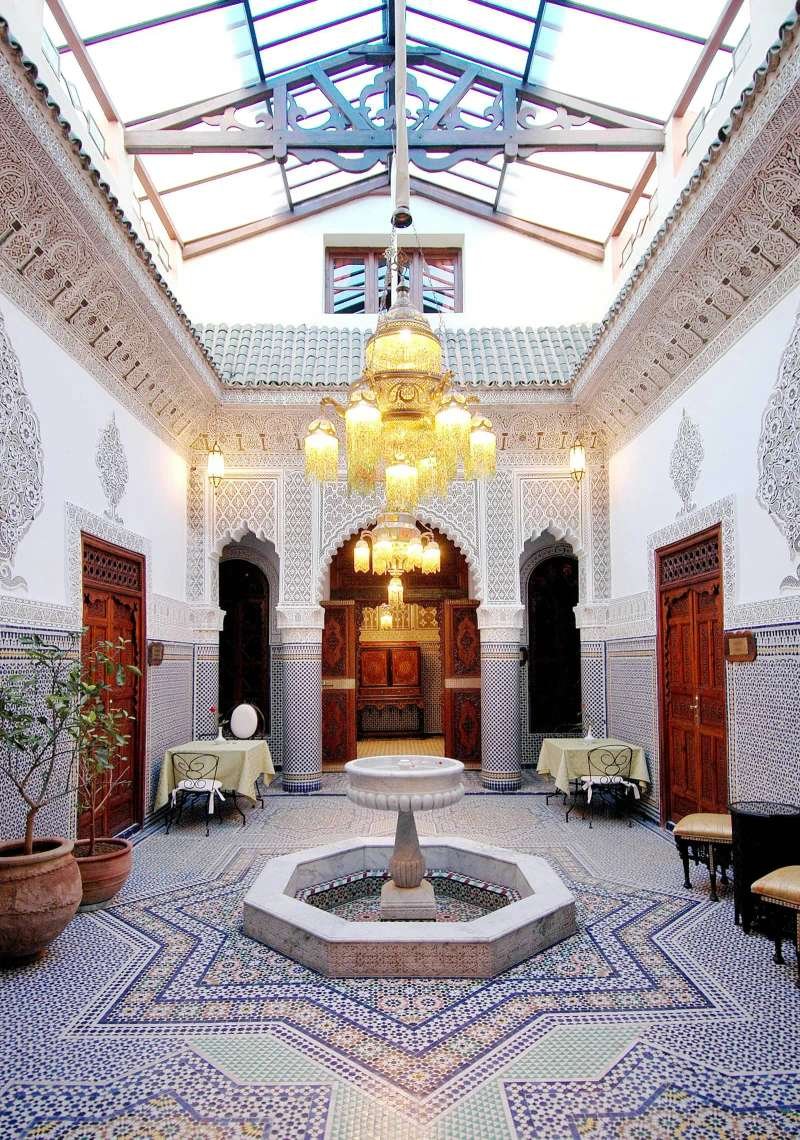
Your flight from Barcelona, Paris, or Madrid typically arrives midday. Private transfer to your riad in the medina: a restored eighteenth-century residence with carved cedar ceilings, courtyard fountain, private rooftop terrace.
The afternoon is yours. Sleep off the flight, or walk the few streets around the house. The riad manager will orient you and answer the navigation questions everybody asks on the first day.
Dinner this evening on your private terrace. The riad's chef prepares a traditional meal: seven salads (no two of them cooked the same way), followed by tagine that's been cooking slowly since morning, hand-rolled couscous, seasonal fruit. The meal unfolds over three hours.
Accommodation: Restored 18th-century riad with courtyard fountain and private rooftop terrace.
Day 2 Marrakech with Context
Breakfast when you choose. Msemen (layered flatbread), amlou (argan almond paste), local honey, fresh bread, yogurt, fruit, coffee or mint tea.
Your guide meets you mid-morning. A historian by training, raised in Marrakech, equally fluent in the medina's history and in what it is doing this week. The morning takes in the obvious sites (Koutoubia Mosque, Bahia Palace, the souks) and the less obvious places that explain how the city works.
You meet artisans the guide knows personally. The spice merchant whose family has occupied the same stall for four generations, who will explain how ras el hanout changes from region to region. The metalworker using his grandfather's tools. Your guide has known both of them for years.
Lunch at a small restaurant in the medina. No menu. The chef cooks what's excellent today from this morning's market. The meal might be tanjia (lamb slow-cooked overnight in sealed clay pots), exceptional salads, fresh bread, mint tea. Simple presentation, profound technique.
The afternoon offers choices: visit Jardin Majorelle for its botanical collection and color, experience a traditional hammam, explore the mellah (historic Jewish quarter), or return to your riad for quiet time.
Dinner at a restaurant where the chef takes Moroccan techniques seriously: either contemporary interpretations or classical preparations done at the highest level.
Day 3 Atlas Mountains, Then Departure
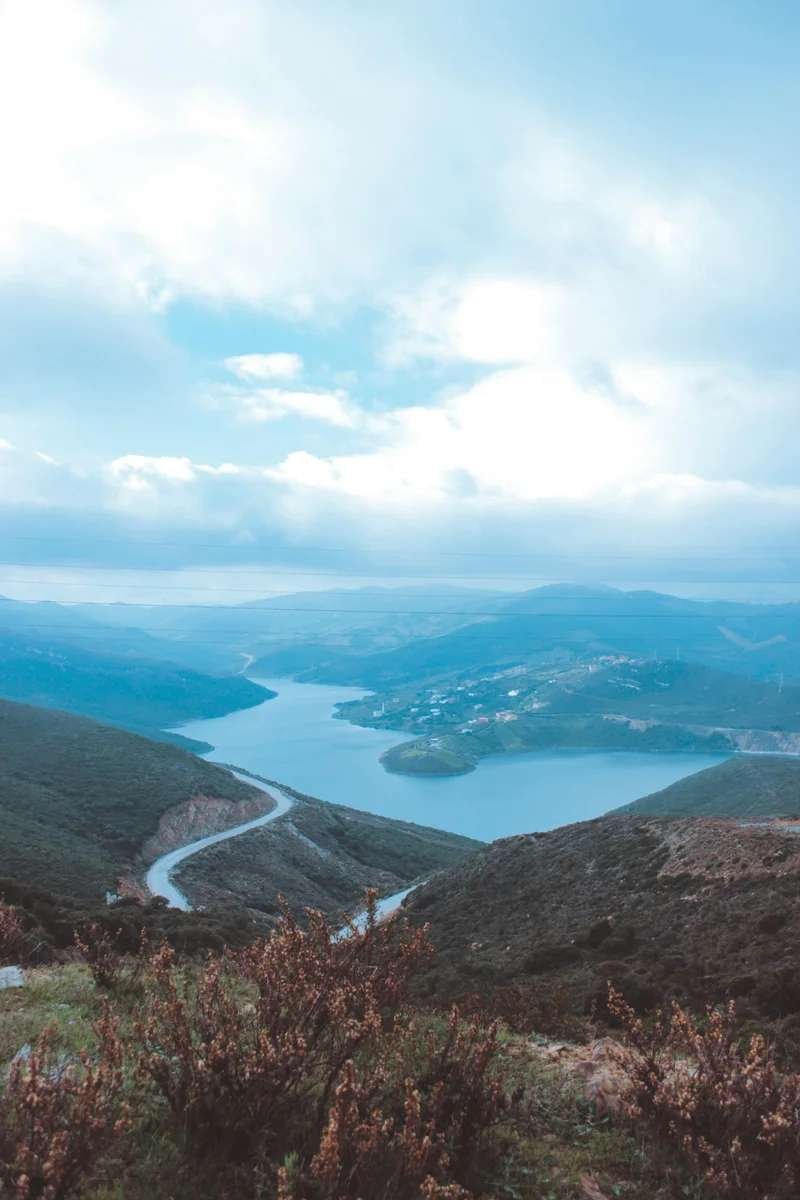
Early departure into the High Atlas. Two hours of climbing, through valleys where the villages sit up on the rock and every piece of flat ground has been given over to crops.
Lunch is in a family home. We arranged it; it is still their house, their kitchen and their afternoon. The grandmother bakes bread in an outdoor clay oven. Her daughter prepares tagine using vegetables from their garden and lamb from farms nearby. You are put to work on the dough, and told why the same tagine is cooked differently up here than it is on the plain.
You eat on a terrace above the valley. Fresh bread, the tagine, salads, mint tea with mint cut from the garden, fruit, walnuts off their own trees. Through your guide, the grandmother explains what altitude does to cooking times.
Return to Marrakech late afternoon for your evening flight back to Europe, or remain one more night if your timing allows.
This Includes:
Two nights in restored medina riad
All breakfasts and two dinners
Private driver throughout
Private historian guide in Marrakech
Mountain family cooking experience with lunch
Airport transfers
24/7 support
Doesn't Include:
International flights
One dinner (left flexible)
Beverages
Travel insurance
Personal purchases
Theme: Extended journey with Atlas Mountain overnight
Best for: Anyone who would sooner sleep in the mountains than drive up and back in a day
Pace: Relaxed, with a full night and morning in the mountains
Your flight from Barcelona, Paris, or Madrid typically arrives midday. Private transfer to your riad in the medina: an eighteenth-century house built around a courtyard fountain, with carved cedar ceilings and a roof terrace of your own. On a clear afternoon you can see the Atlas from it, across the terra-cotta.
The afternoon has nothing in it. Sleep if the flight has caught up with you, or walk the surrounding lanes, which are residential and get on with their day whether or not visitors are in them. The riad manager will take you through the map and the handful of turnings worth remembering.
Dinner on your terrace, with the evening call to prayer going up around you. Seven salads, a tagine that has been on since morning, hand-rolled couscous steamed three times over the broth, and fruit. Three hours, start to finish.
Accommodation: Restored 18th-century riad with courtyard fountain and private rooftop terrace.
Day 2 Marrakech with Context
Breakfast whenever you come down. Msemen, amlou, honey from Atlas hives, warm bread, yogurt, fruit, and mint tea poured from a height that is showing off slightly.
Your guide arrives mid-morning: a historian by training, raised here. The morning covers what you would expect it to (Koutoubia, the Bahia Palace, the souks) and a good deal you would not, because the aim of a first morning is orientation.
You are then taken to people your guide knows personally. The spice merchant whose family has held the same stall for four generations, who will tell you exactly why his ras el hanout is not his neighbor's. The metalworker still working with his grandfather's tools.
Lunch at a small restaurant with no menu. The chef cooks whatever came back from the market that morning. If you are lucky it is tanjia: lamb sealed in a clay pot and left overnight in the ashes of the hammam furnace. Plain plates, serious cooking.
Then the afternoon is open. Jardin Majorelle for the cactuses and that blue, a hammam that will take the flight out of your shoulders, the quiet streets and synagogues of the mellah, or your own roof terrace.
Dinner somewhere the kitchen takes the tradition seriously, whether that means a modern reading of it or the classical version done properly.
Accommodation: Restored 18th-century riad with courtyard fountain and private rooftop terrace.
Day 3 Mountain Immersion
Early departure into the High Atlas. The road climbs in switchbacks past terraced farms and villages built into the rock itself. Two hours from the city gate, the landscape has changed completely.
Lunch is in a family home. Bread out of the outdoor clay oven, tagine made with whatever is in the garden, lamb from farms you can see across the valley. Olive oil off their own trees, mint cut five minutes before it reaches the glass, walnuts the children crack for you. You will be handed the dough.
The difference on this itinerary is that you do not drive back down. You carry on to a mountain kasbah: a restored fortress house with stone walls thick enough to hold the temperature and a fire lit against the evening. Dinner is lamb from an earth oven, mountain vegetables that never make it to the plain, bread baked that day.
Then the noise stops. There is no traffic within earshot and nothing lit up in the valley below. The stars come out in numbers that city people find slightly unnerving.
Accommodation: Mountain kasbah with valley views, stone architecture, fireplaces.
Day 4 Return and Departure
A morning walk through the walnut groves, on paths that pass through the villages above the valley. Women wave from doorways; children will try their English on you. Your guide can explain the water rights, which were settled between these households centuries ago and still govern who irrigates when.
Return to Marrakech by early afternoon. There is time to go back to a craftsman whose work you liked, to buy something now that you know what you are looking at, and to have one more mint tea on the terrace.
Departure on the evening of day four or the morning of day five, depending on your flight home.
This Includes:
Three nights accommodation (riad + mountain kasbah)
All breakfasts and three dinners
Private driver throughout
Private historian guide in Marrakech
Mountain family cooking experience
Airport transfers
24/7 support
Doesn't Include:
International flights
One dinner (left flexible)
Beverages
Travel insurance
Personal purchases
Theme: Hollywood's Morocco: film locations and dramatic landscapes
Best for: Film enthusiasts, photographers, and anyone curious how Ouarzazate became a back lot
Pace: Two long drives over the Atlas, with unhurried days between them
Arrival in Marrakech. Private transfer to your riad, a palace house with carved plasterwork around the courtyard and a roof terrace looking over the medina toward the Atlas. Once the front door shuts, the street noise is replaced by the fountain.
Nothing is scheduled for the afternoon. Sleep in the silk-draped rooms, or walk the lanes immediately around you. The staff will deal with the bookings and the questions without being asked twice.
Dinner on your terrace. The riad's chef sends up seven salads first, which is the course most people underestimate, then the tagine, then hand-rolled couscous steamed over broth, then something sweet.
Breakfast, then out of the city and over the High Atlas by the Tizi n'Tichka pass, the highest road in the country. The light up here is why cinematographers keep coming back, and the switchbacks are why the drive takes longer than the map suggests.
The landscape changes as you come down the southern side, Mediterranean to Saharan in the space of an afternoon. Argania forest gives way to date palms; the buildings go from red earth to kasbahs, fortified and also made of earth, the same color as the hillside behind them.
Ait Benhaddou before midday. A UNESCO World Heritage ksar, and a fortified village that people still live in: families remain inside the earthen walls. Lawrence of Arabia, Gladiator, Game of Thrones and The Mummy have all used it, variously, as Rome, as Jerusalem and as Yunkai.
Your guide grew up in Ouarzazate and knows the families inside. What Hollywood chose here was a living building tradition, not a reconstruction of one: rammed earth, geometric decoration, ventilation placed where it does the most work. Several centuries of accumulated knowledge about building in a climate that punishes mistakes.
Lunch inside the ksar or on a terrace looking at it, whichever you prefer. Tagine, cooked the way it was cooked here when the caravans were still stopping.
Continue to Ouarzazate. You stay either in a restored kasbah, where the earthen walls hold the temperature steady without much help, or in a hotel that borrows the vernacular without pastiching it. Both have terraces facing the Atlas and a pool.
Dinner at the hotel, or at a restaurant cooking the southern repertoire: dates in the savory dishes, preserved lemon, and the spices that came up the caravan routes.
Accommodation: Restored kasbah or luxury hotel with Atlas views, traditional architecture, refined interiors.
Day 3 Cinematic Landscapes and Film Studios
A morning spent on Ouarzazate's other trade. At the Atlas Film Studios, Kingdom of Heaven built its Jerusalem, Alexander its Babylon, and The Jewel of the Nile whole villages. Walking the sets is an education in perspective: what reads as grandeur on screen turns out to be three walls and a well-chosen camera position.
The land around the studios is the real reason directors come back. The air is dry enough to hold detail at distances that would be haze anywhere humid, and the gorges and plains supply a scale nobody has to build.
Then Taourirt Kasbah, which once controlled a share of the trans-Saharan trade and now shows how the south's ruling families lived. Narrow passages, decorated chambers, and a roof with the valley laid out below it.
Lunch at the hotel or taken with you. Nothing is fixed after that: the rock formations of the Dades Valley, a carpet cooperative, or the pool and the terrace and nothing else.
Last evening in this landscape. Dinner is regional and does not travel north: Berber, Arab and Saharan cooking in one kitchen.
Day 4 Return to Marrakech, Departure
Back to Marrakech over the High Atlas, on a different road where the timing allows it. Your driver will stop at viewpoints that are not marked on anything, and at a roadside café where the coffee is better than the building suggests.
Marrakech by early afternoon. Time for a last walk in the medina, or for buying the thing you decided against on the first day.
Evening departure to Europe, or extend your stay another night if timing allows.
Accommodation: Optional: Additional night in Marrakech if flight schedule requires.
This Includes:
Three nights accommodation (riad + kasbah/hotel)
All breakfasts and three dinners
Private driver throughout
Private guide for Ait Benhaddou and film studios
All entrance fees
Airport transfers
24/7 support
Doesn't Include:
International flights
One dinner (left flexible)
Beverages
Travel insurance
Personal purchases
Theme: Marrakech and Fes, the country's intellectual capital
Best for: Anyone who wants the medieval city as well as the imperial one
Your flight from Barcelona, Paris, or Madrid typically arrives midday. Private transfer to your riad in the Marrakech medina, an eighteenth-century house restored over several years: cedar ceilings, a fountain in the courtyard, a roof terrace with the Atlas behind it.
Nothing is planned for the rest of the day. The lanes immediately around the riad are residential and will not try to sell you anything. Your riad manager handles the orientation and whatever needs booking.
Dinner on your terrace, cooked in the house. Seven salads, tagine, hand-rolled couscous steamed three times over the broth, fruit. It runs to about three hours, which is normal here.
Accommodation: Restored 18th-century riad with courtyard fountain and private rooftop terrace.
Day 2 Marrakech with Context
Breakfast when you choose: msemen, amlou, honey from Atlas hives, bread still warm, yogurt, fruit, coffee or mint tea.
Your guide, a historian raised in Marrakech, comes at mid-morning. Koutoubia, the Bahia Palace, the souks, and then the streets in between, which are where the city explains itself.
Two introductions worth having: the spice merchant whose family has held the same stall for four generations, and the metalworker using his grandfather's tools. Neither introduction is arranged in advance. Your guide simply walks in.
Lunch at a small restaurant with no menu, cooking whatever the market gave up that morning. Perhaps tanjia, the lamb sealed in a clay pot and left overnight in the ashes.
Then choose: Jardin Majorelle, a hammam, the mellah's quiet streets and its synagogues, or the roof terrace.
Dinner where the kitchen is serious about Moroccan technique, in the modern register or the classical one.
Accommodation: Restored 18th-century riad with courtyard fountain and private rooftop terrace.
Day 3 Transfer to Fes
The drive to Fes takes six hours by road. The country changes color as you go north: red earth gives way to green hills, date palms to olive groves. The towns in between are on nobody's itinerary, which is the argument for looking out of the window.
There are stops worth making. A women's cooperative pressing argan oil on stone mills of a design that has not changed in centuries; a viewpoint over the Middle Atlas with cedar forest running to the horizon; a roadside café where the coffee comes thick and sweet and nobody else is a tourist.
The land keeps changing. What grows where depends on rainfall and altitude, and both of them move all day. By the time Fes shows up ahead of you, the vegetation is nothing like what you left.
Arrival late afternoon. The riad in Fes is a different animal from the one in Marrakech: older, quieter, more worked. The courtyard zellige spans dynasties; the cedar ceiling was carved by a method that has not changed in four centuries. You're staying inside what you'll study tomorrow.
Dinner at the riad. Fassi cooking is more layered and more worked than the Marrakchi version; the city has been Morocco's intellectual capital for twelve centuries and it shows at the table.
Accommodation: Refined riad in Fes medina, rooftop terrace, historical restoration.
Day 4 Fes Exploration
Fes is where the country feels most continuous with its own past. The medina is among the largest car-free urban areas in the world: three hundred hectares that no vehicle can enter, with more than a hundred and fifty thousand people living inside them. It is a UNESCO World Heritage site that has never stopped being a city.
Your guide was born here, which counts for something in a medina where people navigate by landmarks an outsider cannot see. The leather tanneries, where the dye pits have occupied the same ground since the eleventh century; you smell them well before you reach the terrace. Woodworkers cutting geometric patterns without drawing them first. The Quaraouiyine Mosque, founded in 859 CE and still a center of Islamic scholarship.
You meet the people behind the work. A zellige tile master who can name the proportions of a twelve-point star without measuring. A calligrapher whose family has written Korans for six generations.
Lunch is cooked with a family. The dish is b'stilla, probably the most demanding thing in the Moroccan repertoire: forty-odd layers of hand-pulled warqa pastry and a filling that is savory and sweet at the same time. You will not master it in an afternoon. You will understand why Fes takes food seriously, and you will eat what you helped make, at their table.
The afternoon: back into the souks now that you can tell what you are looking at, or a workshop you want to see a second time, or the riad before your last dinner in Morocco.
Accommodation: Refined riad in Fes medina, rooftop terrace, historical restoration.
Day 5 Departure
No rush. Breakfast in the courtyard while the medina starts up around you: shutters going, deliveries arriving by mule, the first calls of the day.
If the flight allows, there is time for a last walk through lanes that no longer feel like a maze, or a second visit to an artisan who will remember you from yesterday, or mint tea on the terrace.
Private transfer to Fes airport, out through the medina gates. Five days is enough to have seen two versions of the country: Marrakech loud and imperial, Fes quiet and scholarly. They do not resemble each other much.
This Includes:
Four nights accommodation (Marrakech riad + Fes riad)
All breakfasts and four dinners
Private driver throughout
Private historian guides in both cities
Family cooking class in Fes
All entrance fees
Airport transfers
24/7 support
Doesn't Include:
International flights
Lunches
Beverages
Travel insurance
Personal purchases
Theme: Chefchaouen's blue medina and mountain tranquility
Best for: Photographers, and anyone who wants a quiet mountain town at the end of the drive
Pace: Relaxed, built around two long drives and a lot of walking
Arrival in Marrakech. Private transfer to your riad: a restored palace, carved cedar, a fountain in the courtyard, a roof terrace with the Atlas on the skyline.
The afternoon is unstructured. Rest, walk the streets immediately around you, and give the medina time to stop sounding loud. The staff will take care of the arrangements.
Dinner on your private terrace. Seven salads, a slow-cooked tagine, hand-rolled couscous, then dessert. Allow three hours.
Early departure north toward the Rif. Six hours on the road, and the country turns Mediterranean as you go: more rain, greener fields, a different quality of light on the buildings.
Stop in Rabat. The capital is a calmer proposition than either Marrakech or Fes: wide boulevards, the Atlantic at the end of them, French colonial planning laid over a Moroccan city. The Hassan Tower and the Mausoleum of Mohammed V are worth the hour. White Italian marble, zellige tilework, carved cedar, all of it cut by hand within living memory.
Lunch in Rabat, which does a more polished version of Moroccan food than the south does.
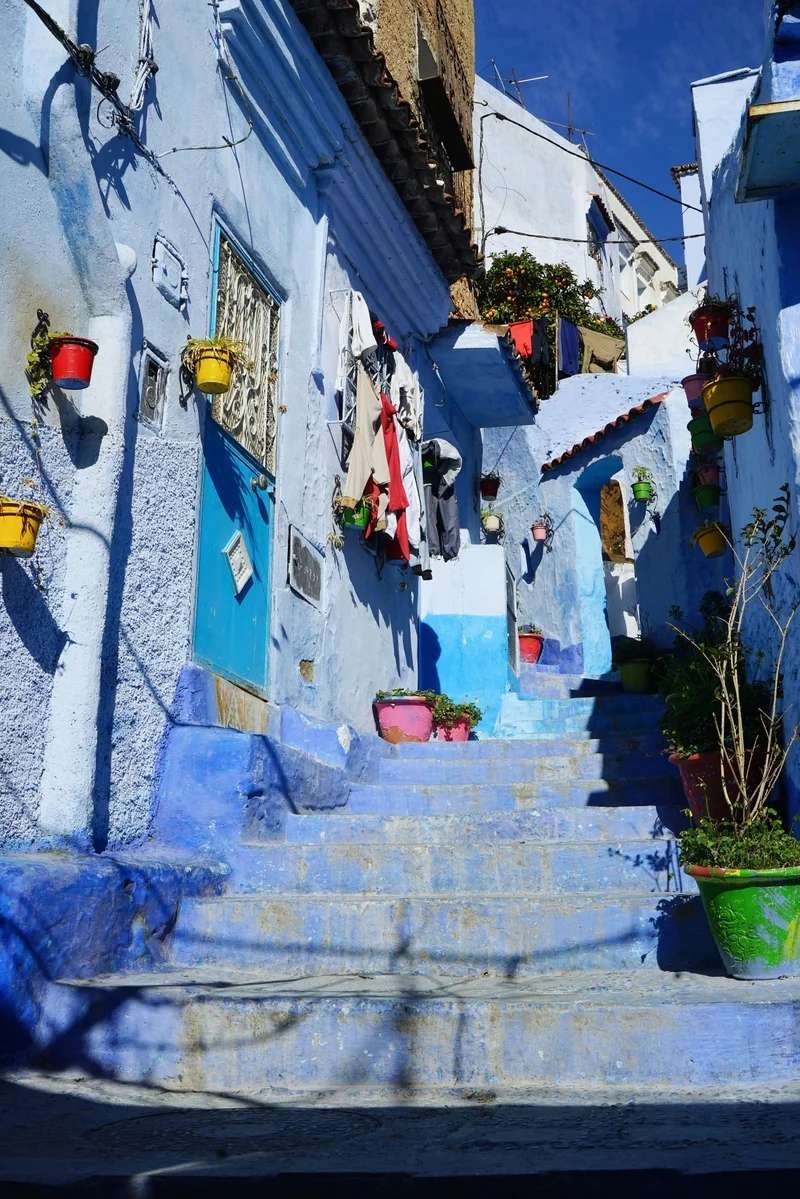
Continue to Chefchaouen, arriving late afternoon. The blue is not one blue: it runs from powder to ultramarine depending on the wall and the hour. The architecture is Andalusian. The air is mountain air, which after a day on the plain is the first thing you notice.
You stay in a traditional riad whose owners put in the plumbing without stripping out the house. Blue-washed interiors, mountain views, and a roof terrace that explains the photographers.
Accommodation: Traditional riad in Chefchaouen medina, blue-washed interiors, mountain views, rooftop terrace.
Day 3 Chefchaouen's Blue Medina
A morning in Chefchaouen with a guide who grew up in it, which is the only way to get the history as well as the photographs.
The blue everyone photographs is credited to Jewish refugees from the Spanish Inquisition who settled here in the 1400s and brought both Andalusian building traditions and the practice of blue-washing walls. Most of those families left in the 1950s. The Muslim households who took over the houses have kept the paint up ever since.
It is a working neighborhood. People live in the blue houses; the workshops turn out leather goods, woven textiles and clothes that are worn locally. Your guide will take you to the weaver whose family has run the same workshop for five generations, and to a leather worker taught by his grandfather.
Lunch is Rif mountain cooking, which is not southern cooking. Goat cheese turns up here, which it does almost nowhere else in Morocco, and the seasoning leans on wild herbs.
The afternoon is for wandering, which is what this medina is for; the blue changes every time the light moves. Or walk up to the Spanish Mosque above the town, which pays for itself at sunset. Or stay on the roof.
Dinner at the riad, arranged in advance, or at one of the places local families eat, where the menu is whatever the market had that day.
Day 4 Mountain Landscapes, Return South
Morning departure from Chefchaouen, six hours south. You come out of the Rif, cross the Middle Atlas and drop onto the plain before Marrakech.
There are stops on this road too: viewpoints over valleys still farmed the old way, a women's cooperative pressing argan oil on stone mills, and cafés where the clientele is local and the coach park is empty.
Marrakech by late afternoon. Back to your first riad, or into a different one if you would sooner see two.
Last evening in Morocco. Dinner somewhere the kitchen is serious, in whichever register you have come to prefer.
Accommodation: Riad in Marrakech medina, courtyard architecture, rooftop terrace.
Day 5 Departure
Morning flight to Europe, or a few hours in Marrakech first if the schedule allows: shopping, with the benefit of four days' education, and a last mint tea on the terrace. Transfer to the airport.
This Includes:
Four nights accommodation (Marrakech + Chefchaouen riads)
All breakfasts and four dinners
Private driver throughout
Private guides in Marrakech and Chefchaouen
Rabat historical visit
All entrance fees
Airport transfers
24/7 support
Doesn't Include:
International flights
Lunches
Beverages
Travel insurance
Personal purchases
Theme: Erg Chebbi, and the two days of driving it takes to get there
Best for: Photographers, and anyone whose main reason for coming is the dunes themselves
Pace: Two long driving days, and two nights in the erg
Early departure from Marrakech, eastward toward the Sahara. It is a long way, and we do not try to compress it. The driving is a real part of this itinerary, not an overhead.
Cross the High Atlas by the Tizi n'Tichka pass. One drive over it explains why the south stayed cut off from the north for centuries. The Berber villages sit on gradients that would defeat a tractor, and the terracing is centuries of accumulated practice.
Stop at Ait Benhaddou, the UNESCO ksar you have seen in Lawrence of Arabia, Gladiator and Game of Thrones without necessarily knowing where it was. Families still live inside it, and the earth walls are still repaired the way earth walls have to be.
Continue through Ouarzazate into the Dades Valley. The sediment here has been folded into shapes that look designed; the rock changes color as the sun moves across it; the kasbahs are built into the cliff faces out of the same material.
You stay in a kasbah hotel: earthen architecture, proper beds, terraces over the valley. The rooms stay cool because the walls are earth and very thick. Dinner is regional, tagine with valley vegetables and bread from a traditional oven.
Accommodation: Kasbah hotel in Dades Valley, traditional architecture, valley views, refined interiors.
Day 2 Through Todra Gorge to the Sahara
Morning departure through country that gets drier by the hour. Then Todra Gorge: limestone walls going up three hundred meters, narrowing to forty meters across at points, the light changing character as the sun crosses the gap.
The road follows old caravan routes. The settlements along it existed to serve the trans-Saharan trade: water, protection and supplies for merchants moving gold, salt and slaves between the Mediterranean and sub-Saharan Africa. A good deal of Morocco's historic wealth came out of that traffic.
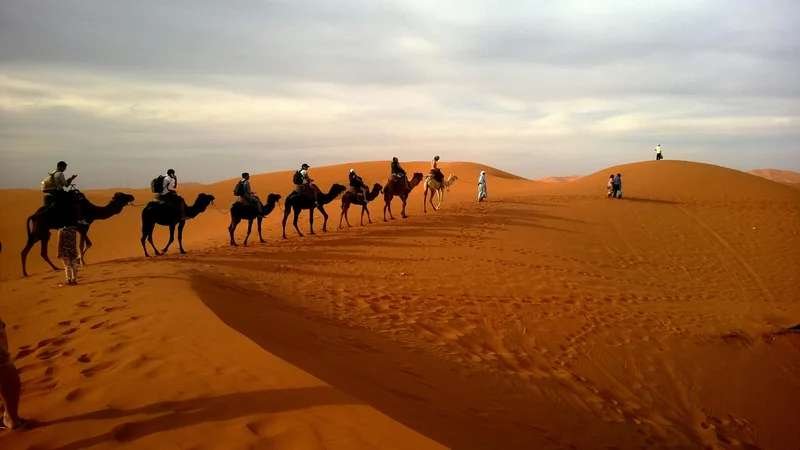
Merzouga in the late afternoon. The desert arrives in stages: a few dunes, then more of them, then Erg Chebbi. These are landforms, not beach features: sand exceeding two hundred meters, apparently solid, and rearranged by the wind every night.
Transfer to camp by camel or 4x4, depending on the hour and on how you feel about camels. The camp is an odd sort of luxury: Berber-style tents with proper beds, en-suite bathrooms and good furniture, pitched somewhere with no electric light within reach of it. The Milky Way has depth here. The quiet is the thing most guests mention first.
Sunset from the dunes. The sand takes on color it does not have at any other hour, and the shadows between the crests get very long. Photographs of it disappoint, because they cannot hold the scale; the desert runs on for thousands of kilometers past anything you can see from the top.
Dinner at camp: tagine cooked in an earth oven, salads, bread, mint tea. Then drumming round the fire if the staff are in the mood, or the fire and nothing else.
Accommodation: Luxury desert camp with en-suite tents, traditional furnishings, and no light pollution at all.
Day 3 Sahara Immersion
Sunrise over the dunes, which runs the previous evening backwards: navy, then violet, then rose, then gold. It is not difficult to see why Sufis came out here for solitude. Nothing in this landscape competes for your attention.
After breakfast the day is yours. Most guests take a guide and walk out into the erg, which is worth doing if only to learn how a Berber guide navigates a place whose landmarks move. Some stay at camp and do nothing at all. There are also villages nearby where families still keep to a partly nomadic life.
Lunch at camp, or packed if you are out. The afternoon heat settles the question of what to do next: shade, a book, or sleep.
Late afternoon, back onto the dunes. Sandboarding if you want to move, cameras if you want the light, or a seat on a crest while the wind redraws the surface in front of you.
Last evening at the camp. Dinner, and then as much conversation as anybody feels like having.
Day 4 Return West
Sunrise, breakfast, then west again on the road you came in on. It looks different in this direction, and you have the context for it now.
Stop in Ouarzazate. The Atlas Film Studios if you want to know why directors keep coming here, or Taourirt Kasbah if you would sooner see how the south's ruling families lived.
Continue toward Marrakech, over the Atlas again, arriving early evening. A riad bathroom after several nights in the desert is a particular kind of pleasure.
Accommodation: Riad in Marrakech medina, courtyard architecture, rooftop terrace.
Day 5 Departure
Morning in Marrakech: a last walk, a last purchase, or nothing at all. Transfer to the airport for the flight back to Europe.
This Includes:
Four nights accommodation (riad + desert camp + kasbah)
All breakfasts and four dinners
Private driver throughout
Desert guide and camel trek
Two nights luxury desert camp
All entrance fees
Airport transfers
24/7 support
Doesn't Include:
International flights
Lunches
Beverages
Travel insurance
Personal purchases
What You'll Experience
Three to five days, and eight of the things they get spent on.
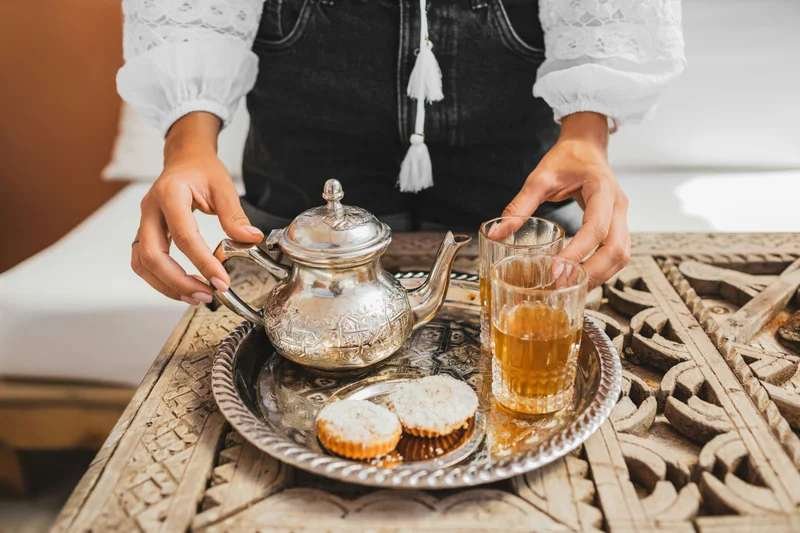
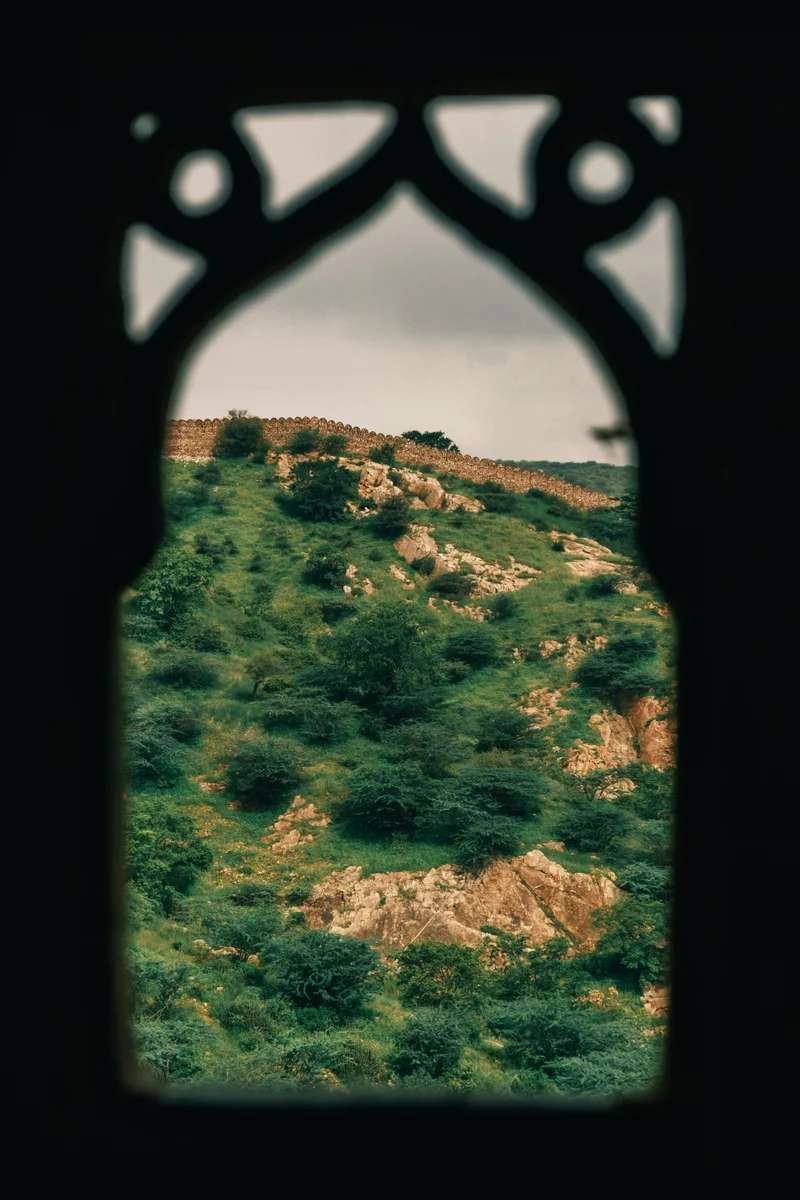
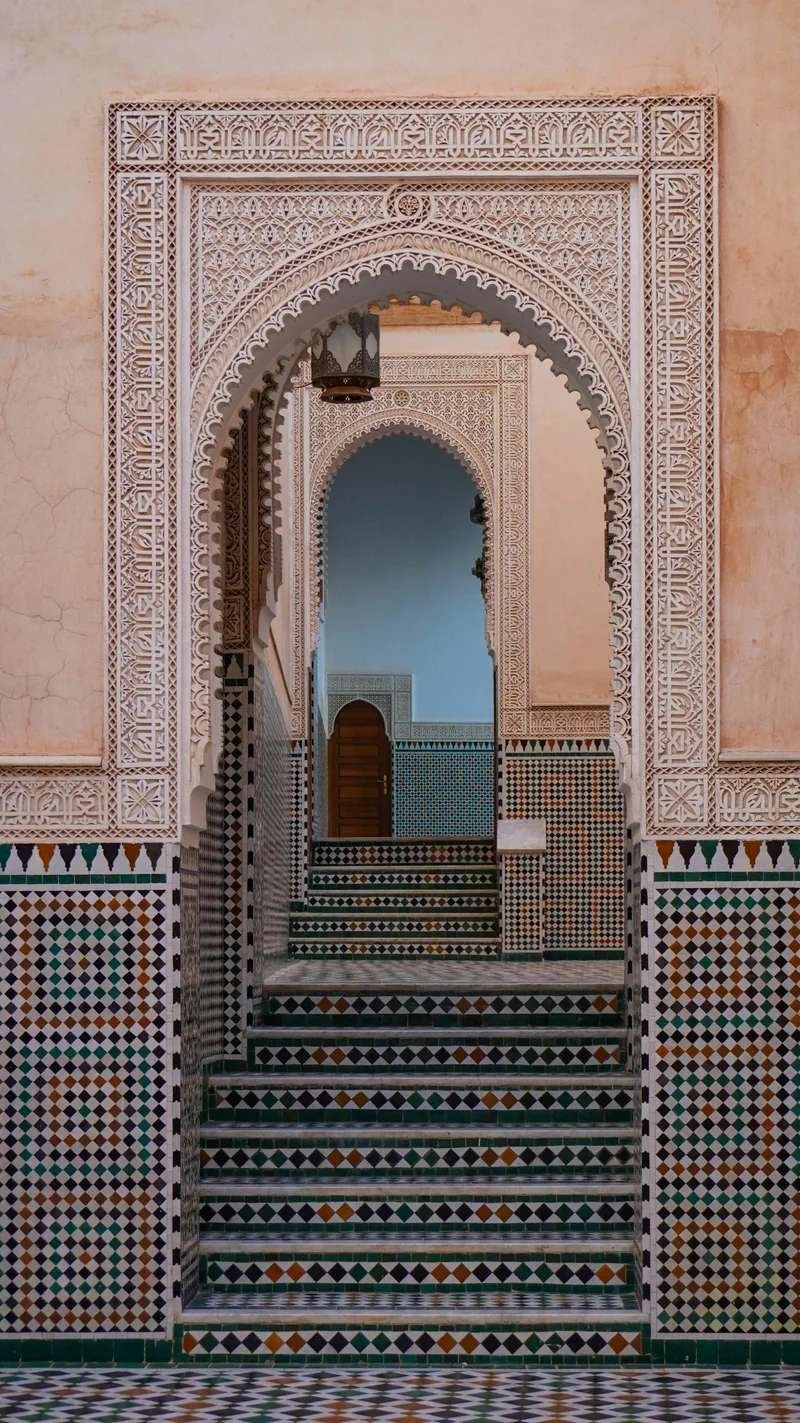
Behind Unmarked DoorsMint tea, poured properlyThe Atlas, through a window
Medina Immersion
Alleyways that have been trading for centuries and have not stopped. Your guide knows which unmarked door is the leather workshop worth seeing, and which family has held which stall since their great-grandfather. The introductions come out of years of buying from these people.
Cooking in Family Homes
A morning in a home kitchen. Mother and daughter cook the tagine their grandmother taught them; none of it is written down anywhere. You knead, you get corrected, and you learn that the timing matters more than the quantities. Then you eat it with them.
Atlas Mountains
An hour from Marrakech: cedar forest, Berber villages built onto the cliffside, air that smells of something other than a city. Half-day excursions, with lunch in a village where the terraces are still worked as they have been for centuries.
Artisan Workshops
Gold leaf laid onto a ceiling by a method four centuries old. Zellige cutters, tanners, brass workers. These are working studios with orders to fill; you are let in because your guide asked.
Rooftop Evenings
Mint tea and dates while the call to prayer goes up across the roofs. The late light does something to the mud-brick that midday light does not.
Hammam Experience
The neighborhood hammam, where people go once a week because it is how you get clean. Hot rooms, cold rinses, and a scrub more thorough than you were expecting. Nothing about it has been adapted for visitors.
Market Mornings
Fresh-squeezed orange juice, msemen off the griddle, coffee strong enough to get you through a morning in the souks. Markets that haven't changed layout in eight centuries. The vendors know your guide by name.
Unhurried Meals
Meals that take three hours because the courses arrive one at a time and nobody is trying to turn the table. This is normal here. It takes most visitors a day to stop checking the time.
Where You Sleep on a Short Trip
A short trip is not a reason to book badly. We choose properties for how fast they put you inside the country: riads where somebody agonized over every tile, kasbahs where the terrace is the reason you booked, mountain lodges where three mornings do the work of a week.
Location and atmosphere come before amenities. On a three-day trip the pool is not the part you will remember, and these houses start working on you at the front door.
A Marrakech riad, mid-morningCourtyard MorningsThe road up to the lodges
Marrakech: Medina Riads
Deep in the medina, ten minutes' walk from Jemaa el-Fna and quiet enough that you would not know the square was there. The doors are unmarked. Behind them: a courtyard with a fountain, a roof terrace with the Atlas on it, and orange juice at breakfast that was fruit an hour earlier.
What defines them:
Six to twelve rooms, which is the point of them. Staff who know your name by the second day. A roof terrace for mint tea at the end of the afternoon. The architecture is centuries old and the furniture does not pretend to be. You'll sleep under a carved cedar ceiling and wake to the call to prayer.
Perfect for detours because:
Location matters more on short trips. These riads sit deep in the medina where you're already experiencing Morocco the moment you step outside. No wasted time commuting to "the real" city. You're in it. And when you need quiet after market chaos, you retreat thirty seconds to your courtyard.
Fes: Medina & Ville Nouvelle
Fes gives you two options. Inside the medina, riads on the same alleyways artisans have used for 800 years. In the Ville Nouvelle, boutique hotels with modern plumbing and terraces looking back at the old city. For a first visit we would put you in the medina and accept the walk; the Ville Nouvelle earns its place on a second trip, or if stairs are a problem.
Medina riads:
Centuries-old townhouses restored with reverence. Zellige tilework that took artisans months. Courtyards centered around fountains. Breakfast arrives on silver trays: fresh bread from the communal oven, preserved lemons made by the owner's mother, olives from family groves. Getting here requires walking medina alleys with a guide. Leaving requires the same. Worth it.
Ville Nouvelle hotels:
Modern properties that borrow from Moroccan design without copying it. Easy taxi access. Rooftop restaurants. Proper showers and reliable WiFi. You spend the day in the medina and come back to quiet. On a three-day trip built around sightseeing, this makes sense.
Atlas Mountains: Valley Lodges
If your detour includes mountain time, and it should, even for a single night, you stay in lodges where the view alone would justify the drive up. Stone and timber built into the hillside. Terraces over Berber villages. It is quiet in a way that takes most people a few hours to get used to.
What you'll find:
Eight to fifteen rooms, each with a mountain view that changes through the day. Meals served family-style from their own gardens and from valley farms. Wood-burning stoves for the cool evenings. Hiking trails leaving directly from the property if you want them. Hammocks if you don't.
The detour timing:
Even one night in the mountains resets you completely. Most detours include two nights here: arrive afternoon, full day exploring valleys, depart morning. It's not rushed. You get the rhythm: morning hikes, long lunches, afternoon reading, sunset from the terrace, dinner by the fire. By the second evening you're wondering why you booked such a short trip.
Desert: Luxury Camps (If Time Allows)
The Sahara sits six hours from Marrakech. On a three-day detour that is too far; you would spend the trip in a car. On five days it is possible and tight. We recommend it only if long drives do not bother you, or if the desert is the reason you are coming at all.
When it works:
Five days minimum. Fly into Marrakech, drive south via Ait Ben Haddou, one night in the luxury camp, return on a different road through the Dades Valley, last night in Marrakech. Ambitious, and doable if you take the driving as part of it.
The camps are good: proper beds, en-suite bathrooms, several courses at dinner, a fire and musicians afterwards. You arrive by camel at sunset and wake to tea brought to the tent. Nobody is camping in the scouting sense of the word.
But if you only have three days, skip it. The mountains give you the same "away from everything" feeling with one-hour drives instead of six.
What's Included
Everything listed below is in the price.
Accommodations
Riads and lodges we have inspected ourselves. Not the most expensive house in each city, but the best-run one. Restorations that kept the original architecture, and owners who take hospitality seriously.
Transportation
Private throughout. The same driver from arrival to departure, and every intercity transfer. You will not be sharing a vehicle with anybody.
Meals
All breakfasts, most lunches and dinners. A few meals are deliberately left open so you can wander off, or stay longer somewhere that turned out well. The included ones are proper meals.
Guides
Private specialists in each city. Historians, food people, and people who grew up in these streets and can answer a question that isn't in the script.
Activities
All market tours, cooking experiences, artisan visits, entrance fees, organized experiences. Nothing offered as "optional extra."
Support
24/7 availability throughout your time in Morocco. Direct phone number for your coordinator, who handles any needs or adjustments.
The Place Itself
The fastest way to understand Morocco is through what people make and how they make it.
Breakfast tables you cannot see the wood of: bread still warm from the neighborhood oven, preserves made in the house, orange juice from the vendor who has had the same corner for thirty years. Kitchens where a grandmother teaches what her own mother taught her. Workshops where the potter's wheel is still turned by foot.
This is the Morocco that exists behind the medina walls. Not created for travelers. Simply accessible to them, with the right introduction.
Accommodations as Cultural Experience
The riads we work with are restoration projects that ran for years. Eighteenth-century palaces where the zellige was relaid tile by tile and the cedar ceilings recut by craftsmen trained in the old methods. Courtyards with fountains that have been running for centuries. Roof terraces over a skyline the early photographs would still recognize.
Authentic Restoration
These are palaces, restored carefully and run by families who know what they are custodians of. None of them was built as a hotel.
The Experience
Waking to the fountain, breakfast in a courtyard open to the sky, tea on your own terrace in the evening. This is what these houses were designed for.
The Food Culture
Morocco's couscous traditions hold UNESCO Intangible Cultural Heritage status, shared across the Maghreb. The listing covers more than the dish: the technique, the regional variations, the hospitality it is served with, and the preservation methods that were worked out before anyone had a refrigerator.
Direct Experience
Dawn markets with a guide whose family has bought from these stalls for decades. Cooking classes in private homes, where what you are taught is what the family eats on an ordinary Tuesday. Meals that arrive over several hours, because that is the length of a meal here.
Traditional Methods
The couscous is hand-rolled grain by grain, which is simply how it is done. The preserved lemons were put up last season. The bread was baked this morning in a communal oven that has been in use for centuries.
Why It Matters
None of this is switched on for paying guests. Moroccan food culture still works this way in homes and in small restaurants, and what we arrange is access to it.
Practical Elements
Barcelona offers the most frequent service to Morocco: multiple daily flights, under 3 hours to Marrakech. Madrid and Paris follow closely. Lisbon, London, Rome, Amsterdam all maintain regular connections.
These are standard European-Morocco corridors, flown by national carriers and budget airlines alike. Nothing about the routing is exotic.
Most travelers put Morocco at one end of the European leg. First, and you get the biggest change of scene while you still have the energy for it. Last, and the trip finishes on something that resembles nothing before it.
Midway works logistically and costs more in flight coordination. We can arrange any sequence; the ends are simply tidier.
Morocco grants 90-day visa-free entry to most nationalities: EU, UK, US, Canada, Australia, New Zealand, Japan, South Korea, Singapore, among others.
This is separate from the Schengen system. Days spent in Morocco do not count against your Schengen allowance.
Check your own nationality if you are not sure. Most readers of this page will not need to arrange anything in advance.
Three-day journey: $1,500-2,000 per person
Four-day journey: $2,000-2,600 per person
Five-day journey: $2,600-3,200 per person
Pricing assumes two travelers. Solo travel incurs single supplements (typically 30-40% additional). Groups of 3-4 benefit from shared costs.
Included: All accommodations, transportation, guides, most meals, activities, entrance fees.
Not included: Flights to/from Europe (you arrange these with your European flights), selected meals left open for flexibility, beverages beyond meals, personal purchases.
The price you are quoted is the price. There is nothing to add on later, and nobody will try to sell you an upgrade in the car.
Initial conversation: We discuss your European trip structure, optimal timing for Morocco, accommodation preferences, any specific interests.
Proposal: Detailed itinerary specific to your dates and preferences. Full pricing breakdown.
Refinement: Adjust until it's correct.
Confirmation: 30% deposit secures dates and properties. 70% balance due 45 days before departure.
Preparation: Complete pre-departure information including packing guidance, cultural context, restaurant recommendations, emergency contacts.
Start this conversation 6-8 weeks before your European trip, and earlier for April or October, when demand is highest. We have put detours together on 3 weeks' notice; it works, but the choice of rooms narrows quickly.
Questions Worth Addressing
Because two days is a travel day and a half. Three gives you the medina, one day in the mountains, and enough meals to have an opinion about the food. Anything longer stops being a detour and becomes a Morocco trip, which we plan differently.
Yes, but then it is not a detour. Past five days people want the Sahara, or the coast, or one region in depth, and each of those wants an itinerary of its own instead of being compressed into a European add-on.
Skip it on a short trip. Casablanca is the country's commercial capital and reads like one. The Hassan II Mosque is worth a visit on its own terms, but with three days you will get more out of Marrakech or Fes.
Not difficult, but different: another language, another set of customs, another daily rhythm. The medinas are confusing to navigate on your first day, and vendors in the tourist streets will test your patience.
A private guide solves the first problem and most of the second. The riad solves the rest, because you can retreat into it. Most people find Morocco easier than they expected.
Vegetarians do well here. Most dishes are vegetable-led with meat as an accent. Gluten-free takes more work but is manageable if we tell the families and the restaurants in advance. Serious allergies need planning and are not a bar.
Tell us early and we will handle it.
Barcelona, Madrid, and Paris offer multiple daily flights to Marrakech: under three hours, frequent service, budget and traditional carriers. Rome, London, Amsterdam, and Lisbon maintain regular connections under four hours.
Position Morocco wherever makes geographic sense in your European routing. We provide guidance on timing and connections but don't book flights directly.
EU, UK, US, Canada, Australia, and New Zealand citizens receive 90-day visa-free entry. Passport must remain valid six months beyond your departure date.
Morocco maintains visa-free agreements with 60+ countries. No vaccinations required. Entry stamp at arrival takes minutes.
3 days (2 nights): $1,500-2,000 per person
4 days (3 nights): $2,000-2,600 per person
5 days (4 nights): $2,600-3,200 per person
Price depends on accommodation tier (boutique riads vs ultra-luxury), group size (couples pay more than groups of four), and season (peak spring/fall vs summer/winter).
What's included: All accommodations, private driver, private guides, most meals, cooking classes, activities, entrance fees, airport transfers. You're only paying separately for flights, some independent meals, drinks, souvenirs.
Not included: Flights from Europe ($100-250 typically), travel insurance, some lunches/dinners we leave flexible, personal purchases.
Payment: 30% deposit when you book, 70% balance 45 days before departure. We accept bank transfers and major credit cards.
Spring (March-May) and fall (September-November) offer optimal conditions: temperatures between 18-27C, clear mountain visibility, comfortable for medina walking. These seasons see highest demand.
Summer (June-August) brings heat (32-40C in Marrakech) and increased tourism. We adjust itineraries for mountain time and schedule activities for early morning and evening.
Ramadan dates shift each year. Restaurants close during daylight hours, though riads will serve you privately, and the evening meals are the best of the year. Tell us your dates and we will tell you where it falls.
Six to eight weeks before your European trip allows optimal riad selection and guide coordination. Cooking classes in family homes require advance arrangement.
Three to four weeks minimum provides sufficient lead time, though accommodation choices narrow during peak season (April-May, September-October).
Shorter notice occasionally works when availability aligns. Contact us to verify.
Approximately one-third of detour travelers are solo. The experience remains identical: private guide, hand-selected riads, cooking classes, market visits. Meals occur in riads, restaurants, or family homes depending on the day's itinerary.
Solo pricing includes 30-40% supplement covering full guide and driver costs. The journey remains fully private and flexible to your interests.
Riads are secure, and a private guide is with you during activities. Solo travelers do fine here.
Comfortable walking shoes for cobblestone medinas, day pack for markets, sunscreen, light layers for temperature variation, modest clothing for medina walking (shoulders and knees covered demonstrates respect, though not required).
Morocco uses European plugs (Type C/E, 220V), identical to most European countries. Riads provide WiFi. Major establishments accept credit cards; carry cash for market purchases. Withdraw dirhams from airport ATMs upon arrival.
You're packing for your European journey regardless. Morocco requires minimal additions beyond what you're already carrying.
Planning Your Detour
Every detour is built around the European trip it attaches to: where you are flying from, when, and what you want out of the days.
1
Initial Conversation
Within 72 hours
Send us your European itinerary: dates, cities, rough routing. Within 72 hours you will hear whether Morocco fits it sensibly, and what the days would look like if it does.
2
Detailed Proposal
If it makes sense, we write the proposal: named properties, the itinerary day by day, the price, the logistics. You refine it until it is right, or you decide it doesn't fit and we part on good terms.
3
Confirmation
30% deposit secures dates and properties. 70% balance due 45 days before departure. Complete pre-departure information follows: packing guidance, cultural context, restaurant recommendations, emergency contacts.
Begin This Conversation
Three to five days in Morocco, between the European cities you are already visiting. Palace riads, private guides, a family kitchen, a mountain valley. Tell us your dates and we will tell you whether it fits.
We build these for people who would rather have three days done properly than two weeks done badly. The properties are chosen for where they sit, and the days are built so that nothing is spent getting somewhere you did not want to go. You'll have our direct number throughout, and it is answered 24/7 while you are in Morocco.
We use cookies to improve your experience and analyze site traffic.