First-Time Guide to Marrakech: Beyond the Medina
Marrakech tends to overwhelm people on their first visit. The medina is intense, summer heat can be brutal, and you'll be approached constantly by people trying to sell you things or guide you somewhere. But people also fall completely in love with this city. The difference usually comes down to knowing what you're walking into and having realistic expectations.
Here's what helps on a first visit: the experiences everyone does, which are worth doing, and the places that take you deeper once you're ready.
Marrakech At a Glance
Marrakech is where most first trips to Morocco begin, which makes it the introduction to the country's regional diversity. Timing your visit matters. Spring and fall are comfortable for walking all day; summer heat can be intense. With limited time, the city carries focused 3-5 day experiences on its own.
Setting Expectations: The Real Marrakech
Marrakech isn't some pristine medieval city frozen in time. It's a working city of over a million people that happens to have an incredible historic core. The medina feels like a theme park in parts. The famous square gets chaotic once the food stalls go up. You will be approached by people trying to sell you things, guide you somewhere, or get you into their cousin's shop.
This is all normal. It's not directed at you personally. The city's economy runs partly on tourism, and hustling for business is how many people make their living. You can navigate this without being rude and without getting scammed.
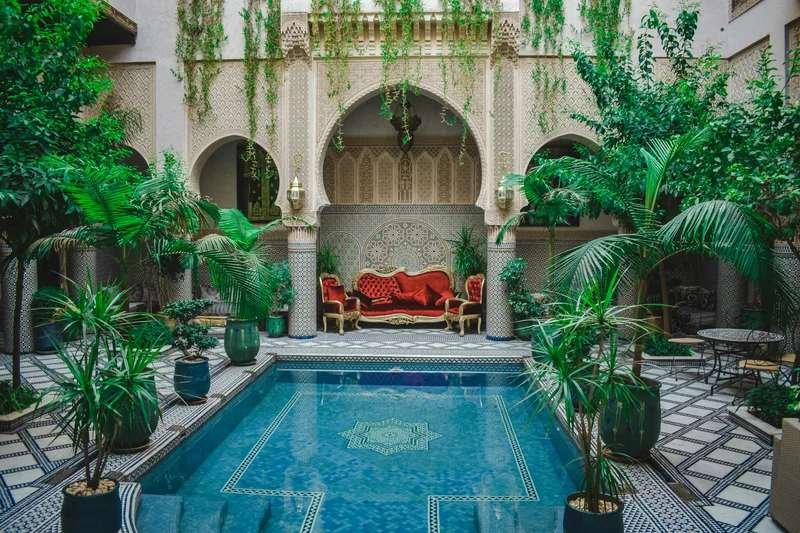
What Marrakech does better than almost anywhere is contrast. You walk through hot, crowded souks and then step into a cool, quiet riad courtyard. These traditional courtyard houses exist for exactly that relief. You come out of Djemaa el-Fna at full volume and find yourself, a few turns later, in a serene garden.
Arrive expecting Disney Morocco and the grit will spoil it for you. It is a real city with history layered on top of modern life, and on those terms it is fascinating.
Essential Marrakech: What Everyone Does (And Should)
A few Marrakech experiences are touristy because they earn it. Here is what to expect from each.
Djemaa el-Fna: The Famous Square
By day the square is fairly calm: orange juice stalls, a few snake charmers, people crossing it on their way somewhere else. By evening it transforms into controlled chaos. Food stalls set up, drummers perform, storytellers gather crowds, henna artists work, and the energy builds until it feels like the entire city is packed into one space.
Go twice if you can. First time at sunset to watch the transformation happen. Second time after 8pm when it's at peak energy. You might stay 20 minutes or two hours, whatever feels right. You'll be invited to eat at stalls, get henna, watch performances. Everything costs money. Prices are negotiable. If you eat at the food stalls, stick to busy ones where you see locals eating. The food is fine, not amazing. You're paying for the experience, not Michelin-quality tagine.
About the Square Photographers
If someone puts a monkey on your shoulder or hands you a snake, they will demand payment. This is their living. Either engage knowing you'll pay (10-20 dirhams is reasonable) or politely decline and walk away.
Plenty of people love the square and plenty find it too much. Either way, you don't have to spend hours here to "get" Marrakech: see it once at dusk, when it changes, and leave when you've had enough.
Koutoubia Mosque: Marrakech's Iconic Landmark
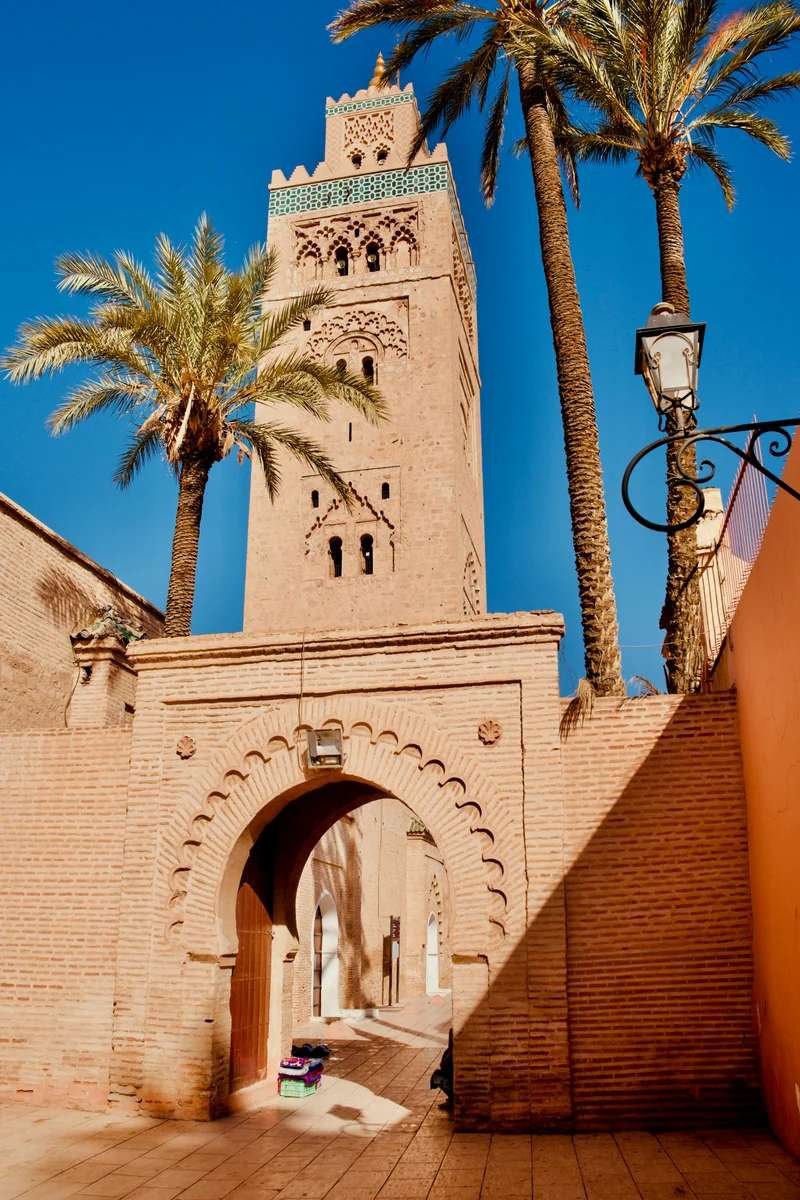
The Koutoubia's 77-meter minaret defines Marrakech's skyline. Built in the 12th century under the Almohads, it set the pattern for Seville's Giralda and Rabat's Hassan Tower, both begun within a generation of it. You can't enter (it's an active mosque), but the exterior and gardens are worth seeing.
Walk around the mosque at sunset, when the call to prayer echoes and the light hits the minaret. The gardens on the north side are where to photograph it, and a quiet break from Djemaa el-Fna's energy, which is just a five-minute walk away.
The minaret is illuminated at night and visible from rooftop restaurants throughout the medina. Use it to orient yourself - if you can see the Koutoubia, you know roughly where you are.
The Souks: How to Navigate Without Losing Your Mind
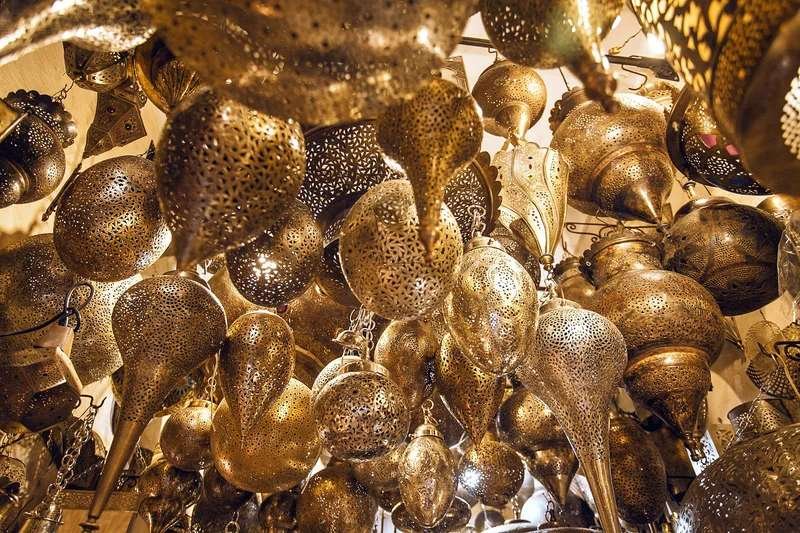
The souks (markets) spread north from Djemaa el-Fna in a maze of covered alleyways. Understanding medina navigation helps, though Marrakech's souks remain deliberately complex. Each section traditionally specialized in specific crafts, though this is less organized than it used to be. You'll find metalwork in Souk Haddadine on the east side (you'll hear the hammering). Leather is in Souk Cherratine and surrounding streets (the smell gives it away). Textiles and carpets cluster around Souk des Teinturiers and Rahba Kedima. Spices fill Rahba Kedima square. Woodwork is in Souk Nejjarine.
You will get lost. This is normal and expected. Google Maps barely works in the covered souks. Accept that you'll wander. When you want out, ask for "Djemaa el-Fna?" and someone will point you toward the square.
Shopping in the Souks
If you're just looking, say so clearly: "Just looking, thank you." If you're interested in something, asking the price opens negotiation. Expect to pay 50-60% of the first quoted price. Walking away is a real tactic. If they chase you down, that was their actual price.
Don't buy in the first shop you enter. See what's available, what quality looks like, what real prices settle around. Then either return to somewhere you liked or find the same item elsewhere with better context.
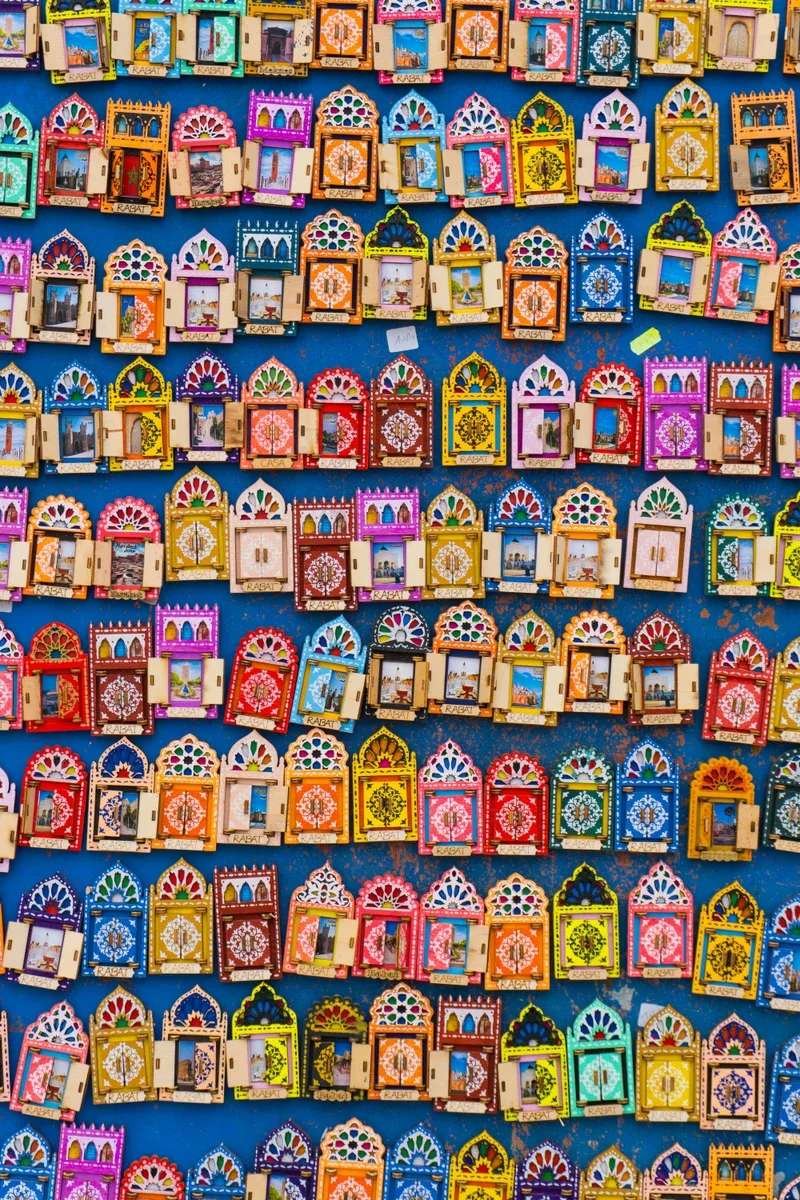
The souks can be exhausting. Shops close in early afternoon (roughly 1-4pm) for the heat. Go morning or late afternoon. And it's okay to do souks one day, skip them the next, and come back refreshed.
Ben Youssef Medersa: The Architecture Masterpiece
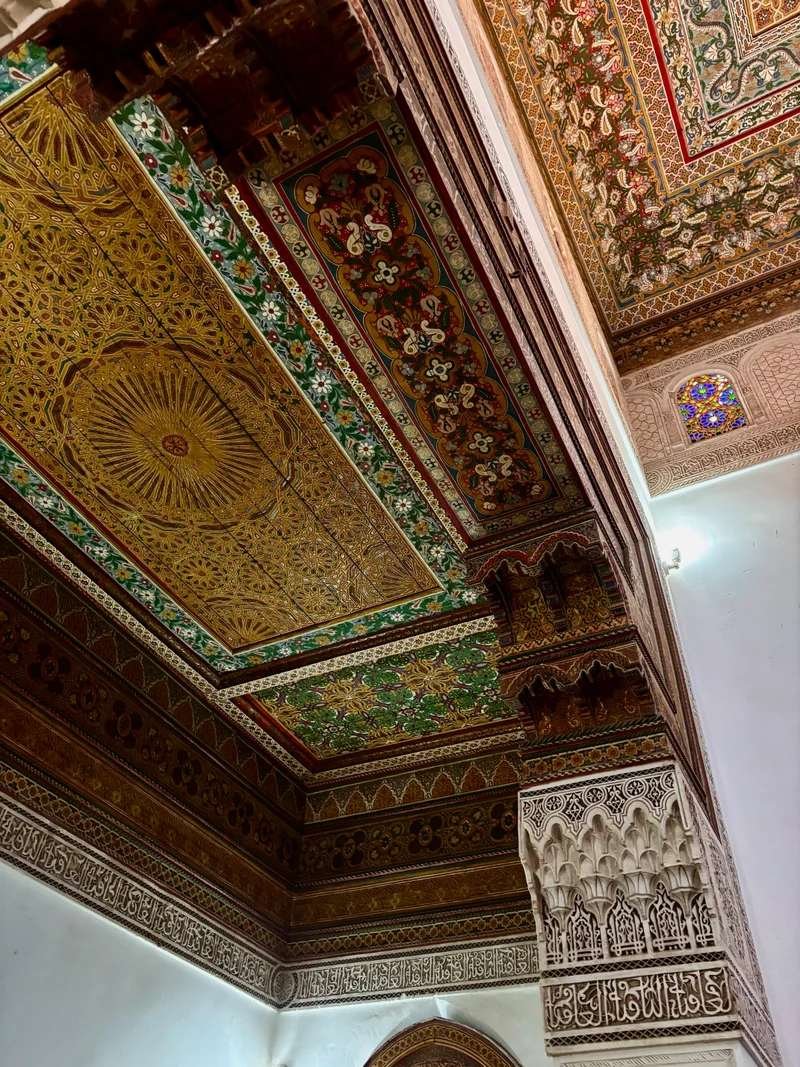
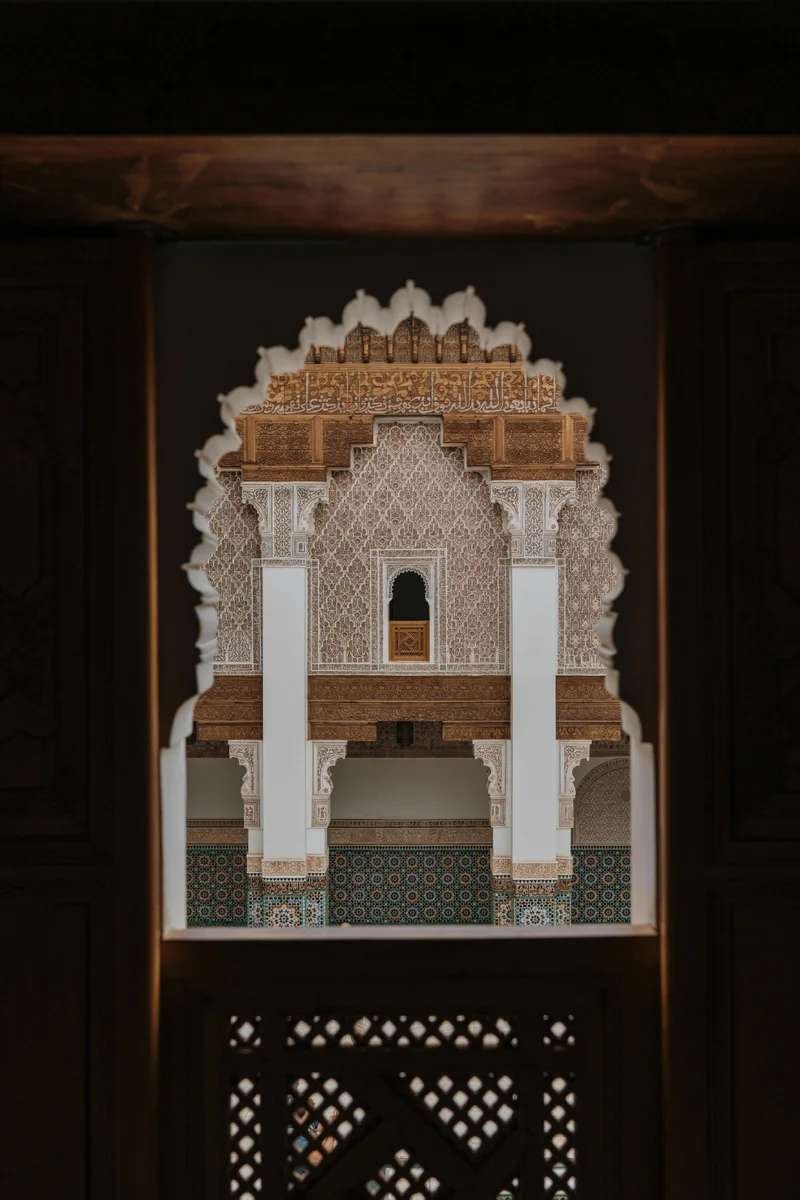
This 16th-century Islamic college is the most beautiful building in Marrakech's medina. A madrasa was founded on the site in the 14th century under the Marinids, but nothing of it survives - the building you walk into today was rebuilt by the Saadian sultan Abdallah al-Ghalib and completed in 1565. Carved cedar, zellige tilework and cut stucco cover every surface that could take decoration. The student cells around the central courtyard give you a sense of what life was like here. Cultural journeys often spend extra time here exploring architectural details and craft techniques.
Go early morning (9-10am) before tour groups arrive, or late afternoon after they've left. Midday can be packed. Plan for 30-45 minutes. Take your time in the courtyard. Look up at the details. Sit for a few minutes.
This is where Moroccan craftsmanship stops being an abstraction. Somebody set out that geometry by hand, tile by tile, and the arithmetic had to be right before the first piece was laid. It's also mercifully quiet after the souk chaos.
Entry fee around 50 dirhams. You don't need a guide for it.
Majorelle Garden: Yes, It's Touristy, But Here's Why
The cobalt blue villa surrounded by cactus gardens was owned by Yves Saint Laurent. It's become Instagram-famous, which means it's crowded. It is also a very good garden, which is why the crowds are there.
Go first thing in the morning (8am opening). By 10am it's packed. Alternatively, if you're staying nearby, late afternoon works too. You get a cool, shaded garden when the city is hot. Beautiful light through bamboo groves. The YSL museum next door if you're into fashion history. About an hour of peaceful wandering.
The blue is striking, the planting is properly kept, and it sits in Guéliz (new city), so it folds easily into a morning of other errands.
If you hate crowds, skip it. Go expecting a beautiful garden with a queue at the gate and you'll get exactly that.
Beyond the Obvious: Where to Go When You're Ready
Once you've done the essential Marrakech, these experiences take you deeper into the city.
Palmerie Cycling at Golden Hour
The Palmerie (palm grove) northeast of the city is the easiest escape from it. Rent a bike and ride through the date palm plantations at sunset: light through the fronds, quiet dirt roads, the occasional donkey cart passing by. It feels rural despite being technically in the city.
Several bike rental shops operate near the Palmerie. Go between 5-6pm in cooler months, 6-7pm in summer. Ride for 90 minutes; most routes loop back to where you started. You will pass almost nobody, which is the point, and you'll feel like you found something even though plenty of people do this.
Mellah: The Jewish Quarter Architecture
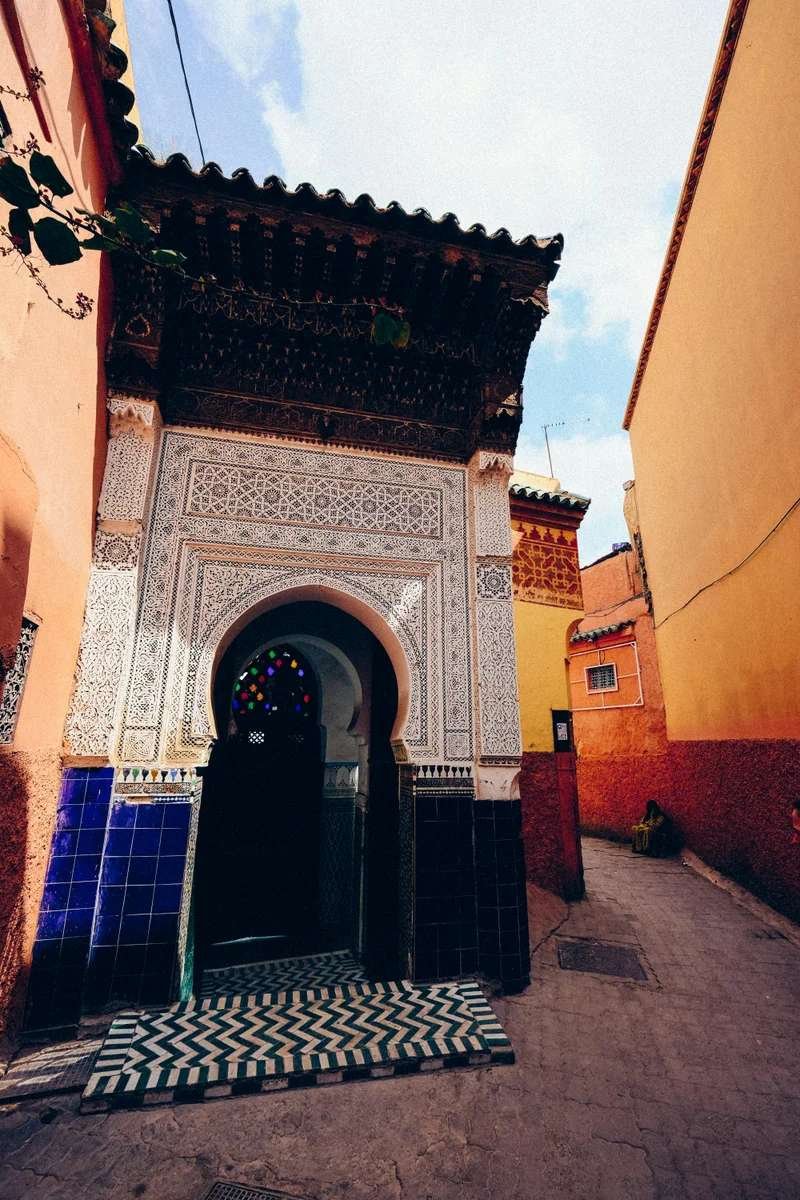
Marrakech's historic Jewish quarter is built differently from the rest of the medina: taller buildings, balconies overlooking the streets, wider passageways. The synagogues, some of them still in use, look nothing like what surrounds them.
A walk here fills in a part of Morocco's history that the main medina leaves out, and shows how different communities built different parts of the same city. The Place des Ferblantiers (now the spice and herb market) anchors this neighborhood. Morning or late afternoon works well, and you can add the Saadian Tombs, which are nearby.
It's a working neighborhood, and parts of it are run-down. The architecture still tells you things the main medina can't.
Contemporary Art Galleries in Guéliz
Marrakech has a serious contemporary art scene concentrated in Guéliz (the French-built new city). Galleries like Matisse Art Gallery, David Bloch Gallery, and Voice Gallery show Moroccan and international artists.
It's a useful corrective to the idea that Morocco is all tradition. The work here treats Moroccan identity, politics and history as live arguments, and it is the clearest way to see what the country's artists are doing now. Gallery hours are typically 10am-1pm and 3-7pm. Pick one or two, don't try to see them all. Not essential, but worth an hour if you have one.
Berber Ecomuseum (Musée Berbère)
Inside the Majorelle Garden complex, this small museum explains Berber culture, textiles, jewelry, and daily life. It's compact but well-curated. Most people skip it for the garden. If you're heading into the Atlas to visit Berber villages, it will change what you notice when you get there. Plan for 30-40 minutes and do it while you're in for the garden.
Understanding Marrakech's Geography
Marrakech divides roughly into four areas. The Medina is the historic walled city where most tourists stay. This is where you'll find the souks, riads, Djemaa el-Fna, and main attractions. Guéliz is the French colonial "new city" built in the 1930s, with wide boulevards, contemporary restaurants, galleries, and modern shops. More breathing room here. Hivernage sits between the medina and Guéliz, with upscale hotels, nightlife, and gardens. The Palmerie is the palm grove northeast of the city with some luxury resorts, cycling routes, and quieter atmosphere.
Most first-timers stay in the medina for proximity to sights. This is fine, but understand you're choosing intensity and authenticity over space and quiet. If you need breaks from medina energy, Guéliz has cafés where you can decompress.
Practical First-Timer Survival Guide
Getting Around
Inside the medina, you're walking. No cars can navigate most streets. Use taxis to reach medina gates, then walk to your riad. Your riad will send someone to meet you at a nearby landmark. Between the medina and Guéliz, take petit taxis (small red taxis). Insist on the meter or agree on the price before getting in. Should cost 15-30 dirhams depending on distance.
For the airport, either arrange a transfer through your accommodation (easiest) or take an official airport taxi with fixed rates posted. About 100-150 dirhams to the medina.
Dealing with Touts and Guides
You will be approached. Constantly. Especially near Djemaa el-Fna and tourist sites. Common approaches: "Souk is closed today, but I'll show you another way," or "Are you lost? I'll help you" (unprompted), or "Follow me, I know the best place for..."
Handling Street Approaches
Polite but firm "No thank you" in French ("Non merci") works better than English. Keep walking. Don't engage in conversation because it's taken as interest. If someone does help you with directions or finding a taxi, 10-20 dirhams is appropriate thanks.
If you want a professional guide, book through your accommodation or a reputable company. Licensed guides wear official badges. They cost 300-500 dirhams for a half-day and earn it in context and navigation.
Food and Restaurants
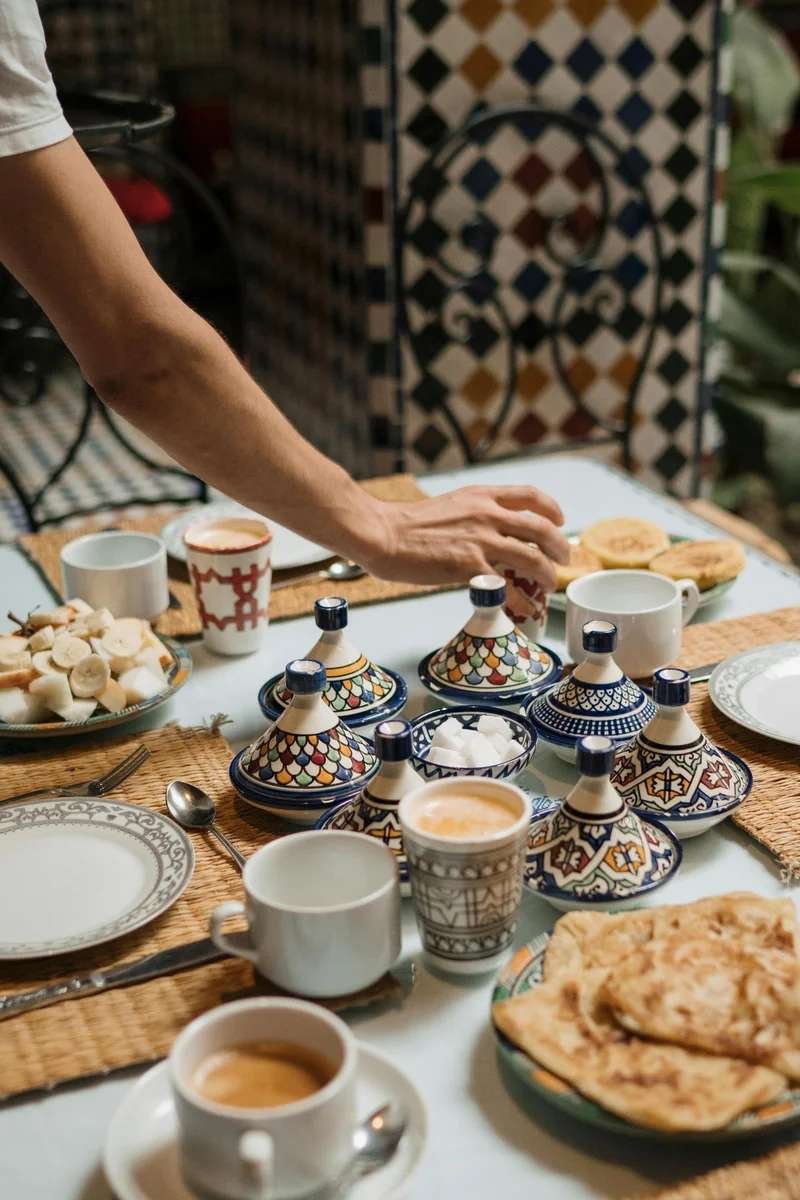
In the medina, riad restaurants offer quality without having to hunt around. Nomad, Le Jardin, and Café des Épices are reliable. Book ahead for dinner. Avoid restaurants with touts outside aggressively pulling people in. If you're being hard-sold, walk away.
If you're adventurous about street food, go for it. Stick to busy stalls. Bring wet wipes. Expect simple, flavorful food, not fine dining. Guéliz has better variety, from Italian to Japanese to modern Moroccan. Comptoir Darna, Le Catanzaro, and La Famille are solid choices.
When to Visit Marrakech
Best Times for Marrakech
March through May and September through November give you comfortable temperatures for walking around all day. Summer (June-August) gets hot (35-40°C/95-104°F). It's doable if you structure your days around the heat with morning and evening activities and midday pool time, but it's not ideal for first-timers who want to explore extensively.
Winter (December-February) brings cool mornings and evenings (5-10°C/41-50°F) but pleasant days (15-20°C/59-68°F). Riads can be cold at night, so pack layers. Winter works well if you're combining Marrakech with the Atlas mountains or Sahara, since both are better in winter.
We've written up detailed seasonal timing across Morocco separately.
How Marrakech Fits Into a Larger Morocco Trip
As Your Arrival City
Marrakech works well as an entry point. Direct flights from many European cities. The intensity eases you into Morocco quickly. Spend 2-3 days here, get oriented, then move to other regions. You process culture shock early when you're fresh.
Some people find it too overwhelming as a first stop, though. If you'd rather ease in, start on the Atlantic coast (Essaouira is a working fishing port and quiet by comparison) or in the Atlas mountains instead.
As a Base for Day Trips
Marrakech's location makes it a natural hub for Atlas Mountain day trips. Imlil village (starting point for Toubkal treks) is 90 minutes away. Ourika Valley offers waterfall hikes and Berber villages. There's more on High Atlas trekking experiences in our mountain guide, from day hikes to multi-day treks. The Agafay Desert gives you desert landscapes without the long drive to the Sahara, though for a true Sahara desert experience, most travelers take 2-3 days from Marrakech to reach the dunes at Merzouga.
Four to five days in Marrakech works well with day trips breaking up medina time. Two days exploring the city, two days in the mountains, one day resting by the riad pool. The city is particularly popular for romantic honeymoon itineraries that combine urban culture with mountain escapes.
As a Bookend
Many trips start or end in Marrakech as a transport hub. If you're returning from the Sahara or Fes and have a final night before flying out, Marrakech gives you modern restaurants, hotel amenities, and a last dose of Moroccan energy.
Compare Marrakech to Fes as your cultural city choice depending on what kind of medina experience you want. Marrakech is the more tourist-developed of the two; Fes is harder work and less staged.
First Day Itinerary
If you arrive in the morning:
9:00am: Breakfast at your riad 10:00am: Explore souks, wander without agenda 12:00pm: Visit Ben Youssef Medersa 1:00pm: Lunch at Nomad or your riad 2:00-5:00pm: Rest at riad (heat break, jet lag recovery) 5:30pm: Walk to Djemaa el-Fna at sunset 6:30pm: Watch square come alive 7:30pm: Dinner at a rooftop restaurant overlooking the square 9:00pm: Quick return to square to see it at peak energy (optional)
This gives you essential experiences without exhaustion.
What Marrakech Isn't
A few misconceptions worth clearing up. Marrakech isn't relaxing. If it's rest you want from Morocco, go to a beach town or an Atlas mountain lodge. This is a stimulating city and a tiring one.
Nor is it pristine heritage. The medina is a UNESCO site and a working neighborhood at the same time, so you'll see satellite dishes and power lines against historic architecture.
And it doesn't stand for the whole country. Marrakech is more tourist-developed than most of Morocco: a real city that also performs "Morocco" for visitors in ways smaller cities and rural areas don't.
What it is, despite the chaos and the pushy sales tactics, is safe. Normal city precautions apply (watch belongings in crowds), and violent crime targeting tourists is rare.
Getting the Most from Marrakech
The city reveals itself slowly. First impressions are often overwhelming. By day two, you start recognizing patterns. By day three, you've found your rhythm. If you can, give Marrakech at least two full days. Three is better. Five gives you time for day trips and deeper exploration.
Stay in a traditional riad if possible. The contrast between medina chaos and riad serenity is core to the Marrakech experience. You need that quiet courtyard to return to.
And adjust your expectations. Marrakech will be more intense and more commercial than you imagine. It will also be more interesting than you expect.
Planning Your First Marrakech Trip
Marrakech rewards a little preparation. Knowing what the medina asks of you is most of the difference between a hard first day and a good one, whether the city is your gateway to Morocco or one stop on a longer route.
We help first-time visitors navigate Marrakech as part of customized Morocco trips that balance city energy with mountain escapes and desert quiet. If you're planning a honeymoon or family journey Marrakech usually plays a role, and we'll help you structure it so it works rather than overwhelms.
Quick Marrakech Reference
Remember
Marrakech reveals itself slowly. Day one is noise. By day three you'll be taking the same shortcut twice without thinking about it.
Frequently Asked Questions
- What is the best area to stay in Marrakech?
For a first visit, take a riad in the medina. You are within walking distance of the souks, Djemaa el-Fna and the historic sites, and the courtyard house is half the point of coming. Gueliz is the alternative if you want more space and a quieter atmosphere, with modern amenities, wide boulevards and contemporary restaurants. Hivernage sits between the two, with upscale hotels and gardens.
- How many days do you need in Marrakech?
2 full days is the floor: Djemaa el-Fna, the souks, and Ben Youssef Medersa, with little room for anything else. Three to four days is the comfortable version, and it buys you the Mellah, the Gueliz galleries, and a day trip to the Atlas Mountains or Essaouira.
- Is Marrakech safe for tourists?
Yes. Violent crime targeting tourists is rare, and normal city precautions cover the rest, such as watching your belongings in crowds. What wears visitors down is the chaotic atmosphere and the pushy sales tactics, and the answer to both is non merci and an unbroken walking pace.
- How much do you tip in Marrakech?
10-20 dirhams for someone who walks you out of a wrong turn or finds you a taxi. Licensed guides cost 300-500 dirhams for a half-day tour; that is a fee, not a tip. At Djemaa el-Fna, if someone places a monkey or snake on you for photos, 10-20 dirhams is reasonable payment. In restaurants, 10-15 percent.
- What should I not miss in Marrakech?
Djemaa el-Fna at sunset, when the square turns over from juice stalls to food stalls and drummers, and Ben Youssef Medersa for its 16th-century tilework and carved cedar. The souks are unavoidable and worth a morning of getting lost in. With more time: the Palmerie by bike at golden hour, the Mellah for architecture the main medina does not have, and the contemporary galleries in Gueliz.