Fes vs Marrakech: Choosing Between Two Very Different Cities
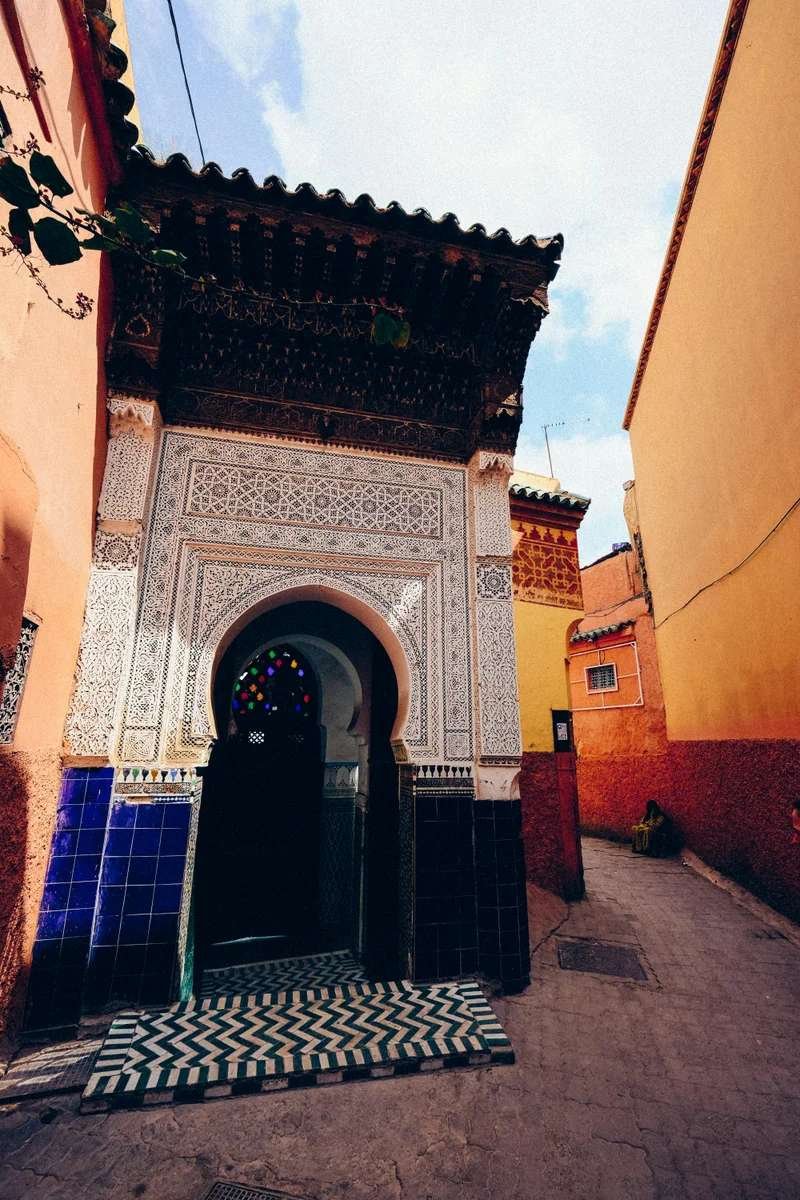
The Fes versus Marrakech question comes up constantly, and the internet treats it like choosing between two interchangeable medieval cities. They're not interchangeable. They have completely different personalities, and which one suits you comes down to how much difficulty you are willing to absorb on a holiday.
What follows is what each city is good at and what it costs you in effort.
Fes vs. Marrakech At a Glance
The Core Difference
Marrakech feels like a city that knows it's a tourist destination and has made peace with that. The infrastructure works, the restaurants cater to international tastes, and English gets you through the day without much stress. It's performing Morocco for you, and it performs well.
Fes feels like a city that happens to allow tourists in without being organized around them. The medina is confusing and stays confusing; fewer people speak English, and the restaurants serve what the neighborhood eats. Fes isn't performing anything. This is just Fes being Fes, and you're welcome to figure it out.
There is no neutral answer here, and calling it a tie is not advice. What separates the two camps is tolerance for being lost. If getting lost sounds like the interesting part of the day, go to Fes; if it sounds like the part that ruins the day, go to Marrakech.
What Marrakech Does Better
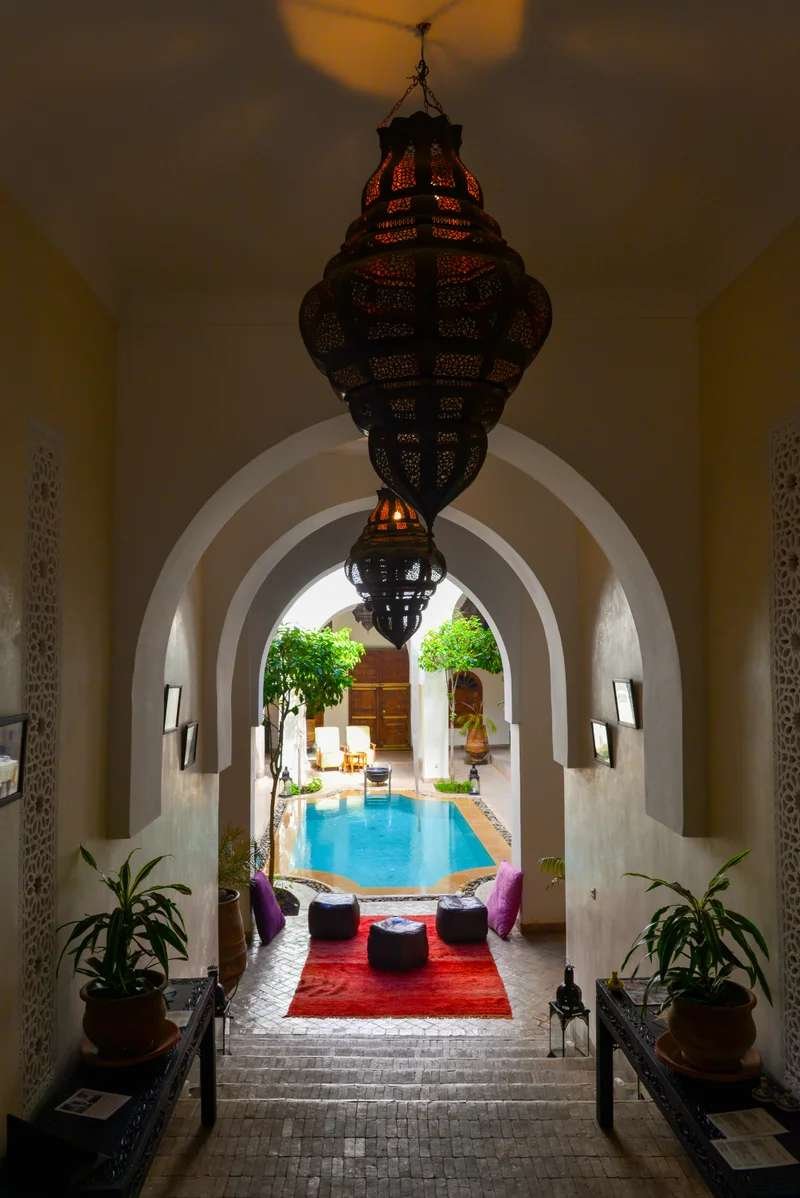
Marrakech understands tourism infrastructure. You can book quality riads online with real reviews, and restaurants have English menus and know how to handle dietary restrictions. The main square (Djemaa el-Fna) gives you that immediate "I'm in Morocco" sensory experience. Tour operators are professional and reliable. For complete Marrakech details beyond this comparison, see our comprehensive first-time guide covering medina navigation, riads, day trips, and what is worth doing once you are there.
The city's location works in its favor. You're 90 minutes from Atlas Mountain treks. The Sahara is reachable on a long weekend. Essaouira makes an easy day trip. Both cities serve as gateways to other experiences: Marrakech to the Atlas Mountains and the Sahara; Fes to the Middle Atlas and northern Morocco's less-visited regions. Marrakech functions as a natural hub for exploring southern Morocco.
Accommodation variety in Marrakech is unmatched. You can find everything from budget hostels to ultra-luxury riads to international hotel chains.
Food in Marrakech ranges more widely. Italian, Japanese, French and modern fusion kitchens all operate at a serious level. If you're traveling with picky eaters, or you just want something other than tagine after a week of them, that range matters.
The city also has a contemporary culture worth your time. Art galleries in Guéliz show serious work, and the fashion scene has produced designers of real interest. There's a modern creative economy here, not only crafts and historic architecture.
Marrakech for First-Timers
For first-time Morocco visitors, Marrakech's infrastructure reduces friction. You spend your attention on the country instead of on logistics, and the learning curve is gentler. You ease into Moroccan culture; Fes throws you into it.
What Fes Does Better
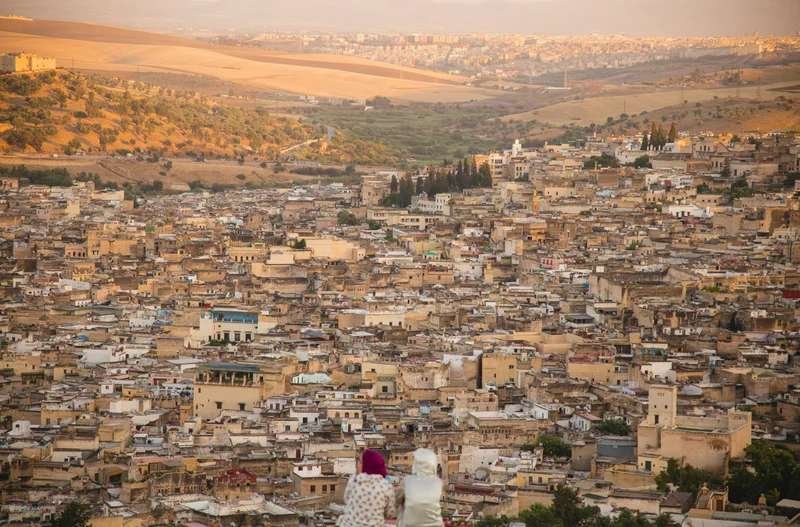
Fes preserves something Marrakech has partly lost: the feeling of a medieval city that still functions as one. The medina here (Fes el-Bali) is one of the world's largest car-free urban areas. Goods move on mule and handcart, up alleyways too narrow for a golf cart to follow, in a city operating roughly as it has for centuries.
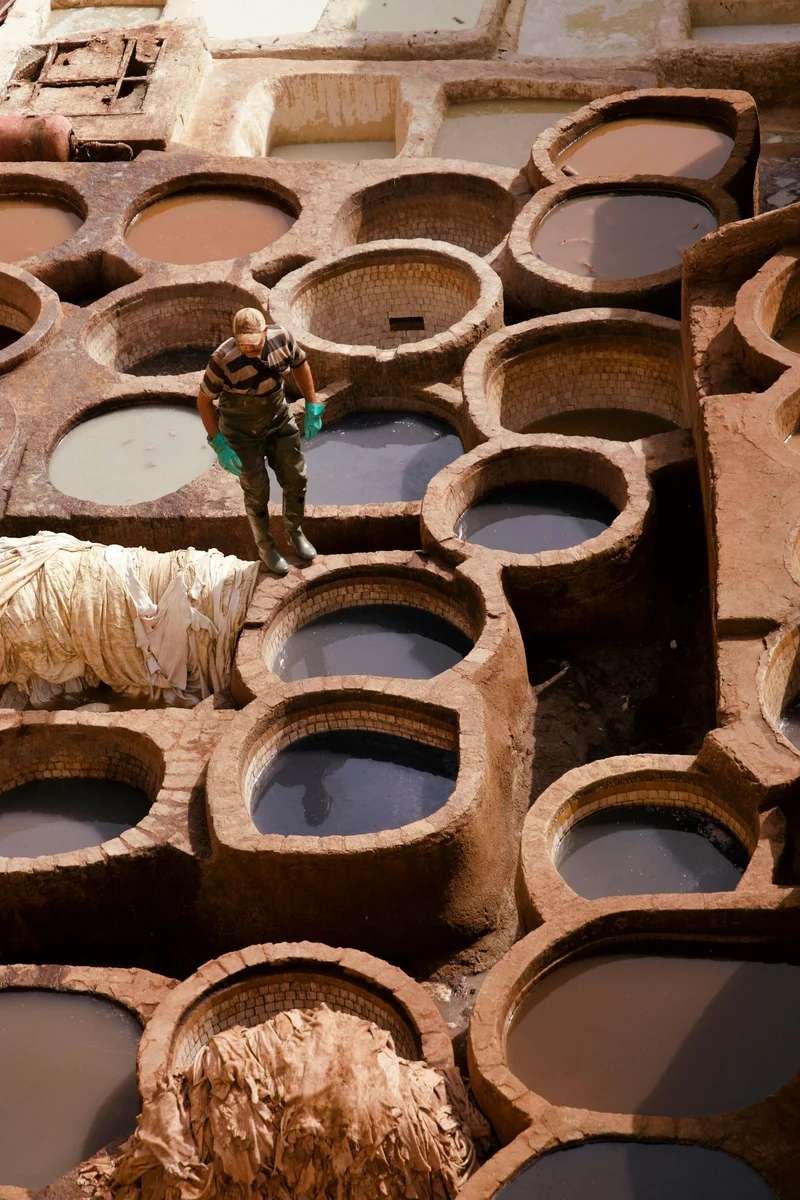
The crafts in Fes are the real thing. This is where Morocco's best artisans work and live. The tanneries are working tanneries, supplying the leather shops that ring them. The metal workshops produce goods Moroccans buy for their own houses. The potters are potters. If you care about craft traditions, Fes wins clearly.
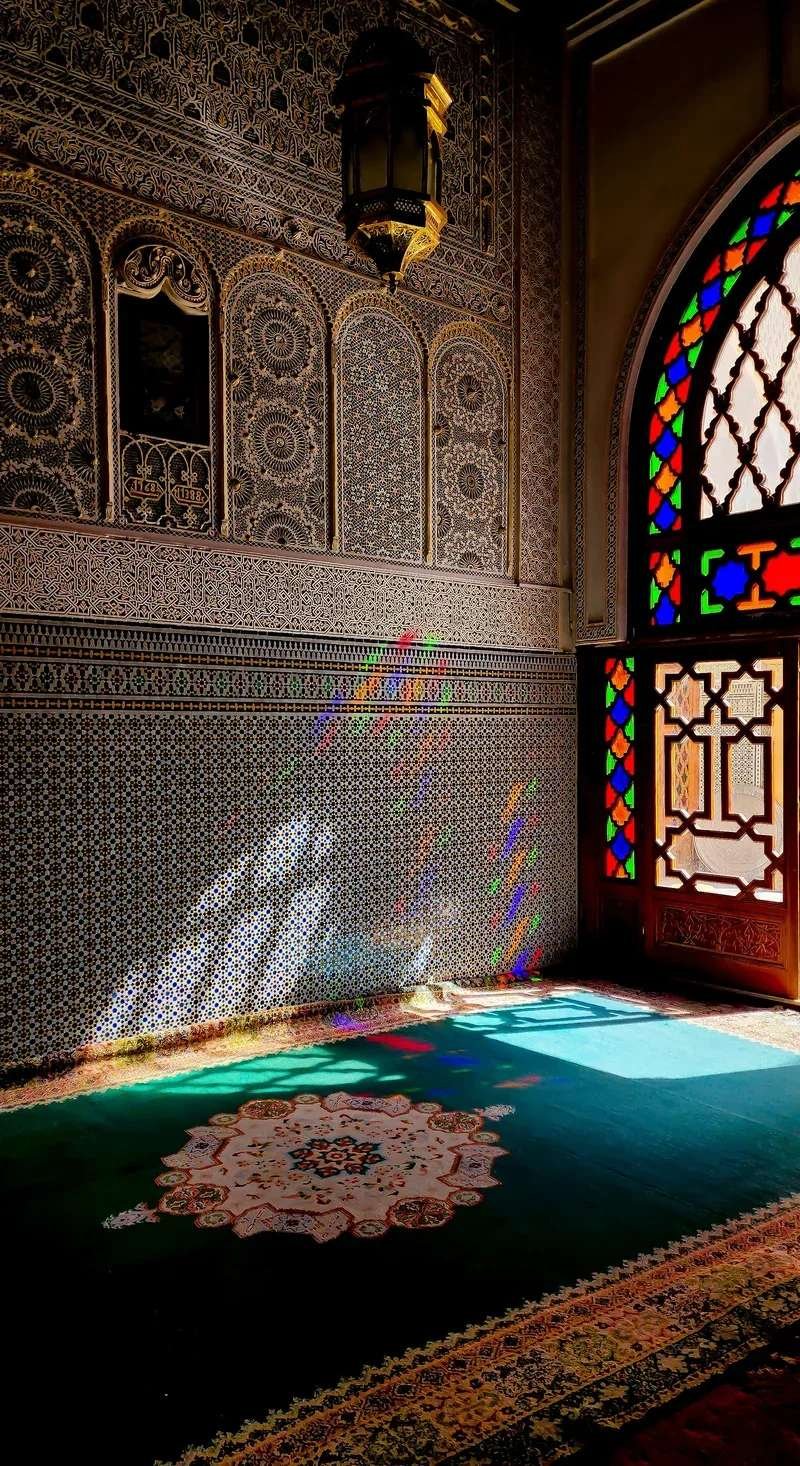
Architecture in Fes shows more sophisticated detail. The Bou Inania Madrasa has finer tilework than anything in Marrakech. The Attarine Madrasa is smaller and arguably finer still. Even the neighborhood mosques show more intricate work than you see elsewhere.
The food scene in Fes stays closer to Moroccan cooking done well. You eat what locals eat, prepared the way locals prepare it, and very little of it is adjusted for visitors. If you want a night off from Moroccan food, you will struggle.
Fes also costs less. Accommodation, food and experiences run 20-30% cheaper than equivalent quality in Marrakech.
Fes Makes You Work for It
There's something valuable about Fes's difficulty. The city makes you work for it: you get lost, you struggle with the language, and you work it out. Guests who arrive on a tight schedule find that exhausting; guests with a spare afternoon tend to describe it later as the best part of the trip. The city doesn't hand you the experience pre-packaged.
The Practical Differences
Getting to each city differs significantly. Marrakech has an international airport with direct flights from major European cities, so you can fly in, start your trip, and fly out without additional domestic travel. Fes has an airport, but fewer international connections. Many travelers fly into Casablanca or Marrakech and then take a train or drive to Fes, which adds a leg to the itinerary at both ends.
Navigation difficulty is real, and it isn't symmetrical. In Marrakech, Google Maps works reasonably well in parts of the medina, the souks have a broadly logical layout, and you can find your way out. In Fes the app is close to useless and the alleyways branch without warning. You will get lost.
Language matters more in Fes. Tourism has pushed English in Marrakech, where shopkeepers, restaurant staff and guides mostly manage it. In Fes, French does the heavy lifting and a few words of Arabic go a long way. Gesture and patience will get you through; if that prospect tires you before you have even packed, Marrakech is the easier city.
Booking accommodation in Fes takes more care. Not every riad has an online presence, reviews are thinner and less reliable, and photographs can flatter a property considerably. Someone who has walked into the place is worth having. In Marrakech the infrastructure is mature enough that you can book independently with more confidence.
Weather doesn't differ dramatically. Fes gets cooler winters; summer heat hits both cities, though Marrakech has far more pools to deal with it. Neither city is pleasant in July and August.
For detailed timing considerations across Morocco, we break down seasonal realities by region.
The "Why Not Both?" Reality
For most travelers with the days to spare, the answer is both. They're different enough that seeing one leaves you with half a picture. The question is which order.
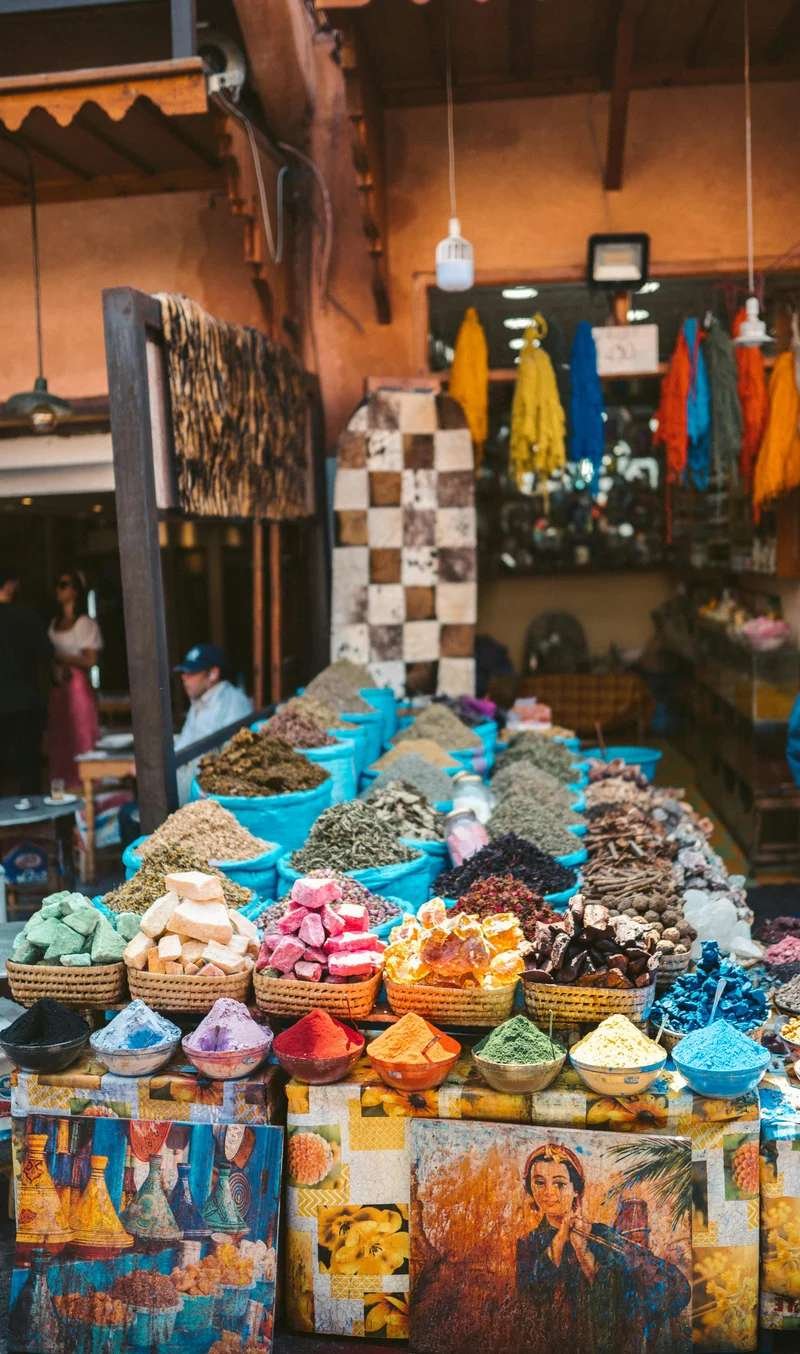
Start with Marrakech if you want to ease in. The infrastructure cushions the culture shock, and by the time you reach Fes you understand enough about how a medina works to enjoy the difficulty instead of resenting it.
Start with Fes if you would sooner take the hardest part first. Marrakech afterwards feels comfortable, and the tourist infrastructure reads as a relief instead of a compromise.
Connecting the Two Cities
The cities are connected by a good train line. ONCF's Al Atlas service runs direct, roughly hourly, and takes about seven hours in comfortable seating at modest cost. Driving is a little quicker, close to six hours on the motorway through Casablanca and Rabat, and it opens the Roman ruins at Volubilis and the hilltop town of Moulay Idriss, both near Meknes toward the Fes end of the route. Either way, treat the transfer as a full travel day rather than a morning's errand. Including both cities in a 10-12 day Morocco trip remains entirely practical.
Typical dual-city itinerary: Three days in Marrakech (including day trip to Atlas), train to Fes, three days in Fes (including day trip to Meknes and Volubilis), then either return to Marrakech for departure or continue to Chefchaouen and the north.
If You Can Only Choose One
If you only have time for one, here is the short version.
Choose Marrakech if you:
- Want easier logistics and navigation
- Are traveling with less adventurous companions
- Need dietary flexibility at every meal
- Want the Atlas day trip on your doorstep
- Want restaurant choice beyond Moroccan cuisine
- Value efficient tourism infrastructure
- Are coming to Morocco for the first time
- Are planning a honeymoon and want reliable luxury
Choose Fes if you:
- Want deeper cultural immersion
- Can handle navigation difficulty
- Speak some French or Arabic
- Are traveling on a tighter budget (20-30% cheaper)
- Would rather have fewer tourists around you
- Want traditional Moroccan food culture
- Are drawn to traditional crafts and culture
What About Families?
Children change the equation. Marrakech handles families better, and much of that comes down to the pool: an afternoon swim resets everyone and makes the evening possible again. Restaurants will cook plainly on request, the medina is navigable with tired legs, and English-speaking guides know how to talk to a nine-year-old.
Fes with young children (under 10) is hard work. The maze is stressful when you are counting heads, restaurant options narrow quickly, and pools are less common in Fes riads. Everyone needs more patience than they packed.
Teenagers often prefer Fes, if they have the patience for it. Older children who can handle getting lost tend to find the workshops and the tanneries more interesting than a pool.
Family Travel Considerations
Our family travel guide goes further into age-appropriate experiences and how to make either city work with children in tow.
The Day Trip Factor
Marrakech's location gives it a clear advantage for day trips. Atlas Mountain villages are within 90 minutes, Essaouira's coast is two hours away, and Agafay (stone desert, not real Sahara) sits 45 minutes out.
Fes opens northern Morocco. Meknes and Volubilis (Roman ruins) make an excellent day trip, Chefchaouen (the blue city) is three hours north, and the Middle Atlas and Ifrane sit close by. None of it carries the name recognition of the Atlas or the dunes. If the iconic sites matter to you, Marrakech's day trip geography wins.
Both cities reward a day out of the medina. Marrakech simply has more of it inside a two-hour radius.
How Locals Think About It
Moroccans have opinions about both cities. Many view Marrakech as touristy and commercialized; "not real Morocco" comes up often enough that you should expect to hear it. They will grant that it's beautiful and that it works, and still think it has sold too much of itself.
Fes carries more respect. Moroccans credit it with keeping its traditions seriously: the craft guilds still function as guilds, and the city hasn't rearranged itself for tourist convenience.
This perspective matters if you care about experiencing Morocco that Moroccans themselves value, not just Morocco packaged for visitors.
The Budget Difference
Fes costs noticeably less than Marrakech for equivalent quality. A good riad in Fes runs €80-100 per night; the same standard in Marrakech is €120-150. Restaurant meals, guides and transport follow the same pattern.
What the Difference Adds Up To
Over a three-day stay, that's €300-400 less per couple at comparable comfort levels. If the budget is the binding constraint on your trip, Fes is the better answer, and you give up nothing in quality to take it.
Making Your Decision
Most people overthink this. If you have the days, go to both. If you must choose one, the shortcut is this: a first visit, a short trip, or anyone in the party who dislikes surprises, and it's Marrakech. Everything else points to Fes.
Your first reaction to those descriptions probably tells you which city suits you better. Trust that instinct.
We Can Help You Decide
We work in both cities regularly and will say which one fits your dates, your party and your patience. Tell us what you have in mind and we'll tell you which way we would lean, and why.
Fes vs. Marrakech Quick Comparison
Frequently Asked Questions
- Should I visit Fes or Marrakech?
Marrakech, if you want easier logistics, a wider choice of restaurants and a gentler introduction to the country. Fes, if you care about craft workshops, deeper immersion and fewer visitors around you. If your trip allows 10 or more days, take both: direct trains run between them roughly every hour and take about seven hours.
- How many days do you need in Marrakech and Fes?
2 days in each city is the floor; 3 days is better. The usual shape is 3 days in Marrakech with an Atlas Mountains day trip, the train to Fes, then 3 days there, including a day trip to Meknes and the Roman ruins at Volubilis.
- What is the difference between Fes and Marrakech?
Marrakech has the polished infrastructure: English is widely spoken, the restaurants range well beyond Moroccan food, and you can find your own way around most of it. Fes has kept more of its medieval character, including one of the world's largest car-free urban areas, tanneries that still work and finer architectural detail. It asks more of you in return, in navigation and in language.
- Is Fes cheaper than Marrakech?
Yes. Fes runs roughly 20-30 percent cheaper than Marrakech for equivalent quality: a good riad costs around 80-100 euros a night against 120-150 euros in Marrakech, and meals, guides and transport follow the same pattern. Over a three-day stay that is 300-400 euros a couple.
- Is Fes or Marrakech better for families?
Marrakech handles families better. Riads often have a pool for the afternoon collapse, restaurants will cook around a fussy eater, the medina is manageable with tired children, and English-speaking guides know how to hold a child's attention. Fes with children under 10 is hard work: the maze wears parents down and the dining options are narrower.