Getting Around Morocco: Your Transportation Options
Morocco's transportation system works. You can move between cities by modern train, reliable bus, domestic flight, private driver, or rental car, and each of those suits a different budget and a different kind of trip. The trade-offs are the whole subject of this guide. If you're planning your first visit, they will also decide how many places you can reasonably fit in.
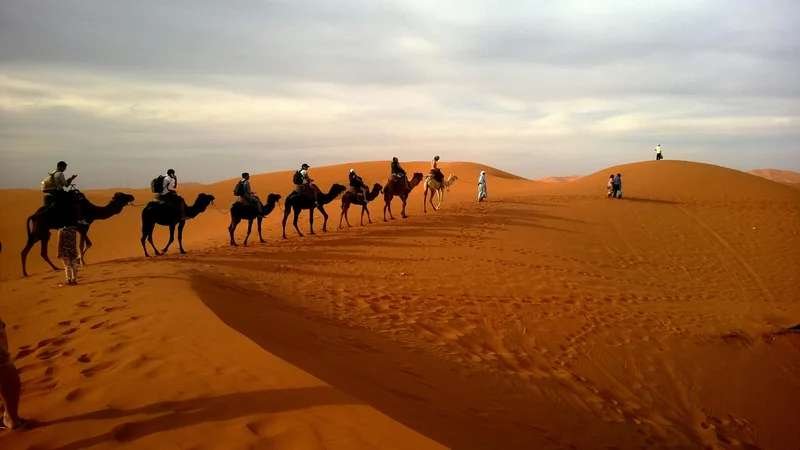
The distances are real. Morocco's geography spans from Mediterranean coast to Sahara Desert. Marrakech to Fes is 530 kilometers: about seven hours on the direct train, about six by road on the motorway through Casablanca and Rabat. These are not gaps you cross in an hour or two, and journey time ends up structuring the whole itinerary, which matters most in family travel where the day has to work for everyone. Short focused trips minimize transfers by concentrating on single cities.
Transportation At a Glance
Between Cities: The Main Options
There are five ways to move between Morocco's major destinations, and they are not interchangeable.
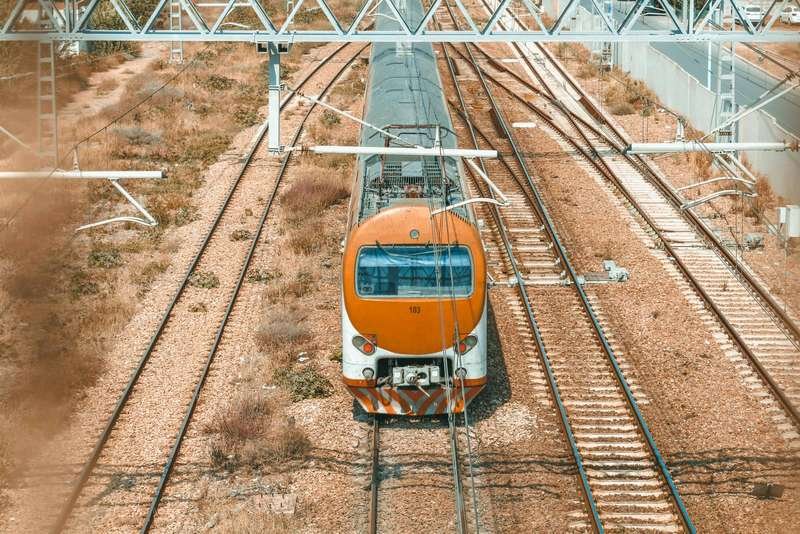
Trains: ONCF, Morocco's rail operator, runs modern, comfortable trains on limited routes. The main line connects Tangier, Rabat, Casablanca, Marrakech, and Fes. Service is punctual, clean, and air-conditioned.
First-class costs about 50% more than second-class and provides assigned seating, more space, and slightly quieter cars. Second-class is perfectly comfortable for most travelers.
The limitation is route coverage. Trains do not reach the Sahara, the Atlas or most coastal towns; they connect the major cities and skip everything between them. You get there efficiently, and you see none of the landscape change.
Journey times:
- Marrakech to Fes: about 7 hours direct, roughly hourly
- Casablanca to Marrakech: 2.5-3 hours
- Tangier to Marrakech: 5.5-6 hours
- Rabat to Fes: 2.5 hours
Book online through the ONCF website or at the station. Advance booking is not essential outside holiday periods, though it does guarantee you a seat.
Train Travel Tips
First-class isn't necessary for most routes. Second-class provides comfortable seating, good windows, and adequate space. Save the upgrade cost for other experiences.
Weekend trains fill faster than midweek. If traveling Friday-Sunday, book a few days ahead. Otherwise, same-day purchase works fine.
Bring snacks and water. While vendors walk through cars selling food, selection is limited. The cafe car exists but isn't always open.
CTM Buses: Morocco's premium bus company runs scheduled service to most destinations. The coaches are modern, air-conditioned and have bathrooms, and they leave when they say they will.
CTM costs less than the train and reaches more places. The trade-off is speed: longer routes, more stops, and slower going wherever the two share a corridor.
Luggage goes in storage compartments beneath the bus. Keep valuables with you. Theft is uncommon but happens occasionally. Your transportation choice affects packing decisions. Trains and private drivers handle rigid suitcases easily, while shared taxis and buses work better with flexible bags. See our packing guide for luggage recommendations based on your transport method.
Journey times run 20-40% longer than the equivalent train route on most corridors. Marrakech to Fes is the exception: 7-8 hours by bus against about 7 by train, which makes that particular choice one of comfort. Everywhere else, what the bus buys you is the places the railway never reaches.
Book through the CTM website or at the bus station. In peak season the popular routes are worth booking a few days ahead.
Domestic Flights: Royal Air Maroc and Air Arabia operate flights between major cities. The flight time advantage disappears when you factor airport transit, check-in, and baggage claim.
Marrakech to Fes: 1 hour flight becomes 4-5 hours door-to-door when you include getting to airport, checking in two hours early, baggage claim, and transport from destination airport to your accommodation.
Flights make sense for:
- Very long distances (Marrakech to Tangier)
- Tight schedules requiring maximum time in destinations
- Travelers uncomfortable with long drives
- Returning to starting point when circular routing doesn't work
They make no sense if the landscape is part of what you came for, and on a first trip it usually is.
Private Drivers and Self-Drive Options
Private Drivers: A driver and a vehicle dedicated to your group. You travel on your own schedule, stop where you want, and change the route as you go. The vehicle is usually an SUV or a van, depending on the size of the party.
Private drivers know the routes, speak functional English (or French), and handle navigation and logistics. They're not tour guides but can provide basic information about areas you're passing through.
It costs substantially more than public transport and less than most travelers expect. Split three or more ways, the per-person figure is unremarkable; for a couple it is a luxury, and a defensible one.
The value is not only comfort. You can stop at a kasbah, pull over at a viewpoint, take photographs at the top of a pass, and start later than planned because the morning went slowly.
What Private Drivers Include
Included: Vehicle appropriate for group size, driver for entire journey, fuel costs, tolls and parking, driver's meals and accommodation, flexible routing, basic area information.
Not Included: Your accommodation and meals, entry fees for sites, guide services (driver isn't certified guide), shopping commissions (good drivers avoid this).
The vehicle becomes your base: you leave things in it instead of carrying them, and you shape the day around your own energy instead of a timetable.
Self-Drive Rental Cars: Major rental companies operate in Morocco. International driving licenses are required (technically, though enforcement varies). Road conditions range from excellent highways to challenging mountain passes.
Self-driving gives you the most control. You decide the timing, the route and the stops, and you answer to no schedule but your own.
The challenges are navigation (GPS helps but is not perfect), local driving customs (more aggressive than most Western drivers), and dealing with the car if something goes wrong. Parking near a medina is difficult, and city traffic is where most of the stress lives.
It works best for confident, experienced drivers who are comfortable with difficult conditions. It works least well on a first visit, when everything else is new too.
Within Cities: Local Movement
City transportation follows different logic than intercity travel.
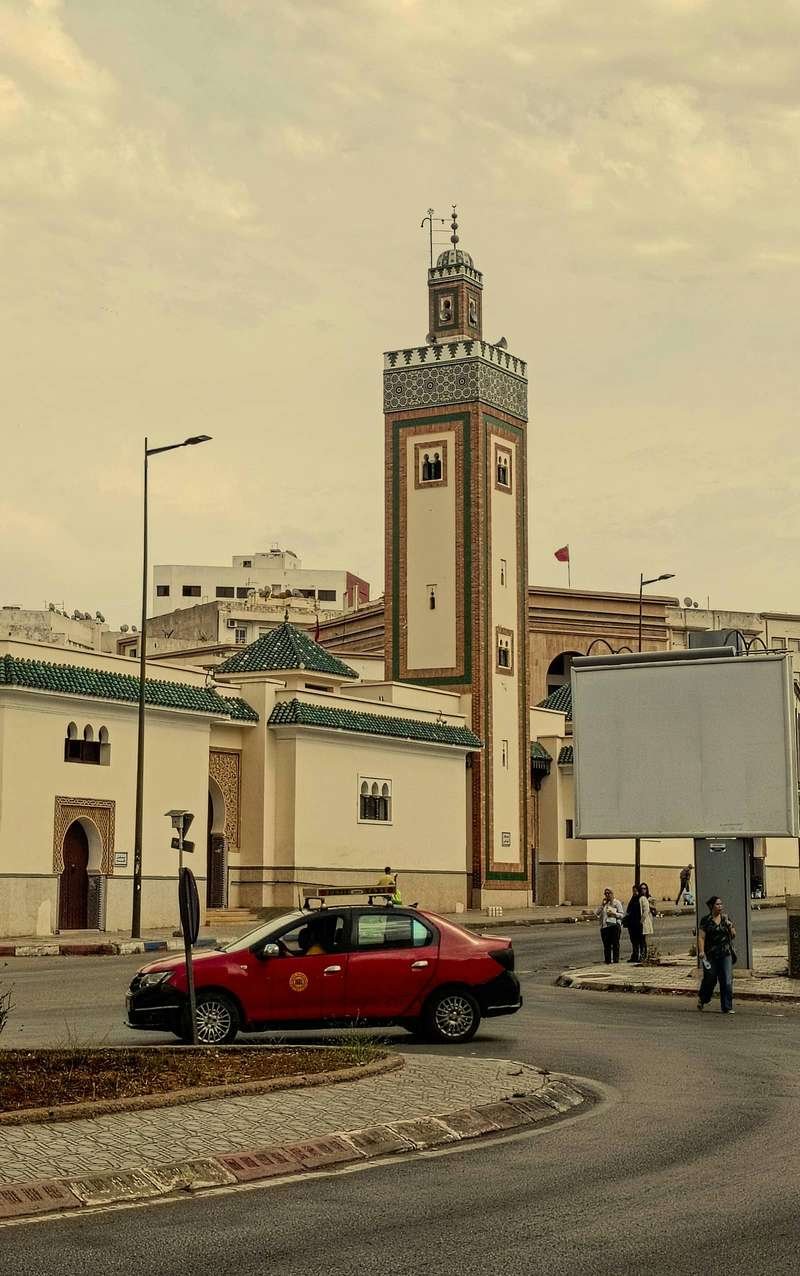
Petit Taxis: Small taxis, usually a Fiat or something similar, painted in a color specific to each city. They are metered and cheap, and they are the answer whenever a walk turns out to be longer than it looked.
The meter should be running. If the driver does not start it, ask: "Le compteur, s'il vous plaît." A driver who refuses is a driver you replace, though most start the meter the moment you ask.
Petit taxis do not cross city boundaries; they work inside municipal limits and no further.
Typical fares: 15-30 dirhams for most city trips (roughly $1.50-$3). Night surcharge increases this by 50%.
Grand Taxis: Larger vehicles, usually Mercedes sedans, running between cities and out to nearby towns. They work as shared taxis and leave when all six seats are full.
You can buy extra seats. Two gets you room; all six gets you the car to yourself and an immediate departure.
Grand taxis cover routes the buses skip, and beat them for time on short intercity hops. Negotiation is part of the process, so agree the price before you get in.
Urban Transportation Strategy
Walking is often the best option in medinas where cars can't reach. Most attractions within medinas are walking distance from each other. Good shoes matter more than transportation budget.
Careem (ride-sharing app) operates in major cities. It functions like Uber with upfront pricing and digital payment. Availability varies by location and time. Not as reliable as petit taxis for immediate pickup but useful when available.
Driving Yourself: When It Makes Sense
Renting a car works for specific trip types and personalities.
Good Scenarios:
- Extended stays (three weeks plus) covering many regions
- Travelers experienced with challenging driving conditions
- Groups wanting maximum flexibility and independence
- Specific interests requiring access to remote areas
- Follow-up trips where Morocco is familiar territory
Challenging Scenarios:
- First Morocco trip with limited time
- City-focused itineraries (cars are burdens in medinas)
- Travelers uncomfortable with aggressive traffic
- Solo travelers (cost efficiency drops, navigation is harder)
- Winter mountain travel (snow and ice on passes. Road conditions vary significantly by season, as detailed in our seasonal timing guide)
Road Conditions Reality
Main highways: Excellent. Toll roads connect major cities with good surfaces and clear signage.
Secondary roads: Vary significantly. Mountain passes can be narrow, winding, and poorly maintained.
Hazards: Speed bumps appear suddenly in villages, often unmarked. Livestock on roads is common in rural areas. Moroccan drivers are more aggressive than most Western drivers. High-speed passing, minimal signaling, and fluid lane discipline are standard.
Navigation: GPS works but has limitations. Rural road data is incomplete. Medina navigation is impossible by car. Place names have multiple spellings on different signs.
Practical Costs:
- Rental: $30-60 per day depending on vehicle type and season
- Fuel: Approximately $1.20 per liter (roughly $4.50 per gallon)
- Tolls: 50-100 dirhams for major highway segments
- Parking: 5-20 dirhams for guarded parking in cities
An international driver's license is required. Some rental companies are strict about it and others are not, and it is cheaper to carry one than to argue at the pickup counter.
Realistic Journey Times: Why They Matter
Distance does not equal time in Morocco. Terrain and road surface decide the duration, not the kilometers.
Major Routes with Realistic Times:
Marrakech to Fes:
- Train: about 7 hours direct, roughly hourly
- Car via the motorway: about 6 hours through Casablanca and Rabat
- Car via Ifrane: 8-9 hours (longer, and a different country out of the window)
The motorway is the quick way and the dull one. The Middle Atlas route costs you a couple of hours and gives you cedar forest and Berber villages.
Marrakech to Merzouga (Sahara):
- Car: 8-9 hours minimum
- Typically done as two days with overnight in Dadès or similar
This is not a day trip. You cross the Tizi n'Tichka pass, drop to Ouarzazate, then work through valleys and gorges, and each of those segments takes what it takes. Rushing it is the one certain way to waste the drive.
Marrakech to Essaouira:
- Car: 3 hours
- Bus: 3-3.5 hours
Reasonable as a day trip, better as a two or three night coastal stay. The drive is manageable; you will still arrive tired.
Fes to Chefchaouen:
- Car: 4 hours
- Bus: 4.5-5 hours
Mountain roads the whole way. The scenery is worth it; the driving wants your full attention.
Understanding Time Requirements: Bathroom breaks, meals, photo stops and the unexpected (livestock, a slow truck on a mountain pass, traffic) add up faster than you expect.
A travel day is a travel day, not a half-day with sightseeing bolted on the end. Plan to arrive in time for dinner and schedule nothing else.
Private Driver Value: What the Money Buys
The premium is easier to judge once you know what sits inside it.
The driver handles the logistics. You do not navigate, argue about parking, or deal with the car when something goes wrong, and the attention that would have gone on all of that goes on the place instead.
For family travel, the flexibility is the whole benefit: a small child's day does not run to a timetable, and a vehicle you control can bend to it. For honeymoon travel, the stress it removes is most of the point.
Cost Reality: Private driver for Marrakech to Fes via Sahara (3 days): approximately $300-500 depending on vehicle type and specific routing. For four people, this is $75-125 per person. Set against bus tickets and the days you would spend on them, the premium is moderate. See our complete Morocco travel costs guide for comprehensive budgeting.
Day-rate drivers for local exploration run $80-150 per day. For a full day in the Atlas out of Marrakech, split between a group, that is reasonable.
Comparing fares alone gets you the wrong answer. What you buy alongside the transport is the freedom to change the day while it is happening.
Why Journey Matters More Than You Think
The landscape transition is Morocco's story. You watch: urban Marrakech, agricultural plains, Atlas foothills, mountain passes with snow, descent to arid plateau, pre-desert vegetation changes, finally desert arrival.
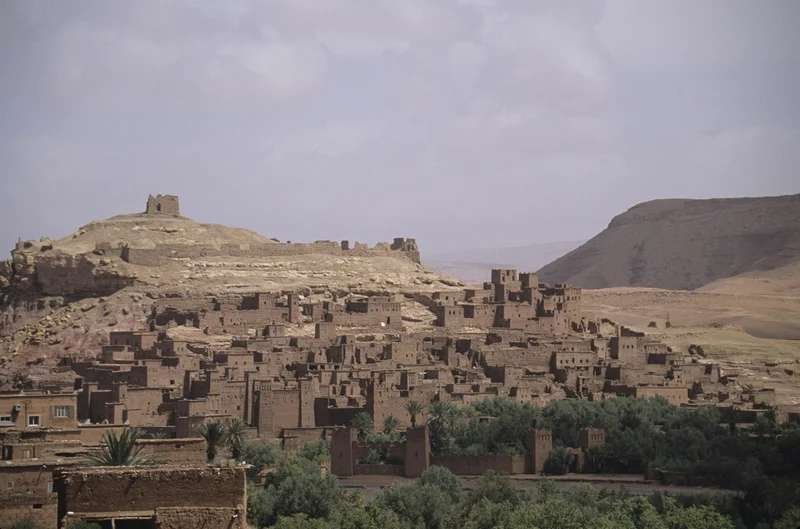
Each zone has distinctive architecture. Building materials change based on available resources. Clay construction appears where stone is scarce. The architecture tells you where you are geographically.
Flying eliminates this narrative. You're in Marrakech, then you're in Fes. The connection disappears. For many trips, especially first visits, the connection matters more than saving three hours.
How We Handle Transportation
The Morocco Detour approach includes private drivers for intercity travel. This isn't upselling. It's recognition that the journey between destinations is part of the experience, not an obstacle between highlights.
The drivers know the routes, anticipate what a day will need, and absorb the logistics that otherwise land on you. You look out of the window; they watch the road.
For families, it removes the variables that make travel with children hard. It also makes cultural exploration possible on the day, since you can stop at a workshop or a village simply because you are passing it. Everyone else gets reliability without a running series of decisions.
We coordinate the timing with the accommodation. Your riad in Fes knows when you will arrive; the desert camp is expecting you at a particular hour. The sequence holds because the timing is managed rather than hoped for.
Quick Transportation Reference
We coordinate all logistics for the trips we plan, private drivers included. The journey is yours; the admin is ours.
Frequently Asked Questions
- Is it better to take trains or buses in Morocco?
Trains are better on the routes they cover: modern, air-conditioned, and much more comfortable than a coach over a long day. Marrakech to Fes is about 7 hours by direct train and 7-8 hours by bus, so on that route you are buying comfort, not speed. CTM buses reach far more of the country, including everywhere the rails do not go, cost 20-40 percent less, and are the only public transport toward the Sahara and the smaller towns.
- How do taxis work in Morocco?
Morocco has two taxi types. Petit taxis are small city taxis costing 15-30 dirhams per ride and should run on meters. Request the meter by saying le compteur s'il vous plait. Grand taxis are larger shared vehicles operating between cities, departing when all six seats fill. You can pay for extra seats for more space or immediate departure.
- Should I rent a car in Morocco?
Renting a car works best for confident experienced drivers on extended stays covering many regions. Challenges include aggressive local driving customs, unmarked speed bumps, livestock on rural roads, and GPS limitations in medinas. For first-time visitors, city-focused trips, or solo travelers, a private driver or public transport is usually a better choice.
- How do you get around between cities in Morocco?
Five main options exist: trains connecting major cities like Marrakech, Fes, Casablanca, and Rabat; CTM buses reaching smaller destinations; domestic flights for long distances; private drivers offering flexible routing and stops; and rental cars for independent travel. Most travelers combine train for major routes with private driver for scenic journeys like the route to the Sahara.
- How much does a private driver cost in Morocco?
A private driver costs approximately 80-150 dollars per day depending on distance and vehicle type. A multi-day Sahara trip with driver runs 300-500 dollars for 2-3 days total. For groups of four, this works out to 75-125 dollars per person for the entire Sahara journey, which includes flexible routing, photo stops, and door-to-door service.