Morocco's Regions: Mountains, Desert and Two Coasts
Morocco packs an improbable amount of geography into a country roughly the size of California. You can stand in snow in the Atlas Mountains, drive eight hours, and sleep under stars in the Sahara. The Mediterranean coast has its own weather, its own vegetation and its own architecture, none of which look much like the Atlantic side. Even the imperial cities sit in different climate zones from one another.
Knowing how the regions differ is what stops an itinerary from repeating itself, and it is also what tells you how much of Morocco you can honestly cover in the days you have.
Regional Diversity At a Glance
The Four Geographic Zones
Morocco has four zones, each with its own climate, its own landscape and its own way of building a house.
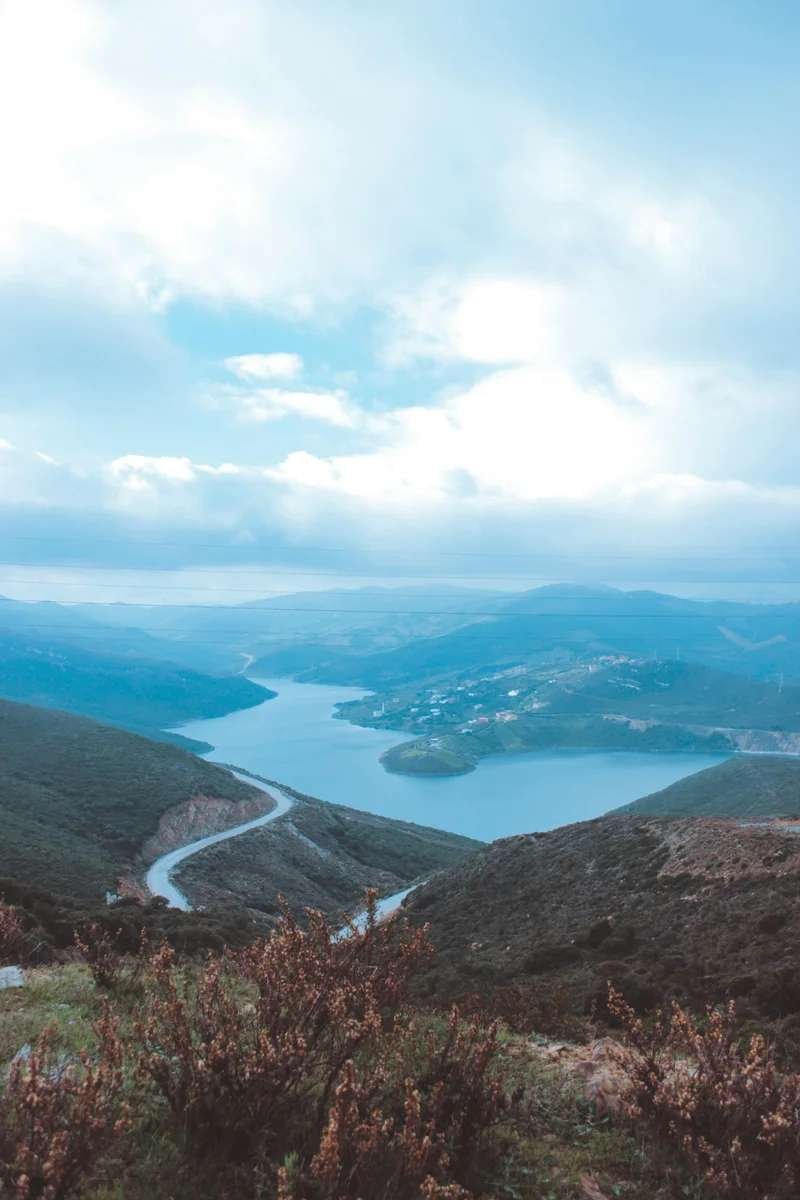
The Northern Arc (Rif Mountains and Mediterranean Coast): Green, mountainous, Mediterranean. This is Morocco's wet corner, and it takes serious winter rainfall. The Rif rises steeply out of the sea, so the roads climb almost as soon as they leave the shore.
The Spanish and Portuguese centuries left more of a mark here than anywhere further south, and you hear it in the language and see it in the buildings. The food is different, and so is the pace.
Most first-time itineraries skip it, and reasonably so: it needs days of its own and it does not bolt onto the classic Marrakech-Fes-Sahara route. Save it for a second trip, or come here first if you would rather not queue for anything.
The Imperial Cities Belt (Central Plateau): Marrakech, Fes, Meknes and Rabat sit across the middle of the country at different elevations. This is urban Morocco: the monuments, the hotels that know what they are doing, and the dense medinas.
The climate is not uniform across them. Marrakech, at 450 meters, has the hot summers. Fes is at a similar 410 meters but runs slightly cooler for being further north. Meknes and Rabat stay moderate most of the year.
This belt holds the densest concentration of cultural sites in the country, and most itineraries are built around it because everything here already works: the flights, the roads, the riads, the guides.
The Atlas Mountain System (High, Middle, and Anti-Atlas): Three ranges cross Morocco roughly southwest to northeast. The High Atlas is the one you notice, with peaks over 4,000 meters and North Africa's highest point, Jebel Toubkal, at 4,167 meters.
These aren't tourist mountains like the Alps, with ski lifts and developed resorts. They're working landscapes, where Berber villages farm terraces and move flocks up and down with the seasons. Tourism exists here, but lightly.
The mountains also make Morocco's weather. They catch the Atlantic moisture on their western slopes and throw a rain shadow across everything east of them, which is why that half of the country is dry. Treat them as a destination, not a wall between two others.
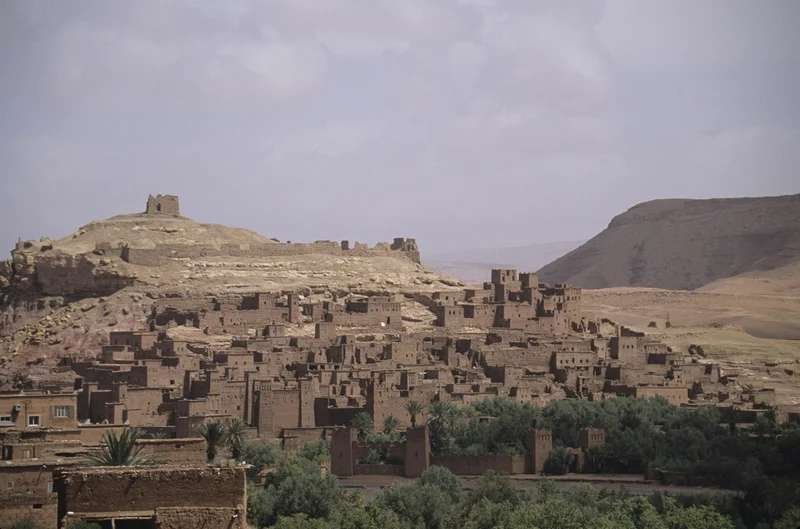
The Desert and Pre-Saharan Zones (South and Southeast): South and southeast, Morocco dries out by stages rather than all at once: green valleys with kasbahs, then rocky hamada plateaus, then the oasis systems strung along the old caravan routes, and finally the sand dunes of the Sahara.
It is hot in summer, regularly over 45°C, pleasant in winter, and the temperature falls away sharply once the sun is down. The architecture answers all of that: thick earthen walls, small windows, courtyards on the inside where the shade is.
The drive from Marrakech toward the Sahara shows all of this better than any description of it can. You watch the land change through the window, kilometer by kilometer.
Imperial Cities: How Many and Which Ones
The four imperial cities (Marrakech, Fes, Meknes, Rabat) each held the capital under a different dynasty. The label is the only thing they really have in common.
Marrakech: Most visited, best tourism infrastructure, and the shortest run to both the Atlas and the road south to the Sahara. The medina is large but you can find your way out of it, and no other city gives you as much choice of where to eat and sleep. It works as a hub.
The atmosphere is energetic and squarely aimed at visitors. Marrakech handles millions of them a year and has shaped itself around the fact. What you get in return is efficiency and choice, and what you give up is a degree of ordinariness.
Most itineraries include it for the simple reason that it is easy to land in, easy to leave for the mountains, and the city every Sahara trip starts from.
Fes: Morocco's spiritual and intellectual capital. The medina is the largest and the most complex, and the crafts are strongest here: the tanneries, the metalwork quarters and the woodcarving workshops all still work at scale, by methods that are centuries old. The cooking is its own regional school. Moroccan cooking classes in Fes focus on traditional techniques preserved through generations.
Fes feels less tourist-accommodating than Marrakech. You will get lost, and the map on your phone will not save you. Less English is spoken. The city is a working Moroccan city that also receives visitors, in that order.
Trips focused on cultural depth usually put Fes first. You trade a degree of ease for a city that has kept more of itself.
How Many Imperial Cities Fit
Ten-day trips: Two, usually Marrakech and Fes. That is depth bought with breadth.
Fourteen-day trips: Meknes can join. Rabat needs either a specific interest or spare days.
All four: Tiring, and the returns fall off fast. By the fourth medina you are comparing more than seeing, unless architecture or history is the point of the trip.
Meknes: Often described as "smaller, calmer Fes," which undersells it and still catches something true. Moulay Ismail's palace complex is enormous, and the scale of it is the point. The medina is a size you can hold in your head. Far fewer people.
It suits anyone who found Marrakech too loud, or who wants the imperial architecture without spending the afternoon lost in Fes. It is also the way in to the Roman ruins at Volubilis.
Most itineraries either skip Meknes or fold it into a day trip from Fes. Given the days most people have, that is fair enough. Meknes deserves better.
Rabat: The current capital, and the most modern of the four. Being the seat of government shows: the infrastructure is better, the streets are cleaner, and the mood is contemporary in a way the others are not.
The medina is small and you cannot really get lost in it. The Hassan Tower and the Mohammed V Mausoleum are the two buildings worth crossing town for. The Kasbah des Oudaias looks straight out at the Atlantic.
Most travelers skip Rabat because it has none of the drama of Marrakech or Fes, and that is a fair reading. It is a pleasant, functional capital. Come here if you want urban Morocco with the volume turned down.
Mountain Regions: Three Different Ranges
Morocco calls all three of them "Atlas," and that is where the resemblance ends.
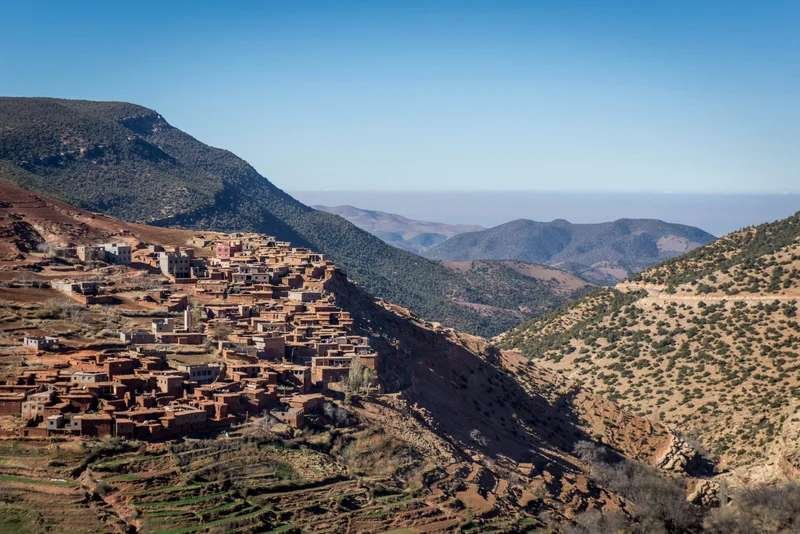
High Atlas: The accessible one, and the one everybody sees. These are the mountains standing between Marrakech and the Sahara. The Tizi n'Tichka pass crosses at 2,260 meters, and the view from the top is the reason people ask the driver to stop.
Imlil is the base village for Toubkal treks. The Ourika Valley is close enough to Marrakech for a day out. Ait Benhaddou, technically pre-Saharan though it sits at the edge of the Atlas, has been the backdrop for more films than anyone can count.
The range absorbs most kinds of trip. Family itineraries take a valley day trip and leave it there. Serious walkers go up for several days. Honeymoon trips often add a night in a mountain lodge, if only to wake up somewhere cold.
Middle Atlas: Quieter, and interesting on its own terms. These mountains lie between Fes and Marrakech, part of them under cedar forest, cooler and wetter than anything around them.
Ifrane is Morocco's oddity: a French-colonial planned town with pitched roofs and tidy verges, built to look like a Swiss village and still doing so. Azrou, just along the road, has Barbary macaques living in the cedars.
Most travelers only see the Middle Atlas through a car window on the way somewhere else, though an overnight in or near Ifrane is easy enough to arrange. It is at its best in spring, when the wildflowers are out, and in high summer, when it is the nearest cool air to the plains.
Anti-Atlas: The southern range, between the High Atlas and the Sahara. Lower, drier, and far less visited. The landscape is dramatic in a hard way: bare rock formations, the occasional oasis, Berber villages that have been where they are for a very long time.
You have to go there on purpose; nothing passes through it on the way to anywhere else. Trips built around deep cultural experiences sometimes route through Anti-Atlas villages precisely because tourism has barely reached the Berber communities there.
Desert and Oasis Valleys
In the south, the drive is half of what you came for.
What the Desert Road Costs You
Marrakech to Merzouga: 8-9 hours of driving with stops. Budget the whole day and spend it looking out of the window.
What passes the window: alpine conditions at the high pass → green valleys with kasbahs → rocky gorges → pre-desert hamada plateaus → sand dunes.
Most people want to 'get to the desert' as fast as possible. The country does not work that way, and the drive is where you see it change.
The Route: From Marrakech the usual line crosses the Tizi n'Tichka, drops into Ouarzazate, runs on through the Dadès or the Rose Valley and the Todra Gorge, and finishes at Merzouga or M'Hamid on the edge of the sand. Call it 8-9 hours of driving with stops.
The order of it goes: alpine air at the high pass, then green valleys with kasbahs and cultivation, then gorges where the rivers have cut down through rock, then the hamada plateaus, and at the end of the day, dunes.
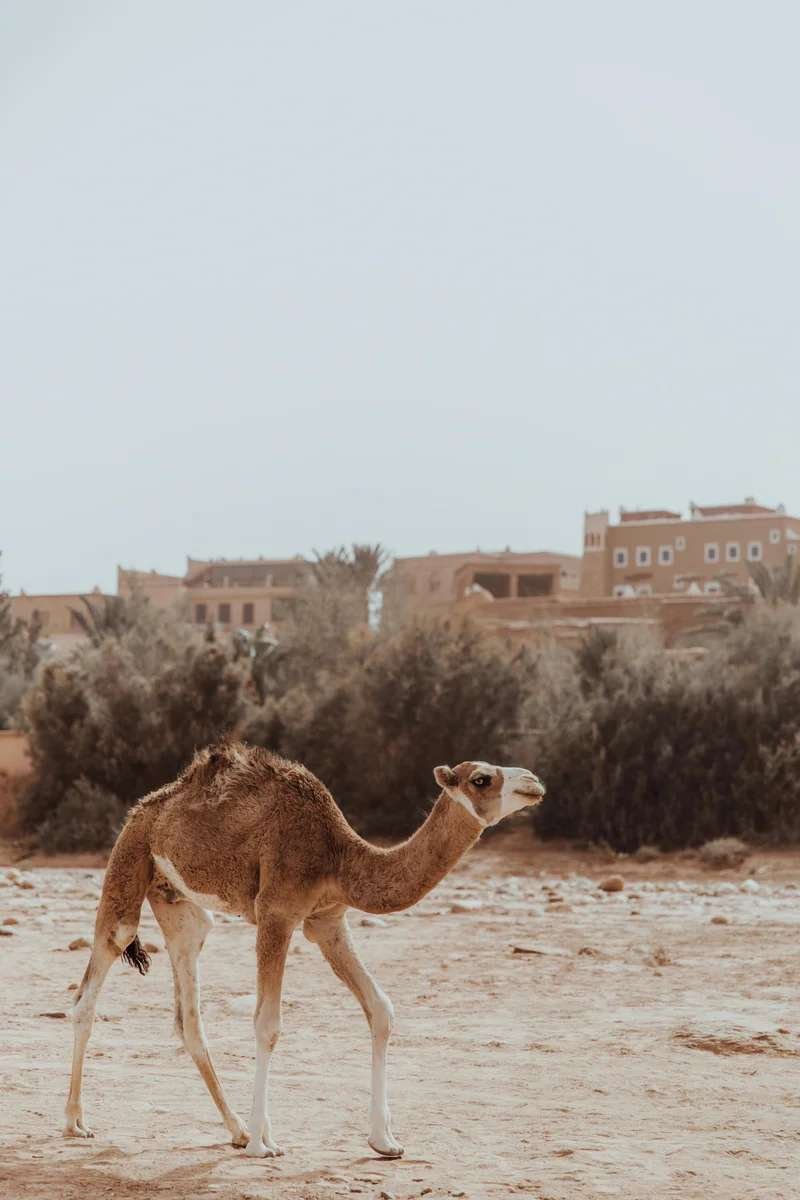
Oasis Valleys: The Dadès and the Drâa follow their rivers as green ribbons through dry country. Date palms, kasbahs, small villages and fields, all of it exactly as far as the water reaches. Step off the line of it and you are in desert.
The khettaras, the underground channels that move water through these valleys, took centuries to work out. The buildings are built for heat: thick earthen walls, small windows, flat roofs.
A good itinerary stops here instead of passing through. An hour walking in the Dadès Gorge, an afternoon in a kasbah village, someone explaining how the irrigation is shared out. Arrive at the dunes having seen that, and the dunes make more sense.
The Sahara Experience: Morocco's Sahara is the western edge of the desert, and the dunes you have seen photographs of are in two places: Erg Chebbi near Merzouga, and Erg Chigaga near M'Hamid.
Both are substantial, and Erg Chebbi reaches 150 meters, but neither runs on forever the way the photographs suggest. You are standing at the edge, where the sand piles up against the rocky hamada.
It is still the thing people came for. Sunset over the dunes. Stars with nothing competing against them. Sunrise throwing shadows long enough to show you the shape of the sand. The silence, which takes most people a while to get used to. Real dunes in real desert, and that is enough; nobody needs it to be the deepest Sahara.
Coastal Morocco: Two Different Seas
Morocco has some 1,800 kilometers of coast, and the Atlantic half and the Mediterranean half have almost nothing in common.
Atlantic Coast: Runs from Tangier all the way south to Western Sahara. The water is cool the year round, 17-22°C, and the wind hardly ever drops, least of all around Essaouira. The beaches are long and sandy.
This is a coast for surfing, kitesurfing and long walks; swimming is the thing it does least well. Family trips that want beach time still come here, because the infrastructure is easy and the waves are manageable.
The towns are not interchangeable. Essaouira is artistic and windy. Oualidia has a lagoon calm enough to actually swim in. Agadir is resorts. Asilah is whitewashed, walled and quiet.
Dropped into a longer itinerary, the Atlantic is where people catch their breath between the cities and the desert.
Mediterranean Coast: The northern coast, Tangier east to the Algerian border. Warmer water, greener country, and a Spanish and European inflection to almost everything.
Chefchaouen sits up in the Rif and not on the water at all, but it belongs to northern Morocco. The blue-washed medina and the mountain setting give it an atmosphere no southern city has.
Like the Rif behind it, the north has to be routed for deliberately. You cannot bolt it onto a Marrakech-Fes-Sahara trip without adding days you probably do not have. It is second-trip country.
Building Itineraries: The Reality of Distance
Morocco is bigger than it looks on the map, and the distances between the places you want to see are real distances.
How Far Apart Things Are
Essential Distances:
- Marrakech to Fes: about 6 hours by car on the motorway, about 7 by direct train
- Marrakech to Merzouga (Sahara): 8-9 hours by car
- Fes to Merzouga: 7-8 hours by car
- Marrakech to Essaouira: 3 hours by car
- Tangier to Marrakech: 6-7 hours by car or train
7-day trip: Two cities + brief desert OR two cities + coast (choosing 2 regions)
10-14 day trip: Three cities OR two cities + substantial desert + mountain/coast component
3+ weeks: Comprehensive touring with depth (multiple cities, extended desert, mountains, coast)
Key Journey Times:
- Marrakech to Fes: about 6 hours by car on the motorway, about 7 by direct train
- Marrakech to Merzouga (Sahara): 8-9 hours by car
- Fes to Merzouga: 7-8 hours by car
- Marrakech to Essaouira: 3 hours by car
- Tangier to Marrakech: 6-7 hours by car or train
Those times assume clear roads and almost no stopping. Add the breaks, the lunch and the photographs, and every one of them becomes a full travel day. Plan them that way.
Where a Week Goes: Seven days breaks down roughly like this:
- Two days in one city
- Two days in another city
- One day traveling to/from desert with overnight
- One day traveling between cities
- One day buffer for arrival/departure
That is two regions, three if one of them is only a stop. Everything else waits for another year.
Ten to Fourteen Days: This timeline allows:
- Three cities or two cities plus substantial desert time
- Mountain component (day trips or overnight)
- Coastal component (two-three nights)
- Geographic variety without constant movement
The Morocco Detour approach is usually built on 10-14 days for exactly this reason: imperial cities, the Atlas, the desert, and a stretch of coast if the days allow.
Hub-and-Spoke Versus Linear Routes
There are two ways to move through Morocco, and the right one depends on how much you mind packing.
Hub-and-Spoke: Base yourself in one city, go out on day trips and short excursions, come back to the same room each night. You unpack once, you get to know one city properly, and nobody spends the evening looking for a suitcase.
Marrakech is the obvious hub. The High Atlas, Essaouira and the Ourika Valley are all within a day trip, and a multi-day Sahara run can deliver you back to the same riad at the end of it.
The cost is that every day ends the same way. You see wildly different country and then come back to the same courtyard, which is either reassuring or a waste of the mountain kasbahs and desert camps you drove past.
Linear Routes: Move through Morocco in one direction: Marrakech to the Atlas to the desert to Fes, or Fes to Chefchaouen to the coast to Marrakech. A different bed every night.
You get the most variety this way, and the trip acquires a shape: the landscape changes around you, and each region is met on its own ground instead of from a distance.
The cost is logistics: more packing, more coordination, more small decisions at the end of tiring days. Our approach is to carry all of that ourselves, which is what makes linear routing worth doing.
Hybrid Approaches: Most of the itineraries that work do both. Three nights in Marrakech with day trips out, two nights in the desert, three in Fes. You stay put long enough to settle, and you move often enough to see the country change.
Prioritization Without Guilt
You cannot see everything in one trip. That is arithmetic, and it is nobody's fault.
Accepting Trade-offs
Choosing the Sahara costs you city time. Choosing several cities costs you the landscape. Choosing depth in one region costs you the rest of the map.
Any one of those makes a good trip. Trying to have all three is what produces the exhausted fortnight nobody enjoyed.
Two regions seen properly beat five touched in passing.
Which Regions Suit Which Season
Summer (Jun-Aug): Coast and mountains best. Desert dangerously hot (45°C+). Cities hot but bearable early morning/evening.
Winter (Dec-Feb): Desert and cities perfect. Mountains can have snow. Coast too cold for swimming but good for walking.
Spring/Fall (Mar-May, Sep-Nov): All regions accessible. Most flexible timing. Best overall conditions for comprehensive trips.
Choose Based On:
- Season: The month you can travel narrows the map before you do. Check it first.
- Interests: Cultural focus means cities and craft quarters. Nature means mountains and desert. Culinary focus means the food cities and the markets that supply them.
- Travel Style: Families need days a child can survive. Honeymoon travelers want somewhere to stay put. Be honest about how much driving your party will tolerate.
- Return Plans: A first trip takes the headlines. A second one takes what you drove past.
Accept Trade-offs: Every night you spend in the desert is a night you do not spend in a medina, and every extra city is a day you do not spend outdoors. There is no arrangement of a fortnight that avoids this.
Pick the two or three things the trip is for and let the rest go. The itineraries that fail are the ones that refuse to.
Regional Combinations That Work
Some pairings do the work for you.
Imperial Cities + Desert: The classic. You go from a city where something is happening at every turn to a place where nothing is happening at all, and the silence of the Sahara lands harder for having come straight from the souks.
The usual 10-day shape: Marrakech (3 nights), the Atlas crossing and the drive south (1 day), desert camp (1-2 nights), the drive on to Fes (1 day), Fes (2-3 nights).
Mountains + Cities: For anyone unmoved by the desert, or traveling in the wrong month for it. Marrakech plus Atlas trekking or a mountain lodge, and Fes on the end of it if you want the cultural weight. In summer this is the version that makes sense, since the mountains are the only cool air within reach of the plains.
Coast + Interior: Open or close on the coast, usually at Essaouira, and put the cities or the desert in the middle. The sea end of the trip is where people stop moving. It suits longer honeymoon itineraries, which generally want a few days with nothing scheduled in them.
Northern Circuit: Tangier, Chefchaouen, Fes, and Meknes if the days stretch. It keeps you in the Mediterranean-influenced north and never crosses the Atlas at all. Good for a second trip, or a first one that would rather not queue.
Practical Routing Advice
Three practical points that shape most itineraries before taste does.
Three Things Worth Settling Early
Arrival/departure cities: Most international flights use Marrakech or Casablanca. Open-jaw flights (arrive one city, depart another) eliminate backtracking. Arriving Marrakech and departing Fes makes geographic sense.
Train vs car: Trains connect cities efficiently but miss the geography. Car travel takes longer but shows how regions connect. You see Atlas passes, stop at kasbahs, watch landscape transition.
Minimum region time: Cities need 2 full days minimum. Desert needs 2 nights. Mountains need day trips or overnight stays. Coast needs 2-3 nights to be worth routing. Shorter stays feel rushed.
Arrival/Departure Cities: Most international flights land at Marrakech or Casablanca, with a smaller number into Fes or Tangier. Where you come in and go out decides more of the route than people expect.
Open-jaw flights, in one city and out of another, remove a whole day of backtracking. In at Marrakech and out of Fes is the obvious pairing. Fly in and out of the same airport and the last leg of your itinerary is spent retracing the first.
Train Versus Car: The trains between the major cities (Marrakech-Fes, Casablanca-Tangier, Rabat-Fes) are comfortable and they run on time. What they do not do is show you anything. You get on in one city and off in another, and the country in between happens without you.
A car, whether you drive it or someone else does, takes longer and shows you how the regions join up: the Atlas passes, the kasbahs you can stop at, the land drying out by degrees. That is our own bias, and we will say so.
Minimum Region Time: Cities need two full days at the floor: arrival day, a whole day, a departure morning. The desert needs two nights, because one travel day in and one out leaves only the middle day for the desert itself. Mountains take either a day trip from a city or a night up there. The coast is not worth routing to for less than two or three nights.
Below those numbers you are visiting the logistics, not the place.
What "Seeing Morocco" Comes Down To
The marketing implies that a proper Morocco trip covers the whole country. It does not, and chasing that is how people come home tired and vague about what they saw.
Seeing Morocco Well: Means staying somewhere long enough for it to stop being strange. Walking a medina until the turnings start to make sense. Two nights in the desert instead of one, so that you are still out there when the stars have moved. Taking a mountain pass slowly enough to notice what changes on the far side of it.
That is what people are still describing a year later. The alternative is a camera roll.
Regional Depth: Buys more than coverage does. Ask anyone six months on and they will tell you about one afternoon, not eleven towns.
Return Visits: Are normal here. Morocco holds enough for three or four trips without repeating itself. The first one establishes the shape of the country; the ones after that go to the places you drove through.
Quick Regional Planning Reference
Tell us how many days you have and which regions you cannot leave out, and we will build the route around that and tell you honestly what will not fit.
Frequently Asked Questions
- What are the main regions of Morocco to visit?
Morocco has four, in practice. The Northern Arc is green and mountainous: the Rif and the Mediterranean coast. The Imperial Cities Belt holds Marrakech, Fes, Meknes and Rabat, and most of the country's monuments with them. The Atlas Mountain System runs to three ranges, with Berber villages and the trekking. The Desert and Pre-Saharan Zone carries you from oasis valleys out to the sand dunes.
- Which Moroccan city should I visit first?
Marrakech, for a first visit. It has the best tourism infrastructure, sits closest to both the Atlas Mountains and the desert road, and works as a hub you can leave and come back to. Fes goes deeper: the largest and most complex medina, the strongest craft traditions, and a city that is working before it is hosting. On a 10-day trip, take both.
- How many days do you need to see Morocco?
Seven days covers two regions properly: two cities plus a short desert run, or two cities plus the coast. Ten to fourteen days stretches to three or four, so cities, mountains, desert and possibly a stretch of coast. Three weeks or more and you can stop counting regions and start staying in them.
- What is the climate difference between regions in Morocco?
Wide. Marrakech summers pass 40 degrees Celsius while the Atlas Mountains sit around 25-28 degrees at 2,000 meters, which is why people go up there in August. Atlantic water stays 17-22 degrees all year and the wind never really stops. The Sahara regularly exceeds 45 degrees in summer and is pleasant in winter, and the temperature drops noticeably once the sun goes down.
- What is the best season to visit Morocco?
Spring (March to May) and fall (September to November), if you want every region open to you at once. In summer take the coast and the mountains and stay out of the desert, which climbs above 45 degrees. Winter is the desert's best season and the cities are at their most comfortable, though the passes can hold snow and the sea is too cold to swim in.