Agadir Guide: The Beach City and When It Fits
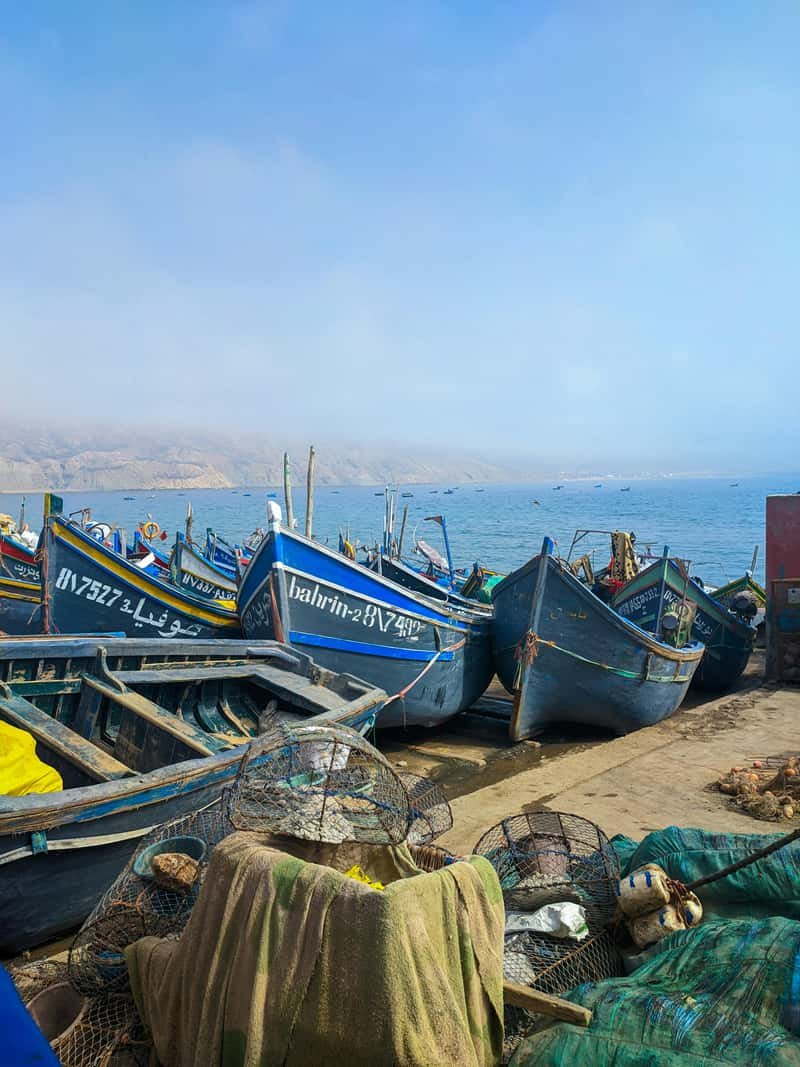
Agadir is the Moroccan city international visitors dismiss most quickly and Moroccan families book most often. Both reactions make sense. The 1960 earthquake took the old town and everything in it, so the guidebook checklist comes up empty here: no medieval medina, no courtyard riad with three centuries of history behind the door, no monument worth a postcard. The city's assets are a long, sheltered Atlantic bay, a climate that behaves itself all year, and a fishing and farming hinterland most beach cities would envy.
The mistake is arriving expecting Marrakech by the sea. Agadir either fits your trip precisely or it has no business being in it, and this guide is mostly about telling those two cases apart.
Agadir At a Glance
Agadir sits at the southern end of Morocco's Atlantic coast, which we cover separately along with Essaouira, Oualidia and Asilah. This guide goes deeper into the city itself and the Souss region behind it.
The City the Earthquake Made
On 29 February 1960, an earthquake destroyed Agadir in a matter of seconds. Roughly 15,000 people died in a city of about 35,000, and around ninety per cent of the buildings came down. The ruined ground was left as it was, and the new city was laid out roughly two kilometres to the south on a modern plan with modern building codes.
Everything about the place follows from that. Agadir reads as a mid-century planned city: wide boulevards, low blocks set back behind gardens, a long promenade, and a logic that assumes you have a car. Knowing this before you land saves you two days of walking around looking for something that was never rebuilt.
The one attraction marketed as an old town dates from 1992. La Médina d'Agadir, out at Bensergao, was begun that year by the Italian-born architect Coco Polizzi and built in Souss masonry, zellige and tadelakt by craftsmen he trained on site. As a working craft village it is worth an hour and worth seeing on those terms. Anyone presenting it as a historic quarter is selling you something.
Where to Stay: The Areas That Matter
Agadir is spread out, and the area you choose determines the shape of your days far more than the hotel does.
Founty and the southern bay. The resort strip, and the reason most people come. Large properties with gardens, pools and direct access to the sand, including long-established addresses such as the Sofitel Agadir Royal Bay Resort. Choose this if you want a stay that takes no effort from arrival to departure, which is often exactly right when travelling with small children or with parents who tire on a medina day.
The Corniche and the marina. The promenade end of the bay, where you can walk to dinner. The marina is the quieter and smarter half, and it is where an evening in Agadir works best: a walk along the front as the light goes, then grilled fish. This is the base for anyone who wants the beach and still wants to leave the hotel on foot.
Talborjt and around Souk El Had. The older town centre, and the part of Agadir where people live. Cheaper, busier, better for food that is not calibrated to European package tastes. There is no sea view and no beach at the door. It is the choice for travellers who want a city around them, not a resort.
Taghazout Bay. Around twenty kilometres north, roughly half an hour by road, and a wholly separate master-planned development: newer international resorts, a golf course, spa culture, and a quieter stretch of coast. Fairmont Taghazout Bay is the best-known address. The trade-off is real, though. You are committed to driving for everything that is not inside the resort.
Taghazout village. The surf town itself, immediately adjacent, and the place on this coast with the most personality. Guesthouses and small hotels instead of luxury, board rental on the street, and a rhythm set by the swell. Choose this if character matters more to you than thread count.
Matching the Area to the Trip
A useful rule: if the point of these nights is rest, stay in Founty or Taghazout Bay and accept that you will drive to anything else. If the point is a change of scene after the imperial cities, stay on the marina so you can walk. If the point is surfing, stay in Taghazout village and skip Agadir proper altogether.
Booking the wrong one is the most common Agadir mistake we correct. The distances between these areas are short on a map and awkward in practice.

What Is Worth Doing
The bay itself
The beach is the reason the city exists in its present form. It faces south-west inside a headland, which makes it calmer than most of the Moroccan Atlantic, and the promenade behind it runs for a long, flat, entirely walkable stretch. Sea temperature sits at roughly 18°C in winter and around 21°C by the end of summer, so this is bracing rather than warm water. Horses and camels work the sand at either end in the late afternoon.
Souk El Had
The most rewarding half day in the city, and the part most resort guests never see. More than 6,000 stalls across thirteen hectares, walled and gated, selling produce, spices, argan oil, ceramics, clothing and a great deal else. Go in the morning, start in the produce halls, and note that the souk closes on Mondays.
Agadir Oufella
The hill above the port carries the ruins of a kasbah built in the Saadian period to hold the coast against the Portuguese, and levelled along with everything else in 1960. Since 2022 a cable car has run to the top in about six minutes. Go late in the afternoon. The view down the whole bay is the best thing to look at in Agadir, and the hill's meaning as a memorial is not lost on anyone standing up there.
Paradise Valley
About an hour north-east, through Aourir and up into the western High Atlas, a palm-shaded gorge of rock pools cut into pink stone. It is a lovely half day and the most popular excursion from the coast. The caveat is the water level, which is seasonal. After winter and spring rain the pools are full; by the end of a dry summer they can be much reduced. Ask what the valley is doing before you commit a day to it.
Argan country and Souss-Massa
The Souss is where argan trees grow, and Agadir sits inside the Arganeraie Biosphere Reserve, designated in 1998 as Morocco's first UNESCO biosphere. Women's cooperatives press the oil by hand and the good ones are worth an hour. The caution is the same as everywhere in Morocco: many roadside operations described as cooperatives are simply shops paying commission. We wrote separately about how the argan stop works and how to tell the two apart.
South along the coast, Souss-Massa National Park was created in 1991 between Agadir and Tiznit and protects one of the last strongholds of the northern bald ibis, along with flamingos, spoonbills and a long list of migratory birds. If anyone in your party is interested in wildlife, this is the most substantial thing in the region.
Taroudant
Around eighty kilometres east, a little over an hour by road, a walled town inside intact earthen ramparts with souks that carry a fraction of Marrakech's sales pressure. Lunch within the walls, an unhurried afternoon, home by evening. It is the day trip we recommend most often to travellers who want a sense of the Morocco that sits behind the coast.
Getting There and Getting Around
Agadir Al Massira airport lies about 25 kilometres from the city, which is a thirty to forty minute transfer depending on where you are staying. It takes direct European flights as well as domestic connections through Casablanca.
The point that catches most people out is that Agadir has no railway station. The southern terminus of Morocco's network is Marrakech, and while a high-speed extension south towards Agadir has been announced, it is not running. Everything arriving overland arrives by road.
By car, Marrakech is roughly 250 kilometres away, about three hours on the A7 motorway. Essaouira is around 175 kilometres up the coast, which is close to three hours on a slower road and makes for a long day trip but a much better overnight. Casablanca is a five-hour drive. For how the options compare across the country, our Morocco transportation guide covers trains, buses, private drivers and self-drive in detail.
Within the city, orange petit taxis handle short hops and should run on the meter. Beyond the promenade, Agadir is not a walking city. The blocks are long and the distances between areas are further than the map suggests.
No Rail Connection
Agadir is the one major Moroccan destination with no train service at all. Plan on flying into Agadir Al Massira, or on a road transfer from Marrakech of about three hours.
If you are combining Agadir with the imperial cities, it is usually cleaner to fly into one end of the trip and out of the other instead of doubling back overland.
When to Come
Agadir Through the Year
Winter (Nov-Feb): Daytime highs usually around 20°C with nights close to single figures. January averages eight to nine hours of sunshine a day. December is the wettest month and even then the rainfall is modest. Bring a jacket for the evenings.
Spring and autumn (Mar-May, Sep-Oct): The best combination of warm days, settled weather and a sea that has had time to warm up. September and October are our first recommendation.
Summer (Jun-Aug): July averages around 26°C, which makes Agadir a genuine refuge when Marrakech is nearing 40°C. Mornings often start under low cloud drawn in off the cold Atlantic current, clearing around midday. Do not book the 9am beach breakfast in August and expect sunshine.
That pattern is worth planning around. The same cold current that brings the morning cloud keeps the city liveable in August, which is why Moroccan families come down from the interior in the school holidays. For the wider picture, see our guide to when to visit Morocco.
When Agadir Earns Its Nights
Agadir works for families who need pools, short transfers and a break from cultural touring, and for the same reason on family itineraries that include older relatives, for whom a day in a medina is hard work. Surfers have their own version of it, in which Taghazout is the destination and Agadir merely the airport. It also works as decompression at the end of a long circuit, and in high summer when the interior is punishing.
As your only stop in Morocco it fails. If you have seven days and you want the imperial cities and the desert, Agadir is the thing to cut. There is no historic quarter to step out into, whatever you were hoping, and the Atlantic here will never give you Mediterranean water temperatures.
The test is simple. If you can name what you want these nights to do for the trip, Agadir will probably do it well. If you added it because a beach seemed like a good idea in principle, the days tend to feel empty by the third one.
Quick Agadir Reference
Planning Agadir Into a Trip
Agadir earns its place at the end of an itinerary more often than at the start. After the medinas and the drive down from the mountains, a few flat, unhurried days by the water are worth more than another city. That is how it appears in most of our honeymoon and family journeys, and why it rarely appears in short stays.
Tell us what the rest of the trip looks like and we will say plainly whether the coast belongs in it. Sometimes the answer is a second night in Marrakech instead.
Wondering whether Agadir fits your Morocco itinerary? Tell us what you are planning and we will tell you how many nights the coast is worth and where they belong in the routing.
Frequently Asked Questions
- Is Agadir worth visiting?
Agadir is worth visiting if you want a sheltered Atlantic bay, mild weather and low-effort logistics, particularly with children or older parents. If your priority is historic Morocco, do not build a trip around it. The city was rebuilt from scratch after the 1960 earthquake, so it has no old medina, no historic riads and no monuments of the kind you find in Marrakech or Fes. Most travellers give it three or four nights of rest inside a longer itinerary; very few make it the trip.
- Where should I stay in Agadir?
Founty at the southern end of the bay is the resort strip, with gardens, pools and direct beach access, and it suits families who want everything in one place. The Corniche and the marina put you on the promenade within walking distance of restaurants. Talborjt, the older town centre near Souk El Had, is the more Moroccan and more affordable choice, though it has no sea view. Half an hour north, Taghazout Bay holds the newer resorts and the golf, and Taghazout village next door is the surf town with the strongest character on this coast.
- Does Agadir have a train station?
No, and it is the detail that catches most people out. Morocco's rail network stops at Marrakech; a high-speed extension south towards Agadir has been announced but is not yet operating. You arrive by air into Agadir Al Massira airport, about 25 kilometres from the city, or by road from Marrakech: roughly 250 kilometres, about three hours on the A7 motorway.
- What is the weather like in Agadir?
Agadir has mild winters and warm rather than hot summers. January daytime highs are usually around 20 degrees Celsius with nights close to single figures, and January averages eight to nine hours of sunshine a day. July averages about 26 degrees, which makes Agadir a genuine refuge when Marrakech is approaching 40. Sea temperature runs from roughly 18 degrees in winter to around 21 in late summer. Summer mornings often start under low cloud that clears around midday.
- What is there to do in Agadir besides the beach?
Souk El Had, with more than 6,000 stalls across 13 hectares, is the city's most rewarding half day and is closed on Mondays. The Agadir Oufella hill above the port, reached by cable car since 2022, holds the ruins of a Saadian-era kasbah and the best view of the bay. Beyond the city, Paradise Valley in the western High Atlas is about an hour away, the walled town of Taroudant just over an hour east, and Souss-Massa National Park lies along the coast to the south.