Morocco Travel Costs at Every Budget, Line by Line
Morocco works at almost any price. $50 a day buys hostel beds, buses and street food. $1,000 a day buys a luxury riad, a driver on call and a schedule somebody else worries about. Most travelers land between the two. If you're visiting Morocco for the first time, the useful thing to work out is what each step up the range changes about your days.
The goal isn't spending the least or the most. It's spending where the money changes something. Three decisions move the total further than any of the others: seasonal timing (shoulder season saves 20-30%), transportation choices, and where you sleep.
Travel Costs At a Glance
Cost Ranges by Travel Style
Most trips fall into one of three bands. The gap between them shows up less in what you see than in how much of the day you spend arranging it.
Budget Travel ($50-80 per person per day): This is hostel dormitories or very basic hotels, public transportation, street food with occasional restaurant meals, free or low-cost activities, and self-guided exploration.
It works for people with more time than money: students, solo travelers who don't mind improvising, anyone whose first constraint is the total. You also see a version of the country most visitors miss, because you're on the same buses and in the same cafes as everyone else.
The trade-offs are comfort, efficiency and predictability. Budget rooms vary wildly from one to the next. Buses leave when the timetable says, not when you're ready. A stomach that copes with street food helps. And a fair share of every day goes on working out where you are and how to reach the next place.
Mid-Range Travel ($150-250 per person per day): At this level you're in comfortable three-star hotels or modest riads, walking and taking taxis with the occasional private transfer, eating in restaurants with street food in between, and buying a guide for the things that need one.
Mid-range is the most flexible of the three. You get your own bathroom, a room you can rely on, several ways of crossing the country and a guide when one is worth having. Most first-time visitors and families end up here.
It's also the band where reading the reviews properly pays. Quality swings by city and by season, and two riads at the same nightly rate can be nothing alike.
Luxury-Private Travel ($400-800+ per person per day): At the top of the range: boutique riads and luxury hotels, a private driver for every intercity leg, expert guides, cooking classes with chefs worth naming, restaurants somebody has eaten in first, and someone else holding the schedule.
What this buys is the absence of friction. The rooms are beautiful, the car is yours, the bookings are confirmed before you land, and most problems are solved before you hear about them.
The hotels are the visible part and the smallest part. What you are paying for is consistency: the same standard of knowledge and attention on day nine as on day one. This is the category where YVM operates, below the palace-and-private-jet tier, at the level where the curation is the product.
Typical Expenses by Category
Here is what the individual pieces cost, so you can build your own arithmetic.
Accommodation Cost Reality
Budget: $15-30/night (hostel dorm or basic private room)
Mid-range: $80-150/night (comfortable riad/hotel, breakfast included)
Luxury: $200-500+/night (exceptional properties, full service)
Seasonal variation: High season (spring/fall) runs 30-50% higher than shoulder season. Marrakech costs more than smaller cities.
Desert camps: $50 (basic Berber tent) to $400+ (luxury with beds, bathrooms, dining). The difference is substantial in comfort.
Accommodations:
- Budget hostel/basic hotel: $15-30 per night (dormitory or basic private room)
- Mid-range hotel/riad: $80-150 per night (comfortable private room, breakfast included)
- Luxury riad/boutique hotel: $200-500+ per night (exceptional properties, full service)
Prices swing hard by city and by season. Marrakech costs more than the smaller cities, and high season (spring, fall, major holidays) runs 30-50% higher than shoulder season.
Desert camps range from $50 (basic Berber tent) to $400+ (luxury camps with proper beds, bathrooms, dining service). What the extra money buys is a real bed and a bathroom you don't share.
Meals:
- Street food: $2-5 per meal (fresh bread, grilled meat, tajine from stalls)
- Casual restaurant: $8-15 per meal (neighborhood restaurants, cafe dining)
- Mid-range restaurant: $20-35 per meal (good riad restaurants, established venues)
- Fine dining: $50-100+ per meal (top Marrakech restaurants, chef-driven experiences)
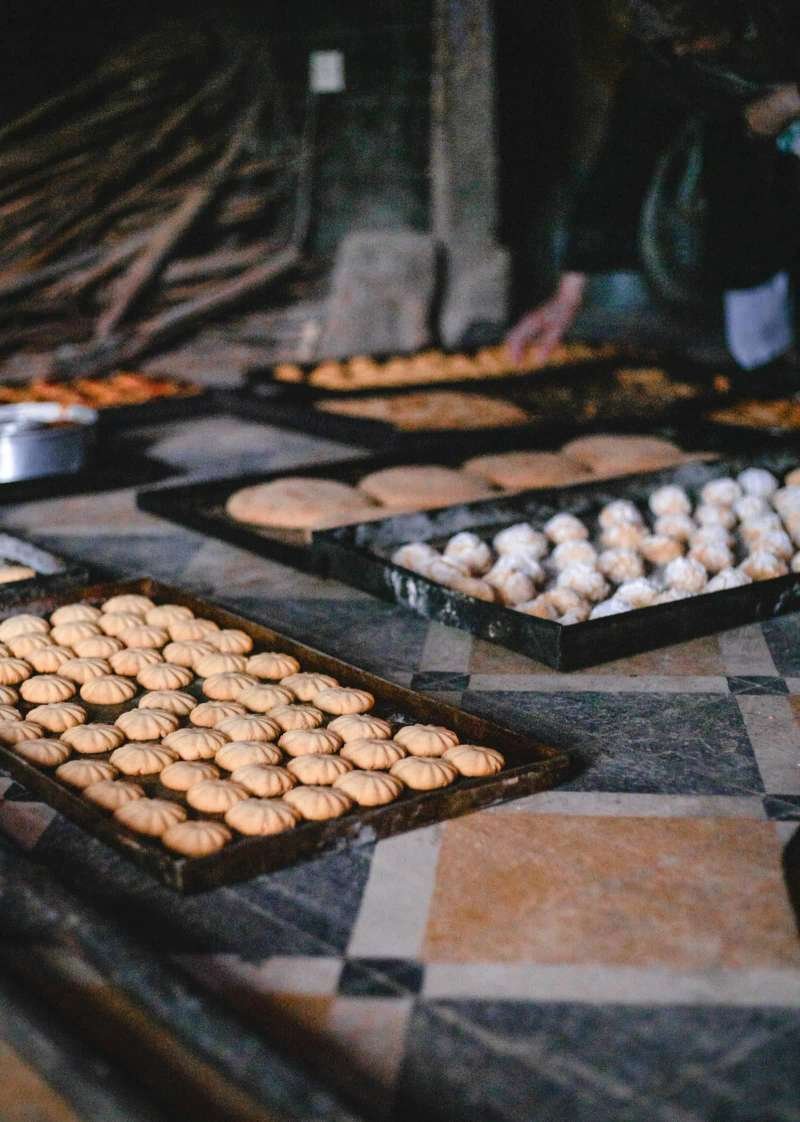
Street food in Morocco is good on its own terms. Grilled sardines at a coastal stall, bread out of a neighborhood oven, a tajine at a market restaurant: this is what people here eat on an ordinary Tuesday.
Dinner at your riad is often the best value in town. The courtyard is beautiful, the cooking is careful, and the price is moderate because you aren't paying for a location or the passing trade.
Transportation:
- Local petit taxi: $1.50-3 per ride within cities
- Intercity train: $10-25 depending on distance and class
- CTM bus: $8-20 for major routes
- Private driver day rate: $80-150 depending on distance and vehicle
- Multi-day Sahara trip with driver: $300-500 for 2-3 days
Transport is where independent and organized budgets diverge most. Public transport is cheap, slow, and assumes you can find the station. A private driver costs more and changes what the day between two cities is for.
Activities and Entry Fees:
- Historic site entries: $1-7 per site (palaces, gardens, museums)
- Cooking class: $40-100 per person depending on quality
- Hammam (public): $5-15 including scrub
- Hammam (private spa): $40-80 for treatment
- Guided medina tour: $30-60 depending on duration and guide quality
- Desert camp (included in Sahara trip pricing above)
Entry fees are surprisingly modest. Morocco has never charged much for access to its historic sites. A full day of sightseeing might cost $10-20 in entry fees total.
Experiences vary more in cost. A cooking class at a tourist-focused venue differs from one with a skilled home cook or professional chef. The price reflects expertise, setting, and group size.
Shopping and Souvenirs: This one is entirely up to you. You can spend nothing, or you can spend thousands.
Typical souvenir budget: $50-200 for several items (scarves, small leather goods, spices, pottery) Serious purchases: $200-2,000+ for quality carpets, significant leather goods, or artisan crafts
Good handicrafts are worth the money. A hand-knotted Berber carpet at $400-800 is reasonable for months of work; a hand-stitched leather bag at $80-120 is fair for the hours in it. You will still be using both long after the trip.
What Affects Costs
Four things move the number once you've chosen a band.
Seasonal Cost Variations
High season (Mar-May, Sep-Nov): Accommodations run 30-50% higher. Popular riads fill completely. Flights cost more. No negotiation leverage.
Shoulder season (Feb, Jun, early Dec): 20-30% savings with good weather still. Best value timing.
Low season (Jan, late Dec, Jul-Aug): Cheapest rates but weather trade-offs (winter cold or summer heat).
Season: High season (March-May, September-November) runs 30-50% higher than low season for accommodations. Popular riads and desert camps fill completely, and a full riad has no reason to negotiate. Flights cost more.
Shoulder season (February, June, early December) saves 20-30% and the weather is still good. Winter (January, late December) and summer (July-August) are the cheapest months, for reasons you feel the moment you step outside.
City Versus Rural: Marrakech and touristy destinations cost more than smaller cities and rural areas. The same quality riad that's $200 in Marrakech might be $120 in Meknes. Meals, taxis, and activities follow similar patterns.
Marrakech is worth its premium. The point is only that the same money buys more once you leave it.
Independent Versus Organized: Self-organizing saves money at the point of booking and spends it later in hours. Two hours finding a room, agreeing a price and settling in are two hours of the trip.
Organized travel costs more at the outset and gives you the hours back to spend in Morocco. Our approach is to take the logistics off you and show you the costs anyway.
Group Size: Solo travelers pay the full room rate and have nobody to split the car with. Couples share both. Groups of 4-6 get the best per-person numbers on private travel.
It shows up most in the car. A solo traveler pays the same $400 for a three-day Sahara trip as a couple or a family of four does. Split four ways, that is $100 each for the identical vehicle and driver.
Where to Invest: Money Well Spent
A few line items repay far more than they cost.
Worth the Investment
Quality accommodations: Difference between $80 and $150/night is substantial. Poor accommodations affect sleep, mood, energy, cascading through your trip. Good riads provide beautiful settings, knowledgeable staff, excellent breakfasts, tranquil spaces. Matters more than most travelers anticipate.
Private drivers: Per-day cost ($80-150) divided by passengers becomes reasonable. Turns the drive into part of the trip: the land changing between Marrakech and the Sahara, kasbahs to stop at, photographs nobody planned.
Cooking classes: Good class ($60-100) teaches techniques for home use, provides cultural context, creates lasting memories. Costs little against the trip total, and you keep using it.
Accommodations: The difference between $80 and $150 a night shows up in the room, the address and the service, and it is not a small one. You start the day somewhere pleasant, and you come back to it in the evening with your feet aching.
A bad room costs you sleep, and lost sleep spreads into everything else. The $50-70 a night you save on a cheap hotel comes back out of the days.
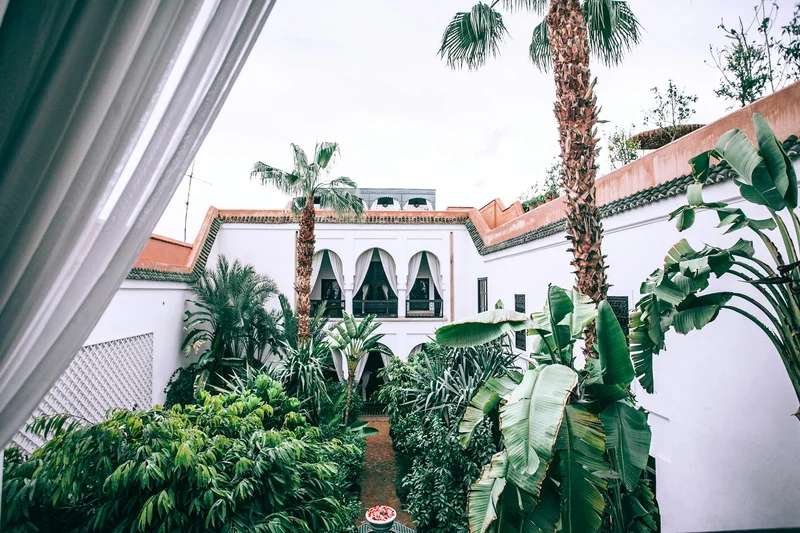
Good riads (which is not the same thing as luxury ones) give you a courtyard, staff who know the city, a proper breakfast and somewhere quiet to sit after the medina. It matters more than most people expect before they arrive.
Private Drivers: On the roads between cities, a private driver changes the day itself. The day rate ($80-150) divided by four passengers is not much per head, and being able to stop where you want turns the drive from dead time into the part people talk about afterwards.
The drive from Marrakech to the Sahara takes most of a day, and in a car that day is worth having: the land changes several times over, there are kasbahs to stop at and passes to photograph. On a bus you watch it through glass and keep going.
For families it removes half a dozen small stresses a day. For cultural exploration it means you can stop at the workshop you happened to notice. Everyone else gets a car that turns up when it said it would.
Cooking Classes: A good cooking class ($60-100) sends you home able to make the thing, which is more than most souvenirs manage. Against the cost of the trip it is almost nothing.
Choose carefully. In the factory classes you watch more than you cook. Small groups with a real teacher, a professional chef or a home cook who has been doing it for decades, are worth the money.
Quality Handicrafts: One good piece beats five mediocre ones. A carpet, a serious leather bag or a piece of artisan pottery will still be in your house long after the rest has been given away.
The carpet you negotiate from $800 to $500 represents months of hand-knotting work, and at $500 the weaver is still fairly paid. The printed "carpets" at $80 are the false economy: they look cheap in a hallway at home, and they wear through.
Where You Can Save: Money Not Spent
Elsewhere, cutting costs you nothing at all.
Smart Savings Without Sacrifice
Street food: Moroccan street food is excellent. You're eating what locals eat, which happens to be inexpensive and often superior to tourist restaurants. Fresh bread, grilled meat, market tajines cost 20-30% of restaurant equivalents.
Public hammams: Tourist spas charge $50-100 for what public hammams provide at $10-15. More authentic experience too. Scrub is thorough in both. Luxury hammam provides nicer towels and quieter atmosphere. Whether that's worth $60-80 premium depends on priorities.
Walking: Most medina sightseeing on foot. Good shoes eliminate taxi needs. Saves money while providing better experience seeing street life.
Street Food: Moroccan street food is excellent, and eating it is no hardship. It is what people here eat, it costs very little, and it is often better than the version served to visitors indoors.
Fresh bread from neighborhood bakeries. Grilled meat from street vendors. Tajine from market stalls. Mint tea at sidewalk cafes. These cost 20-30% of restaurant equivalents and often taste better.
Public Hammams: A spa hammam charges $50-100 for what the public one down the street does for $10-15. The public bath is also the more interesting hour, since you are in a neighborhood facility with the neighborhood.
The scrub is thorough either way and the steam is hot in both. What the expensive one adds is better towels and quiet. Whether that is worth a $60-80 premium is your call.
Walking: You see the medinas on foot anyway. A decent pair of shoes removes the need for taxis inside the old cities, which saves money and is the better way round: you notice the shops, the street life, and how the quarters are put together. Packing the right footwear and essentials matters far more than the extra clothes and gear you could buy here for less.
The modern quarters (Guéliz in Marrakech, the ville nouvelle in Fes) are just as walkable. The occasional petit taxi for a longer hop costs $2-3.
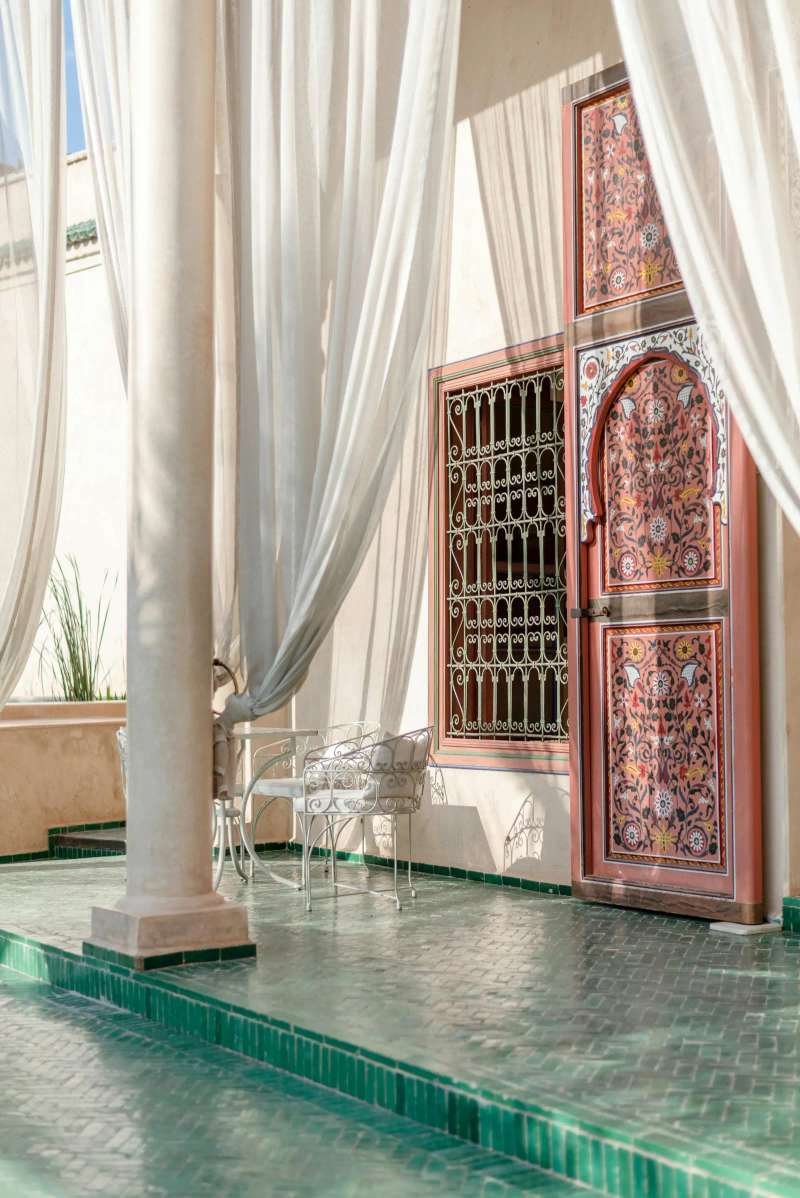
Riad Terraces and Social Spaces: Most riads have a roof terrace or a courtyard with seats. Tea up there is free or close to it (20-30 dirhams), and it does the job a cafe would do for several times the price.
The view is usually better than the cafe's as well. You are above the crowds with the rooftops in front of you, the tea is good, and nobody is waiting for your table.
Budget Ranges for Common Trip Types
Realistic daily per-person costs for different trip structures:
10-Day Budget Independent Trip: $50-80 per day = $500-800 total
- Hostels/basic hotels
- Public transport
- Street food with some restaurants
- Self-guided exploration
- Minimal organized activities
10-Day Mid-Range Semi-Organized Trip: $150-250 per day = $1,500-2,500 total
- Comfortable hotels/modest riads
- Mix of public transport and private transfers
- Restaurant meals
- Some guided activities
- Mix of independence and organization
10-Day Curated Private Trip: $400-800 per day = $4,000-8,000 total
- Boutique riads/excellent hotels
- Private drivers throughout
- Curated dining and experiences
- Expert guides for activities
- Comprehensive logistics management
These ranges are per person and assume double occupancy for accommodations. Solo travelers add 30-50% to accommodation costs. Groups of 4-6 reduce per-person costs by 15-25%.
The Real Question: Value Versus Cost
Value is the relationship between what you pay and what comes back, and price alone predicts it poorly in both directions.
A honeymoon trip is mostly the room and the absence of anything to solve, which is why the money goes there first.
A family trip is mostly the car. The premium over public transport buys you the ability to leave when the children are ready and stop when they need to, which on a long drive is worth the difference.
A cultural focus trip lives or dies on the guide. Access to a working workshop, and somebody who can explain what the craftsman's hands are doing, is not something you can arrange from the street.
Budget travel works if you have time to spare and a high tolerance for improvisation. Mid-range works if you want some of the decisions made for you but not all of them. Private travel works when time is scarcer than money.
If you are caught between two bands, spend at the higher one on the days that involve a long drive and at the lower one on the days you stay in a single city.
Practical Money Matters
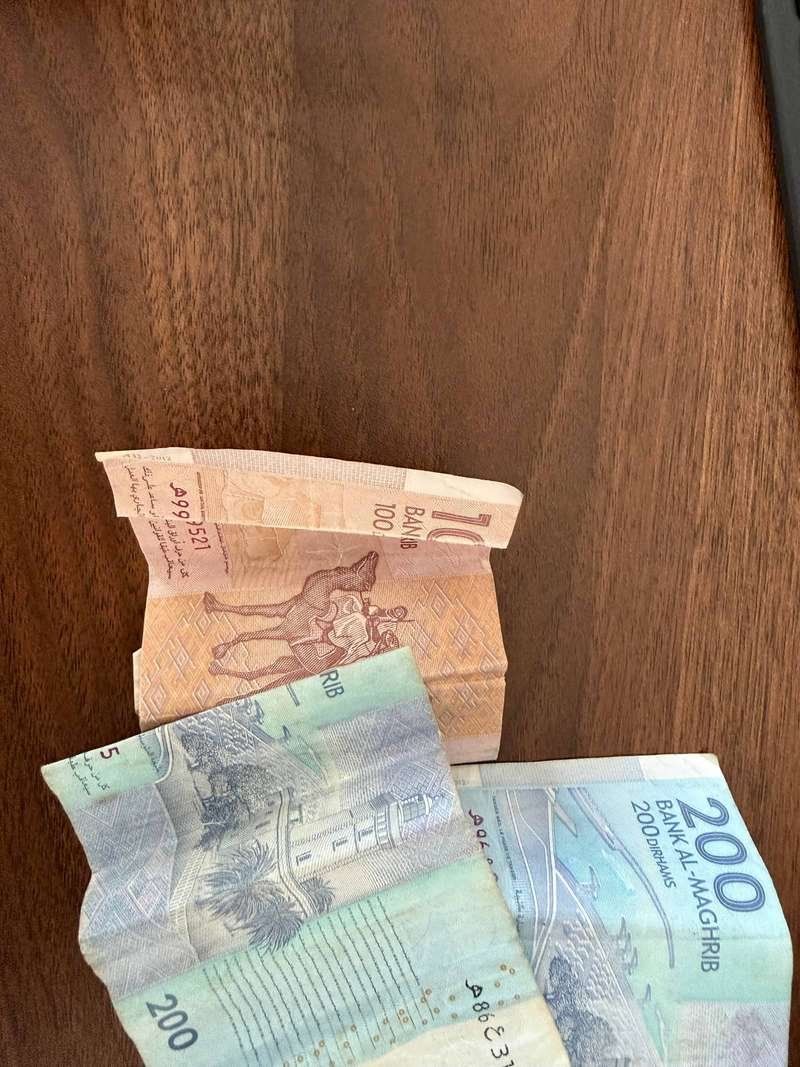
Currency: Moroccan dirham (MAD) only. Exchange at airports, banks, ATMs. The dirham is managed against a basket weighted toward the euro, so the euro rate holds close to 11 dirhams; the dollar rate drifts more. Check both before you travel. Bank Al-Maghrib publishes the official rates daily at bkam.ma.
Cash vs cards: Many riads/restaurants accept cards. Medina shops, taxis and street vendors require cash. Carry a mix, and tell your bank before you travel.
Tipping guidelines: Riad staff 50-100 MAD total at trip end, restaurant servers 10-15%, petit taxis round up, private drivers 100-200 MAD/day, guides 150-250 MAD/day. Adjust based on service quality.
Quick Budget Reference
Send us the outline of the Morocco trip you have in mind and we will price it line by line, including the parts we think you could skip.
Frequently Asked Questions
- How much does a trip to Morocco cost per day?
Three bands, roughly. Budget travel runs 50-80 dollars a day on hostels, buses and street food. Mid-range sits at 150-250 dollars a day, which buys a comfortable riad, a mix of transport and restaurant meals. Private travel with a driver throughout, boutique hotels and expert guides starts around 400 dollars a day and climbs past 800.
- How much does a luxury Morocco trip cost?
About 4,000-8,000 dollars per person for 10 days, covering boutique riads and excellent hotels, private drivers throughout, curated dining, expert guides and the logistics behind all of it. Two line items move that figure more than the rest: the desert camp at 200-400 dollars a night, and the Marrakech riad at 200-500.
- How much should you tip in Morocco?
Expected, but modest: 50-100 dirhams total for riad staff at the end of your stay, 10-15 percent for restaurant servers, rounding up for petit taxi rides, 100-200 dirhams per day for private drivers, and 150-250 dirhams per day for guides. Move up or down with the service. Keep small notes on you, since most medina shops, taxis and street vendors require cash anyway.
- What is included in a private Morocco tour?
Typically: boutique riad accommodation, a dedicated driver and vehicle for every intercity leg, fuel and tolls, curated dining, expert local guides at the sites, cooking classes, desert camp stays, and someone holding the schedule so you do not have to. Flights, personal shopping and some entry fees are usually left out, so ask for the exclusions in writing before you sign anything.
- Is Morocco expensive for tourists?
No. Morocco is not expensive by European or Gulf standards. Entry fees to historic sites cost 1-7 dollars each. Street food meals run 2-5 dollars and are often better than the restaurant version. A public hammam with a scrub costs 5-15 dollars. Shoulder season travel from November through March saves 20-30 percent on accommodation compared to peak spring and fall pricing.