How We Choose Accommodations in Morocco, and Why It Shows
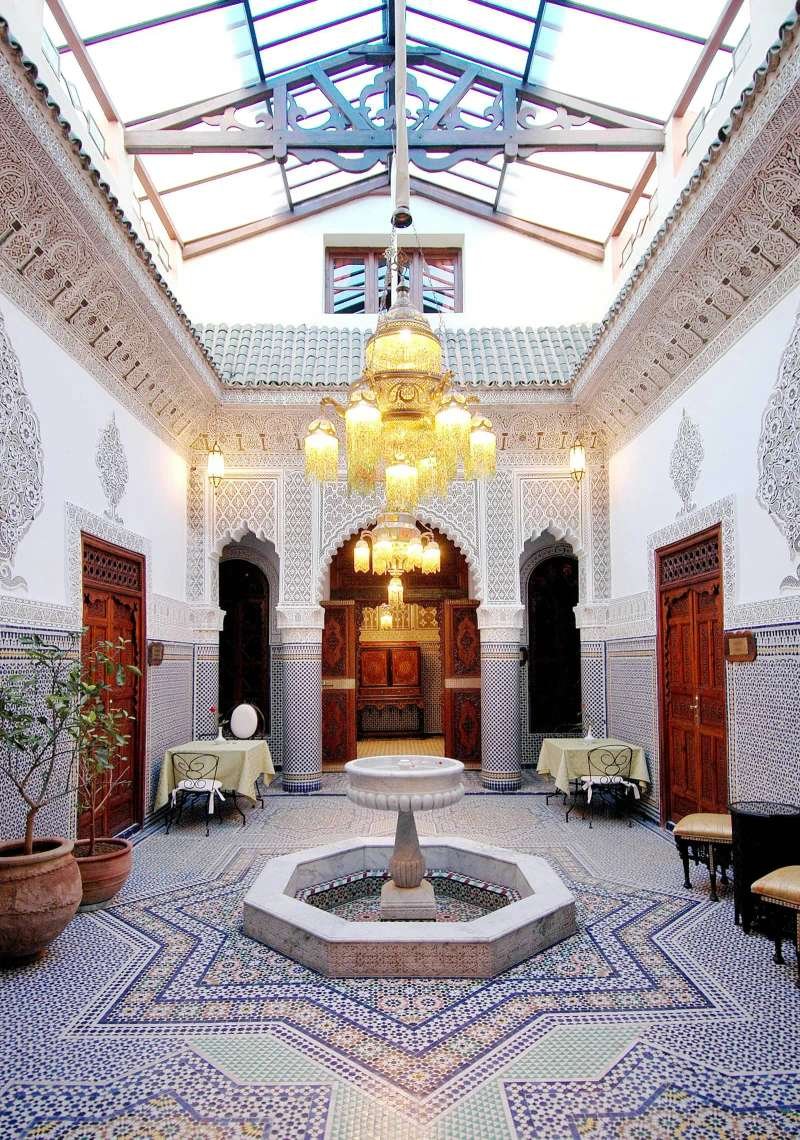
Accommodation decides more about a trip than most travelers expect. The riad you come back to at the end of the day, the breakfast that starts the next one, the person at the desk who fixes the thing you cannot fix, the bed that lets you sleep off a long drive. None of it is decorative.
We've spent years building relationships with properties throughout Morocco. Not through online research or booking platforms, but through repeated in-person evaluation. Staying there. Eating the food. Watching how problems get solved. Learning which properties suit which travelers.
This process isn't efficient. It requires time and consistent presence in Morocco. But it produces knowledge that booking platforms and review sites don't provide. We know which riads have temperamental hot water in winter. Which owners are responsive at midnight when flights are delayed. Which breakfast cooks understand dietary restrictions. Which staff care and which are going through the motions.
That is the level of detail a good match needs.
Our Selection Process
How We Evaluate a Property
In-Person Evaluation: Every property we use has been evaluated in person, usually more than once and in different seasons. We stay as guests, pay attention to the restoration and the upkeep, and watch how the staff deal with the other people in the house.
A first visit shows the obvious things: the architecture, the location, whether the room is comfortable. Later visits show whether any of it holds. Is the maintenance sustained? Does staff turnover show in the service? Do standards survive the low season?
We're watching for the things guests notice without noticing. Whether the hot water stays hot. Whether breakfast changes from one morning to the next. Whether the wifi reaches the top floor. Whether the walls carry noise from the alley, and whether a first-time guest can find the door at all.
None of it appears in a property description or in a photograph.
How We Read a Restoration
For riads specifically, restoration quality separates exceptional properties from adequate ones. True restoration preserves original architectural elements and commissions new work using traditional methods.
We examine zellige tilework precision: Are patterns aligned across surfaces? Are cuts clean? Or are they printed tiles mimicking traditional work?
We check tadelakt application: Does the plaster have proper polish and depth? Does water bead on the surface? Or is it standard paint pretending?
We assess carved cedar work: Are there individual tool marks indicating hand carving? Does the wood smell of cedar? Or is it machine-cut pine with stain?
Most travelers can't tell these apart, and there is no reason they should have to. That is the part of the job that happens before you arrive.
Watching the Staff: Service depends on what the staff know, how they behave, and how much they are allowed to decide. We watch them with the other guests, not only with us.
Do they anticipate? A guest mentions the tanneries at breakfast; does somebody volunteer the best hour to go and how to get there, or do they wait to be asked?
How do they handle problems? When the hot water fails or the room is not ready, is it absorbed quietly or handed to you?
How deep does the knowledge go? Can they name the restaurant two streets away that is worth the walk, point you somewhere that is not on the tour circuit, and get a car to the door at short notice?
Staff quality tracks owner investment almost exactly: training, pay, and how long people stay. A house where the team has been together for years operates on a different level from one that rehires every season.
What We Look For
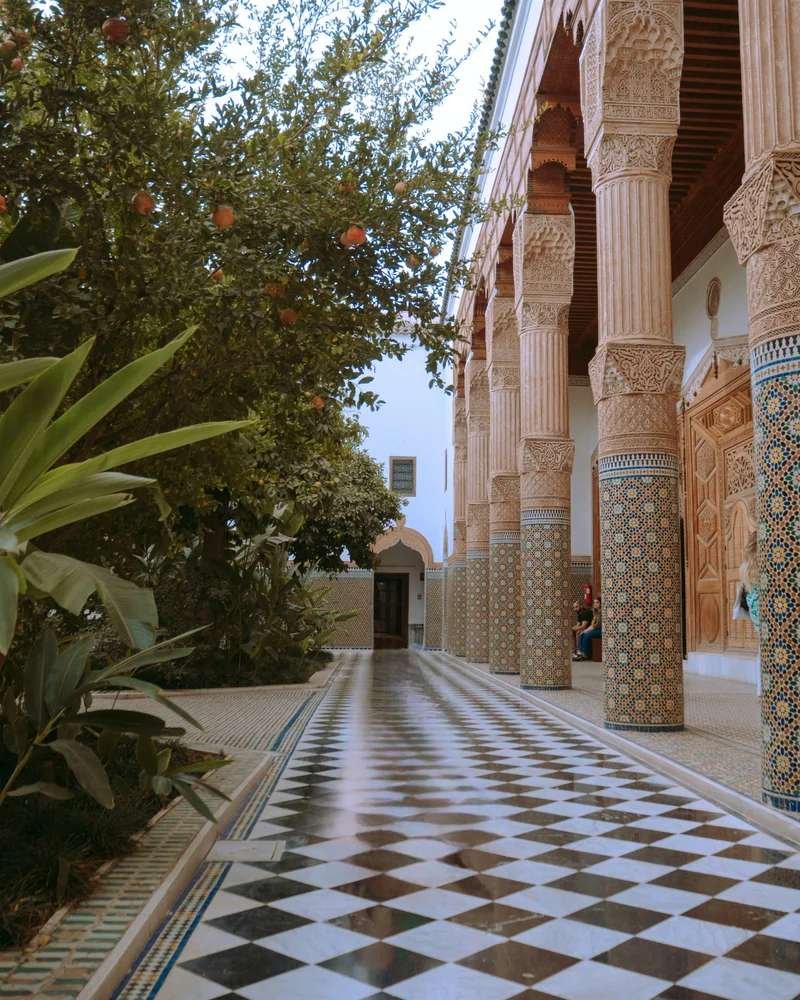
Architectural Authenticity: Not every old building in the medina is an architectural treasure. Some were modest homes with basic decoration; others were merchant houses with elaborate detail.
We look for properties where the restoration respected the original character. An elaborate 18th-century palace should be restored as one. A simpler 19th-century family home should be restored at its own scale, not dressed up as something grander.
Authenticity is not austerity. It means the building's history and its current presentation tell the same story: cedar carved in a period-appropriate style, zellige that follows traditional geometry, rooms that keep their original proportions. Architectural styles also vary significantly by region, and a good restoration knows the difference.
False authenticity is worse than honest modernization. Riads that apply decoration without understanding historical context end up saying nothing at all. Given the choice, take the frankly modern hotel over the badly done fake riad.
Fitting In the Modern Systems: Historic buildings still need plumbing, power and air conditioning. Done well, none of it registers.
Pipework is buried. The air conditioning works and you do not see it. There is no conduit stapled across the plaster, and no router screwed to an ancient wall.
That takes thought and money. Cheap solutions are the ones you notice.
Then the practical questions. Is the bed comfortable or is it a photograph? Is there enough water pressure for a proper shower? Do the rooms hold heat in winter without a plug-in heater? Can you sit at that desk and work for an hour?
Tourist-focused riads sometimes prioritize appearance over function. Luxury requires both.
Location Within Medinas
Riad location is a trade-off. Deep in the medina you get the neighborhood and the quiet; near the gates you get an easier arrival and a walk you can navigate on the first night.
We match location to the traveler. Anyone with mobility concerns is better off near a gate. Anyone who wants to be inside the neighborhood, not beside it, should accept the longer walk.
We know which alleys are quiet at night. Which neighborhoods have good restaurants nearby. Which streets the delivery carts come down before the rest of the medina is awake. Understanding medina navigation and neighborhood dynamics shapes these recommendations.
Maintenance: A good restoration left alone falls apart quickly. There are visible tells.
The grout between the zellige tells you how often anyone cleans it. A fountain that is off is a fountain nobody has repaired. Gardens need daily attention and show it when they don't get it. And the edges of the paintwork will tell you the year of the last coat.
We go back to the same properties year after year. Standards that hold say something about the owner. Standards that slip say something else, usually that the money has gone somewhere newer.
Different Properties for Different Travelers
Honeymoon Accommodations: Honeymoon properties ask for different things. Privacy counts for more than it does on any other trip, and the small gestures are noticed because there are only two of you to notice them.
We choose the better rooms: more space, a view worth waking up to, and staff who know what the week is for and do not need it explained.
Breakfast whenever you surface, rose petals on the bed, a terrace nobody else uses. Not every excellent riad does any of it.
Small properties (4-8 rooms) usually work better than larger riads here. Fewer people at breakfast.
Family-Friendly Spaces: Family travel needs a different list entirely: space, safety, and staff who are pleased to see children at breakfast.
We look for family rooms or connecting suites, ground-floor options so the stairs stop being a worry, and a pool or a courtyard the children can be turned loose in. And owners who mean it when they say children are welcome.
Staff who understand what children need make an enormous difference: meals at odd hours, something plain on the menu, a bottle warmed without a discussion, a high chair that exists.
Plenty of excellent riads set an age minimum or decline children altogether. That is not a failing; a house built around an open courtyard and a stone staircase is not a house for a toddler. We book from the ones that are equipped for it.
Traveling Alone
Solo travel costs more and feels different. You pay the single supplement or the whole room. You eat alone unless you go looking for company. You find your own way back through the medina at night.
Some properties handle this well. Breakfast at a shared table, staff who will walk you to the corner the first time, other guests who talk. Sociable without anybody insisting on it.
Other properties, excellent in every other respect, are lonely. A large riad where every other room holds a couple. No shared space at all. Service so formal that nobody speaks to you all evening.
We match the person to the house. Someone traveling to be alone gets a different list from someone traveling to meet people.
Groups: A group needs somewhere that works collectively and still lets people disappear for an hour.
Taking the whole riad usually solves it. Everyone is under one roof, the courtyard does the work of a hotel lobby, the rooms do the rest, and meals stop being a logistical problem.
Size matters. A four-room riad suits two couples; an eight-room riad takes an extended family. What matters more is whether there is a room big enough for all of you to sit in at once.
Why We Favor Riads Over Hotels
Most YVM accommodations are riads rather than hotels. There are three reasons.
Authentic Experience: Riads give you architectural and cultural context a hotel cannot. The courtyard, the materials, the age of the walls. These are Moroccan houses that people lived in, adapted for guests, not reproductions built for them.
A few nights in one teaches you how the traditional Moroccan house works. The courtyard is the air conditioning. The inward-facing plan is the privacy. The mass of the walls is the silence.
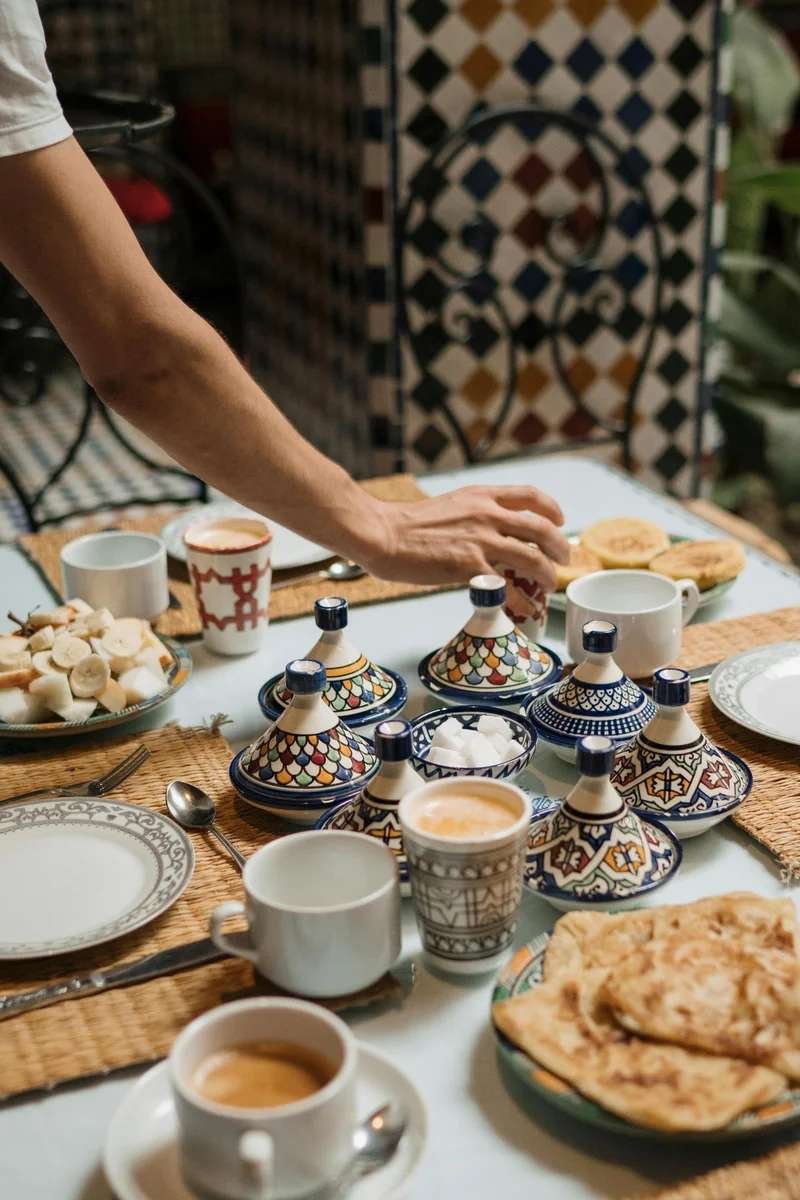
Better Food: Small operations do breakfast better. The riad cook is working in a real kitchen at a volume one person can manage; the hotel is producing breakfast at industrial scale in banquet format.
The bread is fresher. The msemen is cooked to order. The orange juice comes from oranges. The spread shifts once the kitchen learns what you eat. Traditional cooking methods and fresh ingredients make a tangible difference in breakfast and meal quality.
Riad dinners, where they are offered, are home cooking. That is usually the better meal.
Personalized Service: An eight-room riad with three staff knows every guest individually. They pick up your preferences within a day, and the service shapes itself around your patterns.
Hotels are professional without being personal. The competence is high and the customization is not. Some travelers prefer it that way, and we book accordingly.
When Hotels Make Sense
Beach properties: Modern hotels with direct beach access work better than riads.
Mountain locations: Purpose-built lodges do the mountains better than an adapted house.
Large groups: Hotels accommodate groups more easily than booking multiple riads.
Accessibility needs: Hotels typically offer elevators and accessible rooms riads can't provide.
Business travel: Hotels provide business facilities and services riads don't offer.
We use hotels where they are the better answer. Our accommodation philosophy is about the right match, not a preferred category.
What a Direct Relationship Buys
Direct Booking: We book with the property itself, not through an aggregator. That buys leverage and speed a platform cannot.
A delayed flight means one call, and dinner is held or the check-in moves. Dietary requirements go across in advance and in detail. Anniversaries and birthdays get arranged before anyone arrives.
A platform booking gets the standard treatment, because there is nobody at the other end who knows who you are.
When Things Go Wrong: Things go wrong on every trip. Plumbing fails, weather closes a pass, somebody gets ill.
The relationships are what make the fix fast. We know who to call, and the property picks up, because we send business consistently and treat them fairly.
A full riad finds a room in an emergency. An off-duty manager comes back to the house. An owner abroad starts making calls.
None of that is available to a one-off booking. It comes from years of behaving the same way every time.
What Can Be Arranged
A hotel room comes as it comes. A small property, booked through someone who knows us, can be arranged.
Honeymooners want the room set up before they walk in. Families want connecting rooms or a ground floor. Photographers want the room with the light. Anyone staying a fortnight wants to be near the breakfast, not four flights above it.
The properties we use regularly say yes to this, because they know the requests will be reasonable and the guests well matched.
Coordination: When our travelers are staying with a partner property, the two ends talk. The manager tells us about anything that affects comfort. We time drivers, guides and activities around the rhythm of the house instead of against it.
The morning starts when breakfast can. The day trip gets back before the kitchen closes. A late checkout for an evening flight is agreed weeks ahead, not negotiated at the desk.
Guests do not see any of it, which is the intention.
Why We Bother
None of this is the glamorous part of travel planning. It takes time, it never finishes, and it is hard to sell because you cannot photograph it.
It is also the thing most likely to decide how a trip is remembered. A bad riad colors everything around it, including the parts that went well.
So we keep doing the unglamorous half: the visits, the relationships, the checking. We measure whether it works in return guests and in the people they send us.
What a Booking Site Cannot Tell You
Platforms show photos and reviews: We have slept in the rooms, in more than one season.
A review is one night in one month: We watch whether the standards held over years.
Star ratings count amenities: We look at the restoration, the staff, and whether the location suits you.
Generic matching works by category: We match a particular house to a particular set of people.
That is what the visits and the relationships are for.
What We Check
Tell us who is traveling and how you like to be looked after. Let's discuss your trip and we'll tell you which houses fit, and which ones we would keep you out of.
Frequently Asked Questions
- Should I stay in a riad or hotel in Morocco?
A riad, in the cities. The architecture, the breakfast, and the fact that a small house learns your name by the second morning are things a hotel cannot reproduce. Hotels win on the coast, in the mountains, for large groups, and for anyone who needs a lift instead of a staircase.
- How do you choose a good riad in Morocco?
Look at the craft first: whether the zellige patterns line up across a surface, whether the tadelakt has depth or is paint pretending, whether the cedar carries tool marks. Then look at the staff, and at how the modern systems were fitted - wifi that works, air conditioning that has not been bolted across the plaster. Photos and reviews will not tell you any of that, which is why we stay in the places ourselves, across more than one season.
- Are riads in Morocco suitable for families?
Some are, most are not. What you want is a family room or suite, a ground-floor option so the stairs stop mattering, a pool or a courtyard the children can use, and staff who like having them there. Plenty of excellent riads set an age minimum, and they are usually right to.
- What is the difference between booking a riad directly vs through a platform?
Leverage. A platform booking gets you a room; a direct relationship gets you the room held when the flight lands at midnight, meal times moved to suit you, drivers and activities timed around the house, and somebody who picks up the phone when something goes wrong.
- What makes a luxury riad different from a budget riad in Morocco?
Materials and people. Hand-cut zellige and real tadelakt instead of printed tiles and painted walls; beds you sleep on rather than photograph; hot water that holds; modern systems fitted so you never notice them. And staff who have been in the house long enough to be trusted with decisions, instead of a new face every season.