Eid al-Fitr in Morocco: Why You Should Plan Around It
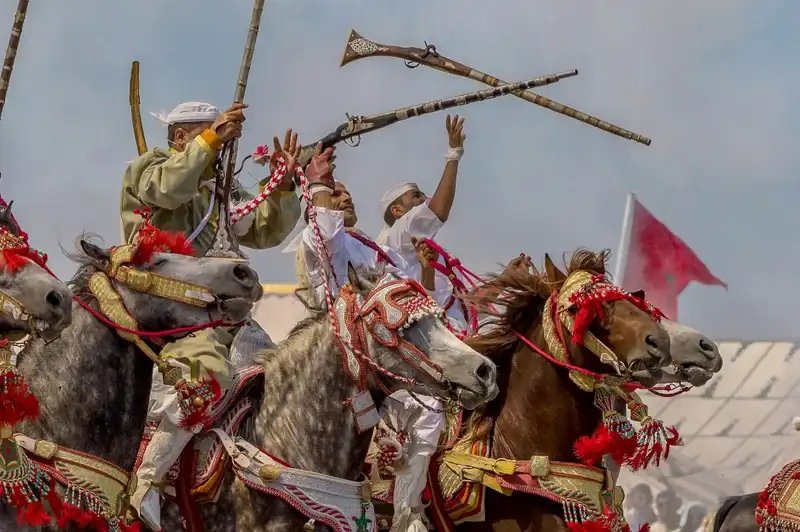
There are exactly zero good travel guides about Eid al-Fitr in Morocco. Search for it. You will find generic paragraphs buried at the bottom of Ramadan articles, a few sentences about "festive atmosphere" with no specifics, and nothing that helps you understand what actually happens, what it feels like, or why you might want to be there for it.
This is a gap that makes no sense. Eid al-Fitr in Morocco is one of the most vibrant, warm, and visually striking celebrations in the country's calendar. The end of a month of fasting releases an energy that is part relief, part gratitude, part pure joy. If you are planning a trip to Morocco in spring 2026, building your dates around Eid (approximately March 20) will give you access to a side of the country that ordinary tourism never touches.
Eid al-Fitr in Morocco at a Glance
What Happens During Eid
Eid al-Fitr marks the end of Ramadan. In 2026, it falls around March 20, though the exact date depends on the sighting of the new moon and is confirmed only the evening before. Celebrations last two to three days, with the first day being the most significant.
Eid Morning
The day begins with Salat al-Eid, the communal Eid prayer. In cities, this happens in large open-air prayer grounds (musallas) and in mosques. In Marrakech, thousands gather near the Royal Palace. In Fes, the prayers around the Qarawiyyin Mosque draw worshippers from across the medina. In villages and smaller towns, the entire community comes together in the town square or a field.
After the prayer, the greetings begin. "Awachar Mabrouka" is what you will hear everywhere. Roughly translated: blessed celebrations. Families embrace. Neighbors visit each other. The streets fill with people in their best clothes.
The Clothes
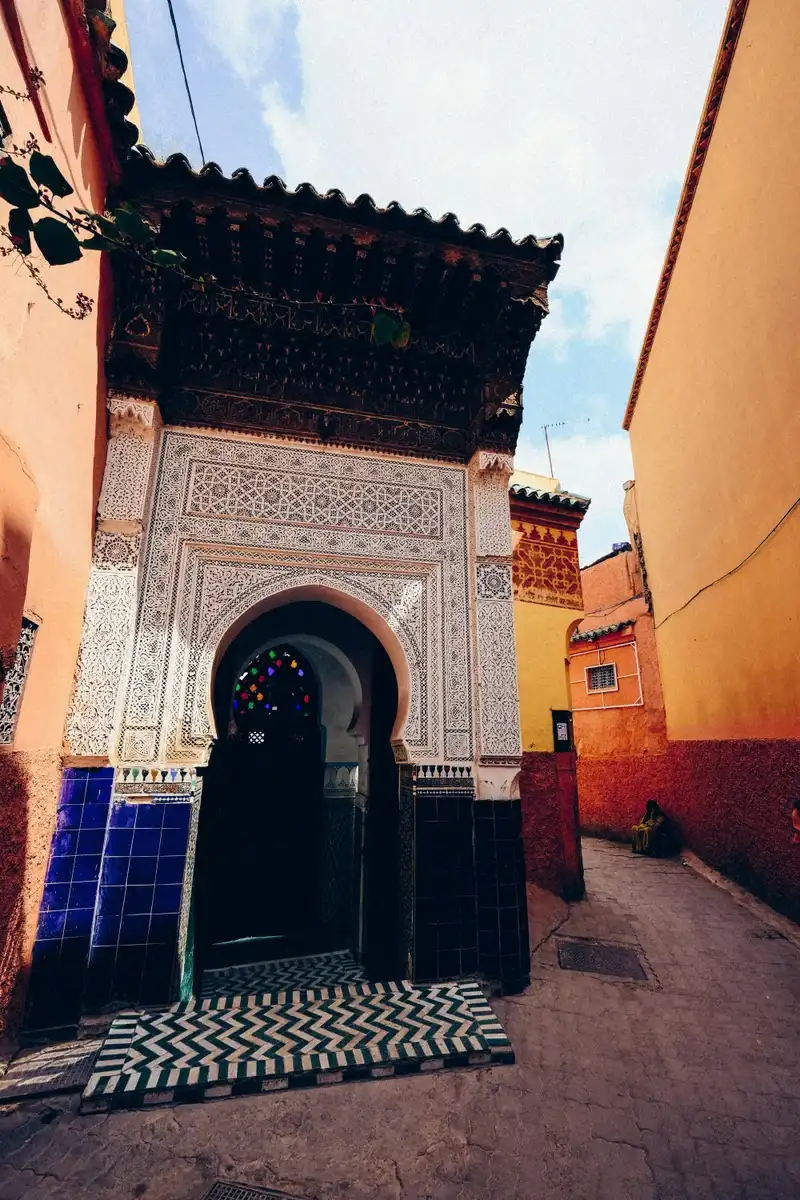
This is something photographs capture better than words, but it deserves mention. Eid in Morocco is one of the few occasions where the full range of traditional Moroccan clothing appears in public.
Women wear caftans and takchitas (a two-layered caftan with an embroidered or beaded overlay). These are not simple garments. They are elaborate, colorful, often custom-made, and represent months of planning and craftsmanship. Girls wear miniature versions. The fabrics range from silk to brocade, in colors from deep emerald to coral to gold.
Men and boys wear djellabas (long hooded robes) in white or cream, often with babouches (leather slippers). Some wear the jabador, a three-piece outfit with embroidered trim.
Walking through a Moroccan city on Eid morning feels like stepping into a living gallery of textile art. The visual richness is extraordinary.
The Sweets
If Ramadan's culinary identity is the ftoor table, Eid's identity is the sweets table. And it is serious.
Kaab el ghazal (gazelle horns): crescent-shaped pastries filled with almond paste scented with orange blossom water, wrapped in a paper-thin dough shell. When done well, they shatter delicately and the almond filling is soft and fragrant. They are the prestige pastry of Moroccan celebrations.
Fekkas: twice-baked biscuits studded with almonds, anise, and sometimes sesame. Crunchy, not too sweet, designed to be dipped in tea. The Moroccan biscotti, though Moroccans would object to the comparison.
Briouats sucrees: the same crispy pastry triangles that appear at ftoor, but filled with sweet almond paste and bathed in honey. The sweet version of what you have been eating all month.
Ghriba: crumbly, dome-shaped cookies made with almonds or sesame or coconut. They crack on the surface as they bake, revealing a soft interior. Every family has a preferred version.
Sellou (or sfouf): a dense, sweet mixture of roasted flour, ground almonds, sesame seeds, butter, and honey, shaped into mounds or pressed into molds. It is rich, nutty, and completely unique to Morocco. Nothing in any other cuisine tastes quite like it.
These are not purchased from a bakery (though bakeries sell versions). In most families, the women prepare Eid sweets in the days leading up to the holiday. The process is social: mothers, daughters, sisters, neighbors working together. The sweets are then displayed on elaborate platters and served to every visitor who comes through the door.
When you visit a Moroccan home during Eid, you will be offered tea and sweets immediately. Declining is not really an option.
The Visits
Eid in Morocco is built around visiting. Families go from house to house, starting with the eldest relatives. Children receive money and gifts. Every home you enter has its own spread of sweets and mint tea waiting. The visits continue throughout the day and often into the second day.
For travelers, this rhythm creates something unusual: a country that is simultaneously celebrating and welcoming. Moroccans are not closed off during Eid. They are expansive, generous, and genuinely happy. If you have any connection to a local person, whether through your riad, your guide, or someone you have met during your trip, there is a real chance you will be invited into a home.
These invitations are not performative. They are how Eid works. One more person at the table is always welcome.
Where to Be for Eid
Fes
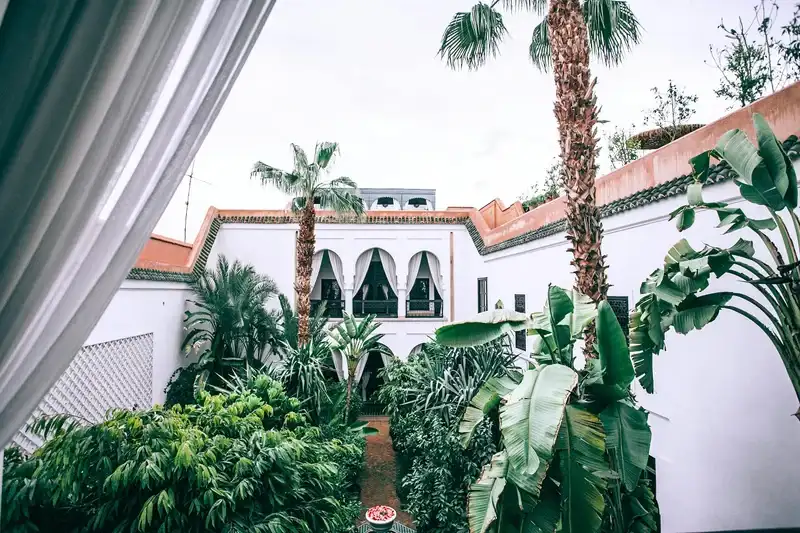
If you want to experience Eid at its most traditional, Fes is the city. The old medina during Eid morning is striking: families in traditional dress walking through medieval streets to prayer. The atmosphere is solemn and festive at the same time. After prayer, the medina comes alive with visits and celebrations. The Qarawiyyin neighborhood is particularly atmospheric.
Fes also gives you the best lead-in: if you arrive a few days early, you catch the final nights of Ramadan, including potentially Laylat al-Qadr (the 27th night, around March 15-16), and then transition into Eid. The shift from the contemplative end of Ramadan to the explosive joy of Eid is dramatic and deeply moving, even for non-Muslim visitors.
Marrakech
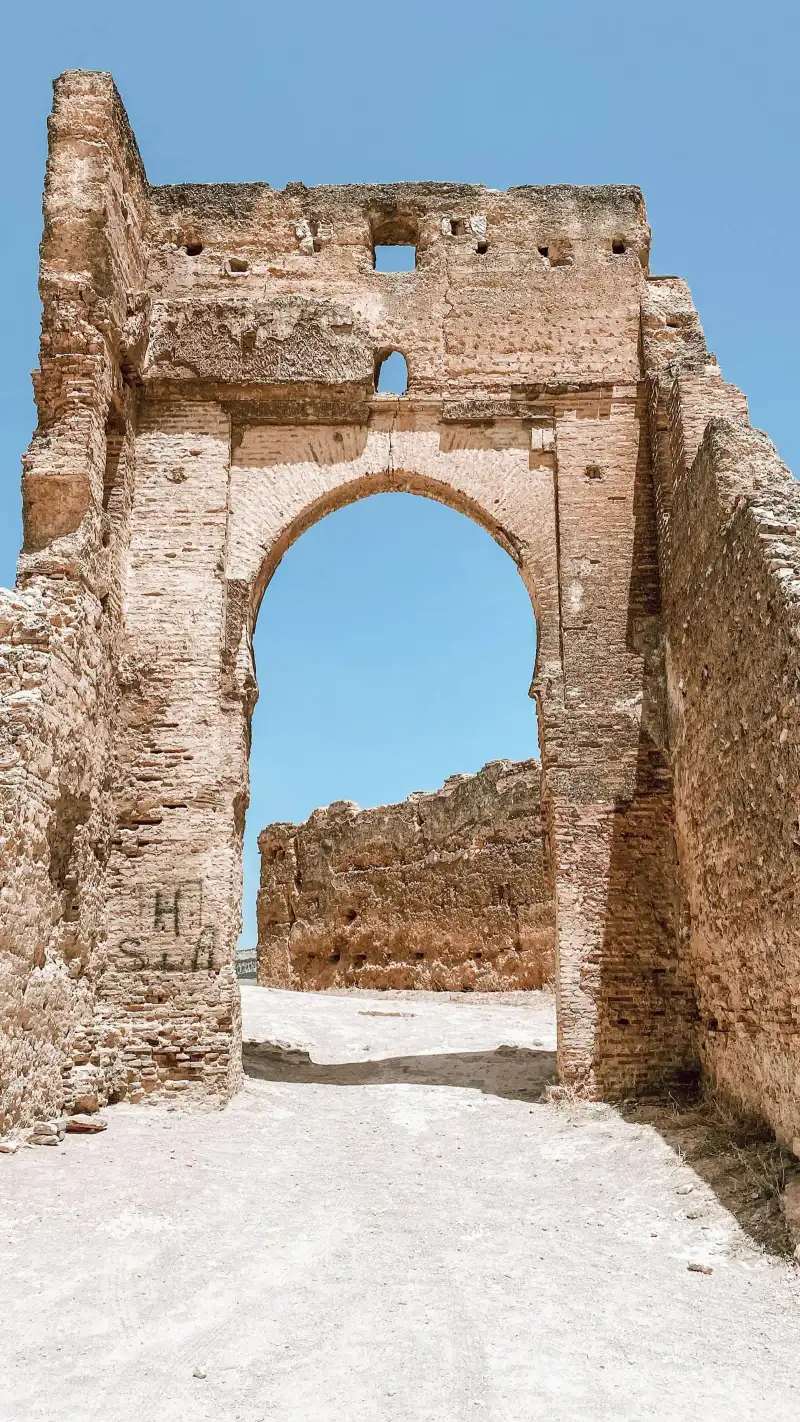
Marrakech does Eid with its characteristic energy. The Jemaa el-Fna square fills with families. The souks reopen with festive energy. The riads in the medina are at their most beautiful, often decorated for the occasion. Marrakech is easier logistically (more restaurants open sooner, more transport options) and gives you a celebratory atmosphere with slightly less intensity than Fes.
Small Towns and Villages
If you want to see Eid at its most intimate, rural Morocco is where it happens. In Amazigh villages in the Atlas Mountains, Eid celebrations have their own local character. The prayers are communal in a way that only small communities can produce. Everyone knows everyone. The sweets are homemade from ingredients grown or gathered nearby. Visitors, especially foreign visitors, are treated with extraordinary hospitality.
Getting to a village for Eid requires planning and a local connection. This is exactly the kind of experience we specialize in arranging. Talk to us about an Eid itinerary.
Practical Considerations
What Closes
The first day of Eid, expect closures. Museums, some shops, and many restaurants will be shut. The second day, things start reopening. By the third day, most businesses are back to normal.
This is not a problem if you plan for it. Eid is not a day for sightseeing in the conventional sense. It is a day for being present in a country that is celebrating. Walk through the streets. Sit in a cafe. Accept tea if offered. The "sights" on Eid are the people.
Transport
Moroccans travel to see family during Eid, just as people do during any major holiday anywhere. Trains and buses fill up. Roads get busy, especially between major cities. If you need to move between cities around Eid, book transport well in advance, or better yet, have a private driver arranged.
We handle all transport logistics for our travelers, but this is especially important around Eid. A private transfer means you are not competing with holiday traffic for bus seats. Let us handle your logistics.
Accommodation
Riads and hotels remain open and operating during Eid. Many decorate for the occasion. Some host their own Eid celebrations for guests. Book early: spring around Eid is a popular period, and the best riads fill up.
Tipping and Gifts
If someone invites you to their home for Eid, bring something. Pastries from a good bakery are the standard gift. Your riad or guide can point you to the right place. A small cash gift (50-100 MAD) for children in the household is appreciated and customary.
Combining Eid with the Rest of Spring
Eid does not have to be the entire trip. It works best as a centerpiece within a longer spring itinerary.
Before Eid (mid-March): The final days of Ramadan. Quiet mornings, spectacular ftoor evenings, and the intensity of Laylat al-Qadr.
Eid (around March 20): Two to three days of celebration.
After Eid (late March onward): The country returns to its normal rhythm, but now in the best weather of the year. Green landscapes, perfect Atlas hiking conditions, comfortable desert nights. By May, the rose harvest begins in the Dades Valley.
Building an itinerary that arrives before Eid and continues after it gives you the full arc: the contemplative close of Ramadan, the joy of the celebration, and then Morocco at its most beautiful in late spring.
We design exactly this kind of trip. Plan your spring and Eid itinerary.
For Muslim Travelers
If you are Muslim, Eid in Morocco offers something specific: the experience of celebrating in a country where the holiday is the default, not the exception.
There is no need to explain to your employer why you need the day off. There is no searching for a prayer space. There is no sense of celebrating on the margins of a society that is doing something else. The entire country stops. The entire country celebrates. The adhan marks the rhythm. The mosques are full. The streets are full. Everyone is part of it.
For Muslim travelers from Western countries, this can be genuinely powerful. Many describe it as the first time Eid felt "complete." Not squeezed into a weekend or observed quietly, but lived fully and publicly and joyfully.
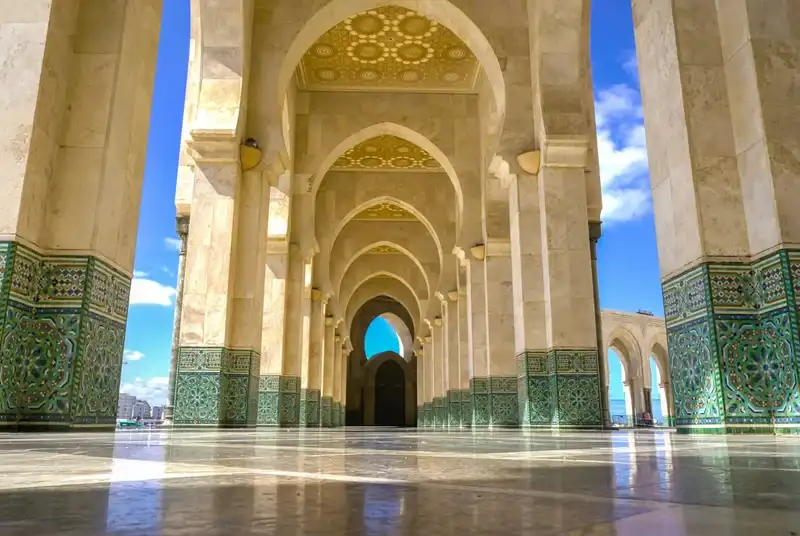
Morocco adds its own layers to this: the Amazigh traditions that blend with Islamic practice, the specific Moroccan sweets and customs, the architectural beauty of celebrating in a medina that has hosted Eid prayers for a thousand years.
If your family has not experienced Eid in a Muslim-majority country, Morocco is one of the best places to start. Let us design your family Eid trip.
For Non-Muslim Travelers
You do not need to be Muslim to enjoy Eid in Morocco. You need to be curious and respectful. That is it.
Eid is a religious holiday, but its outward expressions, the food, the clothing, the visiting, the generosity, are cultural and social. You will not be excluded. You will be welcomed. Moroccans are proud of their celebrations and happy to share them.
The one thing to understand is that Eid is not a performance for visitors. It is a genuine celebration. The joy you see is real. The invitations are sincere. If you approach it with openness, you will leave with stories and memories that no monument or museum could provide.
Why Nobody Writes About This
Eid falls in a content blind spot. Ramadan gets the "should I travel during Ramadan?" articles. Summer gets the "best time to visit" roundups. Eid sits between them, too short to anchor a full travel season, too culturally specific for generic guides.
That is exactly why being there for it feels special. You are not following a well-worn tourist path. You are showing up at a moment when the country is living for itself, and it happens to welcome you into it.
Planning a Trip Around Eid?
Eid timing, transport logistics, and the best locations for the celebration — we handle all of it. Start a conversation and tell us your dates.
Eid al-Fitr Quick Reference
Yalla Visit Morocco designs private, custom journeys across Morocco. No groups. No fixed itineraries. Your trip, built around you and around whatever the country is offering when you arrive. Start planning.