Ramadan in Morocco: What the Month Changes
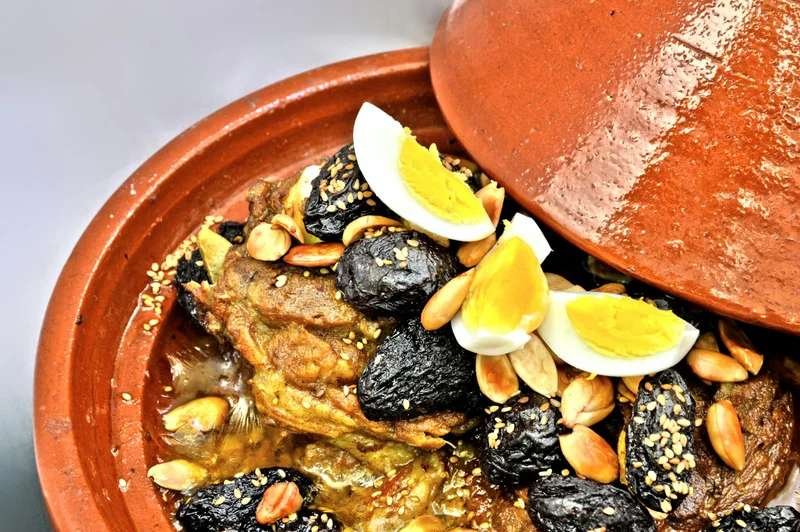
Every year, the same question fills travel forums: Should I cancel my Morocco trip because of Ramadan?
No. You shouldn't.
Travelers who land inside Ramadan tend to come home with the better trip, and most of them did not plan it that way. (If you're still uncertain about timing, our seasonal guide breaks down what to expect month by month.)
The internet will tell you two things about Ramadan in Morocco. One camp says it's a disaster: shops closed, grumpy locals, nothing to do during the day. The other calls it "transformative" and "magical," which sounds like a yoga retreat brochure.
The second camp is closer, though not for the reasons it gives. Ramadan reshapes Morocco's daily rhythm, and if you know how to move with it instead of against it, you'll see a side of this country most travelers never get close to. Including, quite possibly, the best food of your entire trip.
Ramadan in Morocco at a Glance
First, the dates
Ramadan 2026 runs approximately February 18 to March 19. The exact start depends on the moon sighting. Morocco's religious authorities confirm the date, sometimes just hours before. If you're arriving around February 17–18, keep a flexible first day.
Eid al-Fitr, the celebration marking the end of Ramadan, falls around March 20. It has its own article—the sweets alone are a separate cuisine.
Already have a trip booked during these dates? You have accidentally picked one of the better windows of the year, and the rest of this explains how to use it.
The thing nobody tells you about: the time change
This is the single most important practical detail, and most guides skip it entirely.
A few days before Ramadan, Morocco suspends Daylight Saving Time. The clocks go back one hour, from GMT+1 to GMT+0. Your phone should update automatically. Your internal clock will not.
Why it matters: if you booked a 7am airport transfer based on pre-Ramadan time, you're now arriving an hour early relative to your body. If your flight departure was tight, suddenly it's tighter. Train schedules and tour pickup times move with it. Every year, travelers miss connections because of this.
The Time Change: Don't Miss Your Connection
Confirm all transfers, flights, and train times the day before Ramadan starts.
This is one of those details that sounds small until it ruins your morning. When we design a trip that overlaps with Ramadan, the time change is already built into every transfer and every reservation.
The rhythm: don't fight it, design around it
Ramadan doesn't shut Morocco down. It rearranges it. And once you understand the new shape of the day, you can build a better trip around it than you would have built in April.
Morning (until about 11am): Quiet. Locals were up late, many until 2 or 3am for suhoor, the pre-dawn meal. Souks open slowly. It is the best window of the day for walking a medina without the usual crowd pressure: Fes's thousands of alleyways with almost no one in them, the light coming through the lattice screens of a 14th-century madrasa and no tour group blocking your view. That's a Tuesday morning in Ramadan.
Midday to late afternoon: Life is moving, but at a lower gear. Most tourist attractions stay open, though some shorten hours (closing around 3–4pm instead of 6pm). Your riad serves breakfast and lunch normally. Tourist-facing restaurants in Marrakech, Essaouira, and Agadir remain open throughout the day. In Fes, Meknes, or smaller towns, options thin out, so plan ahead or eat at your accommodation.
5pm to sunset (~6:30pm): The streets begin to empty, taxis become impossible, and the shop shutters come down one by one. By 30 minutes before sunset the medina is a ghost town, everyone home or nearly home. The stillness is unlike anything else in the Moroccan year.
Do not plan to travel between 5:30pm and 7:30pm. No taxi will take you. No Uber driver will accept. Be where you want to be by 5pm and stay put. (See our transportation guide for detailed logistics.)
Sunset (ftoor): A cannon fires in some cities. The call to prayer rises. And then, in the span of about ten minutes, the entire country exhales. Families break the fast together, the table is set, the first date hits your lips. What follows is some of the best eating Morocco has to offer. We'll get to that.
Evening (8pm onward): Morocco wakes up for a second time. The souks reopen, the cafes fill, the night markets set up, and families are out with children who would normally be asleep. The energy is closer to a festival than to an ordinary Tuesday night, and it holds until well past midnight, sometimes until 2 or 3am.
We build our Ramadan itineraries around this rhythm. Exploring in the morning while the streets are still empty, activities finished by late afternoon, ftoor at your riad or at a restaurant we've booked or in the home of a family we know, and the evening left open for the night markets or a rooftop terrace.
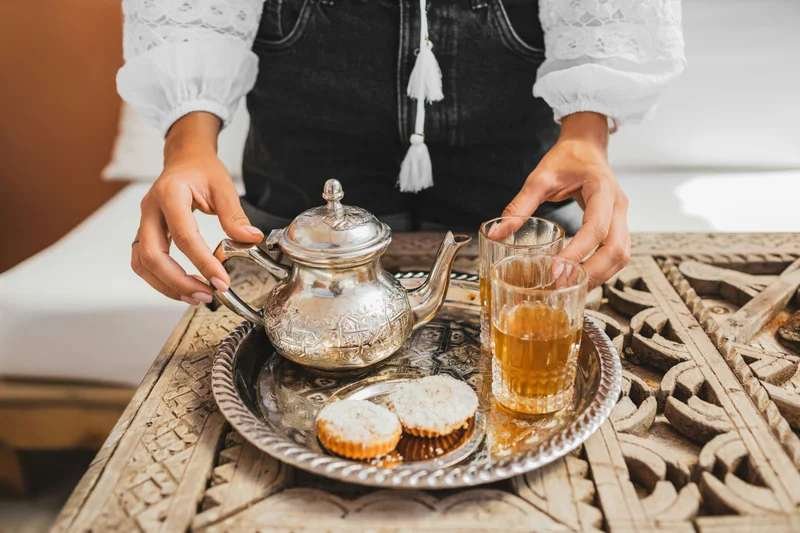
You will eat. In fact, you'll eat better than usual.
First, the anxiety: you will not go hungry during Ramadan in Morocco. Your riad or hotel serves breakfast and lunch normally. In Marrakech, about 80% of tourist-facing businesses operate as usual. Essaouira, Agadir, and Tangier are similar. Supermarkets are open. Bakeries and pâtisseries almost never close, and they're a reliable midday option everywhere.
Where it gets thinner: Fes, Meknes, Chefchaouen, and rural areas. Here, non-tourist restaurants close during the day. You'll eat at your accommodation, at hotel restaurants, or you'll plan ahead. In those towns, lunch is something you arrange in the morning, not something you find at one o'clock.
Ramadan Eating Etiquette
You are not expected to fast. Nobody will confront you for eating. But be thoughtful about where and how:
- Eat in a restaurant or at your riad, not while walking through the souk with a sandwich
- If you need water, step into a doorway or your hotel rather than drinking publicly at 4pm
- Skip smoking in public
Nobody will police any of this. The people around you haven't eaten or had water since before dawn, and a little discretion goes a long way. Moroccans notice it.
Now, here's what nobody mentions in the "can I eat during Ramadan?" panic: the real story is what happens at sunset.
Because Ramadan food is a separate culinary tradition, and many of its dishes appear only during this month. Families spend weeks perfecting recipes passed down through generations. Grandmothers judge the quality of a household's Ramadan table the way a Michelin inspector judges a tasting menu, and they are not kind about shortcuts.
The ftoor table
Ftoor, the meal that breaks the fast, runs by its own rules. It starts simple: dates, a glass of milk, sometimes a small bowl of warm soup. Then it builds.
Harira anchors the table in almost every Moroccan household during Ramadan. A slow-cooked soup, tomato-based, with lentils, chickpeas, fresh herbs, and often lamb or beef. It's thick, deeply savory, and designed to land gently after a day without food. Every family has their version. Some add vermicelli. Others thicken it with flour beaten into eggs. Some are lighter, almost brothy; others are so dense the spoon stands up. The variations are endless and quietly personal. Ask three Moroccan women whose harira is best and you'll start an argument that lasts until Eid.
Around the harira, the table fills:
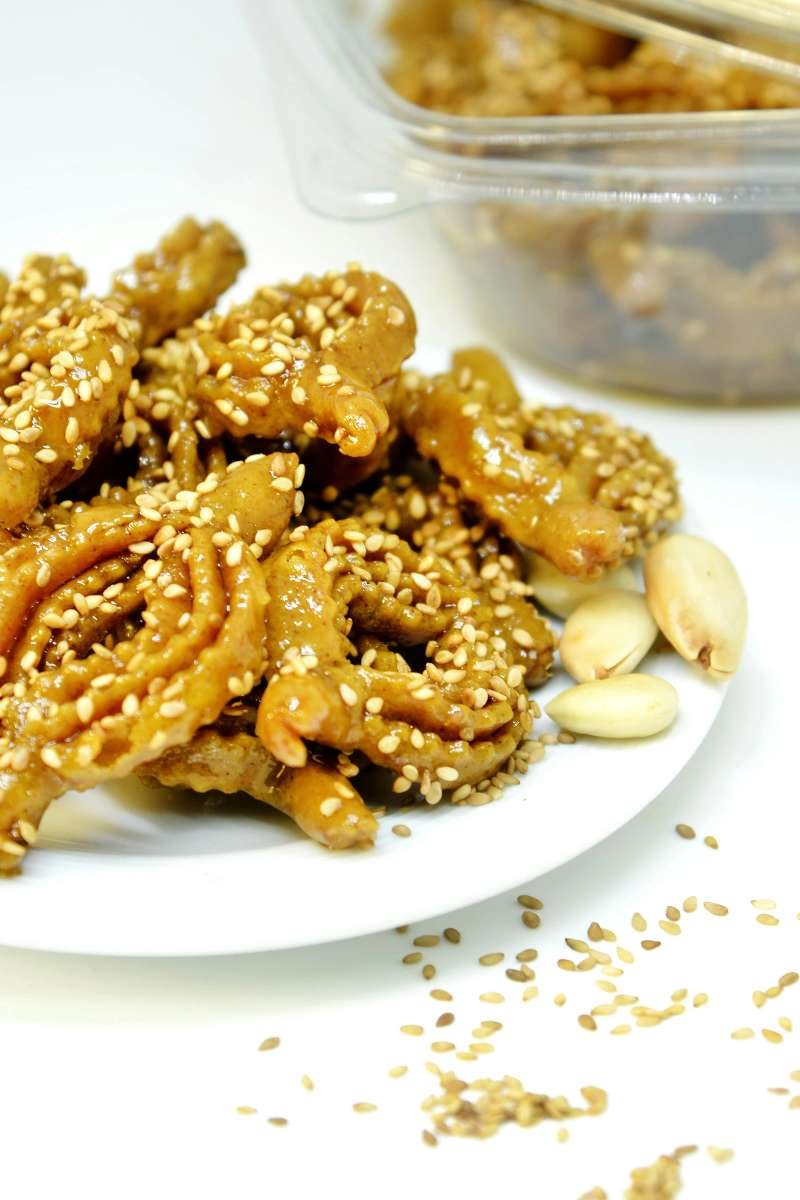
Chebakia. A sesame pastry, hand-shaped into a flower, deep-fried, then soaked in warm honey and dusted with sesame seeds. The good ones shatter when you bite them and leave honey on your fingers. Families make these by the hundred before Ramadan starts. The smell of frying chebakia is the unofficial announcement that the holy month is coming.
Baghrir. Spongy semolina pancakes pocked with hundreds of tiny holes on one side, smooth on the other. Served hot with melted butter and honey that seeps into every crater. They're called "thousand-hole crepes."
Msemen. Square-shaped flaky flatbread, somewhere between a French crepe and an Indian paratha, folded in layers, pan-fried until golden and crisp at the edges but still soft inside. Some families stuff them with onion and herbs, others serve them plain with honey.
Briouats. Small pastry parcels, triangular or cigar-shaped, filled with spiced meat, cheese, or almond paste, then fried until the phyllo shell crackles.
Then there are the eggs, always boiled, sometimes also fried. Olives, cured and glistening. Fresh bread, warm from the oven. Juices: freshly squeezed orange, thick avocado smoothies, date-milk with a whisper of cinnamon.
It's a spread, not a dish: a generous nightly ritual that runs for a month, with every household putting its signature on it. None of it is performance. Nobody is presenting a "Ramadan experience" to tourists — this is simply how Moroccans eat during the holy month, and when you're invited to the table, or when your riad prepares its own version, you're tasting something that exists whether you're there or not.
That's what makes it different from any cooking class or restaurant meal.
How to experience ftoor as a traveler:
- Your riad: Many riads prepare a ftoor spread for guests. Ask when you book. If they don't offer it routinely, they'll often arrange it if you show interest. This is the easiest and most intimate version.
- Restaurants: Café Clock in Fes and Marrakech, among others, offers dedicated ftoor menus during Ramadan. Book ahead; they fill up.
- An invitation: If your guide, your driver, or someone you meet invites you to break the fast with their family, say yes. Arrive a few minutes before sunset, and bring something (pastries from a bakery are always welcome). You'll sit with the family, wait for the call to prayer together, and eat when they eat.
We arrange ftoor for every traveler who is with us during Ramadan: a spread at the riad, a table at one of the few restaurants that do it properly, or an evening in a Moroccan family's home. It is a fixed part of the itinerary.
Ramadan is not the same everywhere
This matters more than most guides let on.
Marrakech is the least affected city. It's built for tourism, and during Ramadan roughly 80% of the tourist infrastructure runs normally. You'll notice the rhythm change, but you won't struggle. The evenings around Jemaa el-Fna take on a different energy: less hawker chaos, more families, more shared purpose.
Essaouira and Agadir behave much the same way: coastal, tourism-oriented, and used to guests who are not fasting.
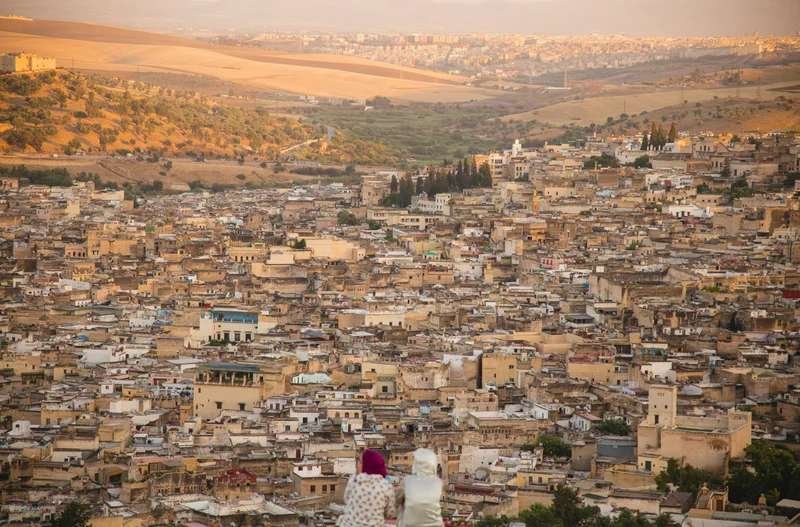
Fes is a different experience entirely. More traditional, more residential, fewer tourist restaurants open during the day. But it's also where Ramadan feels most alive. The spiritual atmosphere in the medina, especially during the evening Taraweeh prayers spilling out of mosques like Al-Qarawiyyin, is extraordinary. If depth is what you came for, Fes is the city to be in during Ramadan.
The desert (Merzouga, Zagora, M'Hamid) is barely affected. Camps operate normally. Your Berber guides are accustomed to hosting travelers during Ramadan. And February to March is the desert at its best: cool nights perfect for stargazing, warm days without a trace of summer heat.
Chefchaouen, Meknes, smaller towns: more closures, a slower pace, fewer places to eat. Beautiful and atmospheric, and they need more planning than anywhere else on this list. Turn up without a lunch arrangement and the afternoons get long.
Every Ramadan itinerary we build accounts for these differences: a lunch plan for the Fes days, transfers scheduled clear of the ftoor hour, and a working list of which Chefchaouen riads keep their kitchen open through the month. Talk to us about your itinerary
Laylat al-Qadr: the night worth planning around
The 27th night of Ramadan, Laylat al-Qadr (the Night of Power), is considered the holiest night of the Islamic year. In 2026, this falls around March 15–16 (depending on the confirmed start of Ramadan).
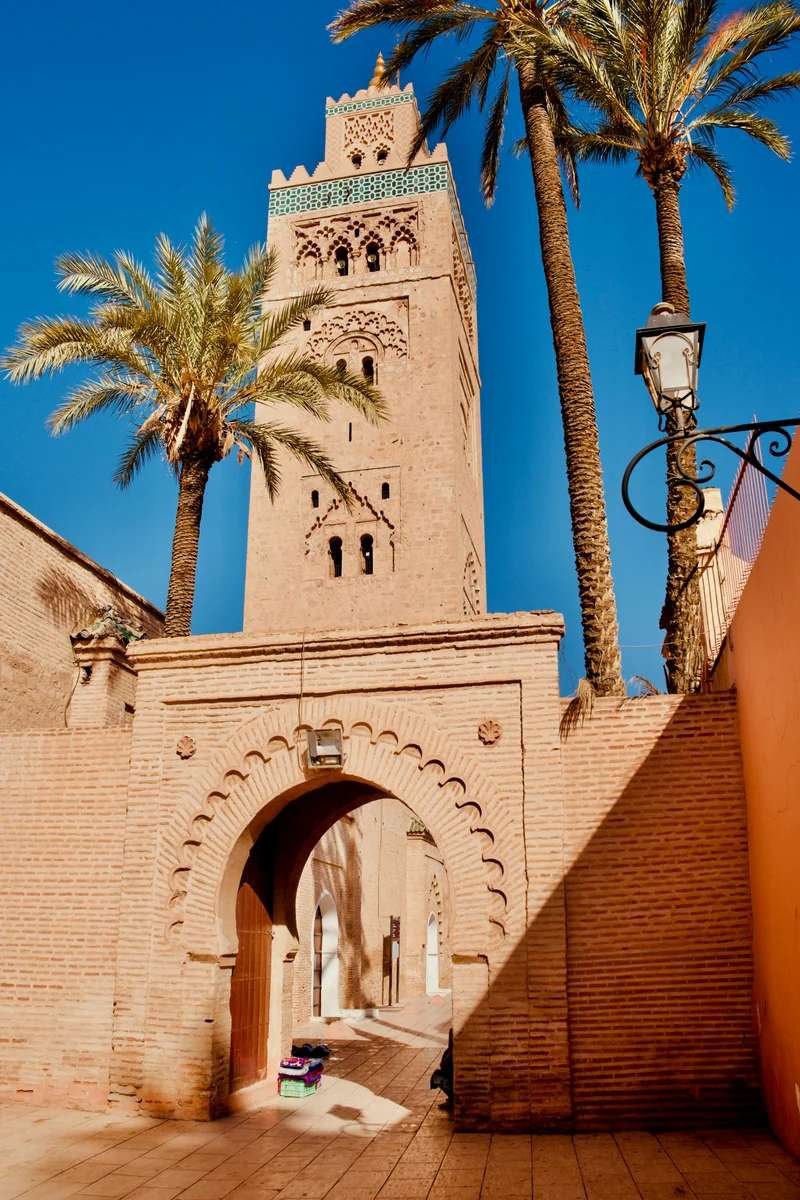
Mosques overflow. In Marrakech, the area around the Koutoubia Mosque is closed to traffic as prayers spill into the streets. In Fes, the scene around Qarawiyyin is electric. People dress in traditional white. Children receive gifts. The atmosphere is solemn and celebratory at once.
If you are Muslim, you can pray with them. Non-Muslim visitors cannot enter Moroccan mosques, but the cafes and rooftops around the squares give you the whole scene. Either way, you're looking at an entire city at prayer under the night sky, thousands of voices at once.
If your trip can include this night, try to be in Fes or Marrakech for it. We can arrange rooftop access for the night.
Don't cancel. Adjust.
Here's what we tell every traveler who contacts us with a booking during Ramadan:
Don't cancel. Let us redesign the flow.
A trip built for regular Morocco works imperfectly during Ramadan. A trip built for Ramadan works, and most of what changes is the timetable.
The pace changes, the activity windows move, and we lock in the restaurants and riads that run at full capacity through the holy month. You're never left at sunset looking for a taxi that doesn't exist. And the ftoor is real ftoor, not a hotel buffet with a "Ramadan theme."
You'll explore quieter medinas in the morning light and see the palaces and gardens without competing for space. In the evening you'll watch the sun go down over a table that took someone all afternoon to prepare, then walk out into night markets that run only during this month.
And you'll have an answer the "should I cancel?" forums never reach. You didn't watch Ramadan from outside it. You ate at the table.
The honest answer
Should you visit Morocco during Ramadan?
If you want nonstop nightlife, late brunches at sidewalk cafes, and a schedule that starts at 8am sharp, wait until April.
If you came for the texture of daily life, for food that exists for 30 days a year, and for the sight of 37 million people keeping the same month together, then Ramadan is the best time you could come.
The medinas are quieter in the mornings and the accommodation is cheaper. The ftoor tables outdo any restaurant meal you'll find, and the nights carry an energy that exists at no other point in the year.
And at the end of it comes Eid, the subject of its own article: two or three days of sweets, new clothes and house visits.
For now: Ramadan starts February 18. Spring is arriving. The almond trees in the Anti-Atlas are already blooming. And the best food of the year is about to appear on tables across the country.
Confirm your transfer times the day before the clocks change, and the rest of the month takes care of itself.
If Your Dates Fall Inside Ramadan
We design trips specifically around Ramadan: adjusted timing, ftoor experiences, the right riads, and logistics that account for the rhythm of the holy month. Start a conversation — tell us your dates and we'll tell you what the month does to them.
Ramadan in Morocco Quick Reference
Yalla Visit Morocco is a Morocco-based travel team specializing in private, tailored journeys. Every itinerary is written from a blank page for one party, Ramadan included. Start planning your trip.
Frequently Asked Questions
- Should I visit Morocco during Ramadan?
Yes. Ramadan rearranges Morocco's day without shutting it down: mornings quiet enough to walk a medina properly, ftoor food at sunset that appears for one month a year, night markets running until two or three in the morning, and fewer tourists in every queue. Build the itinerary around that rhythm and the month works for you.
- Can you eat during Ramadan in Morocco as a tourist?
You will not go hungry. Riads and hotels serve breakfast and lunch as usual, about 80% of tourist-facing restaurants in Marrakech stay open, and bakeries and patisseries almost never close. The one courtesy that matters: eat indoors, not on the street.
- What is ftoor in Morocco?
Ftoor is the meal that breaks the daily fast at sunset. It starts with dates and milk, then features harira soup, chebakia honey-sesame pastries, baghrir thousand-hole pancakes, msemen flatbread, and briouats stuffed pastries. It is an entirely separate culinary tradition with dishes that only appear during Ramadan.
- What time do things close during Ramadan in Morocco?
Most attractions stay open, though many shut around 3-4pm instead of 6pm. From about 5:30pm the streets empty as everyone heads home for ftoor, and taxis are effectively unavailable until 7:30pm, so be where you want to be by five. After 8pm the country restarts, with markets and cafes open until 2-3am.