Prayer, Privacy and Food on a Day Outside Marrakech
For most Gulf families, the questions that come before booking a day outside Marrakech are not about the sights. They are about prayer: where, when, and without it becoming a negotiation. About privacy: whether "private" means what you think it means. And about food: how it gets arranged without a question being asked at the table in front of everyone.
These are the most common questions and the least written about. Day-trip pages tend to put the word "halal" in a features list and go quiet on the rest. This article answers all four with numbers from our own catalogue.
It is written the way we answer on the phone: what holds across the whole catalogue, what holds for only part of it, and where the answer is that we are the wrong company for what you want. The counts come from the live catalogue, so they move when it moves.
The Short Answers
Prayer Is a Timing Question, Not an Availability One
The reassurance first: Morocco has mosques in every village and along every road, and stopping to pray is entirely ordinary for a Moroccan driver. It needs no preamble and no apology. You will not have to explain the request.
The real issue is timing. On a distant day — Aït Benhaddou, say, or Essaouira — dhuhr and asr usually fall either on the road or inside a site. If the stop was not counted in the day's schedule from the start, it gets taken out of the visit later, which is why some itineraries feel rushed for no visible reason.
In practice you pray in one of four kinds of place, and they are not equally comfortable. Village mosques on the main roads — the N8 to Essaouira, the N9 over the Tichka — are plain, clean and open at prayer times. The larger fuel stations have a prayer room and, more usefully, running water and somewhere to sit for wudu. Most gardens, palaces and museums inside Marrakech keep a room aside. And the lunch venue is often the best of the four: indoors, private, already in the schedule.
Two details decide whether that suits the whole party or only half of it. Not every village mosque has a women's section, and where one exists it is sometimes locked outside the congregational prayers. And wudu needs running water, which a fuel station has and a mountain lay-by does not. So the stop is planned around a place that works for everyone travelling, not the first minaret the road offers.
The catalogue distinguishes two different things. Prayer space on site applies to 22 experiences. Prayer stop included applies to 16. The first means the place you are visiting has somewhere to pray. The second means the prayer time itself is inside the day's arithmetic, so it does not come at the cost of something else.
The two labels look almost the same on the page. Only the second one is a claim about the schedule.
Whether to combine dhuhr and asr on a long road day is your decision, not the itinerary's, and a stop already written on the sheet is what keeps it yours. Without one, the choice gets made for you late in the afternoon by a driver making up time. Friday changes more: if the men in the party are praying jumu'ah, the day either starts early and arranges to be at a town mosque before midday — Aït Ourir, Amizmiz, Ouarzazate and Essaouira all have one on our routes — or it stays near Marrakech. A Friday built like a Tuesday cannot be rescued from the road.
The Prayer Clock Moves, and the Day Moves With It
The same itinerary is not the same day in January and in July.
Summer. Fajr is very early and maghrib very late, which stretches the usable day at both ends: a long drive can leave before the heat and still be home before sunset. It also means an early start and fajr can collide, so the pick-up is set once fajr has passed.
Winter. Asr and maghrib crowd into the late afternoon, exactly when a distant day is on the road back, so the winter version of that day turns for home earlier, and the prayer stop moves from the site to the road.
"Private" Is a Word That Needs a Definition
It is the most used and least specific word in this market, and we have seen four different things sold under it:
Private car, shared group. You travel alone, then meet a larger group and a shared guide at the site. The transport is private. The experience is not.
Private guide, public visit. The guide is yours, but you are inside a crowded route on a schedule you do not control.
Private transfer, tickets at the door. The newest version. A car, a driver and pre-bought entry, with no guide at all. The person who meets you at the gate is there to move you past the queue, not to explain anything.
The whole day private. The car is yours, the guide is yours, the timing is yours, and nobody is added at any point.
Every experience in our catalogue is the last kind — 38 of 38, which is to say all of them — so we write it as a promise rather than an adjective. On 10 of them the privacy extends to the table itself, which matters when the meal is one of the reasons you booked the day.
Privacy is sold as comfort, and comfort is the least of what it buys. What you are buying is control of the clock: a private day can stop for prayer without a negotiation, sit longer at a lunch that is going well, cut a site short because a child has had enough, or turn back. A shared day belongs to whoever walks fastest. A private one belongs to whoever in your family walks slowest, which is usually the right person for it to belong to. It also decides the vehicle: a party of five in a Mercedes V-Class rated for 6 travels with a seat spare and nothing on anybody's knees.
And a day can meet every definition above and still not be yours. The commission stop — the argan cooperative, the pottery, the "viewpoint" that turns out to stand in front of a shop — is how part of a private day gets quietly resold to somebody else. We set the mechanism out in how commission works on a Marrakech day trip.
One sentence settles this with any operator: will anyone else be with us, at any point in the day? Hesitation before the reply usually means the day is shared somewhere. The useful follow-up is about shops — how many stops are there that we did not choose?
What a Day Looks Like When Prayer Is Designed In From the Start
"Designed in" is a phrase any operator can write, so here is what it means on the sheet the driver carries.
Take the longest day we run. Aït Benhaddou is 7h20 in the car before you have looked at anything, against 3h30 at the kasbah itself. Those two figures set everything else. The departure is early enough to cross the Tichka before the coaches. Dhuhr goes to a town on the far side of the pass, which has a mosque, shade and somewhere to sit; the kasbah has none of the three. Asr falls on the return at a fuel station chosen for its water, not for its convenience. And the day is timed to be home before maghrib.
A near day runs on the same logic with room to spare. The Ourika is 1h10 each way and 4h in the valley, and the lunch venue is chosen partly because it has a room, so dhuhr costs nothing but the walk to the door.
What this changes is mostly what does not happen. The guide never has to ask "shall we stop?", a question that makes a family feel they are imposing on their own day. The driver is not making up time afterwards on a mountain road. And the site visit is not what shrinks, because the shrinking was done in the planning, where it cost nothing.
What it cannot change is the arithmetic. On the longest days a prayer stop is a stop and it takes time from somewhere; an itinerary claiming otherwise is describing a shorter day than the one it sold. We would rather drop a component than compress the stop. When a family wants both the far kasbah and an unhurried day, the honest answer is that those are two different trips.
The test works on anyone. Ask to see the day's timings written down and look for the prayer stop in them. If the answer is "the driver will stop whenever you like", the stop is not in the schedule, and it will come out of the visit.
What the Driver Needs to Know Before the Car Moves
Three things settle the day at the pick-up, and none takes a minute to say.
Who is praying, and whether the women in the party would rather have a room than a mosque. This changes which stop is used, not whether there is one.
Whether you intend to combine dhuhr and asr. If you do, the day gains a stop's worth of time and it can be spent at the site instead.
Whether Friday prayers are in the plan. It is the one thing that cannot be arranged from the road.
Female Guides and Women-Only Sessions
Here we prefer precision over generosity, because a promise broken in this particular area is worse than a promise not made.
Female guide available on 10 experiences in the catalogue. Not all of them. Licensed female guides in Marrakech are fewer than male ones and demand is high in season, so booking early is the difference between having one and not.
The reason is structural, and knowing it tells you where to expect a yes. Guiding in Morocco is licensed, and the licence is regional and by category: a medina guide is not a mountain guide, and the card is checked at the monument door. Fewer women hold it, and most who do are licensed for Marrakech itself, where sites sit within walking distance of each other and the day ends at a civilised hour. So a female guide attaches readily to the medina walks and the studio sessions, and far less readily to a day over the Tichka that leaves before dawn.
Women-only session available on 7: by their nature the hammams, treatments and some workshops, where the request is real and deliverable. Booking one means reserving the whole space for that period, which needs more notice than an ordinary booking.
That is the part people underestimate. A hammam ritual of 2h, or a spa day of 6h, is not a name written into a diary alongside other names: for as long as you have it, the space is closed to everyone else. It is therefore the first thing to book and the last thing that can be moved. The cooking class in the Ourika, 4h of it, can also run women-only, which surprises people who assumed the request applied only to spas.
What we do not say is that everything is available women-only at any time. It is not, and saying otherwise leaves a family with a surprise on a day when nothing can be changed.
Three Requests That Are Not the Same Request
Ask for these separately. An operator can answer yes to one of them honestly while you meant another.
A female guide. The person explaining the site is a woman. Available on part of the catalogue, and hardest to secure on the long days out of the city.
A female practitioner. The hands in a hammam or a treatment are a woman's. Close to standard, but put it in the booking so nobody has to raise it at the door.
A women-only space. Nobody else is in the room at all. This closes the venue to other guests for your period, so it is booked earliest and released latest.
Food: Arrange It Before the Day, Not at the Table
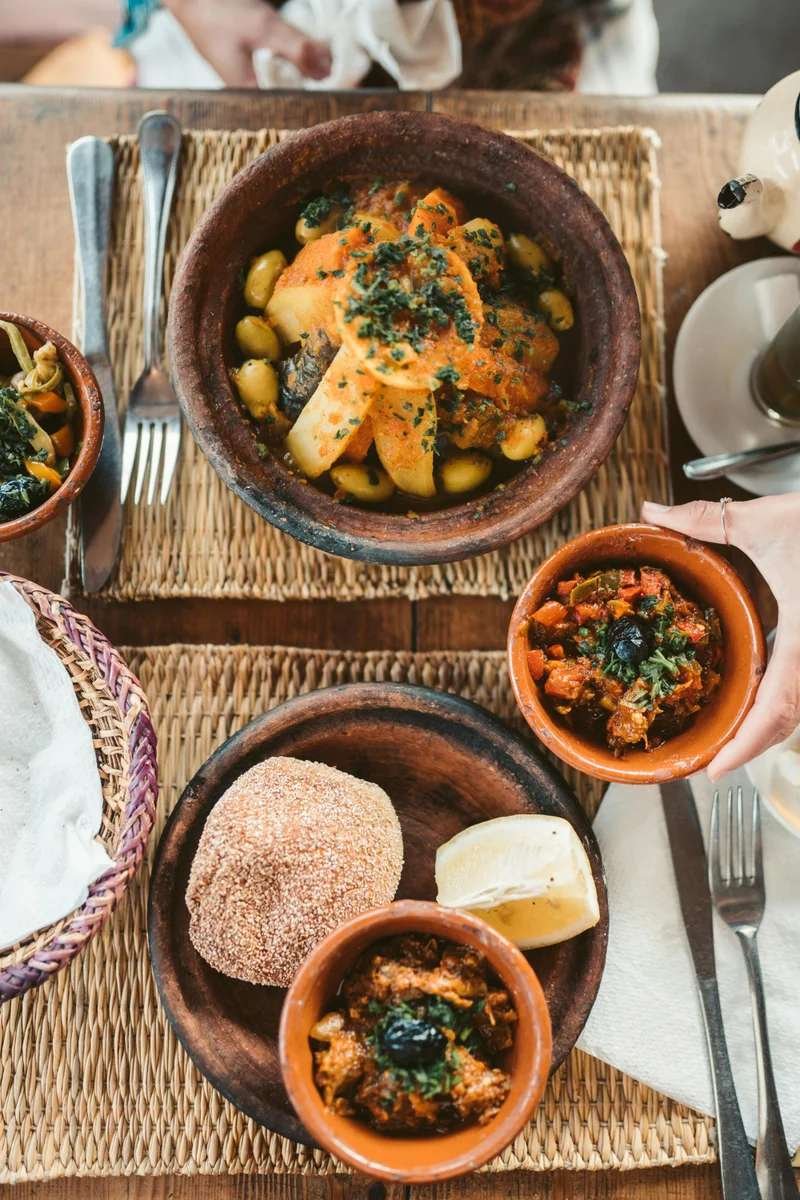
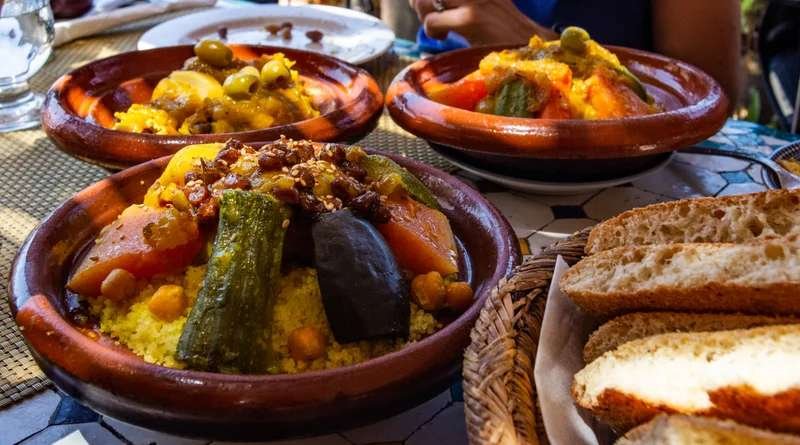
Meat in Morocco is slaughtered according to Islamic practice as a matter of general custom, so the question that occupies a Gulf family is usually not the meat. It is alcohol: whether it is served in the room, and whether it goes into the cooking.
The catalogue marks Halal kitchen on 10 experiences. On the others that include a meal, it is arranged with the venue well before the day: an agreed menu, and a table positioned away from the room's traffic where that matters.
The practical point is that arranging beforehand beats asking at the time. A question at the table puts everyone in a position: the family, the host, the guide. An arrangement made in advance is invisible, and nobody at the table knows it was ever a question.
It helps to know that "do you serve alcohol" is three questions wearing one coat, and answering only the first is how a family ends up uncomfortable in a place that told them the truth. Is it served in the room where we will sit? Does it go into the cooking — a reduction finished with wine, a batter made with beer — which a kitchen may do out of training and think nothing of? And is it on display beside us? A licensed hotel can cook an entire menu without a drop of it; an unlicensed terrace can still finish a sauce the way the chef was taught. The licence tells you almost nothing. The kitchen tells you everything.
So it is worth being exact about what we can promise. We can put the menu in writing beforehand, name the dishes, and have the kitchen confirm that nothing on it is finished with alcohol. We cannot audit the base of a bought-in dessert or the gelatin in a mousse. When that degree of certainty is a requirement and not a preference, we book only the kitchens carrying Halal kitchen, a shorter list.
A second dining promise is easy to read past. Exclusive table appears on 10 of the 38 experiences, and it does not mean a good table in a busy room. It means the room, the salon or the terrace is yours for the sitting, which is what allows a woman who covers to sit as she would at home, and what lets a lunch run long without a head waiter circling for the cover. The limit is weather: an exclusive terrace in the Ourika is exclusive until it rains, and then it is a shared indoor room.
Friday is couscous day across Morocco, at home and in most of the places we use, so on a Friday the best table is usually the simplest one and the house couscous is both the better lunch and the easier arrangement.
Days where part of the party is fasting and part is not are ordinary here, and not only in Ramadan: the Monday and Thursday fasts, the white days, a missed fast made up. Three answers work, and we use whichever you prefer: a hotel table that serves through the day, a packed meal set somewhere it is not in front of anyone fasting, or moving the meal to sunset and building the day around it. Your driver and guide may also be fasting when you are not, which changes nothing you are entitled to but does change what belongs at midday. The longer version is in how day trips work during Ramadan.
Two more things are settled in the same conversation. Ages, because a fine table with a set menu can leave a seven-year-old with nothing on it, and we would rather change the venue than watch that happen. And allergies, because almond and argan run through Moroccan cooking in places the menu never mentions: the pastry, the sauce, the oil a salad is dressed with. Tell us, and we tell the kitchen. Do not rely on being asked.
What We Ask the Venue, So You Do Not Have To
Three questions we put to the venue before the day:
1. Is alcohol served in the room where we will be seated?
2. Does it go into any dish on the menu we will choose from?
3. Can a corner or a table away from the room's traffic be set aside?
When the answer is unsatisfactory, we change the venue.
Families and Three Generations
Children welcome on 28 of 38 experiences. Suits three generations on 9.
The difference between the two is deliberate. "Children welcome" means the place receives them without strain. "Suits three generations" is a narrower test: limited walking, easy ground, a rest inside the day, and a drive that stays within reason. It is a day a grandparent and a grandchild can both live through without one of them paying for it.
What defeats an older traveller in Marrakech is rarely the distance, and it never appears in an itinerary. Cars stop at the medina gates, so every site begins with a walk across ground that is uneven, shared with mopeds and unlit in places, and the beautiful buildings are old buildings: steps without handrails, raised thresholds, courtyards with no shade at the hour most groups arrive. Almost none of it is unmanageable, but all of it has to be known beforehand. The fix is choosing which gate the car uses and which door you enter by, and that is decided the night before, not at the kerb with everybody waiting.
The design rules are dull, and they work. Keep the walk from car to first chair short. Put the outdoor part early, before the heat. Write a sitting stop into the day, because one will not appear on its own. Choose a lunch with a ground-floor room or a lift, and ask the question nobody asks aloud, which is where the nearest toilet is and how many steps away. Suits three generations is the sum of those checks, which is why 9 experiences carry it, against 28 that simply welcome children.
Two things get discovered too late more often than anything else. A pram does not work in the medina, where the ground and the steps defeat it within minutes, so a light stroller earns its place in the gardens and nowhere else. And child seats are not standard in Moroccan vehicles, ours included: tell us the ages and we fit them; without being told we cannot produce them at the pick-up.
The other failure mode sits at the young end. A day of monuments with a teenager in it is a long day for everyone in the car. One active component solves it, which is why Paddleboarding at Lalla Takerkoust and Quad Biking in the Agafay carry Suits three generations while the serious mountain days do not: they give the youngest person something to do and the oldest somewhere to sit while it happens.
What falls outside that list falls outside plainly: long mountain days, anything requiring physical effort, and roads beyond about three hours each way. We say so in advance, because discovering it halfway is not a thing that can be fixed.
If you ask an operator one question about an older traveller, make it this: how many minutes on foot between where the car stops and where I can sit down? It cannot be answered vaguely, which is what makes it useful.
What to Tell Us in Advance, So Nothing Is Negotiated on the Day
Everything above is arranged in one place: a short note sent before the day, so that nothing has to be settled at the kerb with the engine running. Writing it down is not formality. It saves a family from explaining itself four times over: to a driver, a guide, a host and a waiter, each hearing a slightly different version from the last.
The distinction that changes the most is between required and preferred, and almost nobody is asked for it. "A female guide is required" means we do not offer the day at all unless one is confirmed; "preferred" means we try, and tell you early if we cannot. "No alcohol in the room" changes the venue when it is required and only the table when it is preferred. Those are four different days built out of two sentences, so say which you mean without waiting to be asked.
Timing matters more than completeness. Some things can still change on the morning: where the table sits, when the prayer stop falls, whether lunch moves earlier because the children are hungry. Some cannot change once the day is close: a female guide, a women-only session, a certified kitchen, a child seat. That second list is why the note belongs in your first email about dates.
There is also a version of this where we are the wrong company, better said here than discovered later. A family who wants the day decided at breakfast, changed at noon and changed again after that is served better by a car and driver taken by the day than by a designed one. We will arrange exactly that, and it costs less. What we are good at is the other kind of day — the one where the constraints are known in advance and nothing has to be renegotiated in front of the children.
The Note That Prevents Every Awkward Question
Six lines, sent before we build the day.
Prayer. Who is praying, whether the women in the party would rather have a room than a mosque, and whether a Friday is involved.
Table. Alcohol absent from the room: required, or preferred.
Guide. Female guide required, preferred, or not needed. And which language you want the site explained in.
Party. The ages of the children, and the walking limit of whoever walks least.
Food. Allergies, and anything a child will refuse to eat.
The one thing. The single thing that would spoil the day if it went wrong. We design around that first, and everything else fits after.
Language
Arabic-speaking guide on 21 experiences. The difference between a guide who explains a site in Arabic and one who explains it through a second language is the difference between understanding the place and being photographed in it.
English and French are available across the whole catalogue. Arabic is not, so it is marked where it exists.
One clarification is worth making, because it disappoints people who assumed otherwise. Moroccan Darija is not immediately intelligible to a Gulf ear, and a guide who works with Gulf visitors knows it: they explain in fusha and keep Darija for the shopkeeper and the ticket window. If Arabic matters to you, ask which Arabic. The answer tells you within a sentence whether the guide has done this before.
It matters most where the site itself is text: the inscriptions around a medersa courtyard, the poetry cut into a fountain, the names on a minbar. A guide working through a second language paraphrases them, and the paraphrase is exactly where the meaning goes. It matters least in a garden.
The gap shows in the workshops and the spas more than in the monuments: the practitioner's working languages are Darija and French, and the guide bridges. That is a perfectly good arrangement so long as nobody promised otherwise, which is why the label on the page describes the guide, not the venue.
How to Read Any of This on the Site
Every experience in the catalogue carries these promises written on it: privacy, prayer, dining, female guide, family, language. These are not one marketing list repeated on every page; each experience carries only what applies to it, which is why the lists differ from page to page, and why the difference is itself the information.
When several experiences are combined into one day, the day inherits only the promises they all share. If one component cannot offer a female guide, the day does not claim one. You can see that applied on our Signature Days, where each day shows what its parts agree on, not what its best part offers.
That arithmetic is intersection, not addition, and it is deliberately the least flattering way to describe our own days. A certified kitchen, a women-only session and an Arabic-speaking guide are each easy enough to find alone; a single day on which all three hold is a much shorter list, and it is better to see that on the page than to be told it on the morning.
So fix the promise that matters most and build outward from it, rather than choosing a day you like the look of and hoping it complies. If a women-only hammam is the point of the trip, start from the 7 experiences that offer one. If an Arabic-speaking guide is non-negotiable, 21 experiences are your starting set, which is a generous one. And where nothing in the catalogue does what you are asking, we say so. A promise we cannot keep costs far more than a booking we do not take.
What to Ask Before You Book
Frequently Asked Questions
- Where do you pray on a day trip outside Marrakech?
Mosques exist in every village and town along the day-trip routes, and stopping to pray is entirely ordinary for a Moroccan driver; it needs no explanation. Of the 38 experiences in our catalogue, 22 take place somewhere with a prayer space on site, and 16 have a dedicated prayer stop built into the schedule. The practical difference is that a built-in stop is already counted in the day's time, so it does not come out of your visit.
- Does a private tour really mean you are on your own?
With us, yes: every experience in the catalogue runs for your party alone, the vehicle is yours, and nobody is added. But the word is used for several different things in this market: it can mean a private car to a meeting point where you join a group, or a private guide inside a crowded scheduled visit. The question that settles it: will anyone else be with us at any point in the day?
- Can you request a female guide or a women-only session?
Yes, though on part of the catalogue and not all of it, which is worth saying plainly. A female guide is available on 10 experiences, and a women-only session on 7: mostly hammams, treatments and workshops, where the request is deliverable. Book early. Licensed female guides are few, and a women-only session means holding the whole space, so this is the part of a day that runs out first.
- How do you make sure food is halal on a day trip?
Meat in Morocco is slaughtered according to Islamic practice as a matter of general custom, so the real question is usually not the meat but alcohol: whether it is served in the room, and whether it is used in the cooking. We mark the experiences running a certified halal kitchen, 10 of them, and arrange the table in advance elsewhere. Arranging beforehand is better than asking at the table, because it avoids putting anyone on the spot mid-day.
- Are these day trips suitable for families and older travellers?
Much of the catalogue is. 28 experiences suit children, and 9 suit three generations together, meaning limited walking, easy ground, and a rest built into the day. Long mountain days and active pursuits fall outside that, and we name them before you book.