Moroccan Riads: What They Are and Why They Matter
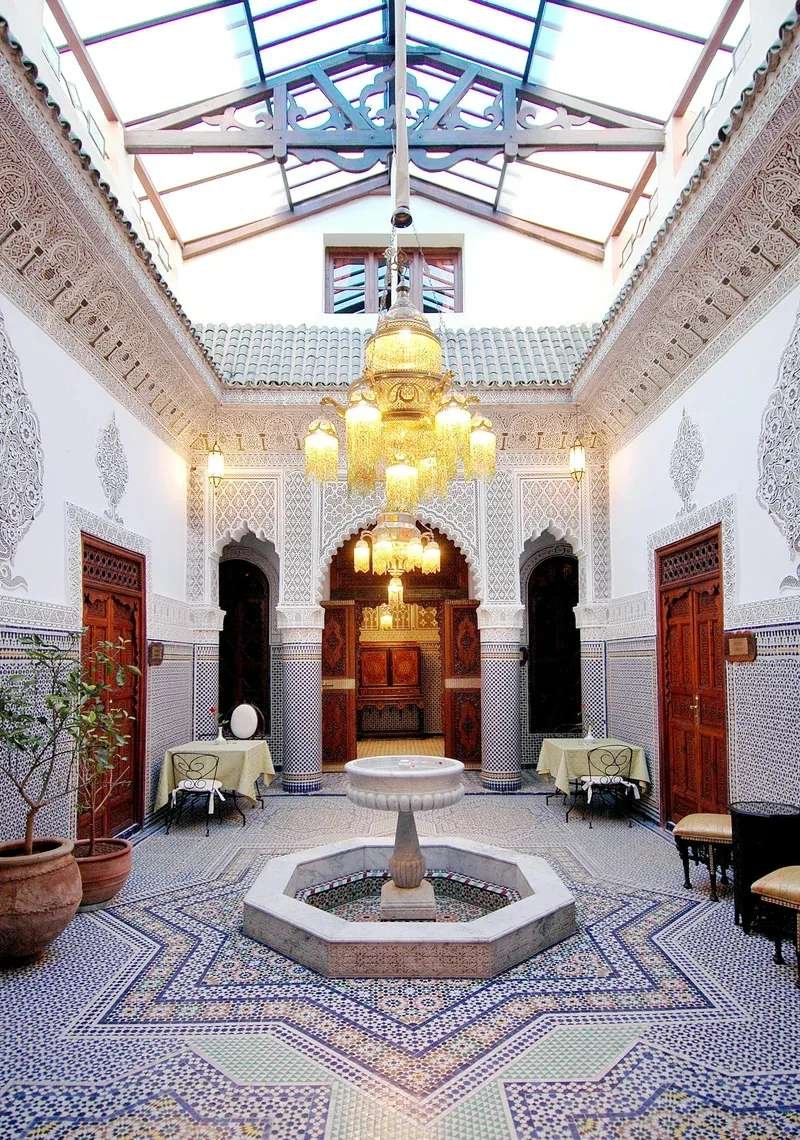
A riad is a traditional Moroccan house built around an interior courtyard. The name comes from the Arabic word for garden, though not all riads have literal gardens. What they do have is a central open space that organizes how the entire building functions.
The architecture isn't arbitrary decoration. Each element serves specific purposes related to climate control, privacy, and how light and sound move through the space. Understanding this changes how you experience staying in one.
Riads At a Glance
How Riad Architecture Works
The design principle is inward focus. The exterior presents a plain wall to the street, often unmarked except for a wooden door. Everything happens inside, around the courtyard.
The Courtyard as Climate Control: The open center creates a thermal chimney. Hot air rises and exits through the top. Cooler air gets drawn in from the rooms. During summer, this passive cooling reduces interior temperatures by several degrees compared to outside.
Water features amplify this effect. Most riads have a fountain or small pool in the courtyard center. The evaporation cools the air. More importantly, the sound of running water psychologically registers as cooler. Your brain hears trickling water and expects lower temperature, which it then perceives.
Medieval Moroccan architects understood psychoacoustics centuries before anyone named it.
Privacy Through Design: Islamic architectural principles emphasize privacy, particularly for family spaces. Riad design achieves this through layers. The street is public. The entrance passage creates transition. The courtyard is semi-private. The rooms are fully private.
Windows face the courtyard, not the street. You can open them for light and air without compromising privacy. Ground-floor rooms typically have smaller windows than upper floors, maintaining privacy gradation.
The thick walls provide both structural support and sound insulation. You're in a dense medina with neighbors on all sides, but inside the riad you hear mostly the fountain and distant city sounds, muffled by mass.
Light Management: The courtyard is the light source. Rooms receive indirect light reflected off courtyard walls and filtered through doorways. This produces even, soft illumination without harsh direct sun.
Upper galleries typically have more light than ground-floor rooms. In hot months, ground floor stays cooler. In winter, upper rooms capture more warmth. Good riads assign rooms seasonally based on this thermal logic.
The Key Materials and Techniques
Three materials define traditional riad interiors. Their presence and quality indicate restoration seriousness.
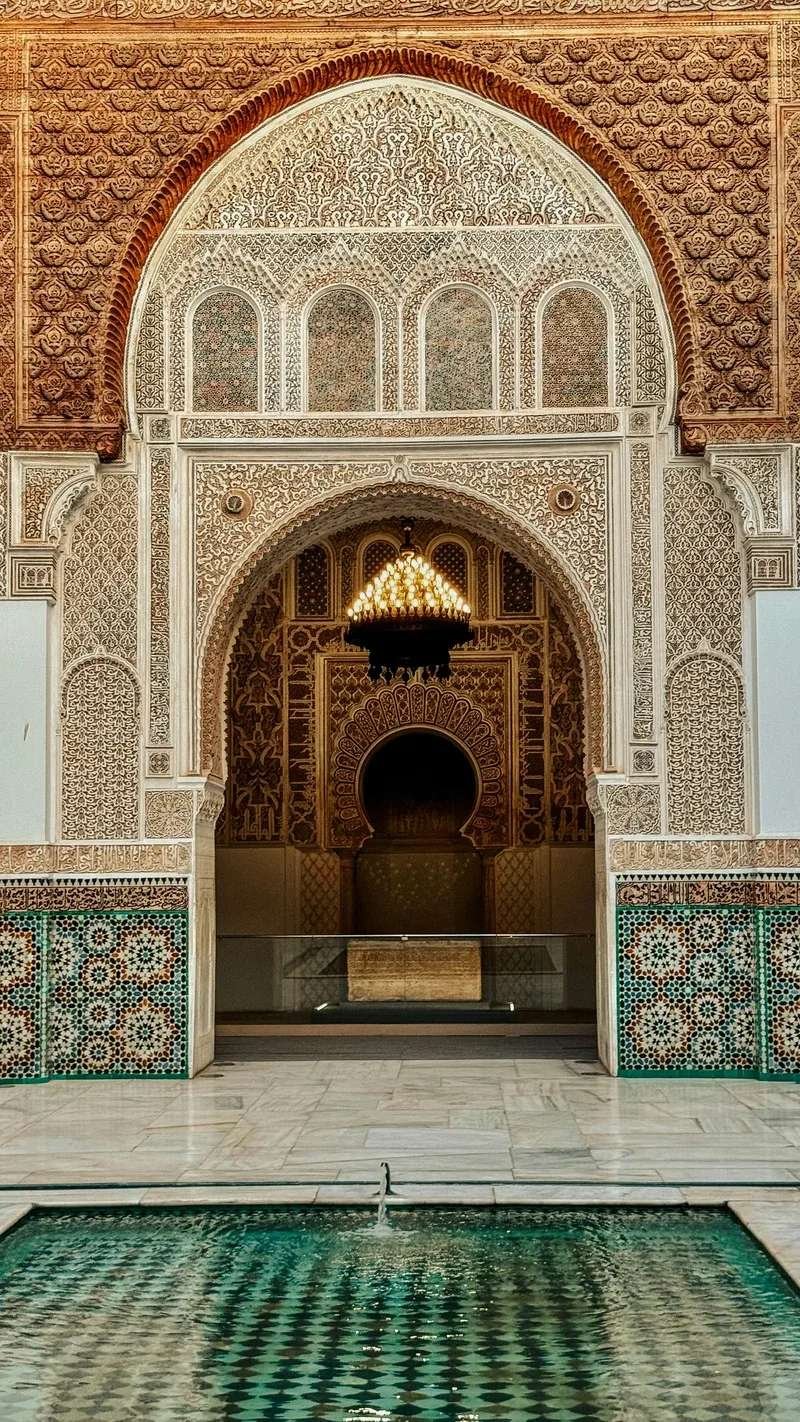
Zellige: Hand-cut mosaic tilework forming geometric patterns. Each tiny tile is individually chiseled from larger glazed ceramic pieces, then assembled into complex designs. Traditional patterns follow Islamic geometric principles, creating infinite patterns without representational imagery.
The work is time-intensive. A skilled craftsman produces perhaps two square meters of zellige per week. The tiles must fit precisely without grout lines. The patterns must align perfectly across large surfaces.
In restored riads, zellige typically covers courtyard floors, fountain surrounds, and lower wall sections. The tiles are durable and water-resistant, functional as well as decorative. Poor restorations use printed tiles that mimic zellige. The difference is immediately visible in the precision and depth of pattern.
Spotting Quality Restoration
Check the details: Are zellige patterns precisely aligned? Does carved wood show individual tool marks? Does tadelakt have depth and slight irregularity?
Real zellige has no grout lines. Tiles fit perfectly. Authentic tadelakt has subtle variation and water beads on its surface. Hand-carved cedar shows unique tool marks, not machine-cut repetition.
Tadelakt: Polished plaster made from lime plaster mixed with specific aggregates, then polished with river stones and treated with olive oil soap. The result is waterproof, slightly glossy, and develops patina over time.
Traditional tadelakt appears in bathrooms, on fountain interiors, and sometimes on courtyard walls. The material requires skilled application. The polishing happens while the plaster is setting, requiring precise timing and technique.
Modern substitutions include standard plaster painted to look like tadelakt. Real tadelakt has depth, slight variation in finish, and water beads on its surface. Fake tadelakt shows brush marks and absorbs water.
Carved Cedar: Moroccan cedar grows in the Middle Atlas mountains. The wood is aromatic, insect-resistant, and carves cleanly. Traditional use includes ceiling beams, door frames, screens, and decorative panels.
Carving patterns follow geometric and vegetal motifs. The work is done by hand with chisels and gouges. Painted cedar receives natural pigments mixed with egg white, creating matte colors that age gracefully.
Authentic cedar restoration preserves original pieces where possible and commissions new work from craftsmen trained in traditional methods. The modern shortcut is machine-carved panels or printed wood-grain panels. The pattern repetition and lack of tool marks give this away.
Types of Riads You'll Encounter
Not all riads are equal. The category includes significant variation.
Merchant House Restorations: The most impressive riads were originally owned by wealthy merchants in the 18th and 19th centuries. These buildings feature elaborate decoration, large courtyards, multiple stories, and substantial rooms.
Restoration typically takes years. Every zellige tile replacement must be hand-cut to match original patterns. Cedar ceilings might need complete reconstruction using traditional joinery. Tadelakt application follows historical methods.
The result is museums you can sleep in. These riads typically operate as small hotels with 6-12 rooms, professional staff, and corresponding rates.
Family Home Conversions: Smaller riads were middle-class family homes. The architecture follows the same principles but with less elaborate decoration and more modest scale. Courtyards are smaller. Rooms are simpler. Materials are good quality but not showcases.
These convert well into 3-6 room guesthouses. The intimate scale creates different atmosphere than larger properties. You're more likely to interact with owners. Service is less formal. Rates are moderate.
Purpose-Built Modern Riads: Some properties are new construction following traditional design principles. They look like historical riads but incorporate modern building techniques, updated plumbing, better insulation, and current safety standards.
The architectural logic works the same way. The craftsmanship can be excellent if skilled artisans are employed. What's missing is historical patina and the irregularities that come from centuries of modification.
These properties often offer better practical comfort than true restorations while maintaining aesthetic appeal. The trade-off is authenticity versus convenience.
What Makes a Good Riad
Quality varies dramatically. Several factors separate exceptional properties from disappointing ones.
Restoration Integrity: Good restorations preserve original elements and commission new work in traditional methods. Poor restorations apply superficial decoration over modern construction, using shortcuts that look acceptable in photos but lack substance in person.
Check the details. Are zellige patterns precisely aligned? Does carved wood show individual tool marks? Does tadelakt have depth and slight irregularity? These indicate serious restoration work.
Staff Presence: Riads function best with present, attentive staff. Someone should be available during daytime hours. Breakfast preparation, door access (many riads keep street doors locked), and local knowledge require human presence.
Smaller riads (under 6 rooms) sometimes operate with minimal staff or absent owners. This works if you value privacy and independence. It fails if you need assistance or services.
Modern Comfort Integration: The challenge is adding contemporary expectations (hot water reliability, comfortable beds, WiFi, air conditioning) without destroying historical character.
Good riads hide modern systems. Air conditioning vents integrate into architectural details. Electrical wiring runs concealed. Plumbing upgrades happen behind walls. The room functions comfortably without visible modern intrusion.
Poor integration shows pipes running along walls, air conditioning units mounted obviously, or modern furniture that clashes with traditional architecture.
Location Considerations: Medina locations have trade-offs. Deep in the medina means authentic neighborhood context and quiet distance from main thoroughfares. It also means difficult luggage transport (often walking several minutes down narrow alleys) and potential navigation challenges when returning at night.
Near medina entrances means easier access and simpler navigation. It also means more street noise and tourist traffic.
Neither is objectively better. The right location depends on your priorities and mobility considerations.
The Practical Reality
Riad accommodation requires certain acceptance of traditional building realities.
Stairs: Riads have stairs. Usually narrow, sometimes steep, occasionally uneven. Most rooms are on upper floors (ground floor is typically reception and common areas). There are no elevators in traditional buildings.
A standard riad might have 15-25 steps from ground floor to first bedroom level, another 15-20 to second level, and more if there's a roof terrace. If you're staying on the third floor, you're climbing 50+ steps every time you leave and return.
For people with mobility limitations, this is significant. Some riads have ground-floor room options. Most don't. Ask specifically before booking.
Mobility Reality Check
Riads inherently have stairs, often 50+ steps to upper floors with no elevators. Narrow passages, uneven steps, and doorways can challenge wheelchair access.
If stairs are difficult, ask specifically about ground-floor room availability before booking. Most riads are multi-level by design. Exceptions exist but are limited.
Sound Transmission: Traditional construction provides good sound insulation from outside. Internal sound transmission varies. Rooms opening onto the courtyard mean sound carries across the open space. A conversation in the courtyard is audible in rooms above.
Some riads have rooms with doors that don't seal completely (traditional doors weren't designed for sound isolation). Footsteps on tile floors echo. Pipes make noise when anyone uses water.
Light sleepers should ask about room locations and consider packing earplugs. The courtyard fountain provides some sound masking, though this also means constant background water noise.
Temperature Variation: The passive climate control works well in shoulder seasons. Summer and winter present challenges. Many riads lack heating (the thermal mass helps, but nights can be cold). Air conditioning is common now but wasn't in original design, so installation is retrofit.
Winter nights in Marrakech reach near freezing. Upper-floor rooms lose heat through the open courtyard above. Riads provide blankets. Some have small space heaters. You might sleep in layers.
Temperature Expectations
Winter (Dec-Feb): Nights near freezing. Upper floors lose heat through open courtyard. Expect blankets and layers.
Summer (Jul-Aug): Passive cooling helps but ground floors stay coolest. Retrofitted AC varies in effectiveness.
Best comfort: Spring (Mar-May) and fall (Sep-Nov) when passive climate control works optimally.
Finding the Entrance: Riad doors are often unmarked or minimally marked. GPS coordinates get you to the general area but not the specific door. Narrow medina alleys all look similar to first-time visitors.
Good riads send detailed arrival instructions with landmarks. Better ones offer to meet you at a known location and walk you in. Arrival during daylight your first time is strongly advisable.
Navigation Tip
Request detailed arrival instructions before you go. Ask for:
- Specific landmarks near the entrance
- Photos of the actual door
- Phone number to call when close
- Option for staff to meet you at a known location
Arrive in daylight your first time. Medina alleys look different at night, and navigation is significantly harder.
When Riad Stays Work Best
Riads serve specific travel purposes particularly well.
Cultural Immersion: Staying in a riad puts you inside traditional architecture, living with design principles developed over centuries. You experience how courtyard houses function, understand why certain materials were chosen, and see craftsmanship up close.
This matters if experiencing Moroccan culture authentically is your priority. The building itself becomes part of the cultural education.
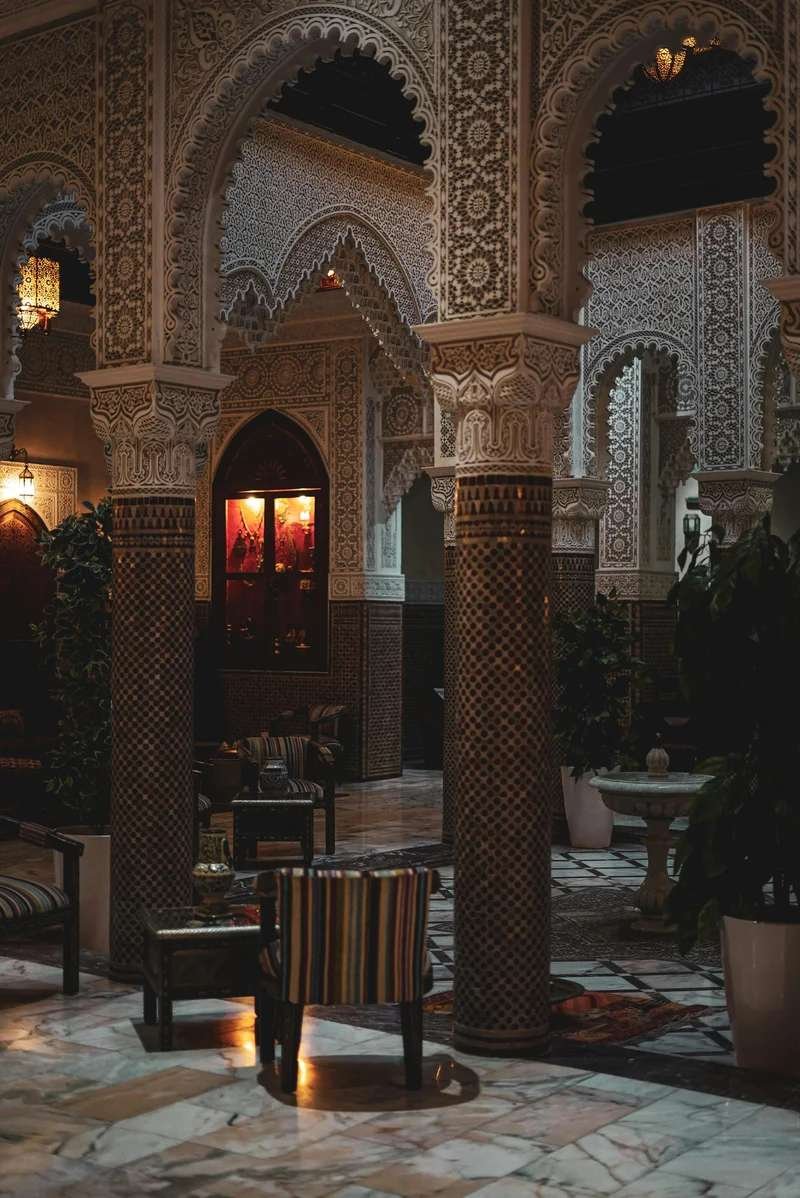
Honeymoon and Special Occasions: The intimacy and aesthetic beauty of good riads create romantic atmosphere. Small properties feel private and exclusive. Honeymoon itineraries often center around carefully selected riads in multiple cities.
The visual environment photographs well. Courtyards, architectural details, and rooftop terraces provide settings that feel special without requiring staging.
Photography Interests: For photographers, riads offer compositional opportunities you don't find in standard hotels. Light patterns, geometric designs, textural contrasts, and the interplay between interior and sky create visual interest.
Morning and late afternoon provide best light. The courtyard's vertical orientation creates changing shadow patterns throughout the day.
Urban Retreat: Good riads create quiet spaces in dense medina neighborhoods. After days of souk navigation and sensory intensity, returning to a peaceful courtyard provides necessary contrast.
The inward focus means city noise stays outside. You're still in the medina but have respite from it.
When Riads Might Not Work
Certain circumstances make riad stays less suitable.
Mobility Concerns: If stairs are difficult, most riads won't work. The architecture is inherently multi-level. Exceptions exist but are limited.
Narrow doors and passages can challenge wheelchair access. Bathroom configurations vary; not all have walk-in showers or grab bars.
Need for Space: Riad rooms are often smaller than modern hotel rooms. The architecture wasn't designed for extensive luggage storage or large bathrooms. Charm compensates for size, but physical space is what it is.
Preference for Modern Amenities: If you require consistent air conditioning, multiple electrical outlets, modern plumbing, and hotel-style services, contemporary hotels deliver this more reliably than adapted historical buildings.
Large Groups: Booking an entire riad works well for groups. Individual room bookings mean sharing courtyard and common spaces with other guests. Privacy is reduced compared to a hotel with separate corridors.
When to Choose Hotels Instead
Choose contemporary hotels over riads if you:
- Have mobility limitations (most riads require climbing 40+ steps)
- Need consistent modern amenities (AC, plumbing, outlets)
- Prefer larger rooms with extensive storage
- Want privacy with individual room bookings (not whole riad rental)
- Require wheelchair accessibility
How We Select Riads
Our approach to accommodations involves extensive property evaluation. We stay in riads we recommend, assessing restoration quality, staff capability, location suitability, and how the property matches specific traveler needs.
Restoration quality matters more than initial appearance. We look for authentic materials, traditional techniques, and maintenance standards that preserve historical integrity while ensuring comfort.
Staff interaction shapes the experience. We work with properties where staff understand guest needs, provide reliable service, and contribute positively to the stay without being intrusive.
Location selection depends on the traveler. Some benefit from deep-medina tranquility. Others need access-point proximity. The right riad for one person isn't right for another.
Quick Riad Reference
Remember
The architecture isn't arbitrary decoration. Each element serves specific climate, privacy, and light management purposes. Understanding this transforms the stay from accommodation into architectural immersion.
Wondering if riad accommodations suit your travel style? We can discuss which properties match your specific needs and where riad stays make sense in your itinerary.