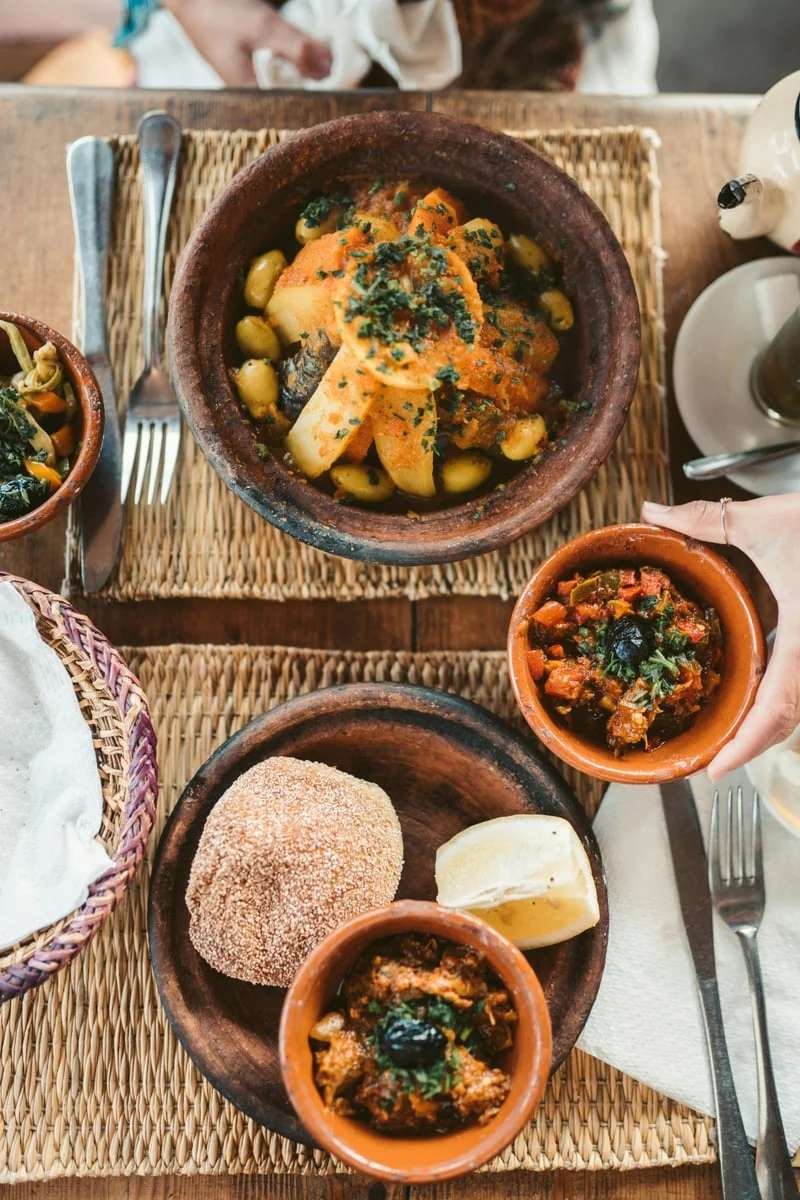
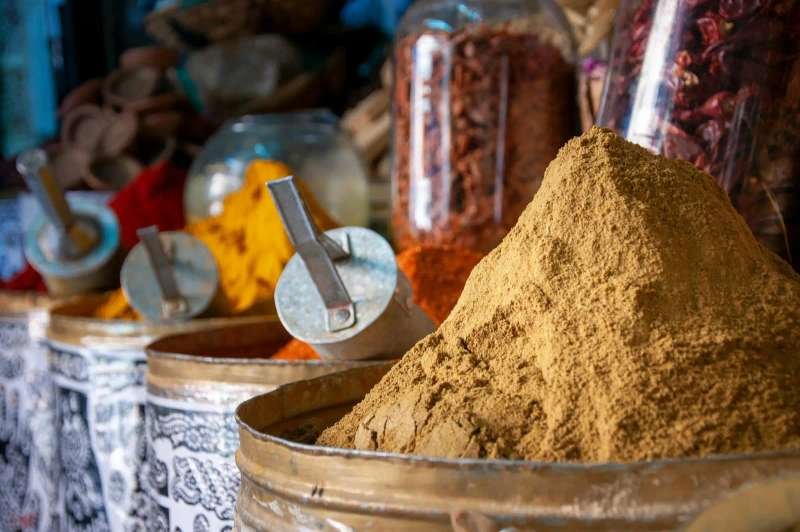
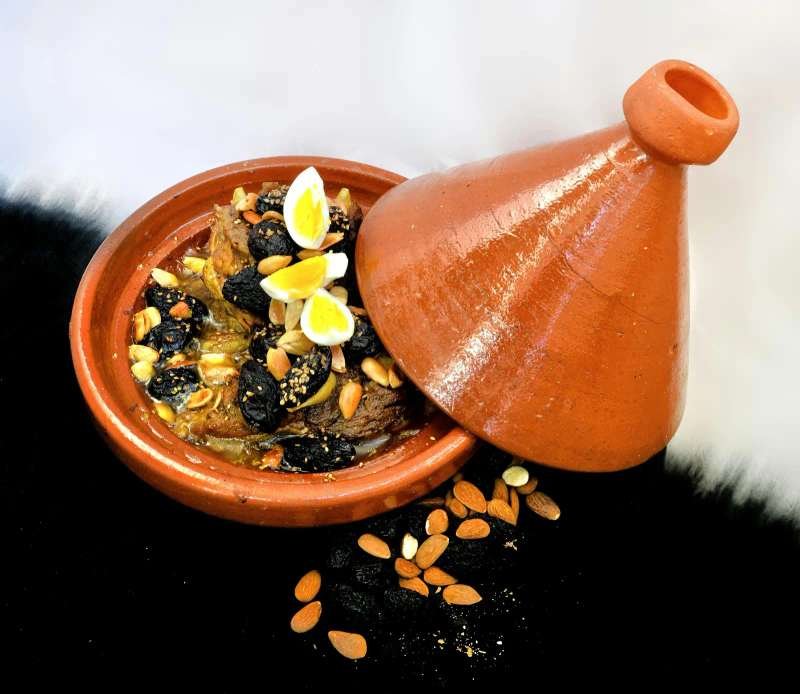
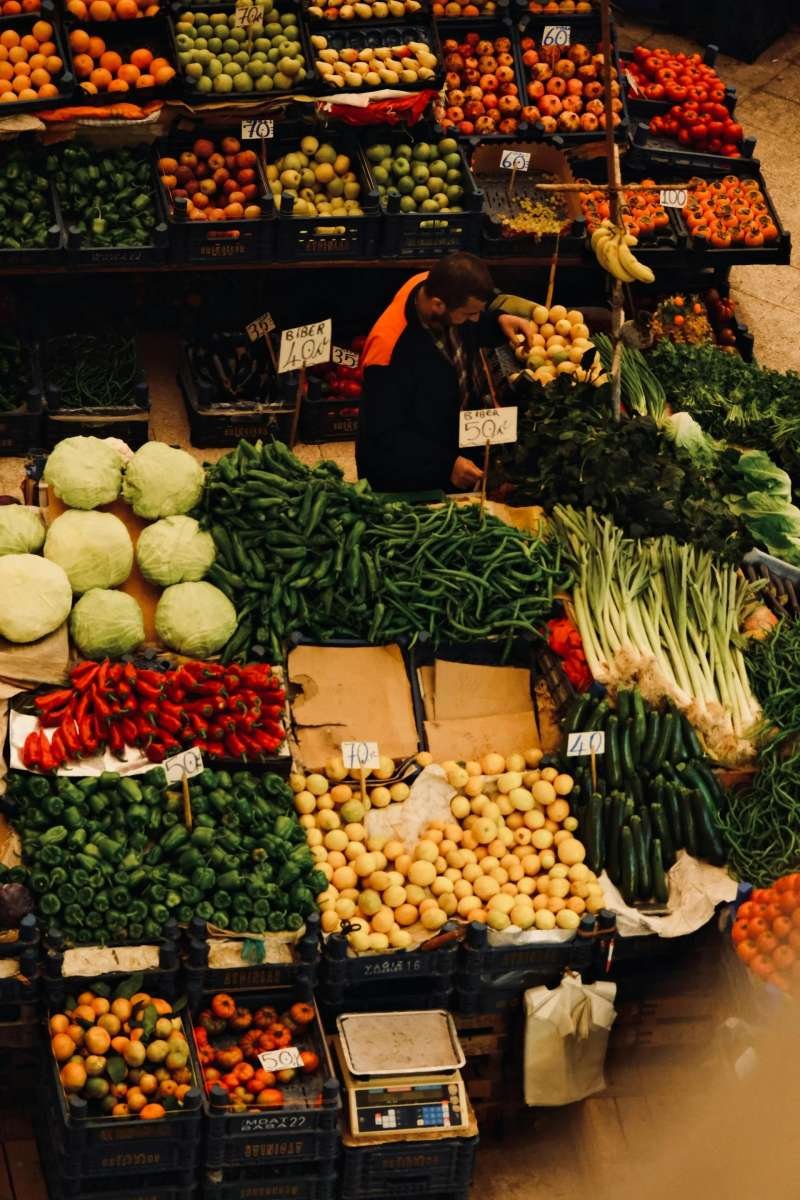
For travelers who understand that food and culture are inseparable. We take you beyond tourist restaurants to family kitchens where recipes are passed through demonstration, to spice markets at dawn when the day begins, to workshops where artisans practice techniques their grandfathers taught them. This is Morocco as Moroccans live it.
Deep food immersion in Morocco for travelers who understand that cuisine reveals culture more honestly than monuments ever do.
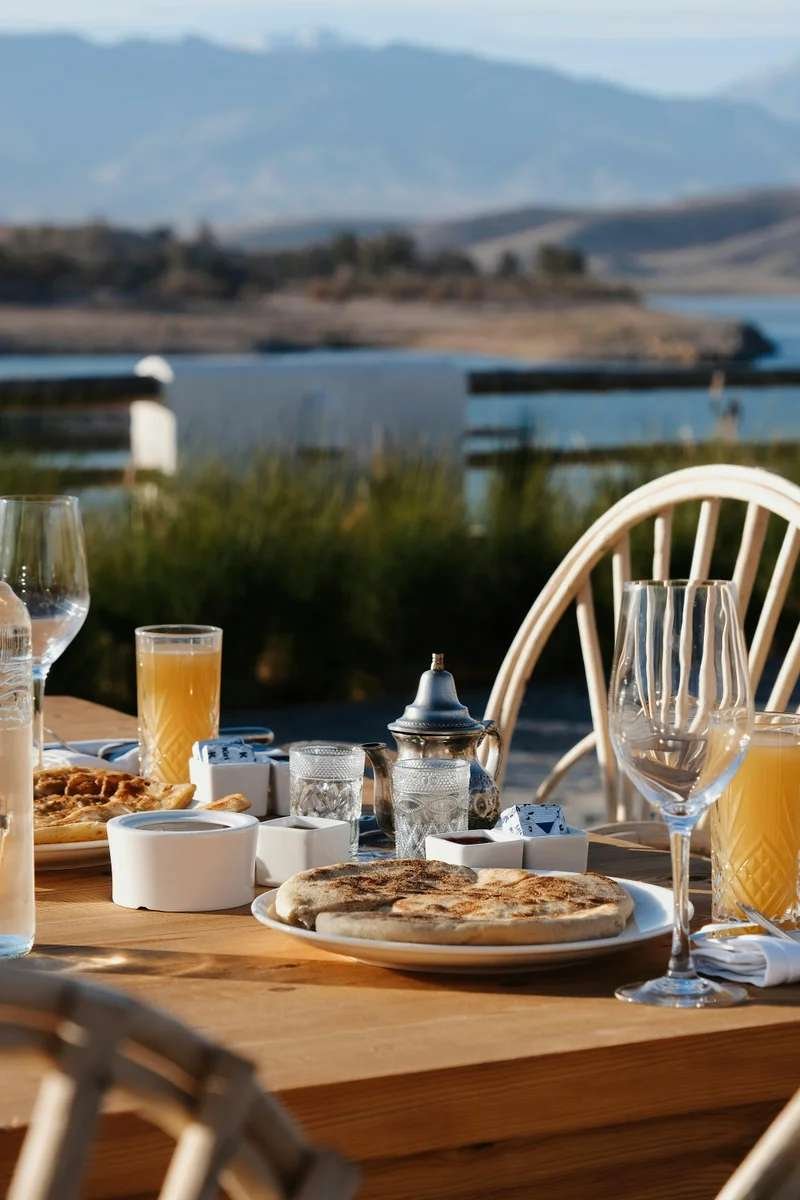
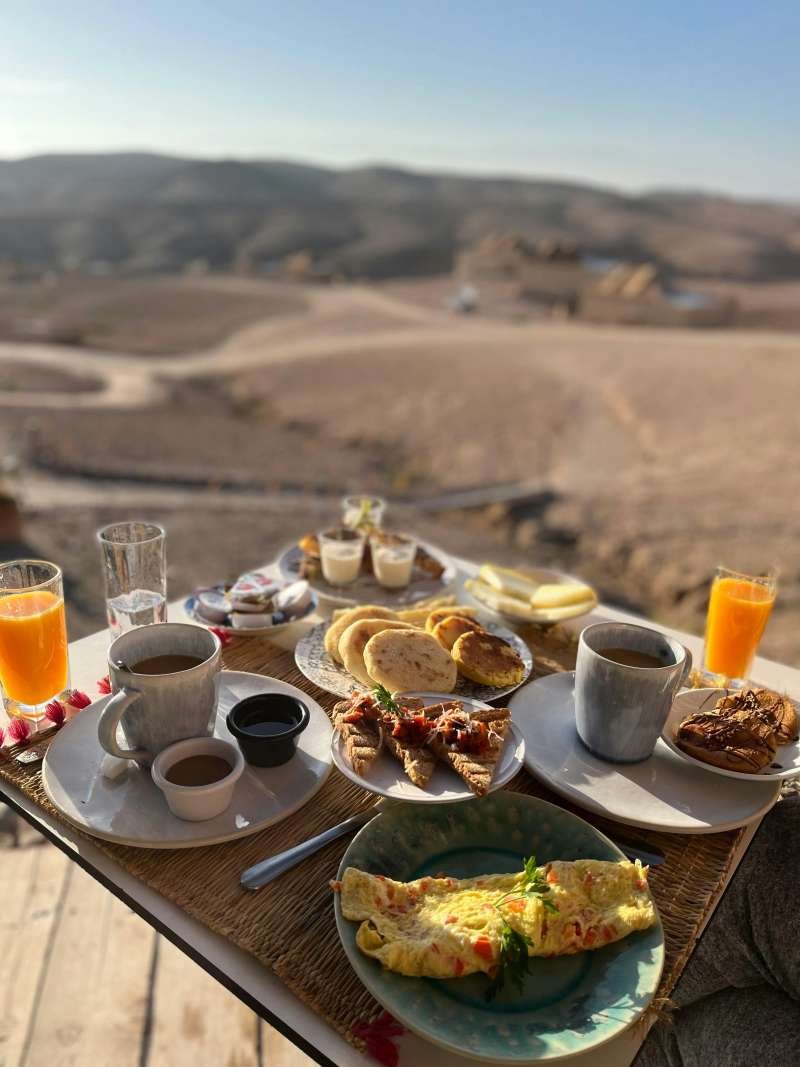
The riads we work with are restoration projects spanning years. Eighteenth-century palaces where breakfast spreads cover entire tables: still-warm bread from neighborhood ovens, house-made preserves, fresh orange juice from vendors who've occupied the same corners for decades. Kitchens where you'll learn alongside families who measure spices by feel and preserve lemons using methods older than written recipes.
We handle the logistics entirely. Market access arranged through decades of relationships, cooking sessions in actual family homes, private guides who understand culinary traditions deeply. You move through Morocco's food culture with access that typically requires years of relationship-building to achieve independently.
What You'll Experience
You'll shop dawn markets with guides who know which vendor stocks the best preserved lemons. Cook multi-course meals in homes that don't advertise. Explore regional food differences that matter.
Dawn Market Access
Shop markets with guides who know which vendor stocks the best preserved lemons. Dawn sessions when produce is freshest, vendors are setting up, and the daily rhythm of Moroccan food culture reveals itself authentically.
Family Kitchen Cooking
Cook multi-course meals in homes that don't advertise. Learn alongside families who measure spices by feel and preserve lemons using methods older than written recipes. Hands-on learning through your own hands, not observation from cooking show audiences.
Regional Food Traditions
Explore regional food differences that matter. Marrakech cooks differently than Fes, coastal tagines differ from mountain versions. Understand how geography, culture, and history shape Morocco's diverse culinary landscape.
Culinary Traditions
Private guides who understand culinary traditions deeply. Access to families who've prepared these dishes for generations, artisan producers, and regional specialists. Knowledge that typically requires years of relationship-building to achieve independently.
How This Works
Who This Works For
Serious food travelers prioritizing culinary culture over sightseeing. Home cooks wanting hands-on technique instruction from families who've prepared these dishes for generations. Culinary professionals seeking authentic regional knowledge beyond restaurant kitchens.
What We Handle
Market access arranged through decades of relationships, cooking sessions in actual family homes, private guides who understand culinary traditions deeply. You move through Morocco's food culture with access that typically requires years of relationship-building to achieve independently.
These itineraries center on food and craft, while still offering full immersion in Morocco itself. Markets reveal medinas. Cooking classes illuminate regional differences. Workshops deepen your understanding of cities. Food becomes your lens for seeing the country, not the only thing you see.
A World in ColorSlow and SacredBefore Dawn Breaks
Best for: First-time Morocco visitors wanting to discover the country through its cuisine
Pace: Immersive with hands-on cooking sessions daily
Your driver meets you beyond customs with a quiet welcome. The road from the airport passes through palm groves, then rose-colored ramparts, then the medina's ancient gates. Within an hour you've entered a world where food is still made the way it's always been made.
Through an unmarked door: a courtyard where a fountain plays, where orange trees scent the air, where your room awaits with windows overlooking the medina's terra-cotta expanse. Settle in. Let the journey begin.
Late afternoon, your guide arrives. Someone whose family has shopped these same stalls for generations. You enter the souks as a student, not a tourist. The spice merchant explains the difference between tourist-grade cumin and what his regular customers buy. The preserved lemon seller shows you how to test fermentation by feel. You're sourcing ingredients for tonight's cooking class, but you're also learning to see.
Evening in a family kitchen where a mother and daughter cook together. Tagine built layer by layer, the sequence matters, the timing matters, the way spices bloom in oil matters. Preserved lemons added at exactly the right moment. Mint tea poured from height to aerate. Your hands in the work. What you learn tonight, you keep.
Accommodation: Selected riad in the medina
Day 2 Marrakech Artisans
Morning in the medina's quieter corners, where craft and cuisine intertwine in ways most visitors never see. A pottery workshop where the wheel is still kick-powered, the clay still dug from local earth, the glazes still mixed by formulas passed through generations. The potter throws a tagine base with the casual precision of forty years' practice. You understand why a handmade vessel costs what it does-and cooks differently than factory-made.
A women's cooperative where looms clack in a rhythm that hasn't changed in centuries. Patterns emerge from memory, not templates. The weavers' hands move with the same unconscious knowledge as the home cooks you're meeting. Different craft, same kind of knowing.
Lunch at a place with no sign, no menu, no tourists. They serve one thing: tanjia, Marrakech's signature dish of lamb slow-cooked overnight in a sealed clay urn buried in hammam ashes. The meat falls apart at the slightest pressure. The flavors have had twelve hours to become inseparable. You eat with bread, with your hands, the way it's meant to be eaten.
Afternoon free to wander. The medina reveals itself differently now-you notice the tagine vessels stacked in craft stalls, the bread delivery boys weaving through crowds, the small details that construct a food culture.
Accommodation: Selected riad in the medina
Day 3 Bread & Preservation
Morning cooking class in the Palmeraie, the palm grove that surrounds Marrakech like a green embrace. Today's focus: bread and preservation-the foundations beneath every Moroccan meal.
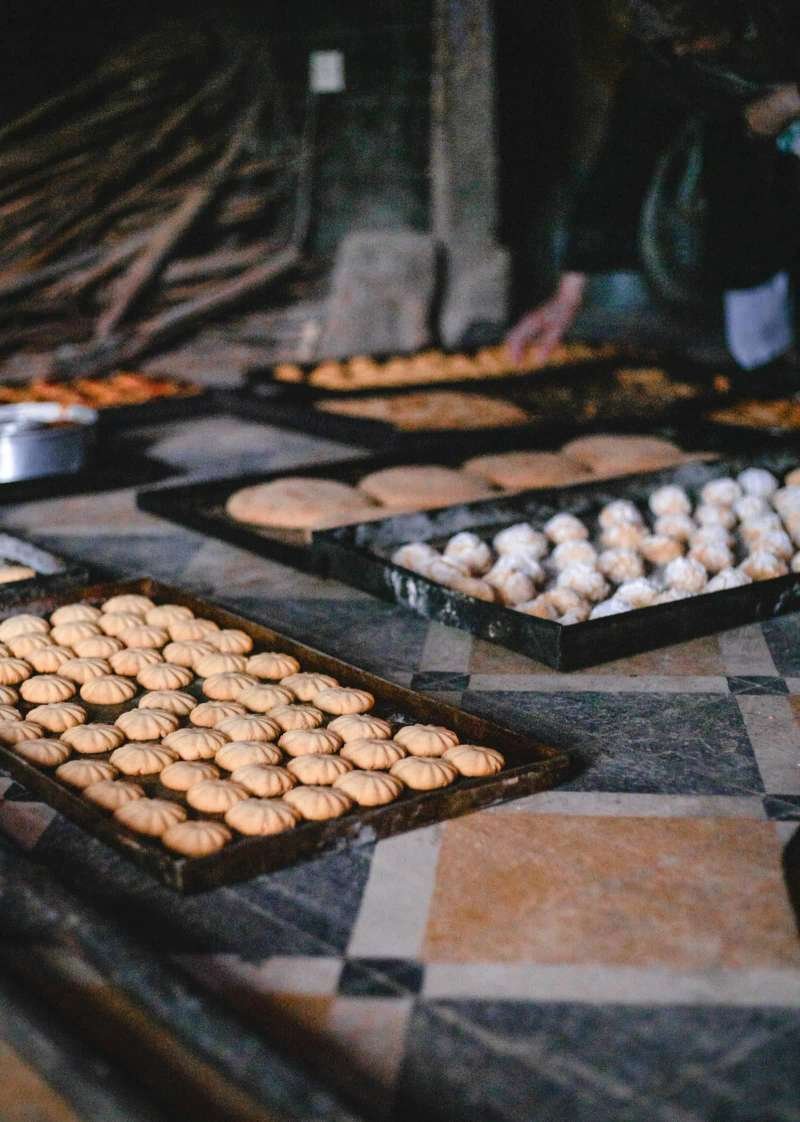
Flour types matter in ways you hadn't considered. Hard wheat versus soft, how hydration affects crumb, why some breads belong in communal ovens and others cook on griddles at home. You make khobz, the round loaf that appears at every meal. You make msemen, the layered flatbread whose technique resembles French puff pastry but predates it by centuries. You carry your dough to the neighborhood ferran-the communal oven where the baker knows each family's bread by shape and marks them with distinctive stamps.
Preserved lemons: the backbone of Moroccan cooking. Salt, lemons, time, patience. The month-long fermentation transforms citrus into something else entirely-the rind becomes silken, the flavor deepens into something floral and complex. You make a batch to take home. The process is simple; understanding when they're ready requires the kind of knowledge that can only be passed hand to hand.
Evening free. Perhaps the rooftop terrace as sunset paints the Atlas Mountains pink. Perhaps a spontaneous discovery in the souks. The rhythm of learning continues tomorrow.
Accommodation: Selected riad in the medina
Day 4 Atlas Mountains
The city falls away within an hour. The road climbs through switchbacks revealing new worlds with each turn. Terraced farms cling to slopes that defy gravity. Berber villages seem to grow from the rock itself. Snow gleams on peaks close enough to touch.
Here, food culture remains tied to the seasons in ways the city has forgotten. Spring greens that appear for two weeks then vanish. Summer vegetables preserved for winter eating. Bread baked in outdoor clay ovens because that's how it's always been done. The altitude changes everything. Even the mint tastes different.
Settle into your mountain lodge as afternoon light softens the valleys to gold. Tea on the terrace, the air thin and sweet with wild herbs. The silence is startling after Marrakech's constant symphony.
Late afternoon cooking with a local family. The grandmother has been rolling couscous by hand for sixty years. Her movements are so practiced they appear effortless, but when you try, you understand the decades required to achieve such unconscious mastery. Semolina worked with water and oil until tiny grains form. The steaming technique that separates each grain. Bread shaped and baked in clay ovens still warm from the morning's firing. What she teaches isn't recipes. It's the physical memory her hands carry. You leave with sore shoulders and a new understanding of what "handmade" actually means.
Accommodation: Mountain lodge with valley views
Day 5 Mountain Flavors
No alarm this morning. The mountain light wakes you gently, filtering through curtains onto a breakfast of local honey, fresh bread, eggs from the property's chickens, and coffee strong enough to climb the peaks outside your window.
Morning walk through walnut groves where farmers wave from terraced fields. The landscape becomes part of the experience. You understand why mountain tagines taste different from city versions, why altitude affects fermentation, how the land shapes what people eat and how they eat it.
Lunch featuring vegetables from the lodge's garden, prepared simply because simplicity is what this food deserves. Tomatoes that taste like tomatoes. Zucchini grilled with nothing but salt and olive oil. The freshness is the technique. Mint tea on a terrace where snow-capped peaks float above the horizon. The air tastes clean in a way you'd forgotten air could taste.
Afternoon drive to Essaouira, descending from mountain air to coastal salt spray. The landscape transforms: peaks yield to plains, then to argan forests where goats climb trees (you'll see it; you'll photograph it; you'll barely believe it). By evening, the Atlantic appears. A different Morocco entirely. Your oceanfront riad awaits, waves audible from your room.
Accommodation: Oceanfront riad, Essaouira
Day 6 Essaouira Fish Market
Early morning at the fish market, before the tourists arrive, when the day's catch is still being unloaded from wooden boats that look unchanged since your grandparents' time. Sea bass with eyes still clear. Sole that gleams like mother-of-pearl. Sardines by the hundreds, silver and blue. Prawns still twitching.
Your guide knows the fishermen. You buy directly from boats, learning what freshness actually looks like: the firm flesh, the bright gills, the clean smell of the sea rather than fish. The selection becomes a lesson in itself. What's best today? What's in season? How do you judge quality without speaking the language?
Carry your purchases to the outdoor grills where charcoal smoke rises into salt air. The grillers cook your fish exactly as you like: charred skin, moist flesh, nothing but lemon and salt and the irreplaceable flavor of absolute freshness. You eat with your hands at plastic tables while seagulls wheel overhead and fishing boats bob in the harbor. This is seafood as it's meant to be eaten: simple, perfect, honest.
Afternoon exploring the ramparts, the galleries, the slower pace that defines this windy port town. The Portuguese influence shows in the architecture, the food, the relaxed attitude so different from Marrakech's intensity. Evening free to discover Essaouira's quiet restaurants, to walk the beach as sunset colors the sky.
Accommodation: Oceanfront riad, Essaouira
Day 7 Coastal Cooking
Morning cooking class focused on coastal specialties, techniques and flavors you won't find inland. Chermoula, the herb-and-spice marinade that transforms fish, shows how coastal cooking differs from mountain versions: more cilantro, preserved lemon rind instead of pulp, a brightness that mirrors the ocean light.
You learn to grill whole fish properly: how to score the flesh for even cooking, when to flip, how to know doneness without cutting. Sardine pastries reveal a completely different approach than inland pastilla: the fish wrapped in thin dough with herbs and spices, fried until crisp, the contrast of flaky exterior and moist filling. Seafood couscous with its broth scented with saffron and fennel.
These aren't Marrakech techniques adapted to fish. This is a distinct regional cuisine shaped by what the Atlantic provides. You understand how geography creates culinary diversity, how a country smaller than California contains multitudes.
Afternoon free. The pace is slower here, the light different, the air carrying salt and the particular tranquility of places where the ocean sets the rhythm. Perhaps a final walk along the beach. Perhaps sitting with mint tea watching fishing boats return.
Late afternoon drive to Fes, four hours of changing landscape, from coast to plains to the foothills that cradle Morocco's spiritual capital. Arrive as the medina settles into evening. Your riad waits in the heart of the old city.
Accommodation: Restored riad, Fes medina
Day 8 Fes Markets & Street Food
Fes represents Moroccan cuisine at its most refined. The imperial city where palace cooking evolved over centuries, where spice blending became art, where dishes like pastilla achieved their perfected form. But before you cook, you must understand.
Today is markets and street food: the olive souk where fifty varieties gleam in ceramic dishes. Dried fruit vendors whose stacks of dates and figs and apricots have occupied the same corners for generations. Spice merchants who blend ras el hanout to formulas their grandfathers created. Your guide was born in this medina. He leads you to places tourists never find.
Tiny restaurants serving only one dish. A woman who's made nothing but harira for thirty years, her soup rich and complex in ways restaurant versions never achieve. A vendor whose fried fish has fed the same families for decades. Street food eaten standing, eaten walking, eaten sitting on plastic stools while the medina flows around you.
The olive tasting alone could take an hour. Green olives cured with bitter orange. Black olives dried in the sun. Red olives you've never seen before. Each with different applications: this one for tagine, that one for salads, this one eaten only with bread. Understanding the city's food culture before you cook it yourself.
Evening at the riad, dinner featuring Fassi specialties prepared by a cook who's been with the property for twenty years. Tomorrow you enter the kitchen.
Accommodation: Restored riad, Fes medina
Day 9 B'stilla & Fassi Cuisine
Today's cooking class centers on b'stilla, the legendary pastilla that represents Moroccan cuisine at its most elaborate. Forty layers of warqa pastry, paper-thin and made by hand. Patience and technique measured in hours, not minutes.
The warqa itself is astonishing: a dough tapped onto a hot pan surface, cooking instantly into sheets so thin light passes through them. The filling of shredded chicken, almonds, eggs, cinnamon, sugar, the sweet-savory combination that defines Fassi sophistication. The layering process requires concentration: sheets overlapping precisely, butter brushed between, everything building toward the final dome. When it emerges from the oven, golden and fragrant, you understand why this dish takes its place among the world's great culinary achievements.
But b'stilla isn't the only lesson. Salads appear in multitudes: zaalouk of roasted eggplant, taktouka of peppers and tomatoes, carrots with orange blossom water. Proper harira, the soup that breaks Ramadan fasts, complex with lentils, chickpeas, lamb, tomatoes, herbs, each component contributing to a whole greater than its parts. Makouda if the potatoes are right this season, fried potato cakes whose simplicity belies their addictive quality.
You appreciate now why Fes cooks take this so seriously. The refinement isn't for show. It's the expression of a culture that believes food deserves the same attention as architecture, as music, as prayer.
Accommodation: Restored riad, Fes medina
Day 10 Craft & Farewell
Morning in the medina's artisan quarters, where craft and cuisine reveal their deep connection. The tanneries first. Leather soaking in vats whose placement hasn't changed since the Middle Ages, the process still using pigeon droppings because no modern substitute works as well. The smell is honest and unforgettable. Understanding the labor transforms how you see every leather goods stall in the souks.
Pottery studios where masters throw tagine bases on kick-powered wheels, their rhythm unbroken by conversation. Zellige tile workshops where patterns emerge from geometry and faith, the same geometric principles that organize the medina, the same attention to detail that defines Fassi cooking. Metal workers hammering copper trays with patterns that have meaning: this symbol for blessing, that arrangement for protection.
Food and craft interconnect in ways you hadn't imagined. The vessels shape the cooking. Tagines function because of clay's properties, couscous steamers work because of their specific construction. The tools express the culture. Understanding craft deepens understanding of cuisine.
Final evening at a family home where three generations cook together. Grandmother teaching daughter teaching granddaughter, the living chain of knowledge you've witnessed throughout this journey. The meal itself is celebration: dishes you've learned to make over these ten days, prepared now by hands that have been making them for lifetimes.
Private transfer to airport carries you through the medina's ancient gates, past olive groves, toward home. Ten days end, but what you've learned continues. The recipes travel with you. The techniques live in your hands now. The understanding of what Moroccan cuisine actually means, why it earned UNESCO recognition, has become part of who you are.
Accommodation: Restored riad, Fes medina
This Includes:
9 nights accommodation in selected riads and mountain lodges
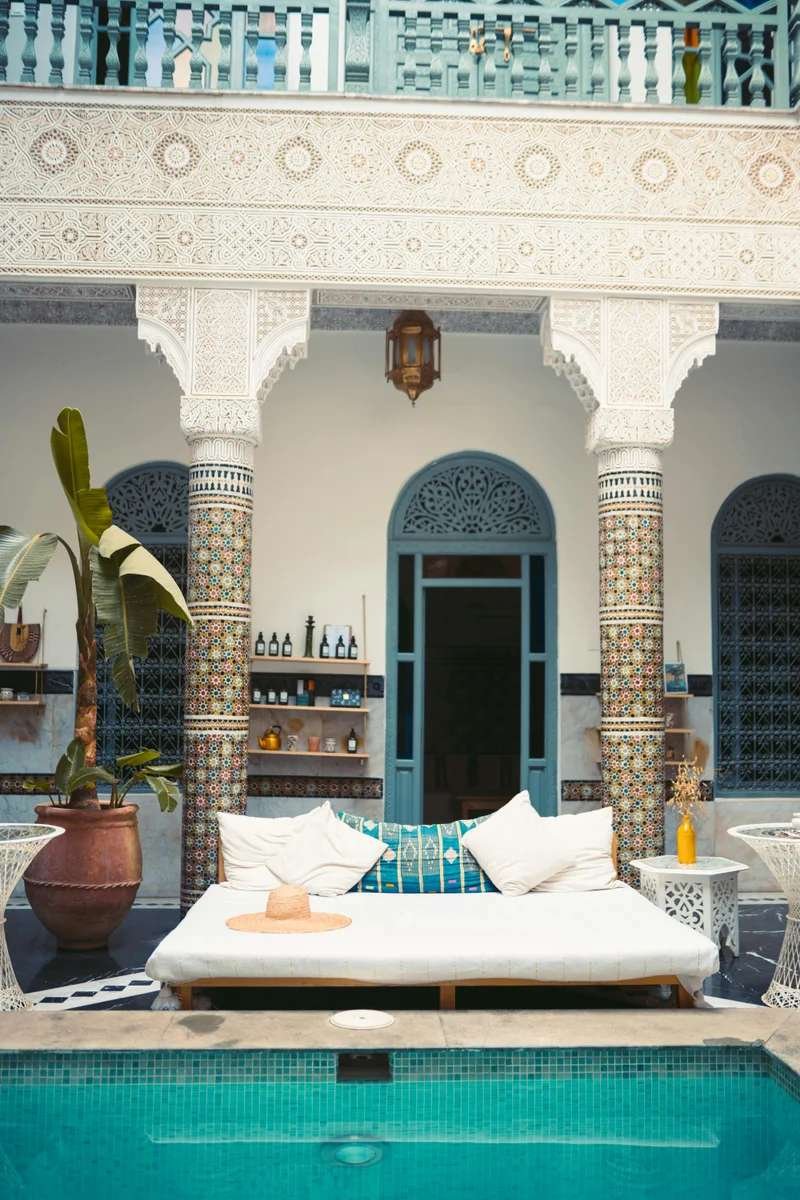
Your driver waits beyond customs with cold water and a quiet welcome. The road from the airport passes through palm groves, then rose-colored ramparts, then the medina's labyrinthine gates. Through an unmarked door: a courtyard where a fountain plays beneath orange trees, where carved plaster arches frame a world apart from the alley outside. Your room awaits, windows overlooking the terra-cotta expanse of the old city.
Late afternoon, you meet your guide. Not a tour guide who knows some food facts, but a professional chef who shops these souks for her restaurant. Together you enter the market as professionals do: evaluating spice freshness by scent, testing olive quality by feel, learning which vendors stock what the serious cooks buy. The education begins before you've touched a pan.
Evening cooking class in a family home where the grandmother has been making these dishes for sixty years. Tagine built with the patience it requires-spices bloomed in oil, onions caramelized slowly, preserved lemons added at just the right moment. You eat what you've made, family-style, understanding that this is how the knowledge has always traveled: hand to hand, house to house, generation to generation.
Accommodation: Selected riad in the medina
Day 2 Marrakech Deep Dive
Morning with a second family-not the same dishes but different versions, different techniques, different preferences. This is where understanding deepens. The grandmother yesterday used harissa; this one uses fresh peppers. The spice blend differs. The olive oil comes from a different region. The same dish, transformed by household tradition. You begin to understand that "Moroccan cuisine" is actually a thousand family cuisines, each with its own logic.
Afternoon in the medina's artisan quarters, where craft and cuisine reveal their deep connection. A pottery workshop where the wheel is kick-powered, where masters throw tagine bases with unconscious precision perfected over decades. You understand now why a handmade tagine cooks differently-the clay's porosity, the lid's weight, the glaze that develops with use. Metalwork studios where copper trays take shape under steady hammering. The vessels shape the cooking. The tools express the culture.
Evening free. Perhaps the rooftop terrace as sunset paints the Atlas Mountains pink. Perhaps wandering the souks, seeing them differently now that you know what to look for. The rhythm of deep learning has begun.
Accommodation: Selected riad in the medina
Day 3 Palmeraie & Bread
Morning cooking class in the Palmeraie, the palm grove that embraces Marrakech like a green ring. Today's focus: bread and preservation-the foundations beneath every Moroccan meal.
You make khobz, the round loaf that appears at every table, learning how flour choice affects crumb, how hydration changes texture, how kneading builds structure. You make msemen, the layered flatbread whose technique predates French puff pastry by centuries-stretching dough thin enough to see through, folding and oiling, creating layers that crisp and separate on the griddle. You carry your dough to the neighborhood ferran, the communal oven where the baker knows each family's bread by shape.
Preserved lemons: the backbone of Moroccan cooking. Salt, lemons, time, patience. The month-long fermentation transforms citrus into something else entirely-silken rind, complex flavor somewhere between floral and fermented. You make a batch to take home, understanding that the process is simple but knowing when they're ready requires the kind of wisdom passed hand to hand.
Evening free. Tomorrow you head south, leaving the familiar for regions tourists rarely reach.
Accommodation: Selected riad in the medina
Day 4 Taroudant
The drive south crosses a different Morocco-the landscape transforming from Marrakech's gentle plains through the Tizi n'Test pass, where the road clings to mountain flanks and valleys plunge impossibly far below. Then descent into the Souss Valley, where citrus groves stretch toward mountains the color of rust.
Taroudant announces itself quietly. Rarely visited by tourists, this walled town serves as regional capital for the Souss. The markets exist for locals, not visitors-no English menus, no tourist prices, no adaptations for foreign palates. You've entered Morocco as Moroccans experience it.
Afternoon market tour with a guide whose family has lived here for generations. The spice blends differ from Marrakech-more earthy, less floral, with aromatics you haven't encountered before. Berber influences show clearly here: simpler presentations, different vegetable preparations, tagines that taste of this particular soil. You buy ingredients for tomorrow's cooking: herbs you don't recognize, spices blended specifically for Souss cooking, vegetables from farms just beyond the walls.
Evening dinner with a local family-your introduction to authentic southern Berber cuisine. The flavors are new. The hospitality is ancient.
Accommodation: Traditional riad, Taroudant
Day 5 Southern Traditions
Morning cooking class focused on southern Berber traditions-techniques and flavors that contrast with everything you learned in Marrakech. The tagines here use different spice combinations: more cumin, less cinnamon, aromatics that reflect the desert's proximity. Couscous prepared with vegetables you haven't seen in the north. Bread baked in patterns specific to this region.
The teaching family belongs to this land in ways that shape their cooking. The grandmother shows you amlou-argan oil, honey, and almonds ground together into a spread that captures the region's flavors in a single preparation. The argan trees grow only here. The honey comes from local hives. The almonds from orchards visible from the kitchen window. Everything connects to place.
Afternoon exploring the ramparts and souks of what locals call "little Marrakech"-the same general structure but different character, slower pace, less tourism's influence. You notice how the food stalls differ: what's sold here, what's absent, what the regional cuisine prioritizes. The connection between geography and gastronomy becomes clearer with each hour.
Evening free to wander the medina as the heat fades, to find the small cafés where locals drink mint tea as the sun sets behind mountain walls.
Accommodation: Traditional riad, Taroudant
Day 6 Ouarzazate & Skoura
The drive east crosses the Anti-Atlas through landscapes that redefine your sense of Morocco. Red earth, pink mountains, valleys carved by ancient rivers now dry. Kasbahs appear on ridgelines-earthen fortresses that seem to grow from the land itself. You've entered the pre-Saharan zone, where food culture adapts to extreme climate.
Stop in Ouarzazate, the "door of the desert," where the architecture shifts entirely. The town exists where it does because water emerges here, creating oasis life in otherwise hostile terrain. Quick exploration of the kasbah that's served as backdrop for countless films-you recognize it without quite knowing why.
Continue to Skoura and its palm groves, one of Morocco's most beautiful oases. Thousands of date palms create a green world in the red landscape. Your restored kasbah stands in the grove's heart, thick walls keeping the afternoon heat at bay.
Late afternoon market visit in a village where dates are "the bread of the desert." You learn to distinguish varieties: Medjool's caramel sweetness, Deglet Noor's honey notes, others you've never heard of. The shopkeeper's family has traded dates for four generations. His knowledge runs deep.
Accommodation: Restored kasbah, Skoura
Day 7 Oasis Cooking
Morning cooking with oasis families whose techniques reflect centuries of adaptation to scarcity. Water is precious here; nothing is wasted. Vegetable scraps become animal feed. Meat appears rarely; when it does, every part serves a purpose. Preservation techniques matter deeply-in summer heat, food spoils within hours.
You learn dishes that don't exist elsewhere: tagines using specific desert herbs, bread baked in sand, preparations featuring the date in ways Marrakech cooks never consider. The flavors are different-earthier, more austere, with the clarity that comes from limited ingredients used with precision.
Understanding how geography shapes cuisine becomes unavoidable here. The oasis provides what the oasis provides: dates, almonds, limited vegetables, occasional meat. Creativity happens within constraints. The cooking is beautiful because of its limits, not despite them.
Afternoon exploring the kasbahs that dot the palm groves-earthen architecture that rises and crumbles and rises again over centuries. The light shifts through date palms. The silence is absolute. You understand now why food here tastes different: it grows from different soil, drinks different water, exists under different sky.
Accommodation: Restored kasbah, Skoura
Day 8 Atlas Mountains
The drive north climbs back into the High Atlas through valleys that hold tight to their water, where terraced farms cling to slopes like stepped green carpets. The air cools with altitude. The landscape transforms from desert ochre to mountain green within hours.
Stop for olive oil tasting with producers who've pressed their family's harvest for generations. You sample different pressings-early harvest versus late, different olive varieties, oils that taste of grass and pepper and almonds and green tomatoes. The producer explains what creates each flavor: timing, variety, processing speed. You understand now why good olive oil costs what it does, and why cheap oil tastes like nothing at all.
Settle into your mountain lodge as afternoon light softens the valleys to gold. Two nights here-time for the altitude to work its way into your cooking, for mountain ingredients to reveal their difference. Tea on the terrace, the air thin and sweet with wild herbs. Snow-capped peaks float above the horizon like hallucinations. The silence is startling after days in markets and kitchens.
Dinner from the lodge's garden: vegetables that taste of altitude, herbs you can't find lower down, lamb slow-roasted in clay ovens. Everything is simpler here, and better for it.
Accommodation: Mountain lodge with valley views
Day 9 Mountain Bread & Argan
Morning devoted to bread-the foundation of every Moroccan meal, and here in the mountains, fundamentally different from what you made in Marrakech. Mountain bread uses different flour, rises differently at altitude, bakes in outdoor clay ovens still warm from the morning's firing. You make multiple versions: the daily loaf, celebration bread stuffed with almonds and honey, flatbreads for scooping tagine.
The contrast is instructive. Same basic ingredients-flour, water, yeast, salt-but mountain bread tastes different. The flour comes from local wheat. The water flows from snow melt. Even the wild yeast differs. You understand now that bread isn't a recipe; it's a relationship between cook and place.
Afternoon at an argan oil cooperative where women crack nuts by hand and grind them into oil the way their grandmothers did. The process is labor-intensive beyond what you'd imagined: each nut cracked individually, each kernel roasted, the grinding endless. You taste oil at each stage, understanding how roasting transforms flavor. The finished product-golden, nutty, irreplaceable-carries the labor of a dozen women across several hours. You'll never think of "expensive" the same way.
Evening on the terrace as the mountains turn pink, then purple, then dark. The stars emerge in numbers the city never permits. Tomorrow you head north, toward a different Morocco entirely.
Accommodation: Mountain lodge with valley views
Day 10 Chefchaouen
The drive north crosses Morocco's center-through Middle Atlas cedar forests where Barbary macaques play in the trees, past the Roman ruins at Volubilis, through agricultural plains that feed the kingdom. Then the Rif Mountains rise ahead, and everything changes again.
Chefchaouen appears as a cascade of blue-buildings tumbling down a mountainside, every wall and staircase and doorway painted in shades from powder to cobalt to indigo. The effect is dreamlike, surreal, unlike anywhere else in Morocco.
But you're here for the food, and Rif cooking differs from everything south. Spanish influence shows clearly: different spice profiles, different techniques, different vegetable preparations. The region was Spanish protectorate until 1956; the cuisine remembers. Olives cured differently. Preserved foods prepared with Mediterranean logic. Cheese appears in ways it doesn't elsewhere in Morocco.
Evening market tour with a local guide whose family has lived here for generations. The ingredients differ from Marrakech: different herbs, different spice blends, even the mint tea tastes different. You buy provisions for tomorrow's cooking, already anticipating how this food will contrast with what you've learned in the south.
Accommodation: Traditional riad in the blue medina
Day 11 Rif Cooking
Morning cooking class focused on regional differences that illuminate everything you've learned before. The same dishes, transformed: tagines with different spice logic, couscous served with different accompaniments, bread shaped in unfamiliar patterns. The cook's grandmother learned from her grandmother, who learned before the Spanish arrived and adapted what she knew to new ingredients, new techniques.
The cooking here uses more fresh herbs, less dried spices. Olive oil appears more generously. Goat cheese-virtually unknown in Marrakech-flavors salads and pastries. You understand now that "Moroccan cuisine" is actually regional cuisines, shaped by history and geography, connected by tradition but distinct in expression.
Afternoon free to wander the blue-washed medina, camera in hand or empty-handed, simply experiencing. The light changes throughout the day, transforming the blues from powder to electric to something approaching purple as the sun sets. Photographers from around the world chase the perfect shot; you simply experience what they're chasing.
Evening with no agenda. Perhaps dinner at a local restaurant the guide recommended. Perhaps simply sitting with mint tea as the medina settles into darkness, the mountains darkening behind. Tomorrow you travel to Morocco's culinary capital.
Accommodation: Traditional riad in the blue medina
Day 12 Fes Markets
The drive to Fes crosses agricultural plains and through small towns where tourism hasn't arrived. Then the city appears-Morocco's spiritual and intellectual heart, its undisputed culinary capital, its most complex and layered medina.
You enter Fes not as a tourist but as a student who's spent nearly two weeks learning to see. The markets reveal themselves differently now: you understand what quality looks like, what regional variation means, how to read a spice merchant's skill.
Extended market exploration with a guide born in this medina. The olive souk, where fifty varieties gleam in ceramic dishes-green cured with bitter orange, black dried in the sun, pink olives you've never seen before. Dried fruit vendors whose stacks have occupied the same corners for generations. Spice merchants blending ras el hanout to formulas their grandfathers created.
Street food eaten standing at stalls that serve only one dish-harira from a woman who's made nothing else for thirty years, fried fish from a vendor whose family has fed this corner for decades. Understanding the city's food culture before you cook it yourself.
Evening at the riad, dinner featuring Fassi specialties: the refined cuisine that developed in this imperial city over centuries, where palace cooking became art.
Accommodation: Restored riad, Fes medina
Day 13 Fassi Masterclass
Today's cooking class tackles the dishes that define Moroccan haute cuisine-preparations that developed in Fes and spread outward, techniques that take years to master.
Pastilla first: the legendary dish with forty layers of hand-made warqa pastry, each sheet so thin light passes through. The filling of shredded chicken, almonds, eggs, cinnamon, sugar-the sweet-savory combination that marks Fassi sophistication. The layering requires patience and precision: sheets overlapping exactly, butter brushed between, everything building toward a final dome that emerges golden and fragrant.
Rfissa next: shredded msemen simmered in chicken broth with lentils and fenugreek-traditionally served after childbirth, now a celebration dish. The fenugreek's distinctive flavor marks the preparation as unmistakably Fassi.
The cook who teaches today trained for years before being trusted with these dishes. She explains not just how but why: the chemistry of warqa, the reason for specific temperatures, when to adjust technique for altitude or humidity. This is professional-level instruction delivered in a home kitchen.
Afternoon: pottery workshop begins. Two days to make something from start to finish-not a demonstration but genuine creation. Clay from local earth. Wheel powered by foot. Glazes mixed to formulas unchanged for centuries. Today you center clay, throw a basic form, understand how difficult mastery actually is.
Accommodation: Restored riad, Fes medina
Day 14 Farewell
Morning completing your pottery piece-the trimming, the glazing, the satisfaction of having made something with your hands in a tradition seven hundred years old. The work ships home in several weeks; the imperfect result will mean more than any purchased souvenir because it embodies the difficulty.
Final afternoon free in the medina. You move through it differently now-understanding the spice merchants' vocabulary, recognizing quality in olive selection, seeing the food culture that underlies the apparent chaos. The lanes that once seemed labyrinthine now feel navigable. You've become, briefly, a resident rather than a visitor.
Final dinner with a family who've hosted cooking sessions through your journey. Three generations at the table, dishes you've learned to make served by hands that have been making them for lifetimes. The conversation flows-about food, about family, about how they learned what they know and who they'll teach it to.
Private transfer to airport carries you through the medina's ancient gates, past olive groves, toward home. Fourteen days end-but what you've learned travels with you. The recipes are in your notebook. The techniques live in your hands. The understanding of what Moroccan cuisine actually means, why it earned UNESCO recognition, how it differs from region to region and family to family-all of that has become part of who you are.
Accommodation: Restored riad, Fes medina
This Includes:
13 nights in selected properties across regions
All breakfasts, 10 dinners
Private driver throughout
Private food-focused guides in each location
8 hands-on cooking classes
Two-day pottery workshop
Olive oil and argan oil tastings
All market tours and artisan visits
Airport transfers
24/7 support
Doesn't Include:
International flights
Lunches
3 dinners (your choice)
Personal purchases
Travel insurance
Theme: Professional-level culinary education with rare access and mentorship
Best for: Culinary professionals, serious food travelers, writers or photographers on projects
Pace: Flexible, following seasonal events and emerging opportunities
Your driver waits beyond customs with cold water and a quiet welcome. The road from the airport passes through palm groves, then rose-colored ramparts, then the medina's ancient gates. Through an unmarked door: a courtyard where a fountain plays beneath orange trees, where carved plaster arches frame a world apart from the alley outside. Five nights here-enough to truly know the Red City's food culture before journeying deeper.
Late afternoon, you meet your chef mentor-someone who will guide you across three weeks, whose expertise runs deeper than recipes, who will develop your palate and your technique until you understand this cuisine at a professional level. This is not casual cooking tourism. This is culinary education conducted through Morocco's kitchens.
First session together in the riad kitchen. Not cooking yet-tasting. Olive oils from different regions. Spice blends from different merchants. Preserved lemons at different ages. Your mentor explains what distinguishes good from exceptional, how to identify freshness, how to read quality without labels. The education begins before you touch a pan.
Accommodation: Selected riad in the medina
Day 2 Wholesale Markets
Five AM start. The medina stirs before dawn: bread delivery boys with towers of loaves balanced on heads, vegetable trucks arriving from farms, butchers setting up their stalls. You're entering the market at wholesale level, where restaurants buy, where the serious cooks source their ingredients.
Your mentor leads you through sections tourists never see. The meat market where carcasses hang and butchers know cuts for every dish. The olive souk where buyers taste before purchasing by the crate. The spice merchants who blend custom formulas for regular restaurant clients. You're learning to see what professionals see: quality indicators invisible to casual buyers, pricing that reflects actual value, relationships that matter more than money.
Afternoon in a restaurant kitchen that never allows visitors. The chef knows your mentor from years of shared sourcing. You observe service preparation-the mise en place, the station organization, the rhythm of a kitchen preparing for evening service. Then you cook alongside them: tagines for tonight's guests, techniques refined over decades, the pressure and precision of professional cooking.
Accommodation: Selected riad in the medina
Day 3 Family Cooking I
Morning with a local family-not a demonstration but an invitation. The grandmother has agreed to teach because your mentor asked, and his word carries weight in this community. Her kitchen is small, functional, nothing like the staged settings tourists see. The pots are dented from decades of use. The spices sit in unmarked containers she reads by smell and color.
Three weeks allows something shorter trips cannot: genuine relationships. You're not a tourist passing through. You're a guest returning tomorrow, and the day after, building the kind of trust that unlocks deeper teaching. Today the grandmother shows you her tagine-the one she makes every week, the one her grandmother taught her, the one that exists only in her hands and now, partially, in yours.
The family lunch extends for hours. Children come and go. Stories emerge. You understand that cooking here isn't separated from life-it's woven through everything, daily practice and celebration and hospitality and love expressed through food.
Evening free. Perhaps wandering the medina with new eyes, understanding now what you're seeing. Perhaps the rooftop terrace as sunset paints the Atlas Mountains pink.
Accommodation: Selected riad in the medina
Day 4 Family Cooking II
Return to the same family. The grandmother smiles when she sees you-you're becoming familiar. Today's dishes are more complex: preparations she saves for special occasions, techniques requiring patience she doesn't share with one-time visitors.
The difference is palpable. Yesterday you were a curious stranger. Today you're a student she's invested in. The teaching goes deeper: not just how but why. The history of this dish in her family. Where the technique came from. What mistakes she made learning and how she corrected them. You're receiving knowledge that usually travels only through bloodlines.
Afternoon with your mentor, processing what you've learned. Professional-level palate training: blind tastings, identification exercises, developing the vocabulary to describe what you're experiencing. This isn't party trick learning-it's the foundation of understanding cuisine deeply enough to eventually create within it.
Evening: if timing aligns, an invitation to a local celebration or extended family gathering. Weddings, naming ceremonies, holiday preparations-moments when food culture reveals its deepest meanings. Three weeks creates these possibilities that shorter trips never encounter.
Accommodation: Selected riad in the medina
Day 5 Marrakech Synthesis
Final mentor session in Marrakech, pulling together everything from these five days. You cook with him now as something closer to colleague than student-still learning, always learning, but cooking with confidence that's been built through repetition and correction.
The session focuses on technique refinement: the small adjustments that separate competent from excellent. How to build spice layers properly. When to add preserved lemon. Why timing matters for vegetable additions. He watches you cook his dishes, corrects your errors, approves your successes. By the end you've internalized approaches you'll carry forward.
Afternoon in the medina's artisan quarters. Pottery workshops where masters throw tagine bases on kick-powered wheels-you understand now why these vessels matter, how they shape the cooking you're learning. Metalwork studios where copper trays take shape under steady hammering. The connection between craft and cuisine deepens: the tools express the culture, and understanding craft deepens understanding of food.
Evening to explore independently, with knowledge now that transforms what you see. You notice things invisible five days ago: the quality gradients between stalls, the relationships between vendors and regular customers, the rhythms underlying apparent chaos.
Accommodation: Selected riad in the medina
Day 6 Atlas Mountains
The city falls away within an hour. The road climbs through switchbacks revealing terraced farms clinging to impossible slopes, Berber villages growing from rock itself, snow on peaks close enough to touch. The air thins and sweetens. Something in you releases.
Four nights in the mountains-time enough for altitude to affect your cooking, for seasonal ingredients to reveal their nature, for mountain families to share what they share only with those who stay. Your lodge appears as afternoon light softens the valleys to gold, thick walls and wood beams creating warmth against the cooling air.
Evening introduction to mountain food culture with the lodge's cook. She grew up in a village visible from the terrace. The ingredients come from gardens and cooperatives within walking distance. The techniques evolved for altitude, for seasons, for preservation through winter months when snow blocks the passes. Different cuisine from the cities-simpler, more elemental, shaped by what the land provides.
Dinner by firelight: vegetables that taste of altitude, lamb slow-roasted in clay ovens, bread baked that morning. The stars emerge in numbers the city never permits. Three weeks unfolds differently up here.
Accommodation: Mountain lodge with valley views
Day 7 Mountain Cooking I
Morning cooking with mountain families whose techniques connect directly to the seasons. Spring brings greens that appear for two weeks then vanish-dishes possible only now. Summer means vegetables dried on rooftops for winter storage. Fall is preservation: olives pressed, lemons sealed in salt, tomatoes concentrated into paste. Winter cooking relies on what's been stored and what's been dried. You learn whichever techniques your visit's timing reveals.
The teaching family's home stands partway up a valley, surrounded by walnut groves and terraced fields. The grandmother cooks on a gas stove now, but she remembers when fire was all there was-and the old techniques survive because they work. Couscous steamed in a setup unchanged for centuries. Bread baked in outdoor clay ovens. Tagines built slowly over low heat because rushing produces different results.
If the olive press is running during your stay-typically November through January-you visit. The centuries-old stone presses still function: donkeys walking circles, stone grinding stone, golden oil emerging. You taste different pressings, understanding how timing and technique create different flavors. The oil you buy here will outlast what any store stocks.
Evening at the lodge, processing what you've learned with the cook. She adds her own variations, her own family's approaches. Same cuisine, different expressions. You're beginning to understand that mountain cooking isn't one tradition-it's many traditions, each valley and each family contributing variations.
Accommodation: Mountain lodge with valley views
Day 8 Craft Immersion
Today begins deep craft immersion-understanding the tools and vessels that shape the cooking you're learning. Not quick demonstrations but genuine creation: multiple days with artisans, producing finished pieces you'll take home.
Ceramics first. The potter's village lies in a valley where clay has been dug for centuries. The master you work with learned from his father who learned from his father-six generations in the same workshop, using the same wheel his great-grandfather powered with his foot. You watch him throw a tagine base in minutes, decades of practice creating unconscious precision. Then you try. Centering clay proves harder than expected. Your first attempts collapse. Gradually, with patient correction, something usable emerges. The imperfection carries meaning: you understand now what mastery actually requires.
Afternoon with weavers. Raw wool arrives from local flocks. You help card it, watching tangled fibers become aligned strands. The loom's rhythm is hypnotic: patterns emerging from repetitive motion, geometries that carry symbolic meaning you're beginning to understand. Your weaving begins-a small piece you'll complete over coming days.
Evening processing what craft teaches about cuisine: patience, precision, understanding materials, respecting tradition while developing personal style. The connections between making pottery and making food become visible.
Accommodation: Mountain lodge with valley views
Day 9 Atlas Farewell
Morning completing your weaving project. The piece is imperfect-tension uneven, patterns slightly off-but it's yours, made with your hands in a tradition older than writing. It ships home with the pottery; when they arrive, they'll carry this place with them.
Final mountain cooking session with a third family, their variations adding layers to your understanding. The same basic dishes prepared differently: this family's couscous uses different flour, that family's tagine includes herbs this one omits. You're learning that Moroccan cuisine isn't fixed recipes-it's a language spoken differently in every home.
If timing aligns with date harvest in the Draa Valley, a side trip is arranged. The palm groves south of the mountains produce Morocco's finest dates-Medjool and others with names you've never heard, each with distinct flavor and texture. Harvest season means fresh dates at their peak, before drying changes their character.
Evening farewell to the mountains. The lodge's staff have become familiar over four nights. The cook you've worked with sends you with small gifts: dried herbs, honey from her hives, written recipes you'll never quite replicate because half the ingredient is place. Tomorrow you descend toward Fes.
Accommodation: Mountain lodge with valley views
Day 10 Fes Arrival
The drive north crosses Morocco's center-through cedar forests where Barbary macaques play in the trees, past the Roman ruins at Volubilis, through agricultural plains that feed the kingdom. Then Fes appears: Morocco's intellectual and culinary capital, the city where palace cooking evolved over centuries, where spice blending became art.
Five nights here-time for genuine relationships, for returning to the same families, for understanding a city that resists quick comprehension. Your riad occupies a restored house in the heart of the medina, courtyard fountains playing music that's played here for generations.
Extended market exploration with a guide born in these lanes. The olive souk where fifty varieties gleam in ceramic dishes. Spice merchants blending ras el hanout to formulas their grandfathers created. Dried fruit vendors whose stacks have occupied the same corners for generations. You move through the market differently now-ten days of learning have trained your eye, and your guide notes your developing expertise.
Evening dinner at the riad featuring Fassi specialties: the refined cuisine that distinguishes this city from all others in Morocco. You taste what you'll learn to make in coming days.
Accommodation: Restored riad, Fes medina
Day 11 Fes Family I
Extended cooking with a Fassi family who don't normally host visitors. Your mentor's introduction opened doors that usually stay closed. The grandmother prepares dishes she learned in the palace kitchens where her mother cooked-techniques passed through service, refined over generations, now practiced in this modest home.
Professional-level project begins: pastilla as it's made for celebrations requiring days of preparation. Today the warqa pastry-paper-thin sheets made by tapping dough on a hot surface, each one taking seconds to cook and an hour to roll properly. The grandmother demonstrates the motion-wrist, not arm-and you practice until your sheets stop tearing, until they're thin enough for light to pass through.
The chicken begins its slow braise: tomorrow it will be shredded, combined with almonds and eggs and cinnamon and sugar, layered between your warqa in the sweet-savory combination that defines Fassi sophistication. The project continues across multiple days because that's how this dish works-rushed pastilla isn't pastilla.
Evening reflection with your mentor at the riad. He explains the techniques' evolution, the Persian and Andalusian influences, why Fes cooking achieved the refinement it did. Historical understanding deepens practical learning.
Accommodation: Restored riad, Fes medina
Day 12 Fes Family II
Return to the same family-the grandmother's approval visible in her greeting. Pastilla continues: the filling components prepared and assembled, the layers built with precision that reflects your warqa work yesterday. The dish takes shape under her supervision, her corrections gentle and specific.
But pastilla isn't the only learning. While the project develops, you make the accompanying salads-five, seven, sometimes ten small plates that precede and surround the main dish. Zaalouk of roasted eggplant, smoky and rich. Taktouka of peppers and tomatoes, seasoned differently than Marrakech versions. Carrots with orange blossom water, sweetened without sugar. Each family's salad array differs; you're learning this family's versions.
Afternoon shift to craft: leather work from hide to finished product. The tanneries' distinctive smell becomes familiar as you understand the ancient process-pigeon droppings, vegetable dyes, techniques unchanged since medieval times. In a workshop, you cut and stitch small leather goods under artisan guidance, understanding why handmade items command their prices.
Evening in the medina as it settles into darkness. The souks close. Cafés fill. A different Fes emerges-locals gathering where tourists don't go, food stalls serving workers heading home. Your guide leads you to places known only through relationship.
Accommodation: Restored riad, Fes medina
Day 13 Preservation Techniques
Today focuses on preservation-the techniques that define Moroccan cooking's flavor profile, the preparations that require time and patience impossible in shorter trips. Three weeks allows you to make preserved lemons that will have begun their transformation by the time you leave.
Aged preserved lemons first: the grandmother shows you her oldest jar, lemons that have been fermenting for three years. The texture is silken. The flavor has deepened into something beyond citrus-almost floral, definitely fermented, irreplaceable in the dishes that feature it. You make your own batch using her technique, understanding that the simple ingredients (lemons, salt, time) matter less than the knowledge of when they're ready.
Fermented preparations requiring time: olives cured in three different styles, each for different uses. Spice blends that develop over days as components marry. Meat preserved in fat for winter storage. These techniques exist because refrigeration didn't-they persist because their flavors are better.
Afternoon returning to vendors you've met before. Two weeks in Morocco means familiar faces now. The spice merchant remembers your preferences. The olive seller saved something unusual for you. The relationships that usually take years to build have begun their development. You buy for tomorrow's cooking, and for the journey's final weeks.
Accommodation: Restored riad, Fes medina
Day 14 Fes Synthesis
Final Fes cooking session: pastilla project completes. The dish emerges from the oven golden and fragrant, the layers visible through the top, the dusting of powdered sugar and cinnamon marking it as properly Fassi. You made this-the warqa, the filling, the assembly. The grandmother approves. This means something.
Morning cooking extends into other Fassi specialties: rfissa, the shredded msemen in chicken broth that traditionally welcomes new mothers. Harira perfected over years, the grandmother's version that she makes identically every time yet no recipe captures. The dishes that define Morocco's culinary capital, now in your repertoire.
Evening celebration dinner with the families you've cooked with-not at a restaurant but in the grandmother's home, all generations present. The food you've helped prepare across five days appears on tables surrounded by people who've become, briefly, family. The conversation flows in Arabic and French and your developing understanding of both. Photographs get taken. Addresses get exchanged. Promises to return get made, and some of them will be kept.
This is what three weeks allows: relationships that transform learning from transaction to gift.
Accommodation: Restored riad, Fes medina
Day 15 Tetouan
The drive north brings a different Morocco-through farmland, past Volubilis again (worth a second stop now that you understand more), then climbing into the Rif Mountains where the landscape greens and the air changes character.
Tetouan: Morocco's hidden culinary capital, rarely visited by tourists but beloved by Moroccan food lovers. The city served as capital of Spanish Morocco until 1956, and the cuisine remembers. More Andalusian influence than anywhere else in the country-different techniques, different flavors, dishes that don't exist elsewhere.
The medina is UNESCO-protected, its whitewashed walls and wrought-iron balconies feeling more Mediterranean than African. Your riad sits in its heart, a family home converted to welcome the rare visitors who find their way here.
Late afternoon market exploration with a guide whose family has lived here for generations. The ingredients differ from Fes: different herbs, different spice blends, different preserved preparations. You buy for tomorrow's cooking, already anticipating how this food will contrast with everything you've learned in the south.
Evening dinner featuring Tetouani specialties-your introduction to cuisine that will reshape your understanding of what Moroccan cooking can be.
Accommodation: Traditional riad, Tetouan
Day 16 Andalusian Traditions
Extended cooking with families maintaining Andalusian traditions-recipes that crossed the strait from Spain five hundred years ago and evolved in Moroccan soil. The grandmother's family fled the Inquisition; their cooking preserves techniques the original homeland has forgotten.
More Spanish influence than anywhere in Morocco: olive oil used more generously, fresh herbs replacing some dried spices, preparations featuring vegetables in ways the south doesn't practice. Fish appears more often-the Mediterranean lies just over the mountains. Cheese and dairy feature prominently, unusual for Moroccan cooking.
You make dishes you've never heard of: pastelas different from Fes pastilla, sweet-savory combinations with distinct proportions, soups and stews that taste faintly of Spain while being completely Moroccan. The grandmother explains origins: this dish came with her great-great-grandmother, that technique adapted when local ingredients replaced unavailable ones.
Afternoon exploring the medina's Spanish architecture-the Plaza Hassan II could be in Andalusia. The connection between visual culture and food culture becomes visible: both preserve heritage from elsewhere, both have evolved into something distinctly Tetouani.
Accommodation: Traditional riad, Tetouan
Day 17 Tetouan Markets
Final Tetouan exploration: the markets locals love, that tourists don't know exist. Your guide leads you to her family's vendors-the fish seller her mother buys from, the vegetable stand with the best produce, the spice merchant who's blended for her grandmother for decades.
Extended tasting throughout the morning: street food eaten standing, pastries from bakeries that don't advertise, fruits from orchards just outside town. The market rhythm here differs from Fes and Marrakech-smaller scale, less overwhelming, more personal. You recognize faces from previous days. Vendors remember you.
The differences between Tetouani and Fassi food culture become clearer with each hour. Same country, fundamentally different cuisines-shaped by history, geography, proximity to Spain. You understand now that "Moroccan cooking" is actually dozens of regional cuisines, each with its own logic.
Evening cooking session focused on dishes you won't find elsewhere: Tetouani specialties that never appear in tourist restaurants, preparations this guide's grandmother taught her, techniques that exist only in this city's homes. You're completing a culinary education that most Moroccans never receive-understanding their country's regional diversity from the inside.
Accommodation: Traditional riad, Tetouan
Day 18 Chefchaouen
The short drive climbs deeper into the Rif Mountains, through villages where the pace slows further, until Chefchaouen appears: a cascade of blue tumbling down a mountainside, every wall and staircase and doorway painted in shades from powder to cobalt to indigo.
The Blue Pearl's visual drama is overwhelming-photographers from around the world chase perfect shots here. But you're here for the food, and Rif cooking offers its own revelations. This is mountain cuisine with Mediterranean influence, simpler than Fes or Tetouan, shaped by what the steep valleys provide.
Afternoon cooking with a local family whose garden supplies half their ingredients. The herbs differ from everywhere else-wild oregano, thyme from the mountain slopes, a variety of mint that grows only here. Goat cheese features prominently: soft cheese in salads, aged cheese grated over dishes, fresh cheese served with bread and honey. The cuisine is different again, a new chapter in three weeks of learning.
Evening wandering the blue medina as light changes. The blues shift through the day from powder to electric; at sunset they glow. Dinner at a small restaurant the cook recommended-the few places in town that serve Rifi cooking rather than tourist adaptations.
Accommodation: Traditional riad in the blue medina
Day 19 Reflection
The journey nears its end. Today creates space to process what you've learned-not just recipes and techniques but the understanding that's developed across three weeks of immersion.
Morning free for photography, for sitting with mint tea in blue squares, for wandering without agenda. Optional professional food photography guidance is available if you've been documenting your journey-a local photographer who knows the light, who can help you capture dishes and ingredients and the cooking moments that matter.
Final northern cooking session with a Rifi family in the afternoon. The grandmother who teaches you is 82; she's been cooking since she was eight years old, helping her mother feed a family of twelve. Her hands move with the unconscious precision of seven decades' practice. What she shows you is irreplaceable-knowledge that exists only in hands like hers, transmitted only through teaching relationships like this.
Evening in the blue medina, final dinner in the north. Tomorrow you travel south, returning to where you began.
Accommodation: Traditional riad in the blue medina
Day 20 Return to Marrakech
The drive south crosses Morocco's full length-five hours through changing landscapes, through every region you've visited, past memories marked on the map. The journey becomes a review: this is where you learned that, here is where that technique clicked, there is the village whose bread you still remember.
Marrakech appears as it did three weeks ago: rose-colored ramparts, palm groves, the medina's ancient gates. But you are not who arrived. The souks look different to trained eyes. The cooking smells readable now. You understand what you're seeing in ways impossible before.
Final sessions with your chef mentor at the riad. He's been tracking your progress across three weeks, coordinating with guides and families in every region. Now comes synthesis: pulling together everything you've learned, identifying gaps that remain, planning how you'll continue developing at home.
The session is demanding-professional-level assessment of technique and palate, honest feedback about what you've mastered and what needs more work. By evening you understand exactly where you stand: no longer a tourist who took some cooking classes, but someone with genuine grounding in Moroccan cuisine, capable of cooking authentically and of continuing to learn.
Final night in the riad where you began. The courtyard fountain plays the same music. The stars appear above the same ancient walls. But your relationship to this place has transformed.
Accommodation: Selected riad in the medina
Day 21 Departure
Morning free for final market visits with your mentor. You buy with knowledge now: specific spices from specific vendors, olive oil pressed by someone you've met, preserved lemons properly aged, ras el hanout blended to a formula you've come to prefer. The purchases are practical-ingredients you'll actually use, connections you can maintain through shipping and correspondence.
The mentor provides recipes tested in Western kitchens, adjusted for available ingredients and equipment. Contact information for every vendor. Recommendations for continued learning. You're not being sent home to forget-you're being equipped to continue developing.
Final lunch at a restaurant the mentor chooses: one of his favorite places, serving Marrakech cooking at its finest. The meal is celebratory but also evaluative-you taste together, discussing what you're experiencing, demonstrating the palate development across three weeks.
Private transfer to airport carries you through the medina's ancient gates one last time. Twenty-one days end at an airport that looks like any airport. But you're not who arrived here three weeks ago. The knowledge lives in your hands. The understanding shapes how you see food everywhere now. The relationships continue-recipes by email, spices by shipping, return visits already planned.
You came as a culinary tourist. You leave as something closer to a cook who happens to be going home.
Accommodation: Selected riad in the medina
This Includes:
20 nights in selected properties
All breakfasts, 16 dinners
Private driver throughout
Chef mentor across multiple sessions
Private food guides in each location
15+ cooking sessions with families and professionals
Deep craft immersion workshops
Seasonal food experiences (harvest, preserving)
Rare access experiences
All market tours and artisan visits
Airport transfers
24/7 support
Doesn't Include:
International flights
Lunches
4 dinners (flexibility for spontaneity)
Optional photography guidance ($400)
Personal purchases
Travel insurance
What You Actually Do
These aren't observations. They're participations. You're not watching someone make bread, you're kneading dough until your hands ache. You're not touring a pottery workshop, you're covered in clay. You're not observing a market, you're buying the vegetables that'll become your lunch.
Fire and FlourClay to TableSweetness Takes Time
Market Tours (The Right Way)
Early Morning Souks
Markets at dawn function differently from midday tourist visits. Vendors arrange displays. Local families shop for the day. Pricing remains honest. Guides arrive at 7 AM, when produce delivery occurs, butchers break down animals, and bakers carry still-warm bread. The family hosting the cooking class purchases ingredients. What they select and how they evaluate quality becomes the first lesson. This is sourcing, not touring.
Included in all itineraries
Ingredient Deep Dives
Sometimes you spend two hours just on spices. Or preserved lemons. Or olive varieties. Learning the difference between good and exceptional, fresh and past-prime, tourist grade and what locals buy. This matters if you're going to cook this food at home. You need to understand what cumin should smell like, what preserved lemons taste like when aged correctly.
From $85
Cooking Classes (Multiple Styles)
Home Kitchens with Families
You're in someone's actual home where they cook every day. The recipes are their family's versions. Not standardized, not simplified. Often grandmother teaching with daughter helping. Rolling couscous takes an hour and your shoulders will be tired. Making bastilla requires three hours. Proper tagine means hand-chopping vegetables to specific sizes. You eat what you make, family-style, with the people who taught you.
From $120Included in most itineraries
Chef-Led Classes
A few trained chefs offer private classes at a higher level. They explain not just how but why: chemistry of preserved lemon, reason for specific temperatures, how to adjust recipes for altitude. These work for people who already cook well and want technical mastery. You're understanding principles that'll let you improvise once home.
From $185
Regional Specializations
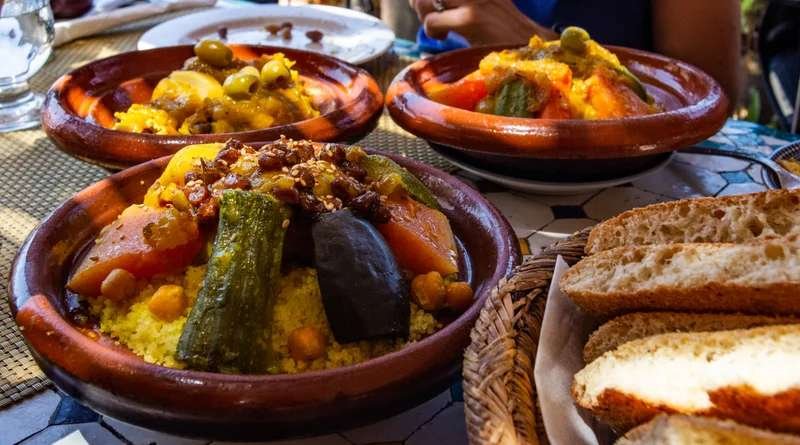
Each region has signature dishes: Fes: Pastilla, rfissa, zaalouk. Marrakech: Tanjia (not tagine), msemen, specific variations. Coast: Fish tagine, stuffed sardines, seafood couscous. Mountains: Berber dishes adapted to altitude. We match the cooking class to where you are and what's actually traditional there.
Artisan Workshops
Pottery in Fes
Fes blue ceramics are UNESCO-recognized, with techniques unchanged in 700 years. Half-day sessions with master potters allow you to watch pieces thrown on foot-powered wheels with speed and precision. Then attempt the craft yourself: centering clay (more challenging than expected), throwing a basic bowl, and painting tiles with traditional geometric patterns. Completed work ships several weeks later. The imperfect results carry more meaning than purchased items because they embody the craft's difficulty.
From $95Often included
Leather Working in Fes
The tanneries' distinctive smell comes from ammonia-rich pigeon droppings used in the traditional tanning process. Understanding the craft differs from merely observing it. Workshop visits show goods being made: hand-cutting patterns, stitching with traditional tools, dyeing with natural materials. Create small items (bookmarks, card holders) working alongside artisans who've practiced this craft for decades.
From $75
Metalwork in Marrakech
Copper and brass workshops where items are still hand-hammered. The neighborhood announces itself through constant rhythmic hammering. Attempting the work reveals its difficulty immediately. Arms tire within minutes. Understanding why hand-hammered trays command higher prices comes from experiencing the labor involved. Artisans maintain this rhythm eight hours daily across decades.
From $85
Textile Weaving
Usually at women's cooperatives. Try hand-weaving on traditional loom. Attempt to tie one Berber knot in a carpet (they tie thousands per day). Card wool. You understand why authentic Moroccan rugs cost what they do and why cheap ones aren't the same.
From $90
Zouak Painting
Traditional Moroccan decorative painting: geometric patterns with symbolic meaning. You spend three hours learning basics with a master painter. Requires precision, patience, understanding of sacred geometry. You complete one small wooden tile. Take it home. You'll never look at Moroccan architectural decoration the same way.
From $110
Regional Specialties and Market Food
Tagine appears on every menu. Understanding why one version costs three times another, or recognizing that tanjia is an entirely different preparation despite superficial similarity, requires deeper exposure.
These regional dishes and market preparations rarely appear in tourist restaurants. Access requires the right guide, the right timing, the right introductions.
Street Food & Market Eats
Msemen
Layered flatbread cooked on market griddles. Dough stretched paper-thin, folded multiple times, cooked in butter. Served hot with honey for sweet preparation, or stuffed with spiced onions for savory. Found at market corners throughout Morocco, prepared by vendors who've perfected this single item across decades.
Snail Soup (Ghlal)
Medina cart specialty. Small snails served in their shells with herbed broth, traditionally consumed as digestive aid. The spice blend varies by vendor, often including combinations difficult to identify without tasting repeatedly. Deeply traditional, rarely encountered by visitors.
Fresh Juice
Local juice stands where fruit is squeezed to order, mixed inventively. Avocado with dates, almonds, and milk creates unexpected combinations. These neighborhood spots serve traditional beverages in reusable glasses, maintaining practices unchanged by tourism.
B'ssara
Fava bean soup, traditional breakfast food in northern cities. Served with olive oil drizzle, cumin, and fresh bread for dipping. Simple preparation showcasing ingredient quality rather than complex technique.
Regional Dishes You Can't Get Everywhere
Rfissa (Fes)
Shredded msemen cooked in chicken broth with lentils and fenugreek. Traditionally prepared after childbirth, now served year-round in Fes homes and select restaurants. Complex layered flavors showcasing fenugreek's distinctive profile. Rarely found outside northern cities without proper guidance.
Tanjia (Marrakech)
Distinct from tagine despite similar appearance. Lamb slow-cooked in sealed clay jar with preserved lemon, cumin, and garlic. Traditional preparation involves bringing the jar to hammam keepers, who bury it in coals overnight. The extended cooking transforms texture entirely. Meat that separates without cutting.
Sardine Balls (Coast)
Fried balls of mashed sardines with herbs, spices, sometimes rice. Coastal treat rarely found inland. Simple, addictive.
Amlou
Argan oil, honey, and almonds ground into thick spread. Traditional Berber preparation, served with fresh bread. Variations exist throughout Morocco, with highest quality found in argan-producing regions south of Essaouira. Flavor profile combines nutty richness with floral honey notes.
Techniques That Matter
Preserved Lemons
The backbone of Moroccan cooking. Every family makes them using only lemons, salt, and time. The month-long fermentation produces lemons with intense, complex flavor: salty, floral, almost fermented. Used throughout Moroccan cuisine in tagines, salads, and countless preparations.
You'll learn the technique and acquire some to take home.
Hand-Rolled Couscous
Hand-worked semolina takes an hour to form into tiny grains, then steams twice in a couscoussier. The texture differs completely from instant couscous: lighter, more delicate, worth the effort.
During <a href="/en/journal/moroccan-cooking-class-guide/" class="text-link">your cooking class</a>, you'll roll couscous by hand. The physical effort reveals why this has become special-occasion cooking rather than daily practice.
Tagine Cooking
Not just throwing things in a pot. There's a sequence: aromatics first in oil, then meat to brown slightly, then vegetables in specific order based on cooking time, then liquid added, then the conical lid traps steam and creates the gentle braising environment. Good tagine has layers of flavor, not mush.
Ingredients You Can't Get at Home (Or Can You?)
Preserved Lemons
You can buy them online now. They're expensive. They're worth it. Or make them yourself. Recipe included with your trip packet.
Ras el Hanout
The spice blend. Every family's version differs. Tourist versions are oversimplified. Good versions have 20+ spices. We'll connect you with vendors who'll blend custom versions and ship to you.
Argan Oil
Expensive at home, cheap in Morocco. Buy culinary grade (not cosmetic). Use it as finishing oil, not cooking oil. It tastes nutty, rich, unlike any other oil. Splurge on the good stuff.
Fresh Spices
This is the real issue. Spices lose potency fast. Moroccan spices are fresh. Your home spices are probably old. Replace them. Buy whole, toast, grind yourself. This single change will improve your cooking more than any recipe.
Where You'll Stay
The places you stay shape your food experience as much as any restaurant or cooking class.
Morning with MountainsDesert DawnsWhere Day Begins
Marrakech
Intimate riads in the medina where breakfast spreads cover entire tables: fresh orange juice, warm bread delivered from neighborhood ovens, house-made jams, msemen or baghrir depending on the day.
What defines them:
Owners who will recommend their favorite lunch spots, not just popular tourist restaurants. Staff who understand that food culture matters. Breakfast timing that works around your morning market visits.
The selection:
Small properties (8-12 rooms) with excellent in-house dining. Rooftop terraces for afternoon tea. Cooking classes can often be arranged on-site with the riad's cook.
Atlas Mountains
The mountain food experience:
Guesthouses and small lodges where meals feature what's currently growing. The women cooking here are making food they'd serve their own families. No tourist adaptations, just what's right for the season.
Mountain air, valley views, and food that reflects its terroir. Breakfast with valley honey and fresh bread. Tagines cooked slowly in the afternoon, ready when you return from hiking. Tea on terraces with endless horizons.
Fes
Restored fondouks and traditional houses with rooftop terraces overlooking the medina. Properties where dinner (if you choose to eat in) showcases regional specialties the cook learned from her mother.
What to expect:
Tea served in hand-hammered silver pots. Food presented on ceramics from local artisans. Kitchens where the cook will often invite you to watch preparation if you're interested.
The advantage:
Fes cooking is distinct from Marrakech. Staying in properties with strong food programs means you'll taste regional differences. Pastilla done the Fes way, specific spice combinations, traditional techniques passed through generations.
Essaouira
Smaller riads near the medina, some with sea views. Properties that know the best fish vendors, can arrange for morning market shopping, understand how to prepare seafood properly (many don't).
The coastal difference:
Fresh seafood daily. Riads that will cook your morning market purchases for lunch. Owners who know which boats bring in the best catch.
Perfect for:
Understanding how coastal Moroccan cooking differs from interior cuisine. Learning proper fish preparation. Experiencing the Portuguese influence in local food culture.
Lesser-visited Cities
The intimate guesthouse experience:
In Taroudant, Chefchaouen, or Ouarzazate, we work with family-run guesthouses where you're often the only guests. Meals happen at communal tables: you, the owners, maybe one other couple. The line between host and guest softens over shared food.
These are places where dinner is whatever the family is making. Where the grandmother might teach you how to roll couscous by hand. Where you'll eat food that's not on any menu because these aren't restaurants. They're homes.
What's Included
Every journey includes private everything: guides, drivers, transportation, cooking classes, market tours, artisan workshop visits. You're never in a group situation unless you've requested it.
Expert Guides
Private English-speaking guides with genuine food expertise. People who grew up in these kitchens and markets, who can explain not just what but why, who love teaching people to actually taste, not just eat.
Transportation
All ground transportation in comfortable, modern vehicles. Private driver from arrival to departure, handling logistics so you can focus on the food. Airport transfers included.
Accommodations
Carefully selected riads, boutique hotels, and mountain lodges where food matters to the owners. Properties with excellent breakfasts and kitchens where the cook will often invite you to watch.
Culinary Experiences
All cooking classes, workshop fees, market tours, and food tastings outlined in your itinerary. Entrance fees to sites and experiences included. No hidden costs or optional extras.
Meals
Daily breakfast plus meals specified in your itinerary. Some lunches and dinners left flexible so you can explore independently or return to a restaurant you particularly loved.
Support
24/7 support throughout your journey via WhatsApp. Pre-departure information including what to pack for cooking classes, which kitchen tools you might want to bring home, and which food items can legally travel internationally.
Why Morocco for Food
France, Italy, Thailand, Japan, Peru: all offer exceptional culinary traditions with devoted international followings. Morocco's distinction lies elsewhere.
Moroccan cuisine offers something increasingly rare: food culture that's still lived, not merely preserved. Visitors enter homes where grandmothers still teach by touch. Markets where measuring happens by eye and handful. Kitchens where recipes exist in muscle memory, not written down.
France's culinary excellence is undeniable, but it's professionalized. Chef-driven, restaurant-focused. Italy's regional food culture runs deep, but tourism has shaped what visitors experience. Thailand's street food thrills, but Bangkok isn't the same place it was twenty years ago.
In 2019, UNESCO added Moroccan culinary art to its Intangible Cultural Heritage list. Not the food itself: the entire practice. The knowledge systems. The social rituals. The way cooking connects generations.
This matters because it recognizes what makes Moroccan cuisine exceptional: it's still practiced as culture, not merely consumed as product. When a Moroccan family prepares a celebration meal, they're not following recipes. They're enacting traditions passed through touch and repetition. A mother teaching her daughter to roll couscous by hand isn't preserving heritage; she's living it.
Compare this to France, where culinary excellence is institutionalized through culinary schools and Michelin stars, or Italy, where regional dishes are increasingly standardized for tourists. Morocco's food culture remains decentralized, family-centered, resistant to commodification. For travelers seeking authentic culinary immersion, this distinction is everything.
Moroccan cooking knowledge exists in homes and hands, not museums. The knowledge lives in relationships between mothers and daughters, vendors and regular customers, families and their traditional cooks. Access requires trust and connection, not admission tickets.
Moroccan cuisine isn't monolithic. It's the convergence of three distinct culinary traditions, each with different techniques, ingredients, and philosophies.
Amazigh (Berber) cooking is the foundation: ancient, elemental, focused on preservation. Think couscous (originally Berber), olive oil culture, honey as primary sweetener, bread baked in communal ovens. This is mountain food, designed for harsh conditions: dried meat, preserved lemons, nuts and dried fruit. Simple preparations that foreground ingredient quality.
Arab-Andalusian cuisine brought sophistication: complex spice layering, sweet-savory combinations, elaborate pastries like b'stilla with its forty hand-pulled layers. This is the cuisine of Fes palaces, of imperial cities, showing Persian and Andalusian influences. Hours-long preparations. Techniques requiring decades to master. Food as art form.
Jewish-Moroccan tradition contributed techniques and dishes that persist even after most of the community emigrated: slow-cooked tfina (related to cholent), preserved vegetables, specific spice treatments. Many families still prepare dishes learned from Jewish neighbors generations ago.
These aren't historical curiosities. They're living traditions practiced simultaneously across regions. One country, three culinary systems, each offering completely different experiences. Italy has regional diversity. Morocco has cultural multiplicity.
Couscous rolling exemplifies Moroccan cooking's tactile knowledge. Cookbooks describe "gently raking semolina with butter and water until small grains form." Instructions that seem straightforward until attempted. The right moisture content, the correct hand motion, the proper pressure exist in muscle memory developed through years of practice, not written recipes.
Moroccan cooking is tactile knowledge. How preserved lemon skin should feel when it's properly fermented. When a tagine's sauce has reduced to ideal consistency (by sound as much as sight). Whether bread dough has been kneaded enough. How b'stilla pastry should tear: easy enough to separate, strong enough not to rip when lifting.
This is why cooking classes in Moroccan homes matter more than restaurant cooking demonstrations. A chef can show technique. A grandmother can teach feel. Learning happens through repetition and correction: hands in dough, discovering proper technique through touch and adjustment. "No, like this." Not explanations, adjustments. The way humans have always taught cooking.
France professionalized this knowledge into culinary schools. Japan systematized it into apprenticeships. Morocco kept it in families. For travelers who cook, this represents access to something vanishing elsewhere: informal knowledge transmission from skilled home cooks who learned the same way.
Morocco is roughly the size of California. Within that space exists more culinary diversity than many much larger countries offer.
Marrakech cooks southern: sweet tagines with prunes and almonds, more spice heat, strong Amazigh influence. Tanjia slow-cooked in hammam ashes overnight. Seven-vegetable couscous.
Fes represents imperial refinement: b'stilla requiring days of preparation, intricate spice layering, Persian-influenced techniques. Street food culture where vendors perfect single dishes across generations. This is Morocco's culinary capital.
Essaouira and coastal towns bring Atlantic seafood and Portuguese influences. Grilled sardines. Seafood tagines unheard of inland. Simpler preparations showcasing ingredient quality.
Atlas Mountain cooking differs entirely: Amazigh traditions emphasizing preservation, communal bread ovens, mint tea culture, mechui (whole roasted lamb) for celebrations. Food shaped by altitude and climate.
Desert regions developed their own cuisine: date-based dishes, nomadic food culture, underground sand-baking techniques. Medfouna (Berber pizza) stuffed with spiced meat.
Ten days allow for five distinct regional cuisines, each with unique ingredients, techniques, and cultural contexts. Thailand offers this. Peru offers this. Most destinations don't. Size doesn't predict culinary diversity. Geography and history do. Morocco has both.
Here's what surprises travelers: despite how deeply family-centered Moroccan food culture is, it welcomes outsiders more readily than many destinations.
Compare to Japan, where accessing authentic food culture often requires language skills, cultural knowledge, advance reservations, and understanding complex etiquette. Or France, where the best experiences happen in Michelin-starred restaurants you book months ahead, requiring both significant budget and formal dining comfort.
Morocco's culinary culture is built around hospitality. Inviting guests to share meals is cultural bedrock. A family won't just teach you their tagine recipe. They'll insist you stay for lunch. Market vendors don't merely sell spices; they'll explain how to use them, often inviting you for tea. This isn't transactional. It's how relationships work here.
The food itself is approachable. Flavors are complex but not confronting. Spicing is layered but rarely extremely hot. Techniques are challenging to master but easy to attempt. Moroccan dishes translate well to home kitchens after this immersion, requiring neither specialized equipment nor impossible-to-source ingredients.
For travelers seeking genuine culinary immersion without the barriers that exist in other world-class food destinations, Morocco offers something rare: depth without exclusivity. You need the right guide, the right connections, the right approach. But the culture welcomes you. The families share generously. The knowledge transfers.
Morocco's accessibility for food travelers differs from France and Japan. Access requires genuine interest and respect rather than premium pricing. Moroccan hospitality culture responds to authentic curiosity consistently.
In Morocco, Food Is Everything
The fastest way to understand a place is through what people eat and how they make things. Morocco understands this in a way many destinations have forgotten.
Food here centers on home cooking rather than restaurants. Recipes exist in hands, not books. Techniques pass through demonstration: mothers showing daughters the right feel for rolling couscous, teaching through touch rather than words. The most memorable meals happen in homes you won't find on any map.
This approach has become increasingly rare. Most destinations have been optimized for visitors: sanitized, simplified, made convenient. Morocco still has pockets where things work the old way. Souk vendors measure spices by eye because their fathers taught them the right handful. Women roll couscous by hand the way their mothers did, and theirs before them.
Food shapes your entire experience of Morocco. Approached superficially (eating only in tourist riads, never venturing beyond familiar neighborhoods, missing the regional variations), you'll return thinking Moroccan food is pleasant but not exceptional. Approached with intention and access, you'll understand why Moroccan cuisine earned UNESCO recognition, and why travelers who've eaten their way through this country return changed by the experience.
We provide that access.
There's the Marrakech visitors see: restaurants near Jemaa el-Fna with multilingual menus and persistent hosts. Then there's the Marrakech where our guides' families shop and cook. Where their relatives run small workshops. Where their friends operate intimate restaurants, each perfecting a single dish over decades.
That second layer doesn't appear in guidebooks. It has no online reviews, no Instagram presence. Access requires relationships, trust built over years. We have those relationships.
Our guides aren't professional tour leaders who happen to know about food. They're people deeply engaged with food culture who choose to share it. One of our Fes guides apprenticed as a chef for five years before deciding he preferred teaching to cooking professionally. Another grew up in her grandmother's kitchen in Taroudant and can identify spice blends by scent alone.
When they introduce you to a spice merchant, it's someone they buy from personally. Cooking classes happen in homes where families are preparing dinner regardless. You're joining something real, not observing a performance. The restaurants we recommend are where we eat when we're not working.
Many Morocco itineraries treat food as monolithic. Tagine everywhere, regardless of place. This misses the point entirely.
Marrakech's cuisine reflects its southern location: more spice, more sweetness, stronger Berber influence. Lamb tagine with prunes and almonds. Seven-vegetable couscous. Tanjia slow-cooked overnight in hammam ashes. The extended cooking transforms texture entirely.
Fes offers something different: more refined, more complex, showing centuries of Persian influence. B'stilla here involves forty hand-pulled layers of warqa pastry. The street food culture runs deep, with vendors serving only fried fish, only harira, perfecting one thing completely.
The Atlantic coast brings seafood and Portuguese touches. Mountain cooking differs from desert traditions. Berber food stands distinct from Arab-Moroccan preparations. These regional variations matter deeply.
We show you why Marrakech cooks differently than Fes, why coastal tagines taste different than mountain versions, why bread changes from one region to another.
Watching someone cook provides one kind of understanding. Learning through your own hands offers something different entirely. You're kneading dough, rolling couscous, discovering how consistency should feel. Hand-rolling couscous proves more challenging than expected. When you successfully prepare something Moroccan months after returning home, you'll understand the value.
We don't offer pristine cooking demonstrations where everything's pre-measured and your role is simply to stir. You shop for ingredients that morning. You prep from scratch. You make mistakes and learn from them. It takes longer and feels messier, but the knowledge stays with you.
Food doesn't exist separately from the objects that surround it. The spice blends you use? Ground daily by merchants in the souk. The ceramics you eat from? Created in Fes or Safi by potters using centuries-old techniques. The bread baskets? Woven by women's cooperatives in the Atlas mountains.
We spend time with artisans. Not merely purchasing from them (though you likely will), but understanding their work. Watching a potter at a kick wheel. Observing traditional leather tanning (the process is fascinating, the smell less so). Learning why Amazigh carpets from different regions carry distinct patterns.
Everything connects. Food culture makes deeper sense when you understand craft culture. Both involve technique passed through families, both are evolving while maintaining their essence, both matter more than most travelers realize.
We can't offer fava beans in December. They're spring vegetables. Great tomatoes don't exist in February. Strawberries appear in late winter around Sidi Rahal. Pomegranates mark autumn. Winter brings citrus season, when families preserve lemons everywhere.
Morocco remains deeply agricultural, its food culture tied to actual growing seasons. This isn't a restaurant trend toward seasonal menus. This is simply how food works here. We time certain experiences to what's genuinely excellent during your visit. Atlas cherries in June. Summer melons. Late fall olive harvest in the mountains. You taste things at their peak.
Some companies promise every experience year-round. We can't, because seasons don't work that way. What we offer instead: food at its optimal moment, which matters considerably more than checking items off a list.
What Makes This Different
Not every travel company understands food beyond surface tourism. We work differently because the people designing your trip actually care about food themselves.
Not every guide understands food beyond tourist explanations. Ours do because:
They're Moroccan: They grew up eating this food, watching their mothers and grandmothers cook, shopping these markets their whole lives. The knowledge is lived, not learned from guidebooks.
They're connected: Their cousin runs a workshop. Their aunt makes the best bastilla in her neighborhood. Their friend's family operates a small restaurant tourists never find. These relationships aren't transactional. They're real.
They're curious: The best guides are the ones who care about food themselves. Who've traveled outside Morocco and understand what travelers want. Who can explain not just what but why. Who love teaching people to actually taste, not just eat.
Family homes: The cooking classes in actual homes. This isn't easy to arrange. It requires trust, relationships, fair compensation, and making sure guests are respectful. We've built these relationships over years.
Artisan masters: The craftspeople who don't usually teach tourists but make exceptions for travelers who genuinely care. Who have time for real instruction, not just performance.
Local restaurants: The places with no signs, no English menus, no tourist infrastructure. Our guides vouch for you. Suddenly you're eating with construction workers and taxi drivers, not other tourists.
Not everything is accessible: Sometimes the grandmother who makes the best pastilla isn't available. Sometimes the workshop is closed for a religious holiday. Sometimes the seasonal ingredient you wanted to learn about isn't in season. We tell you this upfront, not after you've paid.
Not everyone loves Moroccan food: If you hate cumin, don't like preserved lemons, can't handle richness, this trip might not work for you. We'd rather say that now than have you disappointed later.
It's work: Cooking classes are physically tiring. Market tours mean lots of walking. Workshops require concentration. This isn't a passive vacation. If you want to relax by a pool, that's fine, but this probably isn't your trip.
Dietary restrictions: Vegetarian Moroccan food is easy and delicious. Vegan requires more care (butter is everywhere) but it's doable. Gluten-free is harder (couscous, bread, pastilla) but we manage it. Tell us your restrictions, we build around them.
Specific interests: Want to focus on Jewish Moroccan food traditions? Need time with ceramicists for a project? Interested in olive oil production? Writing a cookbook and need recipe testing? We adjust.
Pacing: Some people want to cook every day. Others want cooking balanced with other experiences. Some want intense workshop immersion. Tell us your preference.
Recipes: Every cooking class includes written recipes (tested, translated, adapted for Western kitchens). You'll actually be able to reproduce these dishes.
Shopping resources: We connect you with vendors who'll ship spices, argan oil, preserved lemons. You build an ongoing relationship with sources.
Equipment guidance: What you actually need (not much), what's worth buying in Morocco (tagines, couscoussier), what you can skip.
Ongoing support: After your trip, you're making a recipe and confused about a step? Email us. We'll connect you back to the person who taught you or explain it ourselves.
Frequently Asked Questions
Not at all. We adjust instruction to your level. Complete beginners learn foundation techniques. Experienced cooks go deeper into complex preparations. Tell us your comfort level and we match accordingly.
Moroccan cuisine accommodates vegetarians beautifully (most dishes are naturally vegetable-forward). Gluten-free is manageable but requires communication with cooks and restaurants. Serious allergies need careful advance planning. We work with all dietary needs. We just need to know early.
Markets and medinas require walking, often on uneven surfaces or stairs. You should be comfortable on your feet for several hours. If mobility is limited, we can adapt (car access to markets, fewer walking-intensive experiences), but some foot time is unavoidable in old cities.
These are private journeys. Just you and whoever you're traveling with. Cooking classes sometimes include other family members or friends of the cook, which adds authenticity. But tours, drivers, and guides are exclusively yours.
Generally yes, with enough advance notice. We need about 6-8 weeks minimum to plan properly and secure the best guides and accommodations. Last-minute bookings (under 3 weeks) are sometimes possible but limit options significantly.
Plan $40-60 per person daily for meals not included (usually dinners), shopping, beverages, personal expenses. Some travelers spend considerably more on artisan goods. Carpets, ceramics, and leather goods can add up significantly.
Possible if your guide's schedule allows and we can arrange new accommodations. We build in buffer time for some trips. But major changes are easier before you arrive. Once we've committed guides, cooks, and accommodations, flexibility decreases.
Let's Design Your Food Journey
From our first conversation to your arrival in Morocco, we guide you through a seamless process designed to create the perfect culinary immersion.
1
Tell Us What You Care About
Complete our food-focused planning form (10 minutes). Share your travel dates, which aspects interest you most (cooking vs workshops, urban vs rural), your food background and cooking level, dietary restrictions, specific experiences you're hoping for, and budget range. The more detail, the better we can design for you.
2
Receive Your Custom Proposal
Within 72 hours
A complete itinerary created specifically for your interests. Day-by-day breakdown, which markets and when, which cooking classes with whom, which artisans you'll meet. Accommodation recommendations with breakfast menus (seriously, we include this for food trips). All pricing detailed. Not a template with your name on it. Actually yours.
3
We Refine Together
More time in Fes? Different workshops? Additional cooking classes? Remove certain experiences, add others? We adjust until it reflects exactly what you want. Unlimited revisions. This is a collaboration.
4
Book Your Journey
30% deposit secures your dates. We handle every booking: accommodations, guides, cooking classes, workshops, all experiences. Two weeks before departure, you receive your complete trip packet with recipes, market maps, shopping guide, and packing list specific to food trips.
5
Your Journey Begins
Driver meets you at airport. Everything's arranged. You simply experience it. We're available 24/7 via WhatsApp for anything that comes up: restaurant recommendations, extra workshop time, last-minute cooking class additions.
Begin Your Culinary Journey
Share your vision with us, and we'll design an experience tailored to your passion for food and craft.
Honest guidance from people who know food, response within 72 hours, completely customized to your interests, and recipes and resources to continue cooking at home.
Planning Morocco? We'll save you the 30 open tabs.
Tell us your details. We'll send a free personalized trip outline within 48 hours.
10% off spring journeys · March–June 2026
Done. Check your inbox within 48 hours. We'll send you something worth reading.