Morocco's Atlantic Coast: The Beach Nobody Expects
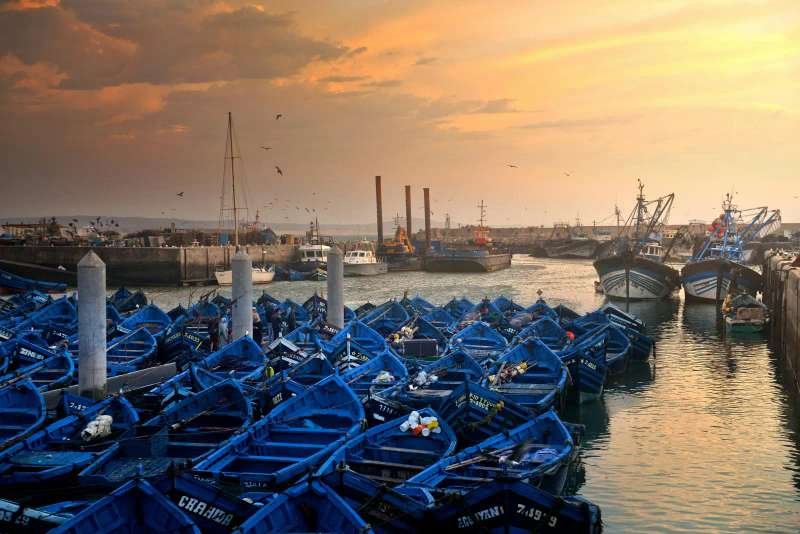
Most people planning a Morocco trip picture desert dunes and medieval medinas. The Atlantic coastline doesn't make the initial shortlist. That's reasonable. Morocco's coast isn't a beach destination in the conventional sense.
But the Atlantic does something interesting. It provides breathing room between the intensity of the imperial cities. The temperature drops. The pace slows. The wind picks up, and with it comes a different energy entirely. If you're planning your first Morocco trip, understanding how coastal towns fit into the larger picture helps you make better routing decisions.
Atlantic Coast At a Glance
Understanding Morocco's Atlantic Reality
The Atlantic Ocean here behaves like the Atlantic, not the Mediterranean. Water temperatures range from 17°C in winter to 22°C in summer. Even July feels brisk when you first enter the water. Your body adjusts after a few minutes, but this isn't tropical swimming.
The wind is constant, particularly in Essaouira and points north. It made the coast strategically important for centuries of maritime trade. Today it draws windsurfers and kitesurfers from Europe who've exhausted their home breaks. Coastal timing differs from inland Morocco. The shoulder seasons of September-October typically offer the best combination of settled weather and comfortable water temperatures.
Seasonal Timing Considerations
Summer (Jul-Aug): High season for Moroccan families. Beaches crowded on weekends, hotels fill up, prices rise. Good for escaping inland heat.
Shoulder (May-Jun, Sep-Oct): Calmer water, fewer crowds, pleasant temps. September-October typically offers best weather combination.
Winter (Nov-Mar): Pleasant for walking and exploring towns, but too cold for swimming. Best surf conditions.
Summer is high season for Moroccan families. The heat in Marrakech and Fes sends locals toward the coast in July and August. Beaches get crowded on weekends. Hotels fill up. This is worth knowing if you're planning summer travel.
The shoulder seasons (May-June, September-October) offer calmer water, fewer crowds, and pleasant temperatures. Spring can be windy. Fall is typically the most settled period.
Essaouira: Where the Wind Meets the Medina
Essaouira announces itself before you arrive. The whitewashed buildings come into view against blue sky, blue water, and that particular quality of light you get in coastal towns where everything reflects.
The medina here differs from Marrakech and Fes. Streets run in a grid. You can navigate without getting lost. The Portuguese built the fortifications in the 18th century, and their architectural logic remains readable.
The port operates as it has for generations. Fishing boats leave at dawn. By mid-morning, the day's catch gets auctioned on the docks. Seagulls circle constantly. The smell is exactly what you'd expect from a working harbor, which means strong and specific.
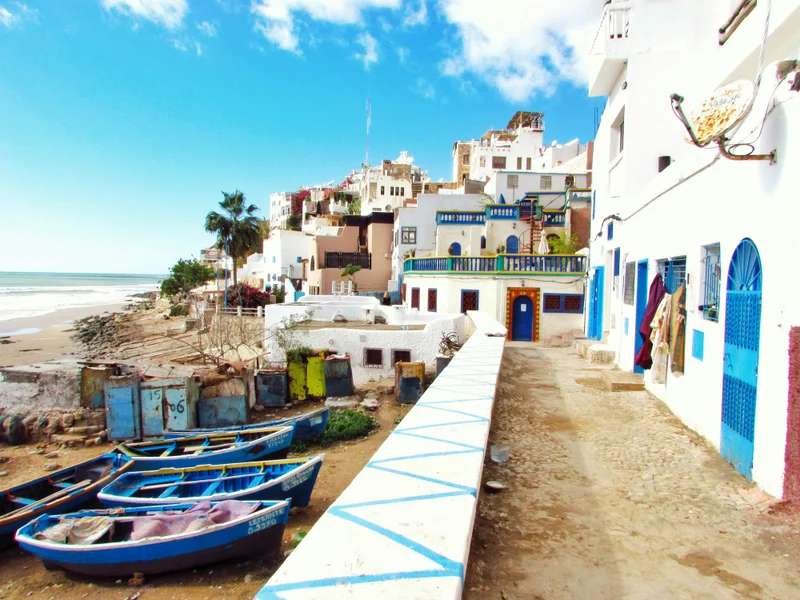
Art galleries occupy former merchant houses in the medina. The town has attracted artists since the 1960s, when it was called Mogador and drew a different kind of traveler. That creative energy persists. You'll find contemporary work alongside traditional crafts.
The souks sell thuya wood items specific to this region. The wood comes from a coniferous tree that grows only in Morocco. Artisans carve it into boxes, frames, and decorative pieces. The scent is distinctive, slightly sweet, resinous.
Restaurants cluster around the port. Several offer the same service: you select fish from the market stalls, they grill it, you eat it at communal tables. The setup is informal. The fish is very fresh. Prices are reasonable. It's exactly what it appears to be.
The Wind Factor
Essaouira's wind deserves specific mention because it defines the experience. It blows almost constantly from the northwest, particularly strong in spring and summer. The town's buildings create wind tunnels. Outdoor cafes provide windbreaks.
The Wind Reality
Essaouira's wind isn't uncomfortable. It's the reason temperatures stay moderate when inland cities reach 40°C. But it does things to your hair. Loose items fly away. Beach umbrellas are pointless.
If wind bothers you, Essaouira might not be your town. If you find it invigorating, you'll understand why people return annually.
This isn't uncomfortable wind. It's the reason the temperature stays moderate when inland cities reach 40°C. But it does things to your hair. Loose items fly away. Beach umbrellas are pointless.
Windsurfers consider Essaouira world-class. You'll see them offshore from morning until the light fails. Kite surfers work further up the beach. Equipment rental and instruction are readily available if this interests you.
Oualidia: The Lagoon Exception
Oualidia operates on a different principle. A natural lagoon creates calm water protected from Atlantic swells. You can actually swim here without the ocean's brisk reminder of its temperature.
The town remains small and relatively undiscovered. A few hotels, several seafood restaurants, and oyster farms that produce some of Morocco's best shellfish. The oysters are Pacific variety, grown in the lagoon's nutrient-rich water, served minutes after shucking.
Families with young children find Oualidia practical. The lagoon's shallow water and gentle waves suit small swimmers. The beach doesn't have facilities beyond what the hotels provide, but it doesn't need them. The scale is manageable.
This is a place for doing very little. Morning walks along the lagoon. Lunch extending into mid-afternoon. Swimming when the tide is right. The rhythm here is deliberately slow.
Oualidia Stay Duration
Oualidia works best as a two or three-night stop. Longer stays require an appreciation for quiet. If you need activities and variety, you'll run out of options.
If you need rest between more intense travel days, it provides that specifically. Summer weekends book up. Reserve ahead.
Oualidia works best as a two or three-night stop. Longer stays require an appreciation for quiet. If you need activities and variety, you'll run out of options. If you need rest between more intense travel days, it provides that specifically.
Asilah: The Art Town
Asilah rebuilt itself through art. The medina walls became canvases during an annual mural festival that started in 1978. The tradition continues. Each summer, artists paint new work directly onto whitewashed walls.
The result is a town that feels curated without being precious. Local life continues around the art. Children play in streets decorated with murals. Fishermen mend nets against walls featuring abstract compositions.
The beach stretches north and south of town. It's wide, sandy, and relatively empty outside peak summer weeks. The water remains characteristically Atlantic in temperature. The waves are suitable for bodysurfing and casual swimming.
Spanish influence is visible everywhere. The architecture carries that whitewashed aesthetic you see in Andalusia. Several restaurants serve seafood with Iberian techniques. The proximity to Spain (just across the Strait of Gibraltar) shaped the town's history and continues to influence its character.
Asilah is smaller than Essaouira, quieter than Agadir. It offers a specific kind of coastal experience: artistic, uncomplicated, easy to navigate. A good overnight stop when driving between Tangier and points south.
Agadir: The Resort Option
Agadir is the resort town Morocco decided to build. After a devastating earthquake in 1960, the city was reconstructed with tourism in mind. Wide boulevards, beachfront hotels, European amenities.
This is not where you go for atmospheric medinas or traditional souks. Agadir is about accessible beach time, family-friendly infrastructure, and straightforward logistics. It serves a purpose.
The beach runs for nearly 10 kilometers. Sand is golden, fine-grained, regularly cleaned. Water is swimmable with lifeguards present during summer. Beach clubs rent loungers and umbrellas. The setup is familiar to anyone who's visited Mediterranean resorts.
Families with children find Agadir practical. Hotels offer kids' clubs and pools. Restaurants serve recognizable international food alongside Moroccan options. The city feels safe and navigable.
The Cultural Trade-Off
Agadir gives you beach access without the immersive Morocco experience you get elsewhere. For some trips, that's exactly right, especially families needing comfortable infrastructure.
For others, it's missing the point. Understanding which trip you're taking matters when deciding whether Agadir fits.
The trade-off is cultural authenticity. Agadir gives you beach access without the immersive Morocco experience you get elsewhere. For some trips, that's exactly right. For others, it's missing the point. Understanding which trip you're taking matters.
Surf Culture and Coastal Activities
Morocco's Atlantic coast has developed a surf culture that surprises people. Consistent swells, varied breaks, and relatively warm air temperatures (if not water) create good conditions from October through April.
Several surf towns have grown around reliable breaks. Taghazout, just north of Agadir, hosts international surfers during winter months. Imsouane further north offers a legendary long right-hand point break. Beginners find manageable waves at numerous beach breaks.
Surf camps and schools operate along the entire coast. Instruction is available in multiple languages. Equipment rental is straightforward. The culture is welcoming to newcomers.
Beyond surfing, coastal Morocco offers hiking along clifftop trails, birdwatching in coastal wetlands, and fishing from rocks or boats. These aren't organized activities with booking systems. They're things you can simply do.
How the Coast Fits Into Your Trip
The Atlantic coast works best as punctuation in a larger Morocco itinerary rather than the main focus. It provides total contrast to Marrakech's intensity and the desert's drama. Slower pace, ocean breezes, fresh seafood, and a more relaxed Moroccan experience. It offers physical activity after days of cultural touring and gives families a break from sightseeing.
Typical integration patterns:
Three to four days on the coast can anchor the end of a 10-14 day trip. After desert camps and medina navigation, the coast provides decompression before flying home. Many travelers combine coast and mountains for varied landscapes. the High Atlas is accessible from coastal Essaouira via Marrakech, creating a mountains-city-coast circuit. Essaouira pairs naturally with families looking for that balance between cultural immersion and beach time.
A two-night coastal stop works as a midpoint break in longer trips. The drive from Marrakech to Essaouira takes three hours. You can spend one full day exploring the medina and harbor, rest, then continue to other destinations.
Summer trips benefit from coastal components. When inland temperatures reach their peak, the Atlantic offers relief without leaving Morocco. This is particularly relevant for families traveling during school holidays.
Practical Coast Logistics
Getting there: Essaouira is 3 hours from Marrakech by car/bus (several daily). Agadir has international airport. Oualidia and Asilah need car access.
Packing: Layers for 10°C temperature swings. Windbreaker for Essaouira. Sun protection (Atlantic breeze makes you underestimate UV). See our comprehensive packing guide for coastal-specific recommendations.
Accommodation: Book Oualidia ahead (limited options). Essaouira medina riads put you near action; beach hotels offer ocean access.
Setting Realistic Expectations
The Atlantic coast won't replace a dedicated beach vacation. The water is cool. The wind is strong. Infrastructure varies by location.
But these characteristics create something else: a coastal experience that feels specifically Moroccan rather than generically tropical. The working harbors, the wind-sculpted towns, the surf culture coexisting with traditional fishing villages. This is worth understanding before you arrive.
The coast works when you approach it on its own terms. Essaouira isn't trying to be the French Riviera. Oualidia isn't competing with Caribbean resorts. They offer what they are: Atlantic towns with their own particular character, integrated into a larger Morocco journey.
For travelers who want every component of their trip carefully calibrated to specific experiences, the Morocco Detour approach often includes coastal elements timed to weather, season, and the traveler's broader interests. The coast becomes part of a larger rhythm rather than an isolated beach stay.
When Coast Makes Sense
Works for: Families needing activity breaks, summer travelers escaping heat, surfers/water sports enthusiasts, those needing downtime between intense destinations, trips 10+ days where variety matters.
Might not work for: Short trips under 7 days focused on imperial cities/desert, winter travelers prioritizing warm swimming, those expecting Caribbean/Mediterranean beach experiences, travelers uncomfortable with wind and cool temps.
When Coast Makes Sense
Coast works for:
- Families needing activity breaks from cultural touring
- Summer travelers escaping inland heat
- Surfers and water sports enthusiasts
- Those who need downtime between intense destinations
- Trips of 10 days or longer where variety matters
- Travelers who appreciate working harbors and authentic coastal towns
Coast might not work for:
- Short trips (under 7 days) focused on imperial cities and desert
- Winter travelers prioritizing warm swimming
- Those expecting Caribbean or Mediterranean beach experiences
- Travelers uncomfortable with wind and cool temperatures
The question isn't whether Morocco's coast is worth visiting. The question is whether it fits your specific trip structure, timing, and expectations. When those align, the Atlantic provides exactly what inland Morocco cannot: space, wind, and the particular clarity that comes from standing where land meets ocean.
Quick Atlantic Coast Reference
Planning a Morocco trip that might include coastal time? We can help you determine whether the Atlantic fits your itinerary, timing, and travel style.