Morocco with Kids: A Realistic Family Travel Guide

Morocco works for families. Not with children under 5, and not on an itinerary written for adults. With the right ages and a schedule that leaves room to do nothing, it becomes one of the more rewarding places to travel with children. If you're visiting Morocco for the first time, understanding family-specific considerations helps set appropriate expectations.
The sensory intensity that tires adults tends to fascinate children. What holds them is the doing rather than the looking: kneading bread dough, sliding down a dune on a board, the mule waiting at the trailhead in Imlil.
Almost everything comes down to three decisions: the age you travel at, the places you pick, and how you build the day around the youngest person in the group. Morocco's regional diversity means some regions repay the effort with children and some do not. Families gain most from private travel arrangements, where the car stops when the six-year-old needs it to and the afternoon can be abandoned without consulting anyone.
Family Travel Essentials
When Morocco Works for Families
Ages 5-6 Through 10-11: This range works best. Children in it can walk far enough to be worth taking anywhere, they are curious about difference instead of frightened by it, and they eat what is put in front of them more often than not. Nothing needs carrying except a water bottle, and the heat slows them without stopping them.
Five and six year-olds are the borderline. The ones who cope are usually the ones who already walk without complaint at home; heat, crowds and noise undo the rest by mid-afternoon. What you know about your own child beats any age guideline here.
Eight to ten is the easiest bracket. They walk without being carried, they will accept an explanation of why something is done differently here, and they do not need entertaining between activities. Give them something physical to do and they will ask for more of it.
What Each Age Can Take
Ages 5-12: Works with planning. The activities hold them, the walking is manageable, and there is always something on the menu they will eat.
Teens (13-17): Attitude matters more than age. Give them part of the planning, choose things with teen appeal, and let them off the leash where it is safe to.
Under 5: Possible, and hard. The walking, the nap clashes, the narrow food range, the heat and the constant watching add up. Most families are better off waiting a couple of years.
Ages 11-12 Through Teens: This age works differently. A teenager who already has an interest, whether in history, architecture, food or surfing, will find something here to attach it to. One who has none will resist the walking and the difference in equal measure, and no itinerary fixes that.
Autonomy helps. Let them lead the way through a stretch of medina while you walk twenty paces behind, pick the restaurant, spend their own money in the souk. It is independence with a safety net, which is what that age is after.
The worst version of this trip is a reluctant fifteen-year-old towed through an adult itinerary. Hand them part of the planning instead, and accept that a photograph they want to post is a legitimate reason to stop somewhere.
Family-Friendly Destinations
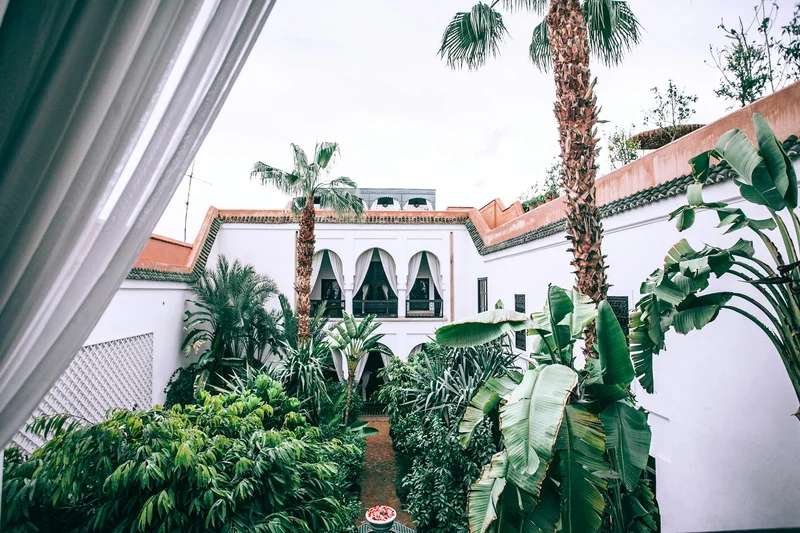
Marrakech: Works well as a base. The infrastructure is there, English is widely spoken in the places you will use, and riad staff are accustomed to children.
Child-friendly Marrakech experiences:
- Jardin Majorelle: Colorful, compact, not overwhelming. Kids enjoy the bright blue building and varied plants. 30-45 minutes is sufficient.
- Palmeraie: Cycling through palm groves or camel riding (shorter rides work better). Physical activity in less intense environment.
- Saadian Tombs: Quick visit (20 minutes) with interesting decoration and story element kids grasp.
- Street entertainment at Djemaa el-Fna: Evening acrobats, musicians, snake charmers. Fascinating for kids in small doses. Can be overwhelming if too long.
Skip or limit: Extended medina souk shopping. One hour maximum. Kids lose interest in repetitive shops quickly.
Atlas Mountains: Excellent for active families. After a few days of medina, children need somewhere they are allowed to run, and the valleys above Marrakech are the nearest place that qualifies. The High Atlas Mountains provide family-friendly activities that balance physical adventure with accessibility.
Family-appropriate Atlas activities:
- Ourika Valley day trip: Waterfalls, riverside restaurants, Berber villages. Hiking is optional and adjustable to ability.
- Imlil: Mountain village with mule rides, easy walks, dramatic scenery. Not challenging trekking, just mountain environment exposure.
- Mountain lodges: One or two nights outside cities provides breathing space. Kids enjoy the different setting.
The Atlas offers what the cities cannot: room to run, and something to climb that is scaled to the child doing the climbing. A night or two up there does more for the rest of the trip than a fourth day of monuments.
Atlantic Coast: Beach time needs no selling to a child. The Atlantic supplies it, with a walled town attached.
Family coastal options:
- Essaouira: Beach, seafront fortifications kids can explore, manageable medina size. The wind is strong but most kids enjoy this. 2-3 nights works well.
- Oualidia: Protected lagoon with calm water, safe swimming for younger kids, oyster farm visits. Very relaxed pace. 2 nights sufficient.
The coast is where the trip decompresses. Children get to burn off a week of being told to stay close, and the day needs no planning beyond where to eat.
Desert with Kids: The Reality
The Sahara is more family-friendly than parents expect. The landscape does the work: a child who has been walked round three medinas wakes up somewhere with nothing in it at all, and is interested within a minute.
What kids enjoy: Sandboarding, short camel rides (20-30 min max), the stars, sunset and sunrise on the dunes, the sheer emptiness.
Critical choices: Camps with real bathrooms, warm layers for the cold nights, brief camel rides (the novelty wears off), and the desert placed mid-itinerary.
Travel timing: The 8-9 hours from Marrakech needs an overnight stop. Split it over two days; done in one, it ruins the day at both ends.
Practical Considerations

Accommodations: Riads vary significantly in family-friendliness. Some are simply the wrong building for it: steep open stairs, rooms the size of a car, breakable things within reach on every landing. Plenty of others are run by families themselves and are set up accordingly.
What to look for:
- Family rooms or suites (connecting rooms or larger spaces)
- Ground-floor options (eliminates stair concerns for young children)
- Pool or courtyard space where kids can play safely
- Staff comfortable with children
- Flexible meal timing
Many good riads decline children under 8 or 10. Take them at their word: an open gallery above a stone courtyard is a hazard they would rather not manage, and they know their own building. Book one of the houses that does want families.
A modern hotel in the ville nouvelle sometimes beats a medina riad for families who need the space and the predictability. That is a fair trade when the alternative is four people in one small room up two flights of stairs.
Food: Picky eaters are a manageable problem here. Moroccan food is aromatic, not hot; what puts children off is unfamiliarity, not heat.
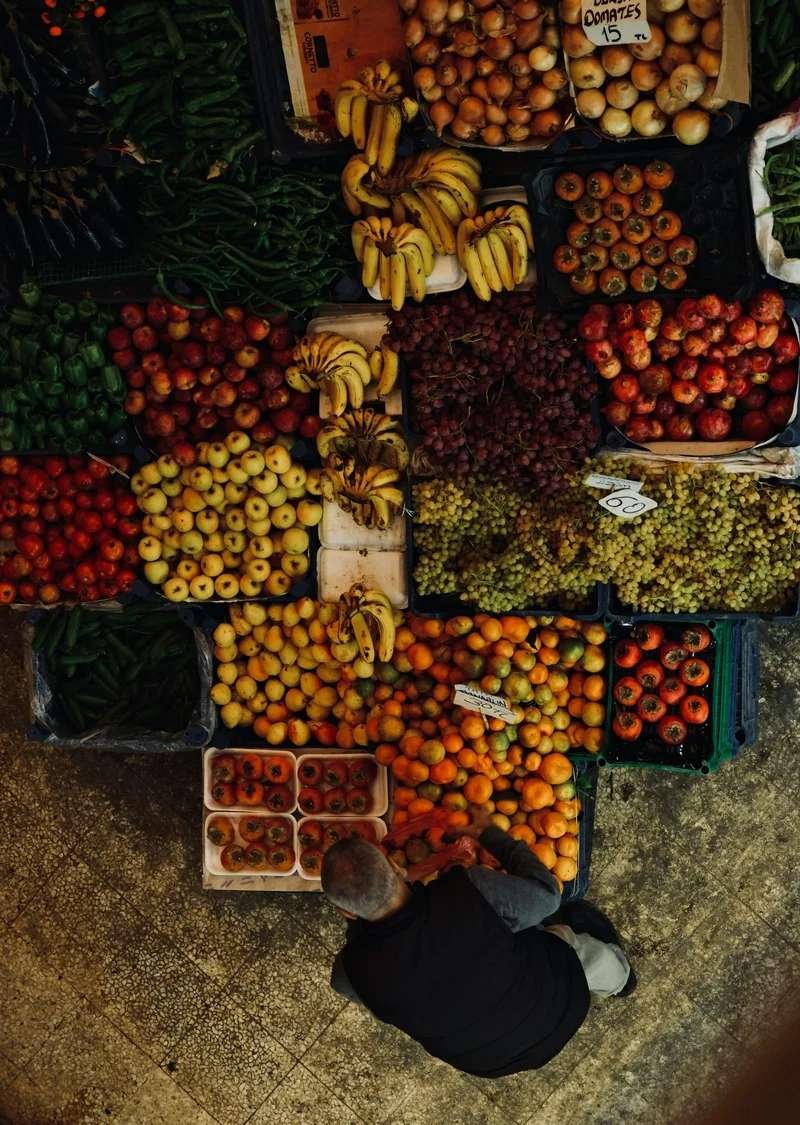
Options for picky kids:
- Bread (fresh, good quality, always available)
- Plain couscous or rice
- Grilled chicken (available everywhere)
- French fries (common in restaurants)
- Fruit (excellent and fresh)
- Yogurt
- Eggs for breakfast
Most restaurants will take a simple request without fuss: plain pasta, an omelette, grilled meat without the sauce. Moroccan hospitality extends to children in a way that surprises some visitors, and the staff will generally keep trying until they find something the child eats.
Do not push adventurous eating. It turns dinner into a negotiation and the child into a refusenik. Put the familiar options on the table and let them reach for the tagine on their own. Some do.
Managing Travel Times with Kids
Long drives exhaust children, and an exhausted child is a behavior problem. Breaking the journey into segments is the whole trick.
Strategies: Stop every 90-120 minutes (bathroom, stretching, snacks). Build in stops with something to do (a kasbah to climb, a viewpoint to run around). Accept that a travel day is a travel day, not a sightseeing day. Use private transport, which buys you flexibility no bus can. Bring entertainment (tablets, books, games).
Critical rule: The 8-9 hour drive from Marrakech to the Sahara is too long in a single day with children. An overnight stop in the Dades Valley, or somewhere similar, makes it manageable. The extra night is worth paying for.
Rest Days: Essential with children. Adults can push through exhaustion. Kids can't. They melt down, behavior deteriorates, everyone is miserable.
Build in:
- Pool days at riad
- Beach time with no scheduled activities
- Morning at accommodation, afternoon activity only
- Short day after long travel days
Rest days buy back the days on either side of them. One rest day per three active days is about the right ratio.
Activities That Hold Their Attention
Cooking Classes: Cooking appeals to children when the class is built for them. Bread is the one that works: they like the kneading, and there is something to eat at the end of it.
Choose:
- Short duration (2-3 hours maximum)
- Focus on one or two dishes
- Classes that expect kids and adjust accordingly
- Morning timing (before afternoon fatigue)
Skip elaborate multi-course cooking marathons. Kids lose interest. Simple, interactive sessions work better.
Pottery Workshops: Clay is a reliable win. The wheel holds them while someone else is throwing, and then they get to make something themselves.
Keep expectations realistic. Kids won't create museum-quality pottery. They'll make wobbly bowls and uneven cups. The experience matters, not the product.
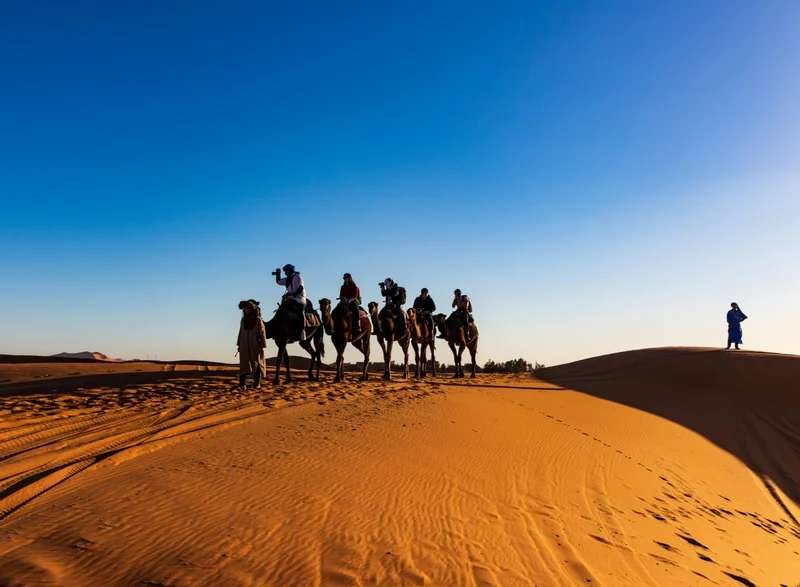
Camel Rides: Every child wants to ride a camel. The ride itself is less comfortable than the idea of it. Keep it to 20-30 minutes; beyond that you will hear about it.
Treat it as box-checking. What they want is to have ridden a camel, and five minutes buys that as completely as two hours.
Beach Time: Reliably successful. The children are in the sand and the water, the parents are not required to explain anything, and nobody has to be anywhere.
The Atlantic is cool. Children used to the Caribbean or the Mediterranean will say so, loudly, and will then get in anyway. The waves settle the argument.
Hammam Experience: This one depends entirely on the child. A child who likes long baths will like a hammam; one who fights bath time at home will fight this too, at higher volume.
Public hammams are hot and crowded, and not the place to find out which you have. A private spa hammam is the gentler introduction.
Shopping Their Own Souvenirs: Give each child a budget (50-100 dirhams) and let them shop for themselves. They enjoy the choosing and they enjoy the haggling, and the souk stops being a parental errand.
Most choose small items: colorful slippers, small drums, carved camels, jewelry boxes. The negotiating is the part they tell people about afterwards.
What to Skip
Extended Medina Shopping: Adults tire of medina shopping. Children are done in 30 minutes. Go in with a list of two or three things and come out again.
If you want real shopping time, take it while the children are resting at the riad. One parent stays, the other goes out, and you swap the following afternoon.
Too Many Cities Too Fast: "Imperial cities tour" itineraries visit four cities in seven days. This exhausts adults. It destroys children. Moving every two days means nobody settles and somebody is always packing.
Better: two cities plus the desert or the coast, three nights in each. Children run on routine, and three nights is long enough to build one.
Adult-Paced Activities Kids Can't Handle
Long museum visits: Brief cultural exposure works. Extended doesn't.
Extensive palace tours: Detailed architectural examination bores children to tears.
Rule of thumb: If adults want 90 minutes, plan for 30-45 with kids. Accept abbreviated versions. You're seeing highlights, not comprehensive study.
Challenging trekking: Serious Atlas trekking doesn't work with children under teens. Light hiking (1-2 hours, minimal elevation gain, clear trails) works fine. Multi-day trekking with camping, high altitude, and long days doesn't work unless you have exceptionally outdoorsy older kids.
Late Night Dining: Moroccan dinner hours run late: 8-9pm is normal, which collides with the bedtime you have spent the whole trip protecting.
Eat early at the riad (6-7pm), and ask restaurants what time they start serving before you book anywhere. The child's schedule outranks the local one here. A tired child at a late table ruins the table.
Structuring Family-Friendly Itineraries
The family itineraries that work tend to look alike:
10-Day Family Itinerary Structure:
- Marrakech: 3 nights (arrival recovery, gardens, light medina exposure, cooking class)
- Atlas day trip or overnight
- Travel to Sahara with overnight stop: 2 nights total
- Desert camp: 1 night
- Return to Marrakech or Essaouira: 3 nights (coast provides recovery)
- Depart
That covers city, mountain, desert and coast without a move every second morning, and it leaves room for the days when nobody wants to leave the pool.
Critical Elements for Family Success
Maximum three locations: More than three and you spend the trip packing
Minimum two nights per location: Three is better for settling in
Build in pool/beach time: Kids need physical release, parents need downtime
Break long drives: An overnight stop turns a brutal day into two ordinary ones
Mix active and quiet days: Alternate intensity with recovery
Morning activities: Schedule major activities before afternoon energy drops
[Our family itineraries]({{ '/morocco/family/' | localizeUrl(lang) }}) start from riads we know will take children, a private driver for the whole trip, and a daily structure loose enough to abandon by lunchtime.
Age-Specific Considerations
Ages 5-7:
- Shorter days (3-4 hours of activities maximum)
- More frequent stops and breaks
- Simple activities (gardens, animal encounters, playground time)
- Early bedtimes maintained
- Strollers work on the main medina routes, not off them
Ages 8-10:
- Can handle 4-5 hours of activities
- Enjoy hands-on workshops
- Physical challenges appeal (hiking, climbing, sandboarding)
- More flexible on food and schedules
- Can walk the medina without being carried
Ages 11-14:
- Appreciate cultural context when explained
- Want some autonomy and choice
- Photography interests them (bring camera or phone)
- Food adventurousness varies widely
- Physical activities strongly appealing
Teens (15+):
- Either engaged or resistant (not much middle ground)
- Give real input on itinerary choices
- Solo time in safe environments (riad, beach) appreciated
- Adventure activities crucial (surfing, hiking, sandboarding)
- Instagram moments motivate exploration
Parent Survival Strategies
Where Family Trips Go Wrong
Morocco isn't Disney. Nobody is going to entertain your children between activities. There will be boring stretches, uncomfortable moments and complaints, all of which come with travelling with children anywhere.
Entertainment reality: Bring tablets with downloaded content, books, small games. Kids need these for travel time and rest periods. That is practical parenting, and nobody's cultural immersion suffers for it.
Scheduling rule: One activity per day is sufficient for younger kids. Two maximum for older kids. Adults can do more. Kids can't without behavior deterioration.
Transport necessity: [Private drivers]({{ '/morocco-detour/' | localizeUrl(lang) }}) transform family travel. The flexibility to stop, adjust timing, and manage meltdowns without disrupting other passengers justifies the cost.
Accept Imperfect Cultural Immersion: Kids eat French fries in Morocco. They skip some cultural sites. They play in pools while you wanted them experiencing medinas. This is fine. You're creating positive family memories, not optimal cultural exposure.
Tag-Team When Needed: One parent goes out with the older children; the other stays at the riad with the younger or the flattened. You swap the next day. Neither of you needs to have seen the same things.
Build In Individual Attention: Give each child an hour or two alone with one parent somewhere in the trip: an outing, a class, a walk to buy bread. It costs almost nothing and it stops the competition for attention before it starts.
What You Are Signing Up For
Morocco with kids requires more planning, more flexibility, and more patience than adult travel. The rewards are proportional to the effort. Planning considerations include timing your visit around school schedules and optimal weather, budgeting for family-sized groups, and packing strategically for varied activities and climates.
Children who see Morocco at the right age come home with a broader worldview, an ease around difference, and memories that look nothing like anybody else's beach holiday.
It is not easier than a beach resort with a kids' club. If easy is what you want, book the resort. Morocco asks for preparation first.
Age, pacing and the choice of accommodation are the three that decide it. Get them right and Morocco works well for families. Get them wrong and everyone is miserable.
Quick Family Travel Reference
Planning a Morocco trip with your family? We specialize in family itineraries built around child-appropriate pacing, with the logistics handled so you can pay attention to your children instead of the timetable.
Frequently Asked Questions
- Is Morocco family-friendly for kids?
Morocco works well for families with children ages 5-6 and up. What holds them is the hands-on end of the trip: cooking classes, pottery workshops, short camel rides, sandboarding down a dune. Pace the days around the youngest person in the group, and travel privately so you can change the plan at noon.
- What is the best age to take kids to Morocco?
Ages 8-10. They walk without being carried, they will take an explanation of why things are done differently here, and they like doing things with their hands. Ages 5-7 work on shorter days with more breaks built in. Under 5 is hard work: the walking, the nap clashes and the heat all pull against you.
- Is Morocco safe to travel with children?
Morocco is generally safe for family travel, with the ordinary caution any busy city asks for. Children are welcomed here, and restaurant and riad staff will go out of their way for them. Use a private driver: with children, the freedom to stop when you want is worth more than anything else you will pay for.
- What do kids eat in Morocco?
Picky eaters can find plain options everywhere including fresh bread, grilled chicken, French fries, plain couscous, eggs, yogurt, and excellent fresh fruit. Moroccan food is not spicy hot, and most restaurants accommodate simple requests like plain pasta or omelettes.
- How many days should a family trip to Morocco be?
A 10-day trip covering three locations at most, 2-3 nights in each. That leaves room for the rest days, which are not optional with children: one rest day per three active days is about the right ratio.