Morocco sits two hours south of Barcelona, three from Paris. Between your European cities (Barcelona and Rome, Madrid and Paris), add three to five days in Morocco.
Three to five days in Morocco. Close enough to add, substantial enough to remember.
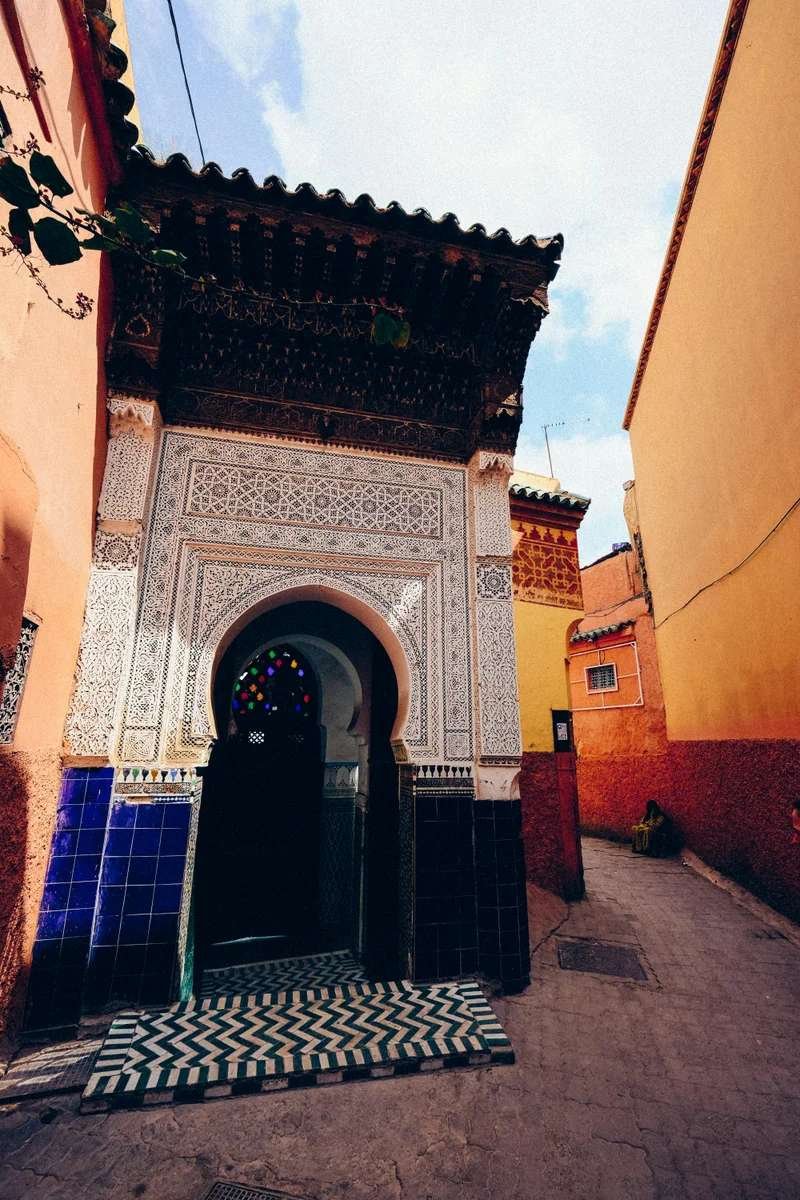
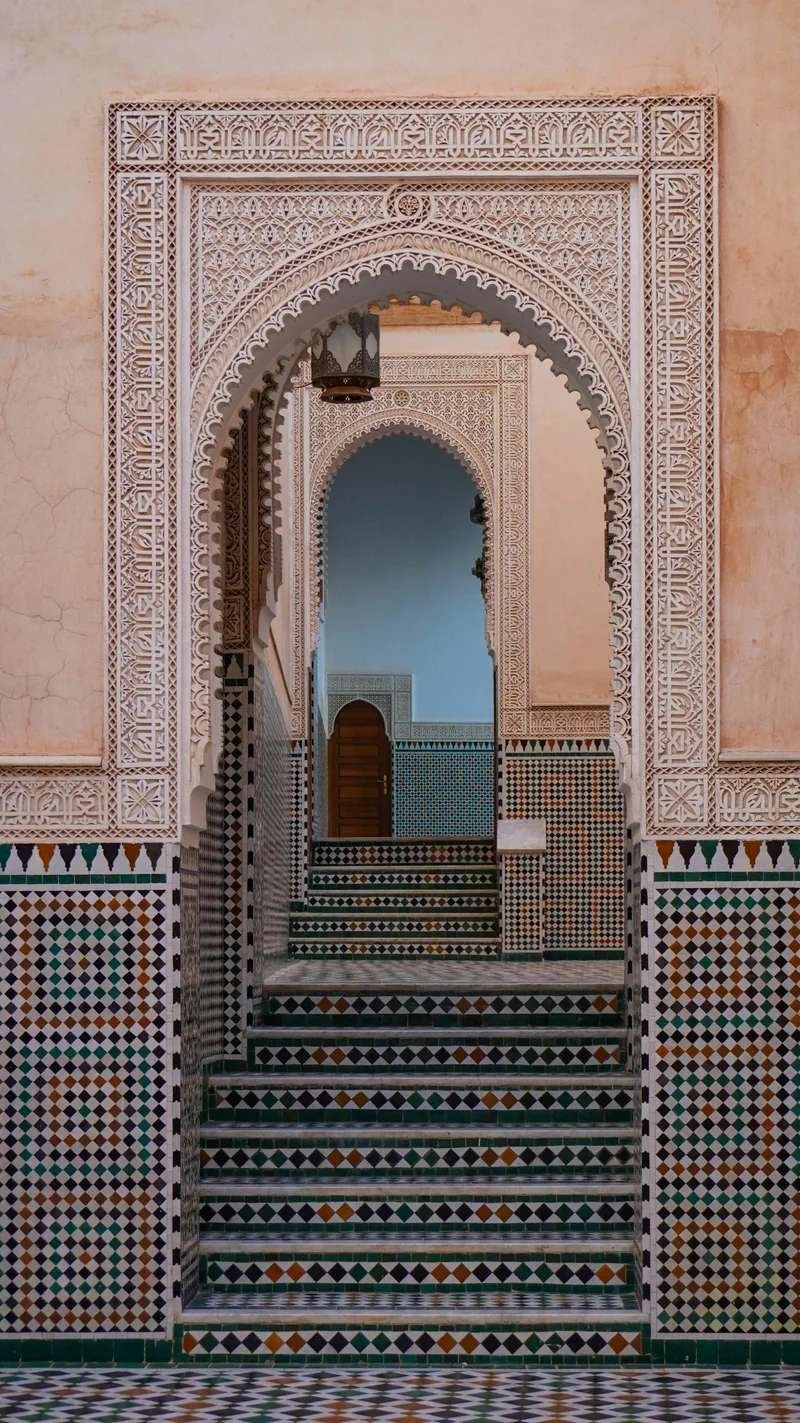
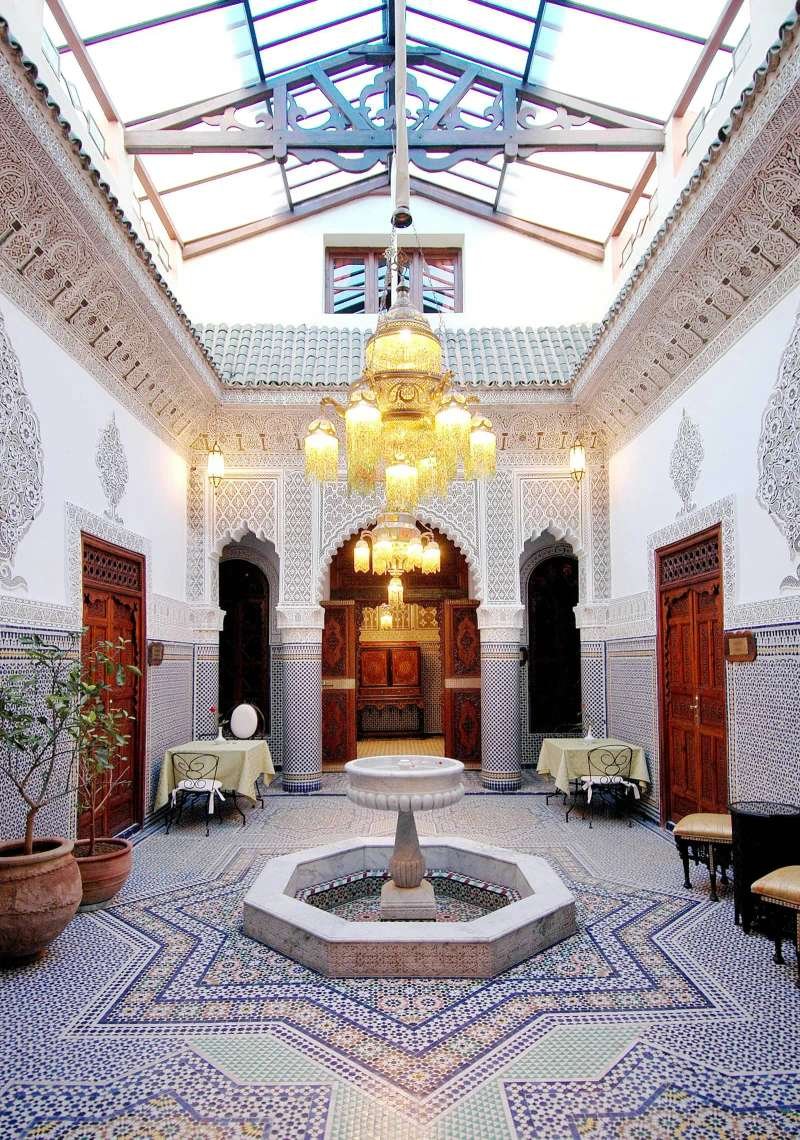
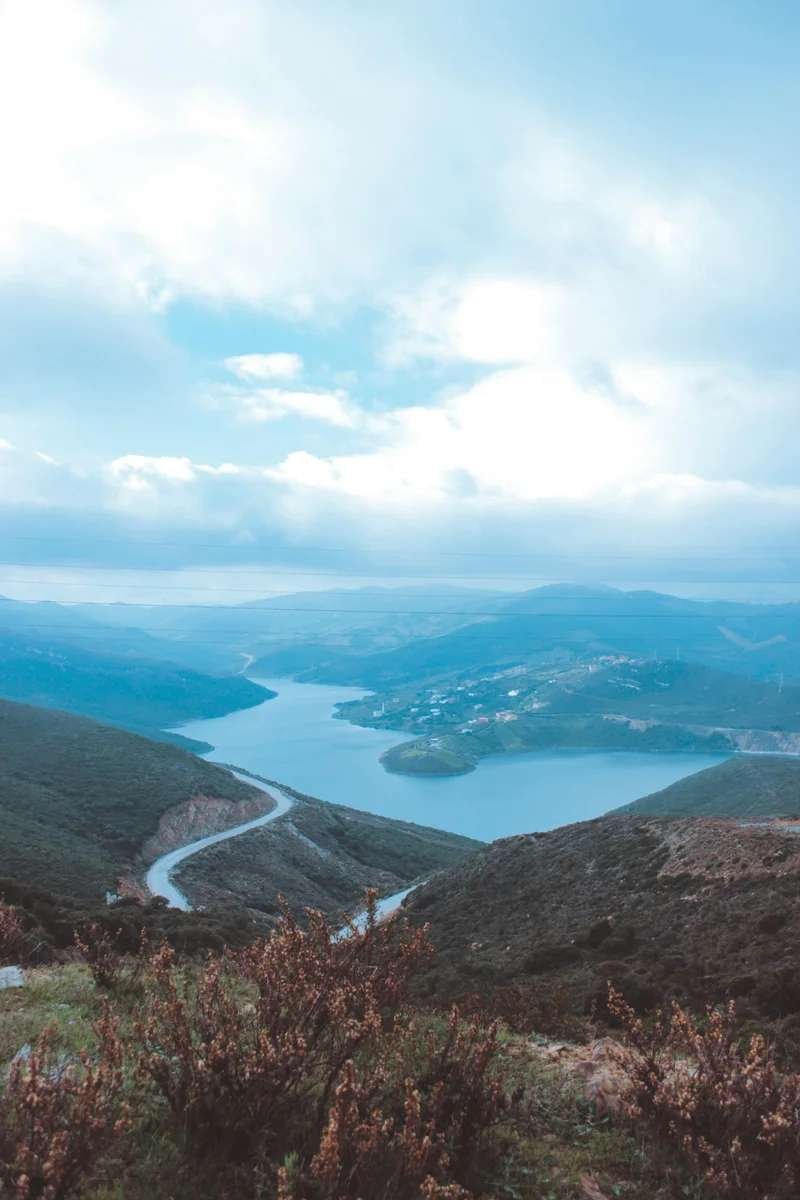
The riads we work with are restoration projects spanning years. Eighteenth-century palaces where every zellige tile was replaced by hand, every cedar ceiling carved by craftsmen trained in traditional methods. Morning sessions in family kitchens where grandmothers hand-roll couscous grain by grain. Medina workshops where potters work kick wheels unchanged since the Almohad dynasty. Mountain valleys where Berber villages cluster on impossible slopes.
We handle the logistics entirely: private guides, coordinated transfers, accommodation positioned thoughtfully. You move through Morocco with ease while experiencing depth that typically requires weeks to arrange independently.
What You'll Experience
Medina Workshops
Craftsmen practicing techniques unchanged since the Almohad dynasty. Potters working kick wheels, metalworkers hammering intricate patterns from memory, weavers creating carpets using methods passed through generations.
Mountain Villages
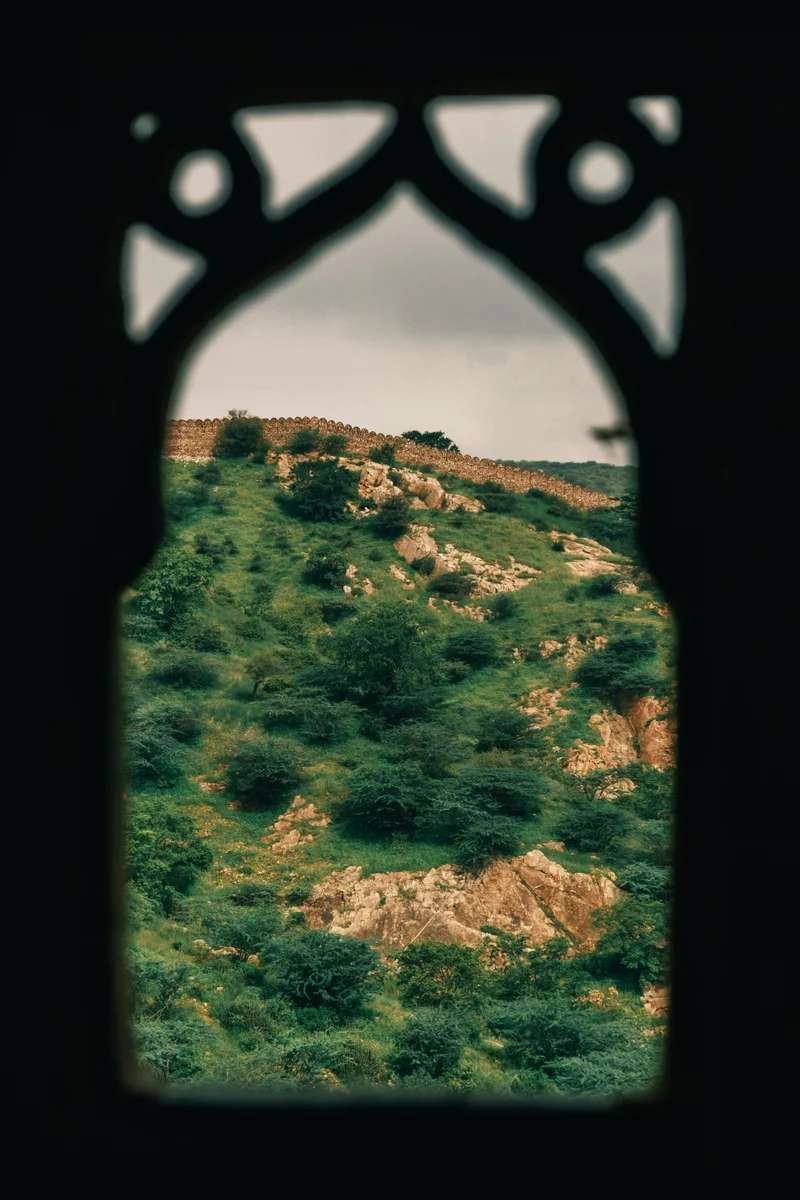
Berber valleys where villages cluster on impossible slopes. Walk terraced fields, meet families maintaining agricultural traditions, experience mountain hospitality in landscapes that have remained unchanged for centuries.
Cooking Traditions
You'll learn cooking techniques from families who've prepared these dishes for generations. Not cooking show demonstrations, but morning sessions in home kitchens where grandmothers still hand-roll couscous grain by grain.
Cultural Immersion
Private guides who know which artisan creates the finest zellige, which family makes the best preserved lemons, which mountain path offers the clearest valley views. Access through relationships, not admission tickets.
The Journey Itself
The minimum that achieves meaningful experience is three days. Most travelers choose four or five once they understand what's possible. Beyond five days, you're no longer adding to a European trip. You're beginning a full Morocco exploration, which deserves its own dedicated journey.
We design each detour specifically. Same framework, different details based on your timing, interests, accommodation preferences.
Where It All BeginsAn Hour Changes EverythingThe Blue Pearl
Theme: Essential Morocco introduction between European cities
Best for: European travelers adding Morocco between cities, first-time visitors seeking essential highlights
Pace: Balanced exploration with built-in flexibility
Your flight from Barcelona, Paris, or Madrid typically arrives midday. Private transfer to your riad in the medina: a restored eighteenth-century residence with carved cedar ceilings, courtyard fountain, private rooftop terrace.
The afternoon remains unstructured. Rest if needed. Explore the immediate neighborhood. Your riad manager provides orientation, handles any arrangements, answers questions about navigating the medina.
Dinner this evening on your private terrace. The riad's chef prepares a traditional meal: seven salads (each representing different techniques and flavor profiles), followed by tagine that's been cooking slowly since morning, hand-rolled couscous, seasonal fruit. The meal unfolds over three hours.
Accommodation: Restored 18th-century riad with courtyard fountain and private rooftop terrace.
Day 2 Marrakech with Context
Breakfast when you choose. Msemen (layered flatbread), amlou (argan almond paste), local honey, fresh bread, yogurt, fruit, coffee or mint tea.
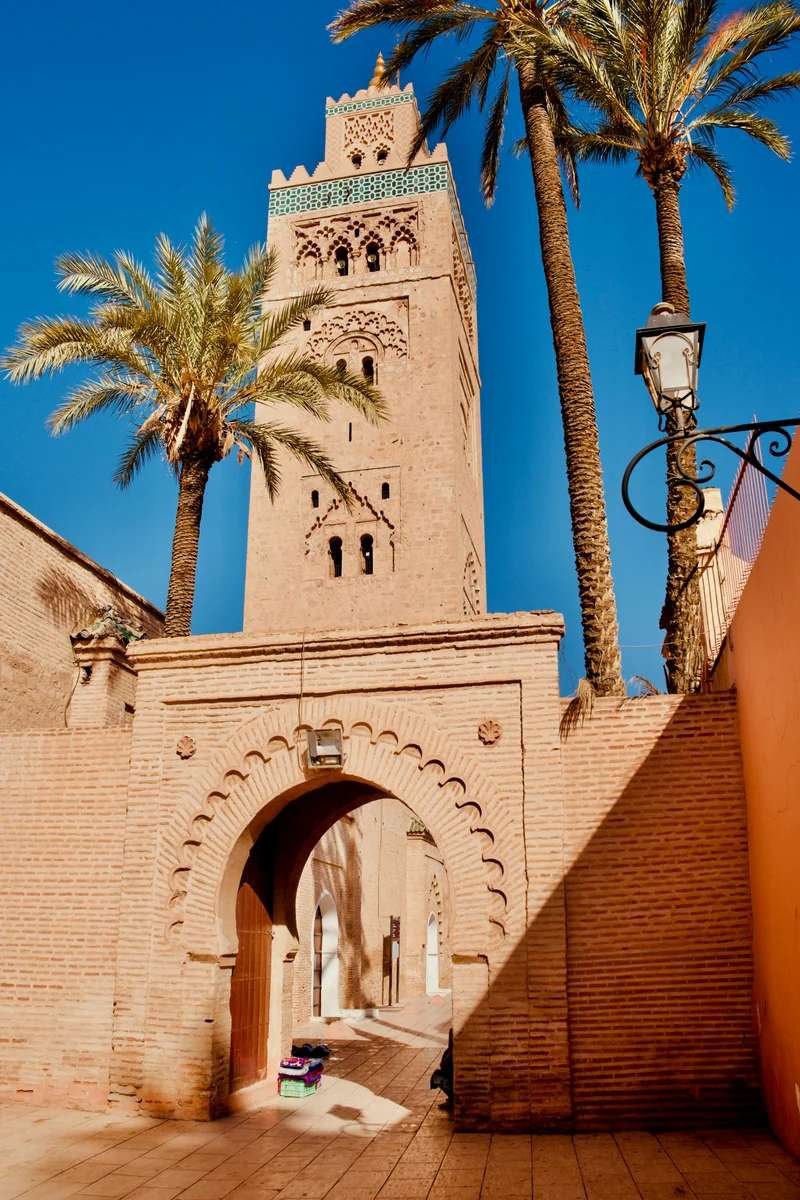
Your guide meets you mid-morning. A historian by training, raised in Marrakech, fluent in the medina's evolution and current life. The morning explores both essential sites (Koutoubia Mosque, Bahia Palace, the souks) and less obvious places that reveal how the city actually functions.
You meet artisans the guide knows personally. The spice merchant whose family has occupied the same stall for four generations, who explains regional differences in ras el hanout blends. The metalworker creating intricate patterns using tools and techniques passed from his grandfather. These introductions happen because of relationships, not because we pay for access.
Lunch at a small restaurant in the medina. No menu. The chef cooks what's excellent today from this morning's market. The meal might be tanjia (lamb slow-cooked overnight in sealed clay pots), exceptional salads, fresh bread, mint tea. Simple presentation, profound technique.
The afternoon offers choices: visit Jardin Majorelle for its botanical collection and color, experience a traditional hammam, explore the mellah (historic Jewish quarter), or return to your riad for quiet time.
Dinner at a restaurant where the chef takes Moroccan techniques seriously: either contemporary interpretations or classical preparations done at the highest level.
Day 3 Atlas Mountains, Then Departure
Early morning departure into the High Atlas. The drive takes two hours through valleys where Berber villages appear unchanged by decades.
Lunch happens in a family home: arranged, but authentic. Their actual residence, their daily food, their hospitality extended to you. The grandmother bakes bread in an outdoor clay oven. Her daughter prepares tagine using vegetables from their garden, lamb from nearby farms. You participate: kneading dough, learning why mountain cooking differs from lowland preparations, understanding why certain techniques matter.
The meal occurs on a terrace overlooking the valley. Fresh bread, slow-cooked tagine, salads, mint tea with mint picked from their garden, seasonal fruit, walnuts from their trees. The grandmother explains through your guide how altitude affects cooking times, why certain ingredients work better at this elevation.
Return to Marrakech late afternoon for your evening flight back to Europe, or remain one more night if your timing allows.
This Includes:
Two nights in restored medina riad
All breakfasts and two dinners
Private driver throughout
Private historian guide in Marrakech
Mountain family cooking experience with lunch
Airport transfers
24/7 support
Doesn't Include:
International flights
One dinner (left flexible)
Beverages
Travel insurance
Personal purchases
Theme: Extended journey with Atlas Mountain overnight
Best for: Travelers wanting deeper immersion, those seeking mountain tranquility and authentic village experiences
Your flight from Barcelona, Paris, or Madrid typically arrives midday. Private transfer to your riad in the medina: a restored eighteenth-century residence where carved cedar ceilings frame rooms that have welcomed travelers for generations, where courtyard fountains play music that's played here since the building was new, where private rooftop terraces reveal the medina's terra-cotta expanse stretching toward snow-capped Atlas peaks.
The afternoon remains unstructured. Rest if jet lag insists. Explore the immediate neighborhood, where authentic medina life continues regardless of tourism. Your riad manager provides orientation, handles every arrangement invisibly, answers questions about navigating the labyrinth beyond your door.
Evening dinner on your private terrace as the call to prayer rises from a dozen minarets. The riad's chef prepares a traditional meal: seven distinct salads (each representing different techniques and regional flavor philosophies), followed by tagine that's been cooking slowly since morning, hand-rolled couscous steamed three times over aromatic broth, seasonal fruit arranged with care. The meal unfolds over three hours. This is how Morocco welcomes you.
Accommodation: Restored 18th-century riad with courtyard fountain and private rooftop terrace.
Day 2 Marrakech with Context
Breakfast when you choose. Msemen (layered flatbread whose technique rivals French croissant), amlou (argan almond paste found only here), local honey from Atlas hives, fresh bread still warm, yogurt, seasonal fruit, coffee or mint tea poured from height.
Your guide meets you mid-morning. A historian by training, raised in Marrakech, fluent in the medina's evolution and current life. The morning explores both essential sites (Koutoubia Mosque's perfect proportions, Bahia Palace's decorative excess, the souks' organized chaos) and less obvious places that reveal how the city actually functions-not as museum but as living organism.
You meet artisans the guide knows personally. The spice merchant whose family has occupied the same stall for four generations, who explains why his ras el hanout differs from his neighbor's. The metalworker creating intricate patterns using tools and techniques unchanged since his grandfather's time. These introductions happen because of relationships built over years, not because we pay for access.
Lunch at a small restaurant where no menu exists. The chef cooks what's excellent today from this morning's market. Perhaps tanjia-lamb slow-cooked overnight in sealed clay pots using hammam ashes-or exceptional salads, fresh bread, mint tea. Simple presentation, profound technique.
The afternoon offers choices: Jardin Majorelle for its impossible blue and botanical collection, a traditional hammam where heat and scrub strip away travel fatigue, the mellah's quiet streets and synagogues, or simply your riad's rooftop terrace.
Dinner at a restaurant where the chef takes Moroccan techniques seriously: either contemporary interpretations that surprise without betraying tradition, or classical preparations executed at the highest level.
Accommodation: Restored 18th-century riad with courtyard fountain and private rooftop terrace.
Day 3 Mountain Immersion
Early morning departure into the High Atlas. The road climbs through switchbacks revealing terraced farms that cling to impossible slopes, Berber villages that seem to grow from the rock itself, snow on peaks close enough to touch. Within two hours, the landscape has transformed entirely.
Lunch in a family home: arranged through relationships, but completely authentic. Their actual residence, their daily food, their hospitality extended to you as honored guests. The grandmother bakes bread in an outdoor clay oven using techniques unchanged for centuries. Her daughter prepares tagine with vegetables from their garden, lamb from farms visible across the valley. You participate: kneading dough, learning why mountain cooking differs from lowland preparations, understanding how altitude affects technique.
The meal unfolds on a terrace overlooking valleys where farmers wave from terraced fields. Fresh bread, slow-cooked tagine, salads dressed with olive oil from their trees, mint tea with mint picked moments ago, seasonal fruit, walnuts cracked by the children. The grandmother explains through your guide how altitude changes cooking times, why certain spices work better here, what the mountain has taught her over seventy years.
Instead of returning to Marrakech, you continue to a mountain kasbah: a restored fortress-residence where thick stone walls maintain constant temperature, where fireplaces crackle against evening chill, where terraces frame valleys extending to the horizon. Dinner features slow-roasted lamb from traditional earth ovens, mountain vegetables unavailable below, bread baked daily. The evening offers silence profound enough to hear your own thoughts, stars numerous enough to blur into rivers of light.
Accommodation: Mountain kasbah with valley views, stone architecture, fireplaces.
Day 4 Return and Departure
Morning walks through walnut groves where the air smells of altitude and wild herbs. The path passes through villages where women wave from doorways and children practice their English. Your guide explains how mountain communities function: the water rights negotiated centuries ago, the seasonal rhythms that govern planting and harvest, the architecture adapted to this specific climate.
Return to Marrakech by early afternoon. Time remains for final explorations: revisiting a craftsman whose work impressed you, shopping with knowledge now rather than tourist uncertainty, one more mint tea on your riad's terrace watching the medina's endless activity.
Departure evening of Day Four or morning of Day Five, depending on your flight schedule back to Europe. Four days end-but they've shown you Morocco beyond what most visitors see in two weeks. The understanding travels with you.
This Includes:
Three nights accommodation (riad + mountain kasbah)
All breakfasts and three dinners
Private driver throughout
Private historian guide in Marrakech
Mountain family cooking experience
Airport transfers
24/7 support
Doesn't Include:
International flights
One dinner (left flexible)
Beverages
Travel insurance
Personal purchases
Theme: Hollywood's Morocco: film locations and dramatic landscapes
Best for: Film enthusiasts, photographers, travelers fascinated by landscapes that doubled for ancient worlds
Pace: Moderate with scenic drives and cultural stops
Arrival in Marrakech. Private transfer to your riad, a palace residence where intricately carved plasterwork frames courtyards, where fountain sounds replace street noise, where rooftop terraces reveal the medina's layered architecture extending toward the Atlas Mountains.
The afternoon unfolds without agenda. Rest in silk-draped rooms. Explore the immediate neighborhood's authentic rhythm. Your riad staff handles every detail invisibly: arrangements made, questions answered, reservations secured.
Evening on your private terrace. Dinner prepared by the riad's chef: an orchestrated progression of Moroccan techniques. Seven salads revealing regional spice philosophies. Tagine slow-cooked since morning. Hand-rolled couscous steamed over aromatic broth. Seasonal desserts.
Breakfast when you choose. Then departure over the High Atlas via the Tizi n'Tichka pass, Morocco's highest road, threading through villages where Berber architecture remains unchanged, where mountain light reveals why cinematographers return repeatedly.
The landscape transitions from Mediterranean to Saharan. Argania forests give way to date palms. Architecture shifts from red earth to kasbahs, fortified earth structures that appear organic extensions of the geology itself.
Arrival Ait Benhaddou before midday. This UNESCO World Heritage ksar (fortified village) exists as it has for centuries. Actual families still occupy these earthen structures, living where Lawrence of Arabia, Gladiator, Game of Thrones, and The Mummy transformed mud architecture into ancient Rome, biblical Jerusalem, mythical Yunkai.
Your guide (raised in Ouarzazate, personally acquainted with families within the ksar) explains both cinematic history and the reality directors sought to capture. The architecture Hollywood chose isn't recreated antiquity; it's continuous tradition. These techniques (rammed earth construction, geometric decoration, strategic ventilation) represent centuries of knowledge about building in extreme climates.
Lunch within the ksar or overlooking it, depending on your preference. Traditional preparation: tagine cooked using methods identical to those employed when caravans stopped here traversing Saharan trade routes.
Continue to Ouarzazate. Your accommodation here reflects the region's character: either a restored kasbah where earthen walls maintain constant temperature, or a refined hotel where design acknowledges both vernacular tradition and contemporary luxury. Private terraces frame Atlas Mountain views. Pools reflect desert sky.
Dinner at your hotel or at a restaurant where chefs interpret Saharan cuisine: date-based dishes, preserved lemons, spices reflecting trans-Saharan trade history.
Accommodation: Restored kasbah or luxury hotel with Atlas views, traditional architecture, refined interiors.
Day 3 Cinematic Landscapes and Film Studios
Morning exploring Ouarzazate's dual identity. The Atlas Film Studios, where Kingdom of Heaven built Jerusalem, where Alexander constructed Babylon, where The Jewel of the Nile created entire villages. Walking through these sets reveals filmmaking practicality: what translates to screen grandeur exists as clever perspective and efficient construction.
But the actual landscape surrounding these studios explains why directors return. Light here behaves differently: exceptional clarity that reveals detail impossible in humid climates. The geology itself provides ready-made epic scale: dramatic gorges, vast plains, mountains that frame horizons cinematically without art direction.
Visit Taourirt Kasbah, once controlled the trans-Saharan trade, now demonstrates how southern Morocco's aristocracy lived. Labyrinthine passages, decorated chambers, rooftop terraces commanding valley views.
Lunch at your hotel or during excursions. The afternoon offers choices: explore the Dades Valley's geological formations, visit artisan cooperatives producing carpets using traditional techniques, or return to your accommodation for quiet time (pool, terrace, spa treatments).
Final evening in this landscape that's doubled for so many others. Dinner features regional specialties unavailable in northern Morocco: dishes reflecting Berber, Arab, and Saharan influences.
Day 4 Return to Marrakech, Departure
Return to Marrakech via the High Atlas, taking different routes to reveal landscape variety. Your driver knows viewpoints unmarked on maps, knows when morning light transforms specific valleys, knows where to stop for exceptional coffee while locals gather.
Arrival Marrakech early afternoon. Time for final medina explorations, shopping informed by what you've learned, or simply rest at your riad.
Evening departure to Europe, or extend your stay another night if timing allows.
Accommodation: Optional: Additional night in Marrakech if flight schedule requires.
This Includes:
Three nights accommodation (riad + kasbah/hotel)
All breakfasts and three dinners
Private driver throughout
Private guide for Ait Benhaddou and film studios
All entrance fees
Airport transfers
24/7 support
Doesn't Include:
International flights
One dinner (left flexible)
Beverages
Travel insurance
Personal purchases
Theme: Complete immersion with Morocco's intellectual capital
Best for: History enthusiasts, travelers wanting Morocco's intellectual heart, those seeking medieval medina depth
Your flight from Barcelona, Paris, or Madrid typically arrives midday. Private transfer to your riad in the Marrakech medina: a restored eighteenth-century residence where carved cedar ceilings frame rooms that have welcomed travelers for generations, where courtyard fountains play music unchanged since the building was new, where private rooftop terraces reveal the medina's terra-cotta expanse stretching toward snow-capped Atlas peaks.
The afternoon remains unstructured. Rest if jet lag insists. Explore the immediate neighborhood, where authentic medina life continues regardless of tourism. Your riad manager provides orientation, handles every arrangement invisibly, answers questions about navigating the labyrinth beyond your door.
Evening dinner on your private terrace as the call to prayer rises from a dozen minarets. The riad's chef prepares a traditional meal: seven distinct salads (each representing different techniques and regional flavor philosophies), followed by tagine that's been cooking slowly since morning, hand-rolled couscous steamed three times over aromatic broth, seasonal fruit arranged with care. The meal unfolds over three hours. Morocco welcomes you properly.
Accommodation: Restored 18th-century riad with courtyard fountain and private rooftop terrace.
Day 2 Marrakech with Context
Breakfast when you choose. Msemen (layered flatbread whose technique rivals French croissant), amlou (argan almond paste found only here), local honey from Atlas hives, fresh bread still warm, yogurt, seasonal fruit, coffee or mint tea poured from height.
Your guide meets you mid-morning. A historian by training, raised in Marrakech, fluent in the medina's evolution and current life. The morning explores both essential sites (Koutoubia Mosque's perfect proportions, Bahia Palace's decorative excess, the souks' organized chaos) and less obvious places that reveal how the city actually functions-not as museum but as living organism.
You meet artisans the guide knows personally. The spice merchant whose family has occupied the same stall for four generations, who explains why his ras el hanout differs from his neighbor's. The metalworker creating intricate patterns using tools and techniques unchanged since his grandfather's time. These introductions happen through relationships, not transactions.
Lunch at a small restaurant where no menu exists. The chef cooks what's excellent today from this morning's market. Perhaps tanjia-lamb slow-cooked overnight in sealed clay pots-or exceptional salads, fresh bread, mint tea. Simple presentation, profound technique.
The afternoon offers choices: Jardin Majorelle for its impossible blue and botanical collection, a traditional hammam where heat and scrub strip away travel fatigue, the mellah's quiet streets and synagogues, or simply your riad's rooftop terrace.
Dinner at a restaurant where the chef takes Moroccan techniques seriously: either contemporary interpretations that surprise without betraying tradition, or classical preparations executed at the highest level.
Accommodation: Restored 18th-century riad with courtyard fountain and private rooftop terrace.
Day 3 Transfer to Fes
The drive to Fes takes six hours, but the landscape tells Morocco's geographic story. Southern regions give way to northern-red earth transitioning to green hills, date palms yielding to olive groves. Small towns bypassed by tourism reveal Morocco as Moroccans experience it.
Your driver knows worthwhile stops: a women's cooperative where argan oil is pressed using stone mills unchanged for centuries, a viewpoint over the Middle Atlas where cedar forests stretch to the horizon, a roadside café where locals gather and coffee comes thick and sweet.
The landscape transitions continually. Mountains rise and fall. Agricultural patterns shift with rainfall and altitude. By the time Fes appears on the horizon, you've crossed not just distance but climate zones, geological eras, cultural regions.
Arrival late afternoon. Your riad here reflects Fes's character: more refined than Marrakech, older, layers of history visible in every restoration decision. The courtyard's zellige tilework spans dynasties. The cedar ceiling was carved using techniques unchanged for four centuries. You're staying inside what you'll study tomorrow.
Dinner at the riad tonight. Fassi cuisine differs from Marrakech-more refined, more complex, the product of a city that's been Morocco's intellectual capital for twelve centuries. Let the food introduce the culture.
Accommodation: Refined riad in Fes medina, rooftop terrace, historical restoration.
Day 4 Fes Exploration
Fes is where Moroccan culture feels most continuous with its past. The medina is the world's largest car-free urban area, a UNESCO World Heritage site that functions as it has for centuries-not preserved, not recreated, but simply continuing.
Your guide (Fassi, born here) leads you through nine thousand lanes that locals navigate by landmarks invisible to outsiders. Leather tanneries where vats of color have occupied the same ground since the eleventh century-the smell is honest and unforgettable. Woodworkers carving geometric patterns from memory, not templates. The Quaraouiyine Mosque, founded in 859 CE, continuing as a center of Islamic scholarship.
You meet the people behind the work. A zellige tile master who can name the proportions of a twelve-point star without measuring. A calligrapher whose family has written Korans for six generations. These introductions happen because your guide knows everyone.
Lunch involves cooking with a local family. You're learning b'stilla-perhaps Morocco's most complex dish, involving forty-plus layers of hand-pulled warqa pastry, savory-sweet filling, techniques requiring years to master. You won't master them in one afternoon, but you'll understand why Fes takes food seriously. The meal you help prepare, you share with the family. This is how culinary knowledge transfers: through demonstration, correction, tasting, conversation.
Afternoon: return to souks with new understanding, visit specific workshops whose artisans you now appreciate differently, or rest at your riad before your final dinner in Morocco.
Accommodation: Refined riad in Fes medina, rooftop terrace, historical restoration.
Day 5 Departure
No rush this morning. Breakfast in the courtyard as the medina stirs to life-vendors setting up, calls echoing, the ancient rhythm continuing as it has for a millennium.
Time remains for final moments if your flight allows. Perhaps a last wander through lanes that no longer feel labyrinthine. Perhaps one more purchase from an artisan who remembers you from yesterday. Perhaps simply mint tea on the rooftop terrace, absorbing what five days have revealed.
Private transfer to Fes airport carries you through the medina's ancient gates, toward home. Five days end-but they've shown you two Moroccos: Marrakech's imperial energy and Fes's scholarly refinement, the south's boldness and the north's intricacy. The contrast illuminates both.
This Includes:
Four nights accommodation (Marrakech riad + Fes riad)
All breakfasts and four dinners
Private driver throughout
Private historian guides in both cities
Family cooking class in Fes
All entrance fees
Airport transfers
24/7 support
Doesn't Include:
International flights
Lunches
Beverages
Travel insurance
Personal purchases
Theme: Chefchaouen's blue medina and mountain tranquility
Best for: Photographers, aesthetic seekers, travelers wanting mountain tranquility and visual poetry
Pace: Relaxed with time for wandering and photography
Arrival in Marrakech. Private transfer to your riad: restored palace architecture, carved cedar detailing, courtyard fountains, rooftop terraces with Atlas Mountain views.
Afternoon unstructured: rest, explore immediate surroundings, acclimate to medina rhythms. Your riad staff handles arrangements invisibly.
Evening dinner on your private terrace. The riad's chef prepares a traditional progression: seven distinct salads, slow-cooked tagine, hand-rolled couscous, seasonal desserts. Three-hour meal.
Early departure north toward the Rif Mountains. The drive requires six hours, but the route reveals Morocco's geographic diversity: leaving southern landscapes, entering Mediterranean regions where rainfall creates different architecture, different agriculture, different light.
Stop in Rabat, Morocco's capital. Unlike Marrakech's tourist density or Fes's labyrinthine intensity, Rabat maintains governmental dignity: wide boulevards, coastal position, French colonial planning merged with Moroccan aesthetics. Visit the Hassan Tower and Mausoleum of Mohammed V: contemporary Moroccan craftsmanship at its finest. White Italian marble, zellige tilework, carved cedar (traditional techniques applied with modern precision).
Lunch in Rabat: refined Moroccan cuisine in settings that acknowledge both tradition and contemporary expectations.
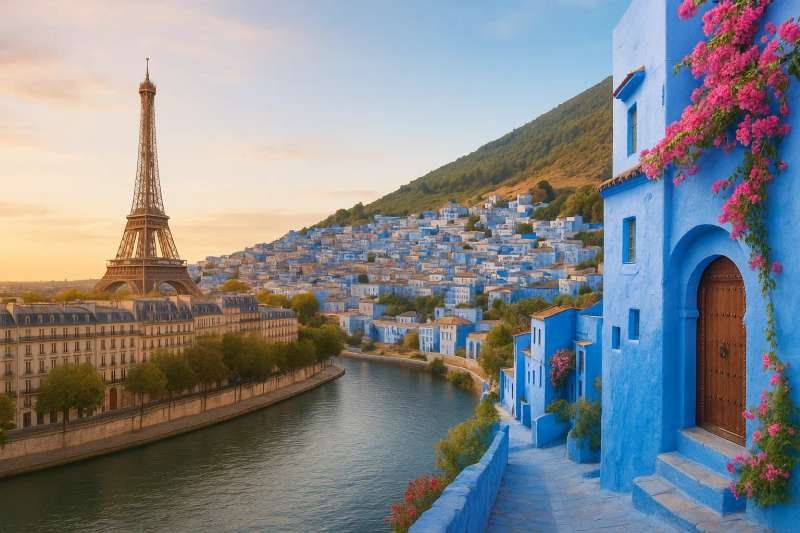
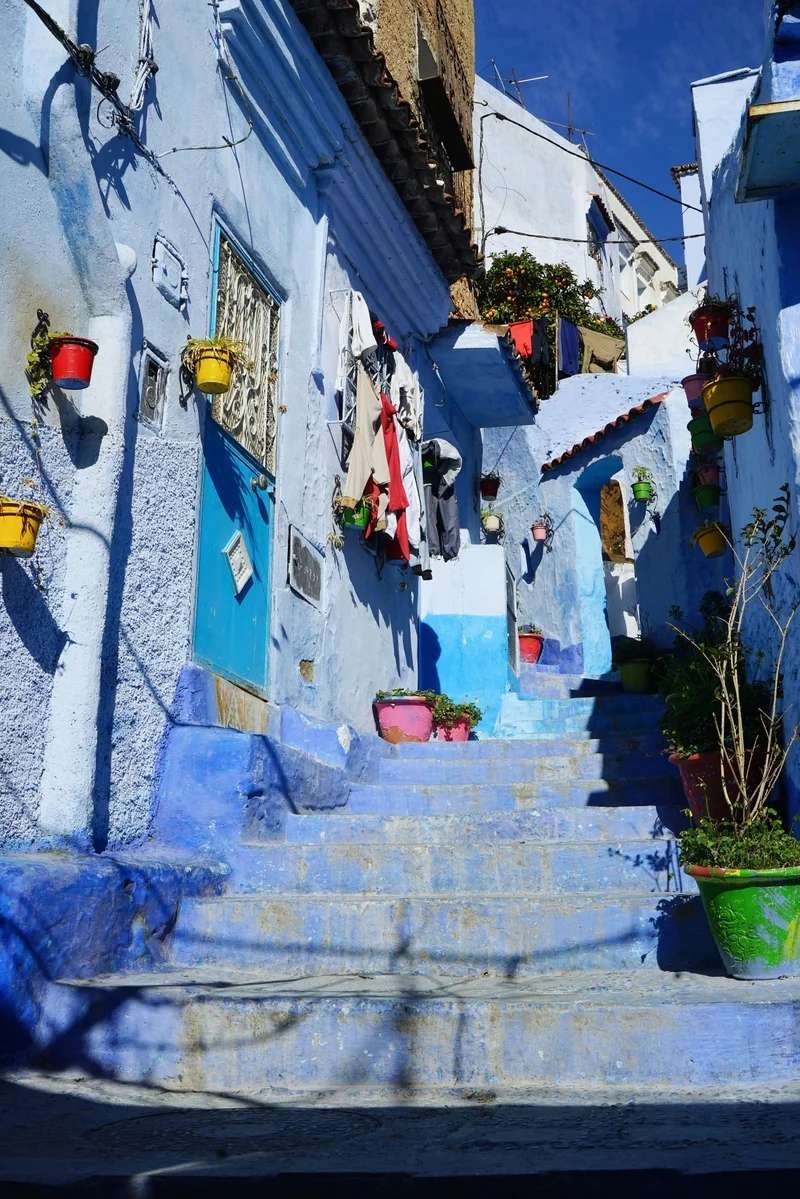
Continue to Chefchaouen. Arrival late afternoon as mountain light softens. The medina reveals itself gradually: blue walls in shifting tones from powder to ultramarine, Andalusian architectural details, mountain air replacing plains heat.
Your accommodation here: a traditional riad where previous owners maintained historical elements while adding contemporary comfort. Blue-washed interiors, mountain views, rooftop terraces where evening reveals why photographers obsess over this location.
Accommodation: Traditional riad in Chefchaouen medina, blue-washed interiors, mountain views, rooftop terrace.
Day 3 Chefchaouen's Blue Medina
Morning exploring Chefchaouen with your guide, someone raised here, who explains both the medina's visible beauty and its less obvious history.
The blue tones everyone photographs originated with Jewish refugees from Spanish Inquisition who settled here in the 1400s, bringing Andalusian architectural traditions and the practice of blue-washing walls. The tradition continued after most Jewish families departed in the 1950s, now maintained by Muslim residents who inherited these homes and perpetuate the aesthetic.
The medina itself functions as actual neighborhood, not museum. Families live in these blue houses. Artisans produce leather goods, woven textiles, traditional clothing. Your guide introduces you to specific craftspeople: the weaver whose family has operated this workshop for five generations, the leather worker who learned techniques from his grandfather.
Lunch at a local restaurant: traditional Rif mountain cuisine differing from southern cooking. Goat cheese appears here (rare in most Morocco). Wild herbs season dishes. Cooking techniques reflect mountain climate and local ingredients.
Afternoon exploring at your own pace. The medina rewards wandering: each alley reveals different blue tones, different light angles, different architectural details. Or hike to the Spanish Mosque above town for panoramic views. Or simply rest at your riad, experiencing the tranquility that transcends the Instagram aesthetic.
Evening dinner: either at your riad (arranged in advance) or at restaurants where local families eat, where menus reflect what's currently available rather than standardized tourist expectations.
Day 4 Mountain Landscapes, Return South
Morning departure from Chefchaouen. The drive south takes six hours, but reveals landscape transitions: leaving Rif mountains, crossing Middle Atlas, entering plains approaching Marrakech.
Your driver knows worthwhile stops: viewpoints over valleys where traditional agriculture continues, women's cooperatives producing argan oil using stone mills, cafes where actual locals gather rather than tourist buses.
Arrival Marrakech late afternoon. Return to your original riad or transfer to a different property if you prefer experiencing multiple riads.
Final evening in Morocco. Dinner at a restaurant where chefs treat Moroccan techniques seriously: either contemporary interpretations or classical preparations executed at the highest level.
Accommodation: Riad in Marrakech medina, courtyard architecture, rooftop terrace.
Day 5 Departure
Morning departure to Europe, or optional time for final Marrakech explorations if flight schedule allows. Shopping for items you've now learned to evaluate. Last mint tea on your riad terrace. Transfer to airport.
This Includes:
Four nights accommodation (Marrakech + Chefchaouen riads)
All breakfasts and four dinners
Private driver throughout
Private guides in Marrakech and Chefchaouen
Rabat historical visit
All entrance fees
Airport transfers
24/7 support
Doesn't Include:
International flights
Lunches
Beverages
Travel insurance
Personal purchases
Theme: Desert immersion with Sahara's dramatic dune landscapes
Best for: Desert dreamers, photographers seeking dramatic landscapes, travelers wanting profound silence and natural wonder
Early departure from Marrakech eastward toward the Sahara. The journey requires strategic pacing. This isn't about maximizing kilometers, but about understanding how landscape transforms.
Cross the High Atlas via Tizi n'Tichka pass. The highest road crossing reveals why these mountains isolated Morocco's south for centuries. Berber villages cling to slopes where agriculture seems impossible, yet terraced fields demonstrate knowledge accumulated over millennia.
Stop at Ait Benhaddou. This UNESCO ksar (fortified village) appears in countless films (Lawrence of Arabia, Gladiator, Game of Thrones) but remains actual residence for families maintaining earth construction techniques unchanged for centuries.
Continue through Ouarzazate into the Dades Valley. Geology here creates natural amphitheater: layers of sediment folded into improbable formations, rock colors shifting with sun angle, kasbahs integrated into cliff faces as if grown rather than built.
Your accommodation: a kasbah hotel where traditional earthen architecture meets refined comfort. Terraces overlook valley formations. Rooms maintain constant temperature through thick walls. Dinner features regional cuisine: tagines using valley vegetables, bread baked in traditional ovens.
Accommodation: Kasbah hotel in Dades Valley, traditional architecture, valley views, refined interiors.
Day 2 Through Todra Gorge to the Sahara
Morning departure through landscapes growing increasingly arid. Todra Gorge: limestone walls rising vertically three hundred meters, reduced to forty-meter width at points, light creating dramatic effects as sun angle changes.
The road continues through former caravan routes. Settlements here existed to serve trans-Saharan trade: water sources, protection, supplies for merchants transporting gold, salt, slaves, goods between Mediterranean and sub-Saharan Africa. Understanding this commerce explains Morocco's historic wealth and cultural diversity.
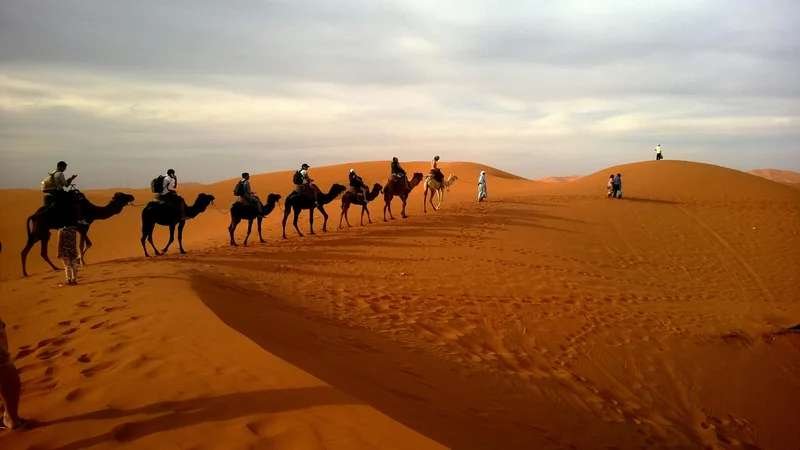
Arrival Merzouga late afternoon. The Sahara announces itself gradually: scattered dunes appearing, then multiplying, then dominating until Erg Chebbi rises impossibly high. These aren't the small dunes of beaches. These are geological features: sand mountains exceeding two hundred meters, appearing solid until you understand wind constantly reshapes them.
Transfer to your desert camp via camel or 4x4, depending on preference and timing. The camp itself exists as luxury anomaly: Berber-style tents with proper beds, en-suite bathrooms, refined furnishings, but positioned where night sky reveals stars impossible to see near any city. Milky Way visible as three-dimensional ribbon. Silence so complete it becomes tangible presence.
Sunset from the dunes. Colors transform through spectrum (amber to gold to copper to rose) as sun descends. The experience photographers attempt to capture but can't fully translate: the scale, the silence, the light quality, the realization that this landscape extends thousands of kilometers in every direction.
Dinner at camp: traditional Berber meal (tagine slow-cooked in earth ovens, salads, bread, mint tea). Then perhaps drumming around fire, or simply silence under stars that seem close enough to touch.
Accommodation: Luxury desert camp with en-suite tents, traditional furnishings, complete silence, infinite stars.
Day 3 Sahara Immersion
Sunrise over the dunes. Wake early to watch color reverse the sunset sequence (darkness to navy to violet to rose to gold). The desert reveals why Islamic mystics sought solitude here: clarity that strips away everything except essential awareness.
After breakfast, choices define your day. Some travelers hire guides to walk deep into the erg, understanding how navigation works where landmarks shift, learning how Berber guides read subtle signs in sand. Others prefer extended time simply experiencing silence and scale. Others visit nearby villages where families maintain nomadic traditions increasingly rare elsewhere.
Lunch at camp or packed for excursions. The afternoon heat suggests rest: reading in shade, sleeping, simply existing without agenda.
Late afternoon, return to the dunes. Sandboarding if you want activity. Photography if light obsesses you. Or simply sitting as wind creates ephemeral patterns that will vanish overnight.
Final evening under Sahara stars. Dinner, conversation, or silence: whatever seems appropriate when surrounded by this much beautiful emptiness.
Day 4 Return West
Sunrise, breakfast, then departure west retracing your route but experiencing it differently. The same landscapes reveal new details returning. You understand now what you were seeing before.
Stop in Ouarzazate. Visit Atlas Film Studios if you want context for why directors choose these locations. Or Taourirt Kasbah demonstrating how southern Morocco's aristocracy lived.
Continue toward Marrakech, crossing the Atlas again. Arrival early evening. Return to riad luxury after desert simplicity. The contrast itself becomes meaningful.
Accommodation: Riad in Marrakech medina, courtyard architecture, rooftop terrace.
Day 5 Departure
Morning in Marrakech. Final explorations, last shopping, or simply rest at your riad. Transfer to airport for return flight to Europe, carrying memories of landscape where beauty becomes overwhelming enough to genuinely lose yourself within it.
This Includes:
Four nights accommodation (riad + desert camp + kasbah)
All breakfasts and four dinners
Private driver throughout
Desert guide and camel trek
Two nights luxury desert camp
All entrance fees
Airport transfers
24/7 support
Doesn't Include:
International flights
Lunches
Beverages
Travel insurance
Personal purchases
What You'll Experience
Three to five days. Eight experiences that shift how you see things.
Behind Unmarked DoorsThe Art of SlowingFramed Horizons
Medina Immersion
Ancient alleyways where centuries of commerce continue unchanged. Your guide knows which unmarked door leads to the finest leather workshop, which terrace offers views tourists never find, which families have occupied the same stalls for generations. Private introductions to artisans through relationships built over years.
Cooking in Family Homes
Morning sessions in home kitchens. A mother and daughter prepare tagine recipes passed from their grandmother. Techniques that exist in hands rather than written instructions. You work alongside them: kneading dough, understanding why certain spices combine, learning why timing matters more than measurement. The meal you help prepare, you share at their table.
Atlas Mountains
An hour from Marrakech: cedar forests, Berber villages positioned on cliffsides, air that carries different scents. Half-day excursions revealing why mountains shape Moroccan identity. Lunch in villages where terraced agriculture continues as it has for centuries.
Artisan Workshops
Watch craftsmen apply gold leaf to ceilings using methods their ancestors employed four centuries ago. Zellige tile makers, leather tanners, brass workers. These are actual working studios, not demonstrations. You're granted access to observe techniques passed through generations.
Rooftop Evenings
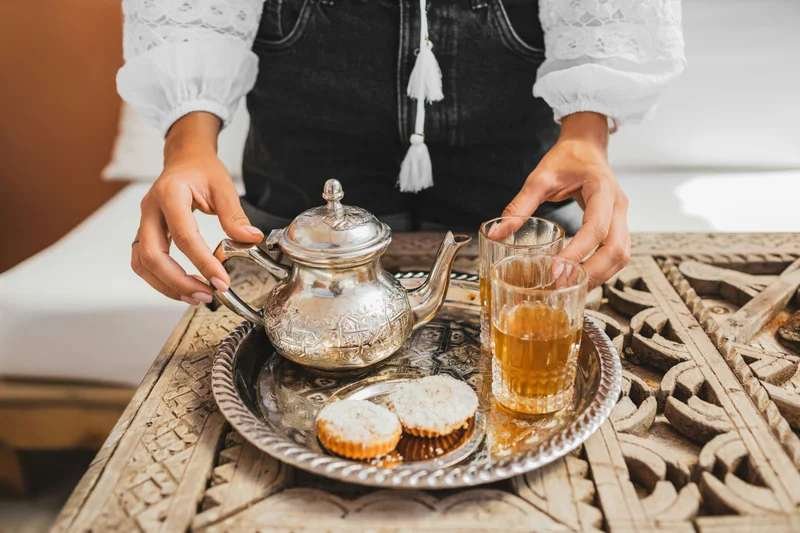
Mint tea and dates as the call to prayer echoes across rooftops. Late afternoon light transforming medina architecture. The specific combination of sound, taste, and shifting color that becomes your sensory memory of Morocco.
Hammam Experience
The neighborhood hammam where locals go weekly. Hot rooms, cold rinses, thorough scrubbing. Functional ritual that's somehow deeply restorative. Traditional practice without tourist adaptation.
Market Mornings
Fresh-squeezed orange juice, msemen from griddles, coffee strong enough to fuel morning walks through souks. Markets that haven't changed layout in eight centuries. Vendors your guide has known for decades.
Unhurried Meals
Meals lasting three hours because courses arrive gradually and conversation matters. Multiple preparations appearing in sequence. European pacing applied to Moroccan hospitality.
Three Nights, Zero Compromises
Short trips don't mean settling. Every property is hand-selected for how quickly it immerses you in Morocco. You're staying in riads where designers obsessed over every zellige tile, kasbahs with views that make you forget you're only here briefly, lodges where three mornings feel like a week.
We prioritize location and atmosphere over resort amenities. You're not here for a pool and room service. You're here to experience Morocco. These properties deliver that from the moment you walk through the door.
Three Nights of ThisCourtyard MorningsWorth Every Turn
Tucked into the medina's labyrinth, close enough to walk to Jemaa el-Fna in ten minutes but quiet enough you'd never know it's there. Behind unmarked doors exist courtyards with fountains, rooftop terraces overlooking the Atlas Mountains, and breakfasts where fresh orange juice tastes like it came from a different planet.
What defines them:
Six to twelve rooms maximum. Intimate by design. Staff who know your name by the second day. Rooftop terraces for mint tea and sunset views. Architecture that's been here for centuries, furnishings that respect that history without feeling like museums. You'll sleep under carved cedar ceilings and wake to the call to prayer echoing across rooftops.
Perfect for detours because:
Location matters more on short trips. These riads sit deep in the medina where you're already experiencing Morocco the moment you step outside. No wasted time commuting to "the real" city. You're in it. And when you need quiet after market chaos, you retreat thirty seconds to your courtyard.
Fes offers two experiences. Inside the medina: riads where you navigate the same alleyways artisans have used for 800 years. In the Ville Nouvelle: boutique hotels with modern comforts and terraces overlooking the ancient city. Both work. Your choice depends on how much immersion you want versus ease of access.
Medina riads:
Centuries-old townhouses restored with reverence. Zellige tilework that took artisans months. Courtyards centered around fountains. Breakfast arrives on silver trays: fresh bread from the communal oven, preserved lemons made by the owner's mother, olives from family groves. Getting here requires walking medina alleys with a guide. Leaving requires the same. Worth it.
Ville Nouvelle hotels:
Design-forward properties that respect Moroccan aesthetics without literal interpretation. Easy taxi access. Rooftop restaurants. Proper showers and reliable WiFi. You visit the medina during the day, then return to comfort and quiet. For three-day trips where you're maximizing sightseeing, this makes sense.
If your detour includes mountain time (and honestly it should, even one night), you'll stay in lodges where the view justifies the entire trip. Stone and timber architecture built into hillsides. Terraces overlooking Berber villages. Silence that makes you realize how much noise you live with normally.
What you'll find:
Eight to fifteen rooms, each with mountain views that shift throughout the day. Meals served family-style using vegetables from their gardens and meat from valley farms. Wood-burning stoves for cool evenings. Hiking trails leaving directly from the property if you want them. Hammocks if you don't. This is where you remember what quiet feels like.
The detour timing:
Even one night in the mountains resets you completely. Most detours include two nights here: arrive afternoon, full day exploring valleys, depart morning. It's not rushed. You get the rhythm: morning hikes, long lunches, afternoon reading, sunset from the terrace, dinner by the fire. By the second evening you're wondering why you booked such a short trip.
The Sahara sits six hours from Marrakech. For three-day detours, it's too far. You'd spend most of your time driving. For five-day trips, it's possible but tight. We only recommend it if you're genuinely comfortable with long drives or if desert ranks as your primary reason for coming.
When it works:
Five days minimum. Fly into Marrakech, drive to desert (via Ait Ben Haddou), one night in luxury camp, return different route through Dades Valley, final night in Marrakech. It's ambitious but doable if you embrace driving as part of the experience.
The camps themselves are exceptional: proper beds, en-suite bathrooms, multi-course dinners, bonfire with musicians. You arrive by camel at sunset, sleep under more stars than you've ever seen, wake to tea delivered to your tent. It's not roughing it remotely.
But if you only have three days, skip it. The mountains offer similar "away from everything" feeling with one-hour drives instead of six.
What's Included
Every element, transparently detailed.
Accommodations
Hand-selected riads and properties. Not the most expensive in each city. The most authentic and well-managed. Restorations that respected original architecture. Owners who understand hospitality as cultural exchange.
Transportation
Private throughout. Driver from arrival to departure. All intercity transfers. No shared vehicles, no group situations.
Meals
All breakfasts. Most lunches and dinners. We leave specific meals open so you can explore independently or extend experiences you particularly enjoyed. When meals are included, they're substantial and thoughtful, not token offerings.
Guides
Private specialists in each city. Historians, food experts, people raised in these places who can provide actual context rather than memorized scripts.
Activities
All market tours, cooking experiences, artisan visits, entrance fees, organized experiences. Nothing offered as "optional extra."
Support
24/7 availability throughout your time in Morocco. Direct phone number for your coordinator, who handles any needs or adjustments.
The Place Itself
The fastest way to understand Morocco is through what people make and how they make it.
Riads where breakfast spreads cover entire tables: still-warm bread from the neighborhood oven, house-made preserves, fresh orange juice from the vendor who's occupied the same corner for thirty years. Kitchens where grandmothers teach techniques their mothers taught them, recipes that exist in hands rather than books. Workshops where potters work kick wheels, metalworkers hammer intricate patterns from memory, weavers create carpets using methods unchanged for generations.
This is the Morocco that exists behind the medina walls. Not created for travelers. Simply accessible to them, with the right introduction.
Accommodations as Cultural Experience
The riads we work with are restoration projects spanning years. Eighteenth-century palaces where every zellige tile was replaced by hand, every cedar ceiling carved by craftsmen trained in traditional methods. Courtyards with fountains that have run for centuries. Rooftop terraces overlooking medina roofscapes that appear unchanged from historical photographs.
Authentic Restoration
These are not hotels designed to resemble riads. These are actual palaces, restored with care, operated by families who understand their architectural and cultural significance.
The Experience
Waking to fountain sounds, breakfast in a courtyard open to sky, evening tea on your private terrace. This is how you experience Moroccan domestic architecture and hospitality culture.
The Food Culture
Moroccan cuisine earned UNESCO Intangible Cultural Heritage status. This recognizes not just the food, but the entire culture around it: techniques passed through generations, regional variations, ceremonial hospitality, preservation methods developed before refrigeration existed.
Direct Experience
Shopping at dawn markets with guides who know which vendors their families have bought from for decades. Cooking classes in private homes where mothers and grandmothers teach actual family recipes. Meals where courses arrive over hours because rushing would contradict the entire purpose.
Traditional Methods
The couscous is hand-rolled grain by grain. Not as performance, but because that's how it's done properly. The preserved lemons were made last season using methods older than written recipes. The bread was baked this morning in communal ovens that have operated for centuries.
Why It Matters
This level of attention exists not because you're paying for luxury, but because Moroccan food culture still functions this way in homes and small restaurants. You're being given access to something ongoing, not something staged.
Practical Elements
Barcelona offers the most frequent service to Morocco: multiple daily flights, under 3 hours to Marrakech. Madrid and Paris follow closely. Lisbon, London, Rome, Amsterdam all maintain regular connections.
These aren't obscure routes. These are standard European-Morocco corridors, often served by both national carriers and budget airlines.
Most travelers position Morocco at the beginning or end of their European portion. Beginning offers the advantage of experiencing the most culturally distinct element first. Ending provides a final chapter that feels different from everything preceding it.
Placing Morocco midway through Europe works logistically but requires more flight coordination. We can arrange any sequence. Just know that beginning or end typically flows more naturally.
Morocco grants 90-day visa-free entry to most nationalities: EU, UK, US, Canada, Australia, New Zealand, Japan, South Korea, Singapore, among others.
This is separate from European Schengen visas. You're not using any Schengen days during your Morocco portion. The systems operate independently.
Verify your specific nationality if uncertain, but most travelers reading this won't require advance visa arrangements.
Three-day journey: $1,500-2,000 per person
Four-day journey: $2,000-2,600 per person
Five-day journey: $2,600-3,200 per person
Pricing assumes two travelers. Solo travel incurs single supplements (typically 30-40% additional). Groups of 3-4 benefit from shared costs.
Included: All accommodations, transportation, guides, most meals, activities, entrance fees.
Not included: Flights to/from Europe (you arrange these with your European flights), selected meals left open for flexibility, beverages beyond meals, personal purchases.
The pricing is final and comprehensive. No hidden costs, no pressure for extras, no surprise additions.
Initial conversation: We discuss your European trip structure, optimal timing for Morocco, accommodation preferences, any specific interests.
Proposal: Detailed itinerary specific to your dates and preferences. Full pricing breakdown.
Refinement: Adjust until it's correct.
Confirmation: 30% deposit secures dates and properties. 70% balance due 45 days before departure.
Preparation: Complete pre-departure information including packing guidance, cultural context, restaurant recommendations, emergency contacts.
Start this conversation 6-8 weeks before your European trip. Earlier for April or October travel when demand is highest. Later booking possible (we've arranged detours with as little as 3 weeks' notice) but limits accommodation selection.
Questions Worth Addressing
Three days allows for Marrakech's medina immersion, mountain tranquility, and sufficient meals to understand Moroccan food culture. Shorter feels rushed. Longer shifts toward full Morocco exploration, which merits dedicated journey rather than European detour.
Yes, but at that point you're shifting from "detour" to "Morocco journey." Beyond five days, travelers typically want to add the Sahara desert, coastal regions, or deeper regional exploration. Those merit their own dedicated itineraries rather than trying to compress them into a European trip extension.
Casablanca is Morocco's economic center. Think commercial hub rather than cultural destination. The Hassan II Mosque is architecturally significant and worth seeing if you have specific interest. Otherwise, travelers generally find Marrakech and Fes more compelling for limited time.
Morocco involves cultural difference: different language, customs, daily rhythm. Medinas are labyrinthine. Vendor interaction in tourist areas requires patience.
Private guides provide context and navigation. Riads offer quiet refuge when needed. Most travelers find Morocco more accessible than anticipated. Three to five days provides substantial immersion without requiring weeks of commitment.
Moroccan cuisine accommodates vegetarians naturally. Most dishes are vegetable-forward with meat as accent rather than centerpiece. Gluten-free requires more attention but is manageable with advance communication to families and restaurants. Serious allergies need careful planning but aren't prohibitive.
Share dietary needs early so we can plan appropriately.
Barcelona, Madrid, and Paris offer multiple daily flights to Marrakech: under three hours, frequent service, budget and traditional carriers. Rome, London, Amsterdam, and Lisbon maintain regular connections under four hours.
Position Morocco wherever makes geographic sense in your European routing. We provide guidance on timing and connections but don't book flights directly.
EU, UK, US, Canada, Australia, and New Zealand citizens receive 90-day visa-free entry. Passport must remain valid six months beyond your departure date.
Morocco maintains visa-free agreements with 60+ countries. No vaccinations required. Entry stamp at arrival takes minutes.
3 days (2 nights): $1,500-2,000 per person
4 days (3 nights): $2,000-2,600 per person
5 days (4 nights): $2,600-3,200 per person
Price depends on accommodation tier (boutique riads vs ultra-luxury), group size (couples pay more than groups of four), and season (peak spring/fall vs summer/winter).
What's included: All accommodations, private driver, private guides, most meals, cooking classes, activities, entrance fees, airport transfers. You're only paying separately for flights, some independent meals, drinks, souvenirs.
Not included: Flights from Europe ($100-250 typically), travel insurance, some lunches/dinners we leave flexible, personal purchases.
Payment: 30% deposit when you book, 70% balance 45 days before departure. We accept bank transfers and major credit cards.
Spring (March-May) and fall (September-November) offer optimal conditions: temperatures between 18-27C, clear mountain visibility, comfortable for medina walking. These seasons see highest demand.
Summer (June-August) brings heat (32-40C in Marrakech) and increased tourism. We adjust itineraries for mountain time and schedule activities for early morning and evening.
Ramadan dates shift annually. Restaurants close during daylight hours, though riads serve meals privately. Some travelers value witnessing the cultural observance; others prefer avoiding the period.
Six to eight weeks before your European trip allows optimal riad selection and guide coordination. Cooking classes in family homes require advance arrangement.
Three to four weeks minimum provides sufficient lead time, though accommodation choices narrow during peak season (April-May, September-October).
Shorter notice occasionally works when availability aligns. Contact us to verify.
Approximately one-third of detour travelers are solo. The experience remains identical: private guide, hand-selected riads, cooking classes, market visits. Meals occur in riads, restaurants, or family homes depending on the day's itinerary.
Solo pricing includes 30-40% supplement covering full guide and driver costs. The journey remains fully private and flexible to your interests.
Riads are secure properties. Private guides accompany you during activities. Morocco accommodates solo travelers comfortably.
Comfortable walking shoes for cobblestone medinas, day pack for markets, sunscreen, light layers for temperature variation, modest clothing for medina walking (shoulders and knees covered demonstrates respect, though not required).
Morocco uses European plugs (Type C/E, 220V), identical to most European countries. Riads provide WiFi. Major establishments accept credit cards; carry cash for market purchases. Withdraw dirhams from airport ATMs upon arrival.
You're packing for your European journey regardless. Morocco requires minimal additions beyond what you're already carrying.
Planning Your Detour
We design each Morocco detour specifically for your European trip structure, timing, and interests.
1
Initial Conversation
Within 72 hours
Share your European itinerary: dates, cities, general routing. We respond within 72 hours with whether Morocco integrates logically and what that might look like as actual itinerary.
2
Detailed Proposal
If it makes sense to proceed, we create a specific proposal: exact accommodations, day-by-day itinerary, pricing, logistics. You refine until it's correct or decide it doesn't fit your plans.
3
Confirmation
30% deposit secures dates and properties. 70% balance due 45 days before departure. Complete pre-departure information follows: packing guidance, cultural context, restaurant recommendations, emergency contacts.
Begin This Conversation
Three to five days in Morocco between your European cities. Palace riads, private guides, family kitchens, mountain valleys. Immersion designed for travelers with limited time and high standards.
We design detours for travelers who understand that three days done right beats two weeks done poorly. Every accommodation is selected for immediate immersion. Every experience is curated for depth despite limited time. You'll have our direct contact throughout, and we're available 24/7 during your journey. This is precision travel: maximum cultural access, minimal wasted time.
Planning Morocco? We'll save you the 30 open tabs.
Tell us your details. We'll send a free personalized trip outline within 48 hours.
10% off spring journeys · March–June 2026
Done. Check your inbox within 48 hours. We'll send you something worth reading.