Tangier City Guide: Where to Stay on the Strait
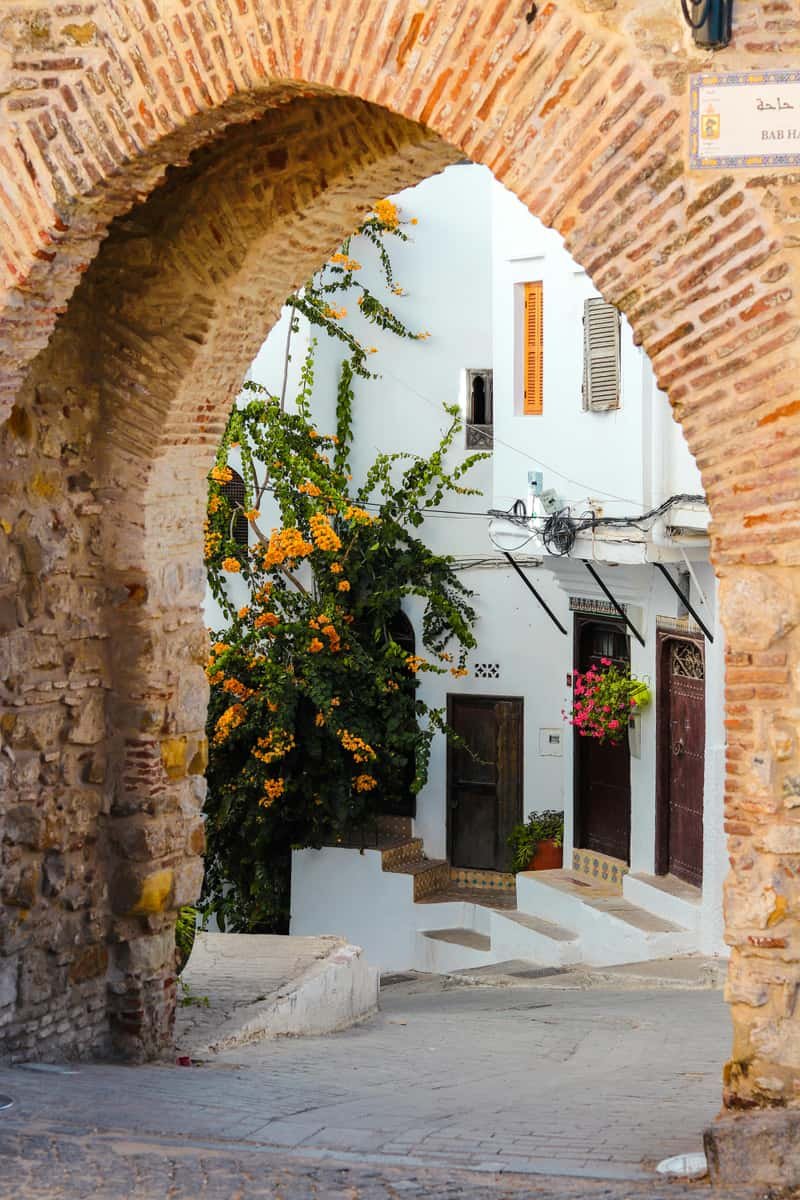
Tangier is a working Mediterranean city of well over a million people, built up a hillside above the Strait of Gibraltar, with a compact old quarter, a long seafront, and a European accent that runs through the architecture, the language and the food. Travellers who arrive expecting the mythologised port of Paul Bowles and William Burroughs, or a smaller version of Marrakech, spend the first afternoon recalibrating.
Tangier works on different terms from the imperial cities, and knowing which kind of city you have booked is the difference between a good two days and a puzzled afternoon.
What follows is what the city offers, where to base yourself, and who should make the journey north.
Tangier At a Glance
Tangier belongs to the northern arc of the country, a region with its own climate and character. It sits at the top of the rail network, so getting in and out of it is straightforward. Our guide to getting around Morocco covers the trains, buses and private-driver economics in detail, so this piece stays with the city itself.
The City the International Years Left Behind
The geography explains almost everything. The strait is about fourteen kilometres across at its narrowest, and on a clear day you can see the Spanish coast from the kasbah wall. For three decades in the middle of the last century a committee of European powers ran Tangier as an internationally administered zone, separate from the rest of the country, until the city was returned to the newly independent kingdom in 1956. That arrangement produced the odd, permissive, multilingual place that attracted the writers and painters, and it left behind Spanish street signs, French cafés, an American legation and a habit of switching languages mid-sentence.
The city has since reinvented itself around its port and its rail terminus. There is new construction, a restored medina, a rebuilt seafront. Some of the old melancholy has been tidied away. What remains is a place that feels less like a monument and more like a city getting on with things.
If your reference point is the choice between Fes and Marrakech, adjust the scale. The medina here is small and you can cross it in twenty minutes. There is no Ben Youssef Medersa, no Chouara tannery. The pleasure is in the walking, the light off the water, and the sense of standing at a hinge between two continents.
Where to Stay
Tangier spreads across hills, and the address you choose determines how much of your day you spend in a car.
The City Centre
The area around the Grand Socco and the top of the medina is where you want to be if you intend to walk. El Minzah has operated here since 1930, built during the international years and still carrying the horseshoe arches, zellige and carved cedar of that period. It is not the most contemporary hotel in the city and the rooms show their age in places, but the location is walking distance to the medina, the kasbah and the seafront, and the courtyard and terrace are worth an hour of your afternoon.
Grand Hôtel Villa de France sits nearby and trades on a specific piece of history: Henri Matisse stayed here in 1912 and painted Window at Tangier from room 35, which the hotel has preserved. It is a small property. If the connection means something to you it is a lovely place to stay. If it does not, you are paying for a story rather than for facilities.
The Hills Above the Medina
Fairmont Tazi Palace is the most substantial luxury address in northern Morocco. It occupies a 1920s palace commissioned for a royal advisor, left unfinished for decades and finally restored and opened as a 133-room hotel in 2022, set in eucalyptus and citrus grounds above the city with a large spa and several restaurants.
The trade-off is the hill. Every trip into the medina or down to the water is a drive, which suits a stay built around the hotel and frustrates one built around the city.
The Coast
Malabata, east of the centre, has modern beachfront hotels within a short drive of town. Further out, on the road towards Asilah, resort properties sit on the Atlantic with golf, spa and private beach inside their own grounds. These work well for families and for longer stays, and less well for a two-night city visit, since you will spend a meaningful part of each day commuting.
Choosing Your Base
Two nights or fewer: stay in the city centre. The walkability is the whole advantage and you will not have time to absorb the drive.
Four nights or more, or travelling with children: the hills or the coast make more sense, because you will want somewhere to return to in the afternoon. Our notes on how we choose accommodations explain what we look at beyond the photographs.
What to Do With Two Days
The Medina and the Kasbah
Start at the Grand Socco and walk down through the gates into the old town. Tangier's medina is nothing like the scale of Fes, and that is its advantage for a short visit: you can cover it thoroughly in half a day without the navigational effort that larger medinas demand. Portuguese fortifications, Moroccan houses and international-era facades sit against each other on the same street.
Climb to the kasbah at the top. The former sultan's palace there now houses the Kasbah Museum, with a quiet garden and rooms covering the region's Mediterranean history, and the terrace outside gives you the view of the strait that most people came for. Go late in the afternoon when the light is low and the ferries are crossing.
Cap Spartel and the Caves of Hercules
About fourteen kilometres west of the city, the headland at Cap Spartel marks the point where the Atlantic gives way to the Mediterranean, with a nineteenth-century lighthouse on the promontory. Below it, the Caves of Hercules open onto the sea through a mouth whose outline, seen from inside, resembles the map of Africa.
The cave itself takes fifteen minutes and is busy in the middle of the day. The drive out along the coast road, the pine woods, the cliffs and the light at the end of the afternoon are the real reason to go. Treat it as a half-day drive with a cave at the end of it, and go late.
The Literary City
The Tangier American Legation occupies a rambling house in the medina, given to the United States by the Moroccan sultan in 1821 and now the only American National Historic Landmark outside the United States. It holds a good collection on the international years and a room devoted to Paul Bowles. Café Hafa has been serving mint tea from stepped terraces above the water since the 1920s, and the Librairie des Colonnes has been part of the city's literary furniture since the 1940s.
This thread only works if you care about it. If twentieth-century writers and the myth of the interzone mean nothing to you, drop the whole circuit and spend the time on the coast.
Half Days Out of the City
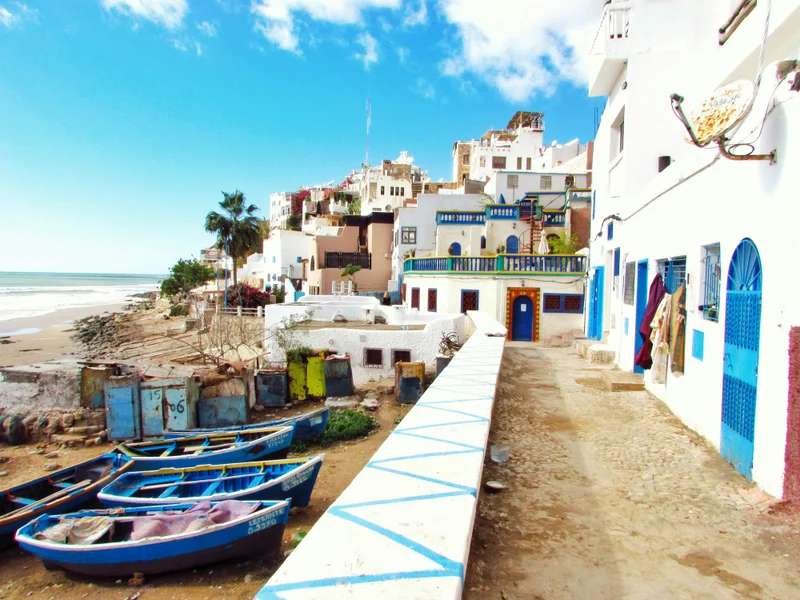
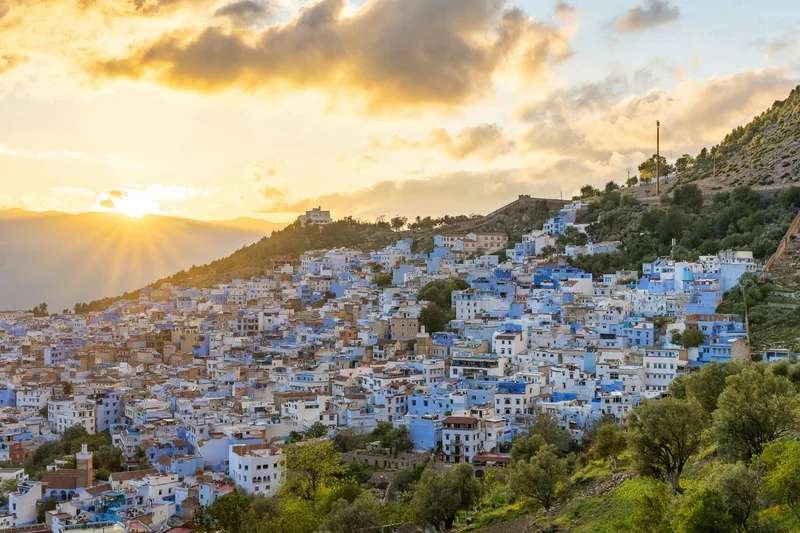
Asilah sits roughly forty-five kilometres south: whitewashed walls, Portuguese ramparts and a mural tradition that repaints the medina each summer. We cover it properly in our Atlantic coast guide. Chefchaouen, the blue town in the Rif, is around two hours inland and works as a long day trip, though it is better as an overnight stop on the way to Fes.
About the Ferry to Spain
The fast ferry from Tangier Ville to Tarifa takes about an hour, and lunch in Spain with dinner back in Morocco is an appealing idea.
Before you plan it: you are entering the Schengen area, so your passport and visa situation governs whether this is possible at all. It also uses a full day of a short trip. We will arrange it when it makes sense, and we will tell you when it does not.
Getting There and Around
Tangier is the northern terminus of the Al Boraq high-speed line, which is the easiest way in. Casablanca to Tangier takes about two hours and ten minutes, Rabat to Tangier roughly an hour and twenty, with several departures a day. Tanger Ville station is modern and close to the centre. Tangier's own airport takes direct flights from a number of European cities, and ferries arrive from Tarifa and, at the larger port east of the city, from Algeciras.
Within Tangier, petit taxis are cheap and plentiful, and you will use them more than you expect because of the hills. The medina is walking only. If you are combining the city with Asilah, Chefchaouen or the coast, a private driver removes the awkward parts, and the transport guide sets out how those costs work.
Tangier's Weather Is Not Moroccan Weather
Tangier has a Mediterranean climate and receives well over 700 mm of rain a year, considerably more than most of the country. November through February are the wet months, with January averaging around 16°C by day and 9°C at night.
Summer is mild by Moroccan standards, with July and August highs averaging around 28°C, which makes the city a sensible option when Marrakech and Fes are difficult. Wind off the strait is constant year-round. Bring a layer even in August. See our seasonal timing guide for how this compares with the rest of Morocco.
When Tangier Earns Two Nights
Go if you have been to Morocco before and want somewhere off the standard circuit, or if you like port cities, long café sittings and coastline more than you like queuing for monuments. Tangier also earns its nights in high summer, when the coast stays around 28°C and the imperial cities are hard work, on a northern route through Chefchaouen towards Fes, and on any trip that arrives or leaves via Spain.
Do not go if this is your first visit and you have seven days. The imperial cities and the desert will give you more of what you imagine when you imagine Morocco, and Tangier will feel like a European city with better weather. The same applies if you need a dense list of sights to feel a place has been done, or if hills and traffic tire you out.
One to two nights for the city, three if you want it as a base. Beyond that you are choosing Tangier as a destination in its own right, which is a fine choice but should be a deliberate one.
How Tangier Fits a Larger Trip
The natural route is the northern one: Tangier, Chefchaouen, Fes, then either south by train or back to Casablanca to fly. Two nights in Tangier, one or two in Chefchaouen and three in Fes makes an unhurried week that avoids the busiest parts of the country entirely.
Tangier also works as a bookend. Flying into Tangier and out of Marrakech, or the reverse, lets the trip run in one direction down the length of the country. On a culture-led journey it adds a layer the imperial cities do not have, and for a short focused stay it is one of the few Moroccan cities that rewards three days without a car.
Quick Tangier Reference
Planning a Northern Route
Tangier is easy to organise and easy to get wrong, usually by giving it either too much time or too little. If you are still shaping the outline of a trip, our trip planning guide covers how the regions fit together.
We build northern routes around what you want to see, and we will take a city out of an itinerary before we let it dilute one. Tell us what you have in mind.
Frequently Asked Questions
- How many days do you need in Tangier?
One to two nights covers the city itself. The medina and kasbah take half a day, and Cap Spartel with the Caves of Hercules takes an afternoon. Give Tangier three nights if you want it as a base for Asilah and Chefchaouen, or if cafés and coastline interest you more than sightseeing does.
- Where should you stay in Tangier?
The city centre around the Grand Socco puts you within walking distance of the medina and kasbah, which is the main reason to be in Tangier at all. The hills above the medina offer palace-hotel grounds and views but require a car for everything. Beach resorts on the Atlantic and at Malabata are self-contained and involve a daily commute into town.
- How do you get from Casablanca to Tangier?
The Al Boraq high-speed train covers Casablanca to Tangier in about two hours and ten minutes, with several departures a day. From Rabat it is roughly an hour and twenty minutes. Tanger Ville station is modern and sits close to the city centre. Tangier also has its own airport with direct flights from a number of European cities.
- Is Tangier worth visiting compared with Marrakech or Fes?
The two are not in competition. Marrakech and Fes offer monumental architecture and dense historic quarters; Tangier offers position, atmosphere, coastline and a European-inflected café culture, with a much smaller medina. First-time visitors with a week in Morocco usually get more from the imperial cities. Tangier rewards second visits and northern itineraries.
- Can you take a day trip from Tangier to Spain?
The fast ferry from Tangier Ville to Tarifa takes about an hour, so it is physically possible. Whether it is practical depends entirely on your passport, since you are entering the Schengen area and will need the appropriate visa. It also consumes a full day. For most travellers on a short Morocco trip, that day is better spent in Morocco.